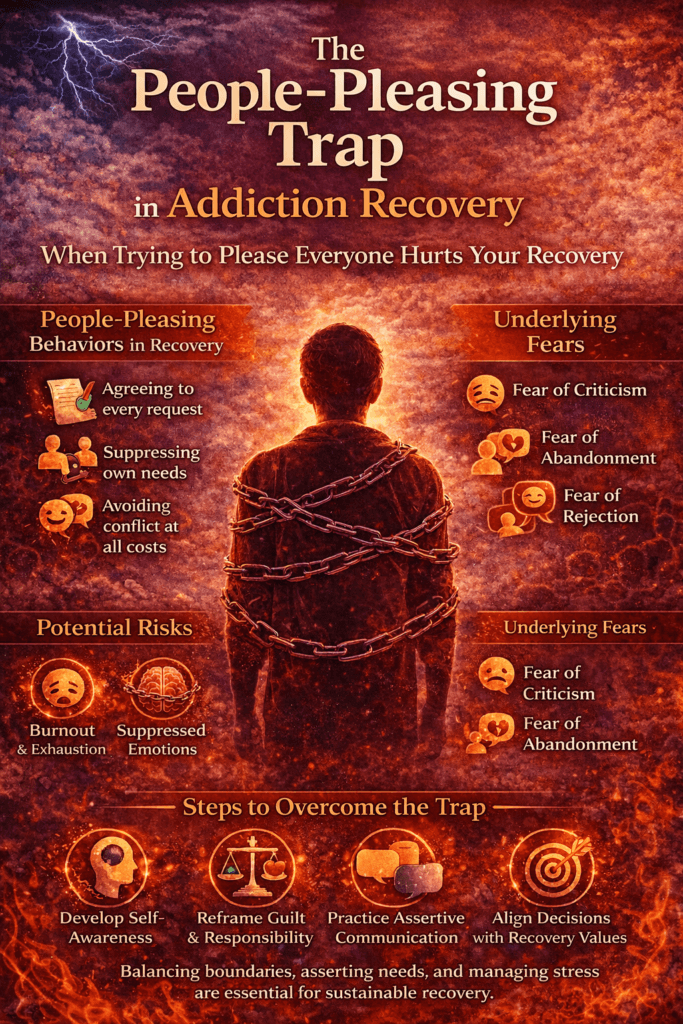
The people-pleasing trap in addiction recovery is a subtle yet significant challenge that can undermine long-term stability. During recovery, individuals often feel compelled to repair past harm, regain trust, and demonstrate change. While these intentions are rooted in accountability and growth, they can evolve into excessive approval-seeking, boundary neglect, and emotional overextension. People-pleasing shifts the focus from internal healing to external validation, increasing stress and suppressing authentic emotional expression. Recognizing this pattern is essential because sustainable recovery depends not on constant performance, but on balanced self-awareness, healthy boundaries, and emotional resilience.
The People-Pleasing Trap in Addiction Recovery: When Approval Becomes a Risk
Addiction recovery is often framed as a journey toward honesty, authenticity, and self-respect. Yet for many individuals, a hidden obstacle quietly undermines progress: people-pleasing. While kindness and cooperation are healthy relational traits, chronic people-pleasing can become a psychological trap—especially in recovery. When the need for approval overrides personal boundaries, emotional stability, and self-care, relapse risk increases.
People-pleasing in recovery often stems from guilt and shame. Individuals may feel compelled to “make up” for past mistakes by overextending themselves, avoiding conflict, or suppressing their own needs. They may say yes when they mean no, take on responsibilities they cannot manage, or prioritize others’ comfort over their own recovery plan. This pattern may temporarily reduce anxiety or fear of rejection, but it erodes internal stability.
At its core, people-pleasing is often rooted in fear—fear of abandonment, criticism, or disapproval. In addition, substances frequently served as a coping mechanism for emotional distress. In recovery, if emotional discomfort arises from interpersonal conflict or unmet expectations, the absence of healthy boundaries can create overwhelming stress. Without assertiveness skills, individuals may internalize resentment, exhaustion, or emotional burnout—all of which can trigger cravings.
Another risk is identity confusion. Recovery involves rediscovering personal values and rebuilding a stable sense of self. Chronic people-pleasing disrupts this process by shaping identity around external validation rather than internal conviction. Instead of asking, “What aligns with my recovery goals?” the focus becomes, “What will keep others happy?” Over time, this external orientation weakens self-trust.
Healthy recovery requires balanced relationships. Setting boundaries is not selfish—it is protective. Boundaries allow individuals to maintain emotional energy, prioritize meetings or therapy appointments, decline high-risk environments, and communicate needs clearly. Learning to tolerate temporary discomfort—such as someone’s disappointment—builds resilience and autonomy.
Developing assertiveness skills is essential. Assertiveness differs from aggression; it involves expressing needs respectfully and directly. Practicing phrases like “I’m not able to commit to that right now,” or “That situation isn’t supportive of my recovery,” reinforces personal agency. Therapy, particularly cognitive-behavioral therapy (CBT) or dialectical behavior therapy (DBT), can help individuals challenge approval-seeking beliefs and build confidence in setting boundaries.
Support systems also play a role. Sponsors, therapists, and trusted peers can provide feedback when people-pleasing patterns emerge. They can help individuals distinguish between healthy generosity and self-sacrifice that compromises recovery.
Ultimately, recovery is not about earning forgiveness through overperformance—it is about sustainable healing. People-pleasing may feel virtuous, but when it undermines emotional regulation and personal boundaries, it becomes a vulnerability. True recovery involves learning that self-worth does not depend on constant approval. By prioritizing authenticity over acceptance, individuals strengthen both their sobriety and their sense of self.
Breaking the Pattern: Self-Management Strategies to Overcome the People-Pleasing Trap in Addiction Recovery
Recovery requires honesty, self-awareness, and emotional balance. Yet for many individuals, people-pleasing becomes a subtle but powerful threat to stability. The desire to gain approval, avoid conflict, or repair past mistakes can lead to overcommitment, suppressed emotions, and neglected boundaries. Over time, this pattern increases stress—one of the most common relapse triggers. Recognizing and actively managing people-pleasing tendencies is therefore essential for long-term recovery.
1. Develop Self-Awareness of Approval-Seeking Patterns
The first step is recognition. People-pleasing often operates automatically. Ask reflective questions such as:
- Do I say “yes” when I want to say “no”?
- Do I feel anxious when someone is disappointed in me?
- Do I prioritize others’ comfort over my recovery needs?
- Do I overextend myself to avoid guilt?
Journaling after social interactions can help identify patterns of resentment, exhaustion, or anxiety—signals that boundaries may have been crossed.
2. Reframe Guilt and Responsibility
In early recovery, guilt from past behaviors may fuel overcompensation. While accountability is healthy, self-punishment is not. Replace thoughts like:
- “I owe everyone everything.”
with - “I am responsible for my growth, not for managing everyone’s emotions.”
Cognitive restructuring—challenging distorted beliefs about worth and obligation—helps reduce compulsive approval-seeking.
3. Practice Assertive Communication
Assertiveness is a learned skill. It involves expressing needs respectfully and clearly without aggression or apology. Simple boundary-setting phrases include:
- “That doesn’t work for me right now.”
- “I need to prioritize my recovery.”
- “I’m not comfortable with that situation.”
Practicing these statements in low-stress settings builds confidence for higher-pressure moments.
4. Build Tolerance for Discomfort
One of the core fears behind people-pleasing is discomfort—disappointment, conflict, or rejection. Recovery requires learning to tolerate these emotions without escaping into unhealthy behaviors. Mindfulness techniques, deep breathing, and grounding exercises help regulate anxiety when boundaries create temporary tension.
5. Align Decisions with Recovery Values
Instead of asking, “Will they approve?” shift the question to:
- “Does this support my recovery goals?”
- “Will this increase or decrease my stress?”
- “Is this aligned with my long-term well-being?”
Value-based decision-making strengthens identity and reduces impulsive compliance.
6. Monitor Stress and Emotional Burnout
Overcommitment often leads to fatigue and resentment. Use self-checks:
- Am I exhausted from trying to meet everyone’s expectations?
- Have I skipped meetings, therapy, or self-care to please others?
Burnout increases relapse vulnerability. Protecting energy is a form of relapse prevention.
7. Seek Feedback and Support
Sponsors, therapists, or recovery peers can help identify subtle approval-seeking patterns. An external perspective provides accountability and reassurance when practicing new boundaries feels uncomfortable.
8. Cultivate Self-Compassion
People-pleasing is often rooted in fear of not being “enough.” Recovery invites a shift toward intrinsic self-worth. Self-compassion practices—affirmations, reflective writing, and acknowledging progress—reduce dependence on external validation.
Conclusion
Overcoming the people-pleasing trap is not about becoming indifferent or unkind. It is about creating balance. Healthy recovery requires boundaries, authenticity, and emotional resilience. By developing self-awareness, practicing assertiveness, tolerating discomfort, and aligning choices with personal values, individuals strengthen both their sobriety and their identity. Sustainable recovery is built not on constant approval—but on consistent self-respect.
Healing Without Overcompensating: Family Support Strategies to Address the People-Pleasing Trap in Addiction Recovery
Addiction recovery is a period of rebuilding trust, stability, identity, and relationships. During this time, many individuals fall into a subtle but risky pattern: people-pleasing. Driven by guilt, shame, or fear of rejection, they may overextend themselves in an attempt to repair past harm. While the intention may be positive, chronic approval-seeking can create emotional exhaustion, resentment, and stress—all of which increase relapse vulnerability. Families play a critical role in recognizing and gently correcting this pattern.
Understanding the People-Pleasing Trap in Recovery
In recovery, individuals often feel pressure to “prove” they have changed. This may show up as:
- Saying yes to every request
- Taking on excessive responsibilities
- Avoiding conflict at all costs
- Suppressing personal needs
- Seeking constant reassurance
Family Support Strategies
1. Encourage Healthy Boundaries
Families can model and reinforce the importance of boundaries. Instead of expecting overperformance, communicate that sustainable progress matters more than perfection. For example:
- Affirm that it is okay to decline requests.
- Support attendance at therapy or recovery meetings, even if it inconveniences family schedules.
- Reinforce that recovery priorities are valid and necessary.
When families normalize boundaries, individuals feel less pressure to overcompensate.
2. Avoid Reinforcing Overachievement as Redemption
Families may unintentionally reward people-pleasing by praising excessive effort while overlooking burnout. Shift the focus from “doing more” to “being consistent.” Recognize emotional growth, honesty, and responsible decision-making—not just productivity or compliance.
3. Promote Open Dialogue About Guilt and Fear
Create space for honest conversations about lingering guilt or fear of rejection. Individuals in recovery may feel they must constantly earn forgiveness. Reassure them that rebuilding trust is a process, not a performance. Emphasize that relationships are strengthened through authenticity, not perfection.
4. Respond Calmly to Boundary Setting
When someone in recovery sets a boundary, it may initially feel unfamiliar or uncomfortable. Families can respond constructively by:
- Listening without defensiveness
- Asking clarifying questions
- Respecting the boundary, even if disappointed
Supportive responses reinforce healthy autonomy and reduce anxiety about asserting needs.
5. Monitor for Burnout and Emotional Strain
Watch for signs of overextension, such as irritability, fatigue, missed meetings, or emotional withdrawal. Gently check in:
- “Are you feeling overwhelmed?”
- “Are you taking enough time for yourself?”
Early recognition prevents stress accumulation that can trigger relapse.
6. Participate in Family Counseling
Family therapy can improve communication patterns and address approval-seeking dynamics within the system. Sometimes, people-pleasing originates from long-standing relational roles. Professional guidance helps families restructure healthier interaction patterns.
7. Reinforce Intrinsic Worth
Regularly communicate that love and support are not conditional on performance. When individuals understand they are valued for who they are—not what they provide—they are less likely to seek validation through overextension.
Conclusion
The people-pleasing trap in recovery is often rooted in fear and a desire to repair relationships. While these motivations are understandable, sustainable healing requires balance, boundaries, and authenticity. Families who encourage healthy autonomy, respond constructively to boundary-setting, and emphasize unconditional support create an environment where recovery can flourish. True healing is not about constant approval—it is about stable growth grounded in mutual respect and emotional resilience.
Building Healthy Boundaries: Community Resource Strategies to Overcome the People-Pleasing Trap in Addiction Recovery
Addiction recovery is not only about abstaining from substances—it is about reshaping identity, relationships, and coping mechanisms. One overlooked vulnerability in recovery is the people-pleasing trap. Many individuals, motivated by guilt or fear of rejection, attempt to rebuild trust by overcommitting, avoiding conflict, and suppressing their own needs. While this pattern may appear cooperative, it can create emotional exhaustion, resentment, and increased relapse risk. Communities play a powerful role in recognizing and addressing this dynamic through structured, supportive resources.
Understanding the Community’s Role
Recovery does not happen in isolation. Community systems—treatment centers, peer support groups, faith organizations, workplaces, and educational institutions—shape the environment in which individuals rebuild their lives. When communities understand how approval-seeking behaviors can undermine emotional stability, they can foster cultures that prioritize healthy boundaries and authenticity rather than performance.
Key Community Resource Strategies
1. Integrate Boundary Education into Recovery Programs
Outpatient programs, residential treatment centers, and peer groups can incorporate workshops on assertiveness training, boundary setting, and communication skills. Teaching individuals how to say “no” respectfully and to tolerate temporary discomfort strengthens relapse-prevention efforts.
Skills training may include:
- Role-playing difficult conversations
- Identifying approval-seeking triggers
- Practicing value-based decision-making
- Differentiating kindness from self-sacrifice
2. Promote Peer Support That Encourages Authenticity
Peer recovery groups should emphasize honesty over perfection. When group culture rewards vulnerability and balanced growth rather than overachievement, members feel less pressure to perform. Sponsors and peer leaders can gently challenge people-pleasing behaviors when they notice overextension.
3. Provide Access to Mental Health Counseling
Community mental health services can address underlying factors that fuel people-pleasing, such as low self-esteem, trauma, attachment insecurity, or anxiety disorders. Therapies such as cognitive-behavioral therapy (CBT) and dialectical behavior therapy (DBT) are particularly effective in building emotional regulation and interpersonal effectiveness skills.
4. Offer Family and Relationship Workshops
Community centers and treatment facilities can host relationship education sessions that teach families and partners how to respond constructively when boundaries are set. This reduces resistance to change and supports healthier interaction patterns.
5. Create Work and Volunteer Environments That Respect Recovery Limits
Employers and volunteer organizations can adopt recovery-sensitive policies, such as flexible scheduling for therapy appointments or meetings. When workplaces respect limits, individuals are less likely to overcommit to maintain approval.
6. Reduce Stigma Through Public Awareness Campaigns
Community messaging that emphasizes recovery as a process—not a performance—helps shift expectations. When individuals are not constantly pressured to “prove” their change, they are more likely to focus on sustainable growth.
7. Encourage Value-Based Goal Setting
Recovery programs and community mentors can help individuals identify personal values and long-term goals. Decisions grounded in internal values reduce reliance on external validation.
Conclusion
The people-pleasing trap in addiction recovery is subtle but significant. When individuals feel compelled to earn acceptance through overextension, emotional strain increases—and with it, relapse risk. Communities that promote boundary education, authentic peer support, access to mental health services, and stigma reduction create protective environments. By reinforcing that recovery is about steady growth rather than constant approval, communities empower individuals to build resilience rooted in self-respect and sustainable healing.
Frequently Asked Questions
Here are some common questions:
1. What is the people-pleasing trap in addiction recovery?
The people-pleasing trap occurs when someone in recovery prioritizes others’ approval over their own emotional stability and recovery needs. It often involves overcommitting, avoiding conflict, and suppressing personal boundaries to gain acceptance or repair past harm.
2. Why is people-pleasing common in recovery?
Many individuals in recovery carry guilt or shame from past behaviors. They may try to “make up” for mistakes by being overly agreeable or accommodating. Fear of rejection or abandonment can also drive approval-seeking behaviors.
3. How can people-pleasing increase relapse risk?
Chronic overextension leads to stress, resentment, exhaustion, and suppressed emotions—all of which are common relapse triggers. When emotional needs are ignored, coping skills weaken, making substance use more tempting.
4. What are common signs of people-pleasing in recovery?
- Saying “yes” when you want to say “no.”
- Avoiding difficult conversations
- Feeling anxious when others are disappointed
- Taking on too many responsibilities
- Neglecting meetings, therapy, or self-care to help others
5. Is being kind the same as people-pleasing?
No. Kindness is a healthy relational trait. People-pleasing becomes problematic when it consistently sacrifices personal well-being, boundaries, or recovery priorities in order to gain approval.
6. How does guilt contribute to this pattern?
Unresolved guilt may lead one to believe that one must constantly “earn” forgiveness. This can lead to self-punishing behaviors, such as overworking or never setting limits.
7. What is the difference between assertiveness and selfishness?
Assertiveness involves respectfully expressing needs and boundaries. Selfishness disregards others entirely. Healthy recovery requires assertiveness, not self-sacrifice or aggression.
8. How can someone begin to break the people-pleasing pattern?
- Develop self-awareness through journaling or reflection
- Practice small boundary-setting statements
- Tolerate temporary discomfort when others disagree
- Align decisions with recovery goals rather than approval
9. Can family dynamics influence people-pleasing?
Yes. Some individuals grew up in environments where approval was conditional or conflict was unsafe. These patterns can continue into adulthood and recovery unless intentionally addressed.
10. Should this issue be addressed in therapy?
Absolutely. Therapies such as Cognitive Behavioral Therapy (CBT) and Dialectical Behavior Therapy (DBT) can help individuals challenge approval-seeking beliefs and develop interpersonal effectiveness skills.
11. What role do sponsors or peer groups play?
Sponsors and peers can provide feedback when they notice overcommitment or avoidance behaviors. Support systems help reinforce balanced boundaries.
12. Is it normal to feel uncomfortable when setting boundaries?
Yes. Discomfort is common when changing long-standing patterns. Over time, practicing assertiveness builds confidence and reduces anxiety.
13. How does people-pleasing affect identity in recovery?
It shifts identity from internal values to external validation. Sustainable recovery requires rebuilding self-trust and making decisions based on personal growth rather than approval.
14. What is the key takeaway about people-pleasing in recovery?
Recovery is about stability, authenticity, and balance—not perfection. Prioritizing emotional health and boundaries strengthens sobriety more than constant approval ever could.
Conclusion
Overcoming the people-pleasing trap requires intentional self-reflection, assertive communication, and supportive environments that value authenticity over perfection. Recovery flourishes when individuals learn that their worth is not contingent on meeting everyone’s expectations. By prioritizing emotional regulation, boundary-setting, and alignment with personal recovery goals, individuals can reduce stress and strengthen relapse prevention. Ultimately, lasting recovery is built on self-respect and honest relationships—not on earning approval, but on cultivating stability, confidence, and genuine connection.
Video: Breaking the Cycle of People Pleasing #RecoverySupport #BoundarySetting