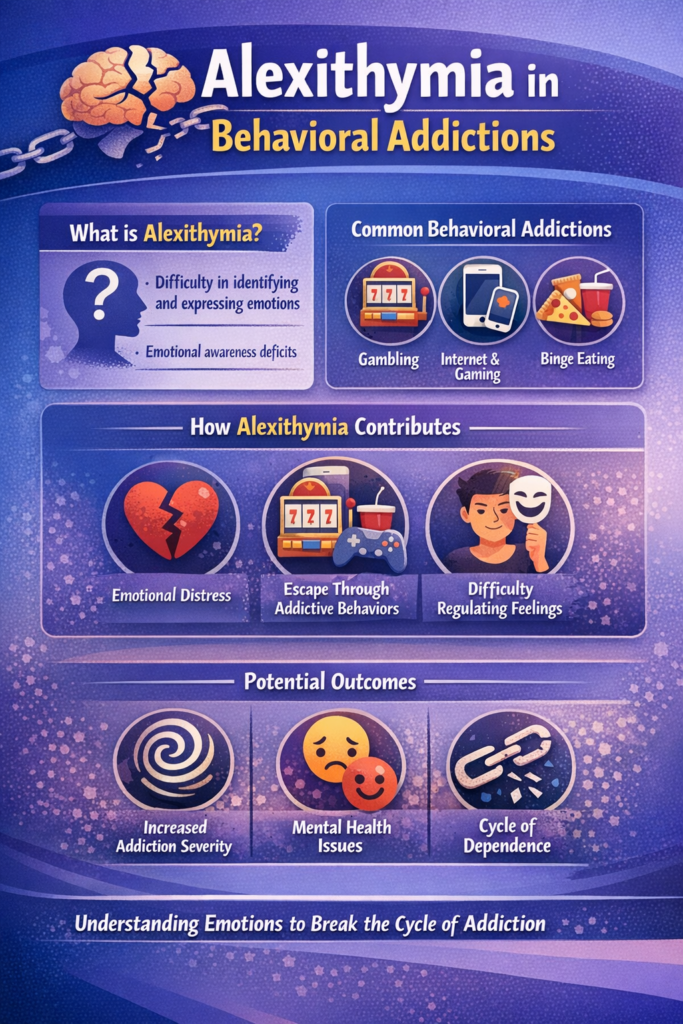
Recognizing and expressing emotions is something most people take for granted, but for those with alexithymia, it’s a challenge. Alexithymia is a personality trait that makes it difficult to identify and describe one’s feelings. When combined with behavioral addictions like compulsive gaming, problematic shopping, or social media overuse, it can create additional difficulties that are hard to manage. Individuals with alexithymia struggle to recognize emotional triggers, leading them to rely on addictive behaviors to cope. For instance, compulsive gaming may be used to escape emotional distress, but the person might not realize the emotional root cause.
This combination often leads to hidden consequences such as chronic stress, anxiety, and depression. The emotional disconnection worsens the addiction, creating a cycle that can be hard to break. To address these challenges, interventions such as cognitive-behavioral therapy (CBT), emotion awareness training, and mindfulness can help individuals understand their emotions and develop healthier coping mechanisms. Recognizing the connection between emotions and behavior is crucial to breaking the cycle of addiction and improving mental well-being.
What Is Alexithymia and How Does It Affect Everyday Life?
Alexithymia isn’t considered a mental health disorder on its own, but it can have a big effect on how someone finds their way through relationships, work, and stress. People with alexithymia often:
- Struggle to name emotions: They might know they’re upset but not be able to say if it’s anger, sadness, or anxiety.
- Find it tough to express feelings: Even basic conversations about emotions may feel confusing.
- Often focus on external events rather than inner states: Instead of “I feel stressed,” someone might only recognize a headache or tiredness.
This challenge can show up in lots of ways, such as avoiding discussions about feelings, missing emotional cues from others, or building routines focused on facts rather than feelings. When emotions are hard to make sense of, it’s natural to seek out activities that bring distraction or structure. That’s how behavioral addictions can sneak in, offering comfort or escape when feelings are hard to place. Sometimes, these patterns develop so gradually that people might not realize what’s driving their behavior.
Understanding Behavioral Addictions
Behavioral addictions are habits or activities that get so tough to control that they start causing real problems. Unlike substance addictions, these revolve around behaviors such as:
- Compulsive gaming or gambling
- Binge eating
- Online shopping and spending
- Excessive social media or internet use
- Exercise taken to an extreme
The key feature is that these activities typically bring a quick sense of relief or pleasure, but the effects wear off fast, and the urge to repeat them gets stronger. Recent research shows behavioral addictions and alexithymia stick together more often than many people expect (source). These links are found in both clinical and everyday settings and affect kids, teens, and adults alike.
Why Are Alexithymia and Behavioral Addictions Connected?
The connection comes down to how people try to manage, or struggle to manage, their emotions. If it’s tough to pinpoint and say how you feel, behaviors that distract or numb can look appealing. Here’s how the cycle can play out in daily life:
- Emotional confusion leads to discomfort: Stress or sadness still hits—even if you can’t name it.
- Behavioral escapes provide relief: gaming, shopping, or endlessly scrolling social media temporarily relieve discomfort.
- Over time, these escapes become habits: The more someone repeats them, the more the brain craves them, leading to compulsive use or reliance.
Behavioral addictions end up being makeshift coping tools for those who haven’t built other ways to deal with tricky feelings. While these habits offer quick comfort, they often complicate life by hiding true emotional needs. It’s a cycle that’s not easy to break: when emotions aren’t clear, distractions feel like the only solution.
Recognizing Signs: What Does the Connection Look Like?
The signs aren’t always in-your-face, but there are clues for spotting when alexithymia and behavioral addiction overlap. If you or someone you know has trouble figuring out their feelings and struggles to control certain habits, keep an eye out for these:
- Difficulty naming or talking about how you feel—responses like “I don’t know” or “fine” are super common
- Turning to activities (like shopping, gaming, or eating) to escape uncomfortable feelings or boredom
- Feeling restless, irritable, or off if unable to do the habitual activity
- Ignoring responsibilities or relationships because of time spent on certain behaviors
- Feeling guilt, shame, or frustration after these behaviors, but not knowing how to stop
Sometimes these patterns go completely unnoticed. Many people with alexithymia don’t realize they’re managing emotions through their habits; they just know these activities are tough to give up.
How Common Is This Link?
Not everyone with alexithymia develops a behavioral addiction, but several studies find a higher risk among those with high levels of alexithymia (read more here). In teens and young adults, the connection can be especially strong. Social and tech-based addictions—like endless smartphone or social media use—are increasingly trending among folks dealing with alexithymia. This trend isn’t surprising, considering that the digital world gives quick distractions when emotions are overwhelming.
Understanding this link helps reduce the self-blame people often feel. Rather than labeling yourself or someone else as lazy or lacking willpower, it’s important to see these behaviors as attempts to make sense of tough emotions using the tools that are available. Being gentle with yourself is key on this adventure.
Practical Steps for Coping
If you spot some of these traits in yourself, or you’re helping someone with alexithymia and a behavioral addiction, there are practical ways to turn things around. Here are several strategies that consistently show up in expert advice and personal stories alike:
- Start tracking feelings and behaviors: Jot down daily habits and moods (even simple words like “good,” “bad,” or “okay”) to build more self-awareness. Over time, this makes it easier to connect certain habits to emotional states.
- Notice physical sensations: The body often tells you things before your mind does. Headaches, muscle tension, or stomach discomfort can signal hidden stress or unease.
- Try mindfulness exercises: Short mindfulness or grounding techniques help connect body sensations to emotions and can ease compulsive urges. Even a 3-minute breathing exercise can make a difference.
- Set clear limits: Put up boundaries around addictive behaviors using tools like screen time apps, shopping budgets, or social media breaks. These reduce temptation while you build new habits.
- Find professional support: Therapists, especially those trained in cognitive-behavioral therapy or mindfulness, can help build emotional awareness and new coping skills. Group sessions and peer support can also help lift you up on this adventure.
For more about mindfulness and breaking addictive cycles, check out Mindful.org.
Barriers That Can Make Change Harder
Switching up habits connected to emotional struggles can feel like an uphill battle. Here are a few reasons change can be even tougher:
- Low motivation or frustration: When emotions don’t make sense, it’s easy to get discouraged. Starting with small wins—like simply noticing when you feel off—can help things move in the right direction.
- Social and cultural stigma: Feeling embarrassed about emotional struggles or compulsive habits is common, but everyone faces challenges. You’re not alone, and support is available without judgment.
- Lack of resources: Therapy isn’t always easy to access, whether due to cost, location, or waitlists. In those cases, free online support groups or self-help resources such as mobile mood journals and mindfulness apps can be helpful steps.
Be patient; progress is often gradual. Every effort to build your emotional awareness makes it a little easier to break tough habits.
Role of Relationships and Social Support
Good relationships are among the strongest buffers against both emotional and behavioral struggles. If you’re supporting someone with traits of alexithymia or a behavioral addiction, try some of these approaches:
- Practice patience—avoid pushing them to “just talk it out” if they aren’t ready
- Be consistent and available, giving support without pressure or judgment
- Share articles or self-help materials together to help start conversations about tricky emotions or habits
- Encourage professional help when needed, reminding them that change is possible with the right support
In time, filling your toolbox with coping skills and supportive routines makes a real difference for both alexithymia and behavioral addictions.
Frequently Asked Questions
What causes alexithymia?
It’s thought to stem from a mix of genetics, life experiences, and brain development. Sometimes it shows up alongside childhood trauma, but not always. For others, it’s simply part of how their brain makes sense of emotions over a lifetime.
How do I know if my habit is a “behavioral addiction”?
If you keep losing control over an activity, if it’s taking up more of your time, or if it’s causing issues at work, school, with money, or relationships, it’s worth looking at more closely. Difficulty stopping the behavior and emotions being hard to pin down are important signals. Mental health professionals can help you understand and manage these patterns.
Can alexithymia get better?
Yes—skills for spotting and expressing emotions can grow with practice. Therapy, support groups, and self-help resources are all great tools, even if progress moves slowly at first. With time, it can absolutely improve.
Moving Forward
Seeing the link between alexithymia and behavioral addictions can be a powerful step for understanding yourself or those around you. Building up your emotional awareness, even bit by bit, sets you on a path toward healthier coping skills and habits. Whether you’re just starting to notice these patterns or helping someone else along the way, progress is always possible and worth the effort.
Keep an open heart, take things at your own pace, and don’t hesitate to check in or reach out if you need support. The road to clearer emotions and better habits is always one worth traveling.
Video: When Your Emotions Are Invisible #alexithymia #mentalhealthawareness