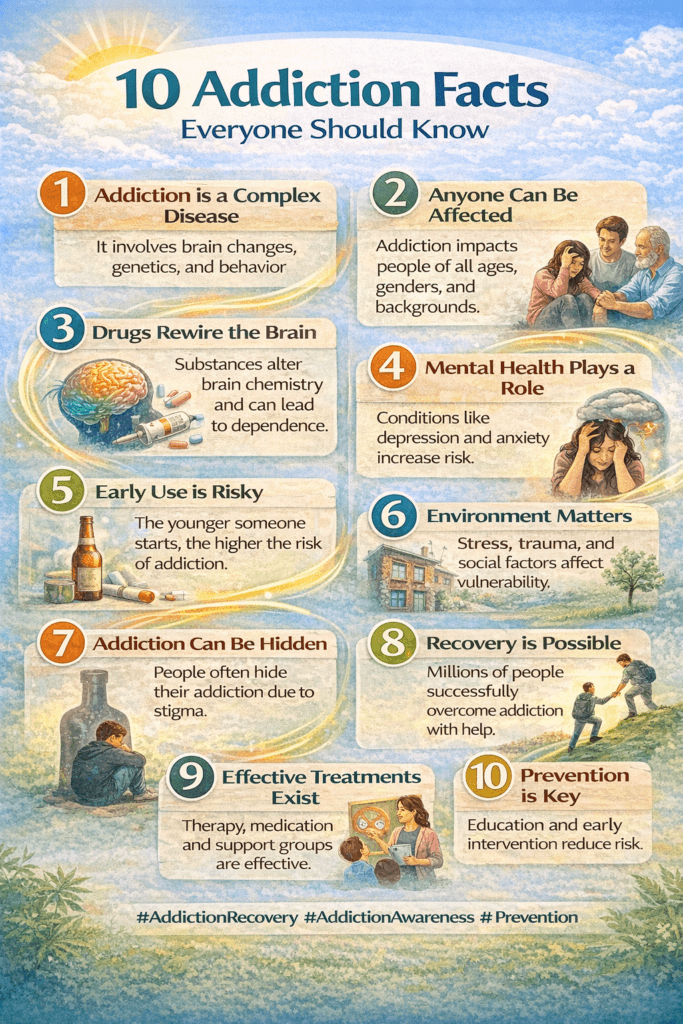
Addiction affects millions of people around the globe, but there’s still a lot of confusion and stigma surrounding what it really means. Learning more about addiction can not only help you support someone you care about, but it can also make a big difference in understanding your own habits or behaviors. I’ve pulled together 10 facts about addiction that I believe everyone should know, along with some tips and common questions. Here’s what I’ve learned over many years of studying, reading, and chatting with experts on the subject.
Understanding What Addiction Really Is
Addiction is more than just having a bad habit or lacking willpower. It’s actually a chronic brain disorder that messes with how someone thinks, feels, and acts. Once the brain gets used to a habit-forming substance or behavior, like drugs, alcohol, gambling, or even gaming, it starts to crave it, making it tough to pull away even when negative consequences pile up. That’s why it’s not always simple to just stop, even if someone desperately wants to.
I often hear people wonder why someone can’t just quit, but addiction actually changes pathways in the brain that control decision-making and impulse control. The science behind this is pretty interesting and eye-opening. Harvard Health Publishing breaks down how addiction rewires the reward circuits in the brain, which keeps people coming back for more (source).
10 Facts About Addiction That Are Worth Knowing
Here’s a breakdown of facts that often surprise people or help clear up a lot of myths surrounding addiction.
- Addiction Is a Medical Condition
It isn’t just a weakness or a moral failing. The American Society of Addiction Medicine treats it as a disease that affects the brain and body, just like diabetes or heart disease. Treatments often include medical care, therapy, and support, not just “toughing it out.” - It Can Affect Anyone
Addiction doesn’t care about age, background, income, or education level. It shows up in all communities, and nobody is really immune. Risk factors do exist, like genetics, stress, and early exposure to addictive substances, but those only nudge the odds. It’s never simple to predict who will struggle. - There’s No Single Cause
People wind up with addiction for all sorts of reasons: genetics, trauma, mental health issues, environment, and even social pressure. Most of the time, it’s a blend of several factors. That’s why treatment is often customized for each person. - Mental Health and Addiction Go Hand in Hand
Many people facing addiction are also dealing with depression, anxiety, PTSD, or other mental health issues. Sometimes one leads to the other, or they might even feed off each other. Good treatment addresses both sides of the equation, not just one. - The Stigma Hurts Recovery
People with addiction are often judged or blamed, which can make them feel ashamed and less likely to reach out for help. Stigma can be a bigger barrier to recovery than the addiction itself. Being more open and supportive can actually make a huge difference to someone who’s struggling. - Relapse Doesn’t Equal Failure
Most people working through addiction have days when they slip, but that isn’t the end. Relapse is pretty common and part of a longer recovery process for many people. What matters is getting support, learning from setbacks, and getting back on track. - Signs of Addiction Aren’t Always Obvious
You might think someone with an addiction would be easy to spot, but a lot of people hide their struggles well or may not fit the stereotypes. Trouble at work, changes in mood, or withdrawing from friends can all be subtle signs that something’s up. - Treatment Options Have Expanded
Gone are the days when the only choice was a “one-size-fits-all” program. Today, there are loads of options: outpatient therapy, group support, medication-assisted treatment, and online counseling. Careful research helps people and their families explore what might work best for their needs. - Support Systems Really Matter
Recovery is way easier when friends, family, or peer groups are involved. Encouragement, understanding, and practical help, like a ride to therapy or someone checking in, can actually lift someone’s odds of getting and staying better. - Prevention Works
Communities, schools, and families that talk openly about addiction and healthy coping skills help lower the risk. Access to mental health support, positive role models, and honest education all play a part in helping people steer clear of addiction in the first place.
Common Types of Addiction
When most people hear the word “addiction,” they imagine drugs or alcohol. But addiction covers way more than that world; shopping, gambling, food, social media, and even exercise can become problematic when they start to control someone’s life. Here are a few types I see coming up most often:
- Substance Use: Alcohol, prescription medications (like opioids), nicotine, illicit drugs
- Behavioral Addictions: Gambling, online gaming, shopping, overeating, internet/social media
Each type may need a different kind of treatment, so spotting what’s going on really helps shape where to start. Understanding where someone’s challenges lie can help build a practical, realistic recovery plan that may work better than generic approaches. The rise of the internet and technology-based addictions has opened the door for counselors and families to check out modern resources tailored specifically for these issues, like digital detox programs and screen time management tips. Keeping an eye out for emerging trends gives everyone a head start in recognizing concerns early and supporting healthy choices from the beginning.
Things to Think About Before Approaching Addiction Treatment
Starting treatment isn’t always straightforward. Here are a few practical points worth considering:
- Access to Care: Some neighborhoods have more addiction resources than others. Online options and telehealth are making treatment easier for more people these days, but there can still be hurdles with cost or transportation.
- Readiness for Change: Not everyone wants help right away, and that’s normal. Pushing someone before they’re ready can backfire, but gentle encouragement and offering information can plant seeds for when they’re open to change.
- Support Networks: Keeping family or trusted friends in the loop (when safe and possible) gives people a safety net. Sometimes this means joining a support group or picking an accountability buddy.
- Dealing with Triggers: Everyday stress, certain people, or even places can tempt someone to fall back into old habits. Working with a counselor on strategies for handling these triggers is pretty handy.
- Long-term Process: Treatment is usually a marathon, not a sprint. Setting realistic goals, being patient, and staying flexible help keep things rolling long term.
Dealing with Relapse
Many people are surprised to learn that relapse happens quite a bit. It’s like any chronic condition; sometimes things flare up. Good treatment plans prepare for this by building in support, coping skills, and check-ins to help someone rebound quickly. The National Institute on Drug Abuse has excellent advice on handling relapse and staying on the path to recovery (source).
Advanced Tips for Supporting Recovery
If you’re a friend, family member, or someone who’s been through addiction yourself, these tips can be really useful:
Listen Without Judgment: Sometimes what people need most is someone to listen without criticism or giving advice. Just being there can help them feel less alone.
Explore Self-care: Recovery can feel overwhelming, so small things like getting adequate sleep, eating well, and practicing mindfulness can keep stress levels in check. There are many self-guided tools available, such as meditation apps, sleep trackers, and basic breathing exercises, that you can incorporate into your daily routine.
Stay Connected: Regular contact, even just a call or text, reminds someone they have a support system, especially if things get rocky. Setting up weekly check-ins or joining online recovery forums can create new avenues for building motivation and accountability.
Encourage Healthy Activities: Hobbies, sports, or creative projects provide distractions and build confidence. If you or the person in recovery hasn’t found a new interest yet, try something new together. Cooking meals, visiting local art spaces, or volunteering can add some variety and new joy during tough times.
Keep Learning: Addiction science is always changing. The more you know, the easier it is to offer meaningful help and recognize setbacks before they get bigger. Track down books, documentaries, or expert-led webinars that offer a fresh take on recovery and challenge old myths or stereotypes.
Frequently Asked Questions
People tend to ask a lot of questions about addiction. Here are a few I get asked most:
Question: How do I know if someone is addicted?
Answer: Signs can be subtle. Look for changes in behavior, mood swings, withdrawal from activities, secrecy, or difficulty managing everyday responsibilities. If you’re unsure, you can always talk to a healthcare provider for advice. If the person seems unreachable, a wellness check with local resources may offer a buffer for safe, private discussion about your concerns.
Question: Can someone recover on their own?
Answer: Some people can make changes on their own, but having support, whether that’s therapy, medication, or community groups, boosts the odds and helps prevent relapse. Most studies show that connecting with professionals or peer support groups improves success, especially over the long term.
Question: What should I do if I’m worried about a loved one?
Answer: Start with honest, caring conversations. Avoid blaming or confronting. Share your concerns and offer resources. Sometimes, connecting them with a professional can get things started. Don’t feel like you have to fix everything alone; reaching out to a counselor or a local helpline can give you more tools for handling tough situations.
Final Thoughts
Addiction is way more complex than most people realize, and recovery takes time, patience, and support. Growing your understanding helps break down barriers and opens up new paths to healing for yourself or someone you care about.
If you’re struggling, or if you love someone who is, remember: nobody has to do this alone. Help is out there, and small steps forward can eventually make a world of difference. If you want to check in with an expert, many online services now offer confidential chats or resources to help you or your loved ones take that crucial first step toward recovery.
Video: 10 Facts About Addiction Everyone Should Know