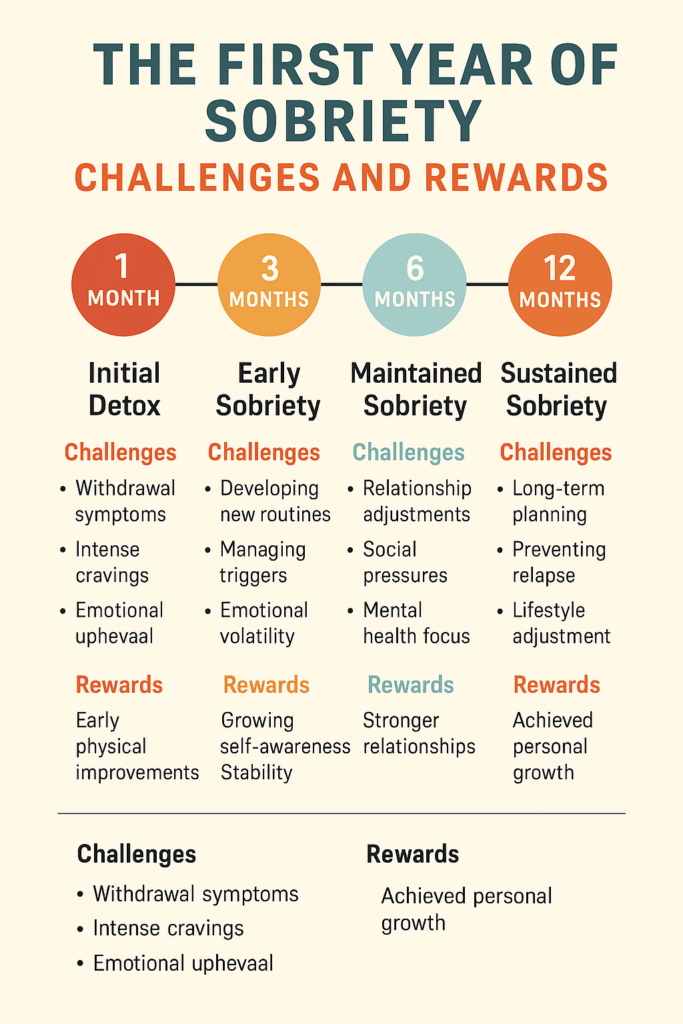
The first year of sobriety is a powerful period of change and growth. After letting go of substances, individuals learn to face emotions, rebuild routines, and navigate life with clarity. Challenges like cravings, triggers, and self-doubt may arise, but so do meaningful rewards — improved health, restored relationships, and renewed self-worth. The first year is not only about staying sober; it is about building a life that supports lasting recovery.
The First Year of Sobriety: Challenges, Rewards, and Staying in Recovery
A Journey of Healing, Growth, and Life Transformation
The first year of sobriety is one of the most transformative — and often the most challenging — periods in recovery. It is a time of physical healing, emotional rediscovery, and rebuilding life without the crutch of substances. During these first twelve months, individuals learn to navigate cravings, relationships, identity shifts, and new routines. While the process can feel overwhelming at times, it also brings powerful rewards: clarity, restored health, renewed purpose, and genuine self-confidence. Understanding the phases of the first sober year helps individuals stay prepared, motivated, and committed to lasting recovery.
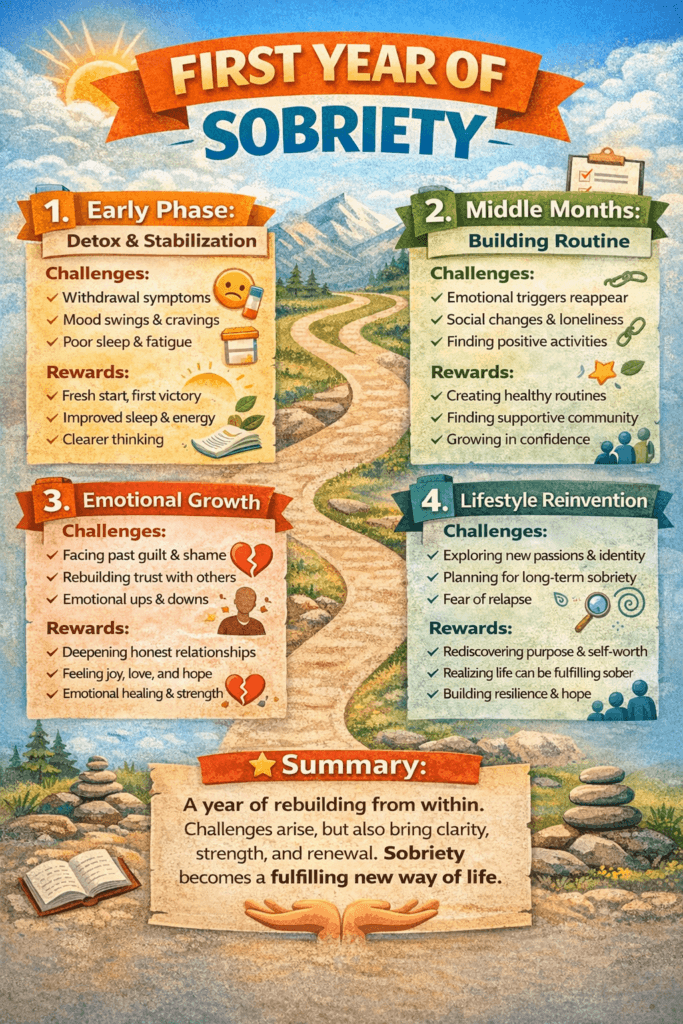
1. Early Phase: Detox and Stabilization
The first weeks of sobriety focus on physical and neurological adjustment. Withdrawal symptoms such as anxiety, fatigue, cravings, mood swings, and sleep disruption are common as the body recalibrates. Emotional ups and downs may feel intense, and motivation can fluctuate.
Yet this phase also brings the first visible victories. Detox represents a clean starting point. Energy slowly returns, thinking becomes clearer, and physical health begins to improve. The “fog” of addiction lifts, allowing hope and self-awareness to reemerge.
2. Middle Months: Building a Sober Routine
As physical stability improves, emotional and lifestyle challenges often surface. Triggers may appear unexpectedly, especially in social situations or stressful moments. Many individuals experience loneliness after separating from substance-centered environments. Learning how to fill time with healthy activities takes patience and experimentation.
At the same time, new routines begin forming. Work, hobbies, exercise, recovery meetings, and self-care practices create structure. Support groups and sober communities offer a sense of belonging and accountability. Confidence grows as individuals prove they can manage daily life without substances.
3. Emotional Growth and Relationship Repair
Recovery brings emotional honesty. Feelings once numbed by substances — guilt, grief, joy, fear — return with new intensity. Repairing broken trust with loved ones may feel slow and vulnerable. Family members may remain cautious, unsure whether the change will last.
But emotional growth is one of the greatest rewards of sobriety. The ability to experience emotions fully becomes a sign of healing. Consistency rebuilds trust. Relationships shift toward authenticity, respect, and deeper connection. Many discover healthier communication skills and stronger self-worth.
4. Lifestyle Reinvention and Long-Term Vision
As sobriety stabilizes, deeper questions arise: Who am I without addiction? What kind of life do I want? Some face “emotional sobriety” challenges — learning to handle stress, responsibility, and identity without chaos or escape. Fear of relapse may still appear during high-pressure moments.
Yet this phase opens a powerful opportunity. Individuals rediscover passions, pursue education or career goals, rebuild financial stability, and develop independence. Gratitude grows. Resilience strengthens. Recovery shifts from a daily struggle into a chosen way of life.
Staying Strong in Sober Recovery
Long-term success in the first year is supported by:
• Staying connected to recovery communities
• Practicing daily self-care routines
• Seeking therapy or counseling when needed
• Building healthy friendships
• Avoiding high-risk environments
• Celebrating progress, not perfection
Sobriety is maintained one decision at a time — not through willpower alone, but through consistent support and self-awareness.
Final Thought
The first year of sobriety is a journey of rebuilding from the inside out. It brings moments of discomfort, self-discovery, and courage — but also clarity, strength, and renewal. With support, patience, and commitment, individuals move from simply staying sober to creating a life filled with purpose, peace, and genuine connection. The first year is not the finish line — it is the foundation of a new life.
Why the First Year of Sobriety Is the Hardest
Understanding the Most Challenging Phase of Recovery
The first year of sobriety is widely recognized as the most difficult stage of addiction recovery. After months or years of substance use, the body, brain, and identity must adapt to life without chemical support. This period involves physical healing, emotional rebalancing, social restructuring, and big psychological change — all happening at once. While later recovery brings stability, the first year demands courage, patience, and constant self-awareness. Understanding why this phase is so challenging helps individuals stay prepared and committed to long-term healing.
1. The Brain Is Relearning Balance
Substances alter dopamine, stress, and reward systems in the brain. When use stops, the brain struggles to naturally regulate mood, motivation, and pleasure. This can lead to anxiety, depression, irritability, and low energy during early sobriety. These symptoms are temporary, but they often feel discouraging in the moment.
Over time, the brain gradually rebuilds a healthy chemical balance — but during the first year, emotional instability is common.
2. Coping Without Substances Is New Territory
Before recovery, substances served as coping tools for stress, trauma, boredom, or emotional pain. Sobriety removes that shortcut. In the first year, individuals must learn new coping skills from scratch — such as communication, mindfulness, emotional regulation, and stress management. This learning curve is uncomfortable but necessary.
3. Identity Shifts Create Uncertainty
Addiction often becomes intertwined with identity, friendships, and daily routines. When substances are removed, individuals may wonder: Who am I now? The first year involves rebuilding self-image, discovering interests, and redefining personal values. This identity transition can feel confusing and emotionally raw.
4. Triggers and Cravings Are Strongest Early On
Environmental cues, social settings, stress, and memories tied to substance use can trigger intense cravings. Because the brain still associates relief with substance use, resisting impulses requires continuous effort. Cravings gradually decrease with time, but early recovery demands vigilance.
5. Relationship Repair Takes Time
Trust damaged during addiction cannot be rebuilt overnight. Family and friends may remain skeptical, setting emotional boundaries until consistency is proven. This can feel discouraging for individuals trying to demonstrate change, yet rebuilding relationships is an essential part of growth in recovery.
6. Life Responsibilities Return Quickly
Bills, work, parenting, and legal or financial consequences of addiction often surface early in recovery. Facing these responsibilities without substances can feel overwhelming. Learning to manage stress while staying sober is a major challenge in the first year.
7. Fear of Relapse Lingers
Even as progress is made, fear of relapse can remain in the background. Many individuals worry that one mistake could undo their progress. This anxiety is normal but requires self-compassion and support to manage.
Why It’s Also the Most Important Year
Despite the difficulty, the first year is the foundation of long-term recovery. It is when new habits form, brain chemistry heals, self-trust grows, and support systems solidify. Every sober day strengthens resilience and confidence.
Final Thought
The first year of sobriety is hard because it demands total transformation — physically, emotionally, socially, and spiritually. Yet within this challenge lies extraordinary growth. With support, structure, patience, and self-kindness, individuals move through the hardest year and emerge stronger, clearer, and ready for lasting recovery. The first year is not just survival — it is rebirth.
Family Support Strategies for the First Year of Sobriety
Helping Loved Ones Stay Strong During Early Recovery
The first year of sobriety is the most fragile and transformative period in recovery. While the individual works to rebuild health, emotions, and identity, family support can make the difference between relapse and resilience. Effective family involvement is not about controlling recovery — it is about creating stability, encouragement, and accountability while respecting independence.
1. Create a Safe and Substance-Free Environment
Early sobriety is highly sensitive to triggers. Families can help by removing alcohol or drugs from the home, avoiding substance-centered gatherings, and supporting sober-friendly activities. A stable environment reduces temptation and communicates commitment to the recovery process.
Goal: Reduce exposure to relapse triggers.
2. Practice Patient, Judgment-Free Communication
Mood swings, anxiety, or emotional withdrawal are common in early recovery. Families should listen without criticism, avoid bringing up past mistakes, and speak with encouragement rather than suspicion. Open dialogue builds trust and emotional safety.
Goal: Strengthen connection and emotional security.
3. Learn About Addiction and Recovery
Understanding withdrawal, cravings, emotional healing, and relapse risk helps families respond with empathy instead of frustration. Attending family education programs, therapy sessions, or support groups such as Al-Anon or SMART Family & Friends provides valuable insight.
Goal: Replace misunderstanding with informed support.
4. Support Healthy Routines
Encourage consistent sleep schedules, balanced meals, exercise, and attendance at recovery meetings or therapy. Offer practical help with transportation, childcare, or scheduling so recovery activities remain accessible.
Goal: Help establish stability and structure.
5. Respect Boundaries and Independence
Recovery requires self-responsibility. Families should avoid micromanaging or policing sobriety. Instead, agree on healthy boundaries, communicate expectations clearly, and allow the individual to own their recovery journey.
Goal: Promote autonomy and accountability.
6. Encourage Connection to Support Networks
Families should support participation in peer groups, therapy, recovery coaching, or sober communities. Recovery thrives with connection, not isolation.
Goal: Strengthen external support systems.
7. Celebrate Progress, Not Perfection
The first year includes setbacks, emotional struggles, and growth spurts. Recognize effort, milestones, and honesty rather than expecting flawless recovery. Positive reinforcement builds confidence.
Goal: Increase motivation and self-worth.
8. Practice Family Self-Care
Supporting recovery can be emotionally draining. Family members need their own support systems, counseling, hobbies, and rest. A healthy family system provides stronger support for recovery.
Goal: Prevent burnout and enable behaviors.
Final Thought
Family support in the first year of sobriety works best when grounded in patience, education, encouragement, and respect. When families create a safe environment, communicate with empathy, and support independence, they help transform early recovery from a fragile stage into a foundation for lifelong sobriety. Recovery is an individual journey — but no one should walk it alone.
Community Support Strategies for the First Year of Sobriety
Building a Network That Sustains Early Recovery
The first year of sobriety is a critical period of healing, adjustment, and identity rebuilding. While personal commitment is essential, community support provides connection, accountability, and access to resources that sustain recovery. Strong community networks reduce isolation, increase motivation, and help individuals navigate challenges that arise during early sobriety.
1. Provide Accessible Recovery Programs
Communities play a key role in ensuring recovery services are easy to find and attend. Offering local 12-step meetings, SMART Recovery groups, Refuge Recovery, Recovery Dharma, and therapy-based programs allows individuals to choose what best fits their beliefs and needs. Online meeting options further improve access for rural or transportation-limited individuals.
Goal: Make recovery support widely available and convenient.
2. Establish Recovery-Friendly Spaces
Recovery cafés, community centers, and sober social clubs offer safe environments where individuals can connect without exposure to substances. These spaces provide sober events, peer mentoring, and educational workshops that strengthen social belonging.
Goal: Replace isolation with healthy community connection.
3. Expand Peer Recovery Coaching
Certified peer recovery support specialists offer guidance from lived experience. They help individuals navigate treatment options, set recovery goals, manage triggers, and access community services. Peer mentorship is especially valuable in early sobriety.
Goal: Provide relatable guidance and accountability.
4. Promote Recovery Education
Community workshops, wellness fairs, and public health campaigns help normalize addiction recovery and reduce stigma. Educational outreach teaches residents about early sobriety challenges, relapse prevention, and available recovery pathways.
Goal: Build understanding and reduce shame around recovery.
5. Improve Access to Mental Health Services
Early sobriety often includes anxiety, depression, or trauma resurfacing. Community clinics, sliding-scale counseling, and telehealth therapy ensure emotional health support is available alongside addiction recovery programs.
Goal: Treat co-occurring mental and emotional needs.
6. Support Employment and Life Stability
Job training programs, recovery-friendly workplaces, and housing assistance reduce financial stress — a major relapse risk in early recovery. Stable housing and employment strengthen confidence and independence.
Goal: Address real-life stressors that impact sobriety.
7. Encourage Family Involvement Programs
Family therapy, education groups, and community-based family support services help loved ones understand recovery and contribute positively to the healing process.
Goal: Strengthen the home environment supporting sobriety.
8. Create Inclusive Recovery Communities
Culturally sensitive programs, LGBTQ+ recovery groups, women’s recovery circles, and trauma-informed services ensure every individual feels safe and represented.
Goal: Ensure recovery spaces feel welcoming to all identities.
Final Thought
Community support transforms the first year of sobriety from a solitary struggle into a shared journey of healing. By offering accessible programs, peer mentorship, education, mental health services, and sober social spaces, communities help individuals stay engaged, hopeful, and committed to long-term recovery. Recovery succeeds best when supported by connection, compassion, and opportunity.
Frequently Asked Questions
Here are some common questions:
1. Why is the first year of sobriety considered the hardest?
The first year involves physical withdrawal, emotional adjustment, and rebuilding daily life without substances. The brain and body are healing, habits are changing, and new coping skills are being learned — all at once. This combination makes early recovery especially challenging, but also deeply transformative.
2. What are common emotional challenges in the first year?
Many people experience mood swings, anxiety, irritability, loneliness, guilt, or shame. These emotions often surface because substances were previously used to numb feelings. Over time, emotional regulation improves with support and healthy coping strategies.
3. How long do cravings last in early sobriety?
Cravings are strongest in the first weeks and months but gradually decrease over time. Triggers such as stress, social situations, or reminders of past use can cause temporary cravings. Learning coping tools and having support systems greatly reduces their intensity.
4. What physical changes occur during the first year?
Common improvements include better sleep, increased energy, healthier appetite, improved memory, and stabilized mood. Some people may experience early-on fatigue or sleep disruption, but overall physical health steadily improves.
5. How important is support during the first year?
Support is essential. Peer recovery groups, therapy, family encouragement, and community programs provide accountability, connection, and guidance. Isolation is a major relapse risk, so building a sober support network is critical.
6. Is relapse common in the first year?
Relapse can occur, but it does not mean failure. Recovery is a learning process. Many people adjust their support plans, strengthen coping strategies, and continue forward after setbacks. Persistence matters more than perfection.
7. How do relationships change in early sobriety?
Some relationships improve as trust is rebuilt, while others may fade if they were centered on substance use. New, healthier relationships often form through recovery communities and sober activities.
8. What activities help maintain sobriety in the first year?
Helpful activities include attending support meetings, exercising, journaling, meditating, engaging in creative hobbies, volunteering, and building structured daily routines. Staying engaged prevents boredom and strengthens self-confidence.
9. When does sobriety start to feel easier?
Most people notice greater emotional stability and confidence after 6–12 months. Coping skills become natural, routines feel normal, and sobriety shifts from effortful to empowering.
10. What is the biggest reward of the first year of sobriety?
The greatest reward is reclaiming control of your life — gaining clarity, self-respect, healthier relationships, and renewed purpose. Many describe it as finally becoming the person they were meant to be.
Conclusion
While the first year of sobriety can feel uncertain at times, it is also a period of profound growth and renewal. Each day sober strengthens confidence, coping skills, and emotional clarity. By staying connected to support systems, practicing self-care, developing healthy routines, and remaining open to learning, individuals create a strong foundation for long-term recovery. Sobriety is not simply the absence of substances — it is the presence of purpose, self-respect, and hope. With patience, commitment, and support, the first year marks the beginning of a lasting, fulfilling sober life.
Video: Year One of Sobriety Life After Addiction