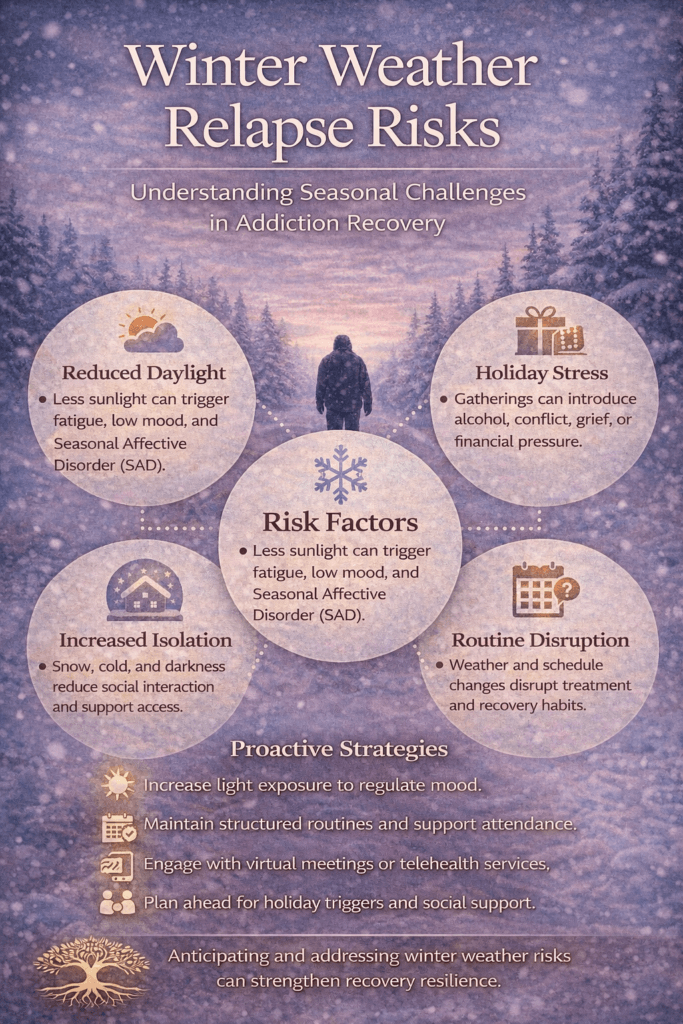
Winter weather relapse risks are often underestimated in addiction recovery planning. Seasonal changes bring shorter daylight hours, colder temperatures, disrupted routines, and increased social isolation—factors that can significantly impact mood, motivation, and coping capacity. For individuals in recovery, these environmental stressors may intensify cravings, depressive symptoms, and emotional vulnerability. Holiday gatherings can add exposure to alcohol, family conflict, or financial pressure. Travel limitations and inclement weather may reduce access to meetings, therapy, or peer support. Because recovery stability relies heavily on structure, connection, and emotional regulation, winter presents predictable challenges that require proactive awareness rather than reactive response. Understanding the seasonal patterns that influence relapse risk allows individuals, families, clinicians, and communities to strengthen protective strategies before vulnerability escalates.
Winter Weather Relapse Risks: Understanding Seasonal Triggers in Addiction Recovery
Winter can be a vulnerable season for individuals in recovery. Colder temperatures, reduced daylight, holiday stress, and social isolation create a cluster of environmental and psychological stressors that increase relapse risk. Understanding how winter conditions influence mood, behavior, and coping patterns allows individuals and families to proactively protect recovery stability.
One of the most significant winter-related risk factors is seasonal mood change. Shorter daylight hours can contribute to low energy, disrupted sleep, and depressive symptoms—sometimes consistent with Seasonal Affective Disorder (SAD). Depression and fatigue can weaken motivation, increase cravings, and reduce engagement in healthy routines. For individuals with a history of substance use, substances may have previously served as a maladaptive coping strategy for emotional discomfort.
Isolation is another major contributor. Snow, ice, and cold temperatures often reduce social interaction. Missed meetings, canceled therapy appointments, or limited outdoor activity can shrink recovery support networks. Programs such as Alcoholics Anonymous and Narcotics Anonymous emphasize consistent fellowship; decreased attendance during the winter months can unintentionally weaken accountability.
Holiday-related stress also increases vulnerability. Family gatherings may trigger unresolved conflict, grief, financial strain, or exposure to alcohol. Anniversary dates and year-end reflection can intensify emotional sensitivity.
Physiologically, winter can disrupt circadian rhythms. Reduced sunlight alters the regulation of melatonin and serotonin, affecting mood stability. Sleep disturbance alone is a well-documented relapse risk factor.
Protective strategies include maintaining structured routines, scheduling regular meeting attendance (in-person or virtual), using light therapy for mood stabilization when appropriate, prioritizing exercise, and strengthening chosen family connections. Telehealth counseling, peer support apps, and community recovery centers provide continuity when weather limits mobility.
Clinically, winter is a season for proactive relapse prevention planning. Increased check-ins, medication monitoring, and reinforcement of coping skills can buffer seasonal stress.
Recovery does not pause for the weather—but preparedness can make a significant difference. By anticipating winter-specific triggers and strengthening support systems in advance, individuals can maintain resilience and continue progressing toward long-term sobriety.
Self-Management Strategies for Winter Weather Relapse Risks
Winter brings unique challenges to addiction recovery. Reduced daylight, colder temperatures, disrupted routines, and holiday-related stress can intensify cravings and emotional vulnerability. Self-management during winter requires proactive structure, mood regulation, and intentional connection.
The first strategy is routine stabilization. Shorter days often disrupt sleep cycles and daily habits. Establish consistent wake times, scheduled meals, exercise periods, and bedtime routines. Predictable structure reduces decision fatigue and emotional fluctuation—two common relapse triggers. Even when the weather limits outdoor activity, indoor movement, such as stretching, bodyweight workouts, or walking in enclosed spaces, helps regulate mood and reduce stress hormones.
Light exposure management is another essential strategy. Reduced sunlight can affect serotonin levels and contribute to depressive symptoms. Spending time outdoors during daylight hours, opening blinds early, or using clinically appropriate light therapy devices can improve mood regulation. Monitoring sleep hygiene—limiting screen time before bed and maintaining a dark, quiet sleep environment—also helps protect emotional stability.
Cognitive reframing is equally important. Winter can amplify negative self-talk, such as “I feel stuck,” or “Nothing is improving.” Practicing structured journaling or cognitive behavioral techniques helps identify distorted thinking and replace it with realistic, recovery-focused statements. Programs like Alcoholics Anonymous emphasize daily reflection and inventory as protective habits during emotional lows.
Social accountability must also be intentionally maintained. Snow or icy conditions may reduce in-person meeting attendance, so scheduling virtual support sessions, phone check-ins, or online meetings through organizations such as Narcotics Anonymous helps preserve connection. Isolation is a powerful catalyst for relapse; connection must be planned rather than assumed.
Emotional regulation skills should be actively practiced. Deep breathing, guided meditation, progressive muscle relaxation, and gratitude exercises reduce physiological stress responses heightened by seasonal changes. Planning for holiday triggers—including family gatherings or anniversary dates—by identifying exit strategies and sober supports, strengthens resilience.
Finally, proactive relapse prevention planning is critical. Increase therapy frequency if needed, review coping strategies weekly, and track cravings using a journal or app. Winter should not be reactive—it should be anticipated.
Recovery requires adaptability. By implementing structured self-management strategies tailored to seasonal stressors, individuals can navigate winter weather risks with stability, confidence, and sustained sobriety.
Family Support Strategies for Winter Weather Relapse Risks
Winter can quietly increase relapse vulnerability. Shorter daylight hours, holiday stress, financial strain, and reduced social interaction can intensify cravings and mood instability. Families play a critical protective role during this season. Strategic, structured support during the winter months can significantly reduce the risk of relapse.
The first family strategy is proactive communication. Rather than waiting for warning signs, initiate regular check-ins. Ask open-ended questions such as, “How are you feeling about the holidays?” or “What feels most stressful right now?” This normalizes emotional discussion and reduces shame. Avoid interrogation- or suspicion-based conversations, as they can increase defensiveness.
Second, maintain routine and structure within the household. Winter often disrupts schedules due to weather delays or school closures. Families can help stabilize routines by maintaining consistent meal times, shared activities, and predictable expectations. Stability reduces anxiety and reinforces recovery habits.
Third, reduce exposure to high-risk environments. Holiday gatherings frequently involve alcohol or triggering dynamics. Families can create sober-friendly alternatives—hosting substance-free events, limiting alcohol at home, or scheduling gatherings earlier in the day. Clear boundaries protect recovery without isolating the individual.
Encouraging continued connection to recovery communities is also essential. Support attendance at meetings, whether in person or online. Programs such as Alcoholics Anonymous and Narcotics Anonymous offer vital fellowship during seasons when isolation increases. Offer transportation during bad weather or help set up technology for virtual meetings.
Families should also monitor mood changes associated with reduced sunlight. Watch for signs of depression, increased irritability, sleep disruption, or social withdrawal. If symptoms escalate, encourage professional support promptly rather than waiting for crisis-level deterioration.
Emotional regulation within the family system is equally important. Holidays may revive past conflict or grief. Seeking family counseling or attending support groups can help loved ones manage their own stress so they respond calmly rather than reactively.
Finally, reinforce hope and progress. Winter can feel stagnant, but recovery milestones continue. Celebrate sobriety anniversaries, acknowledge daily efforts, and highlight strengths.
Winter does not have to become a relapse season. With intentional communication, structured routines, environmental awareness, and continued community engagement, families can provide steady warmth and stability—even in the coldest months.
Community Resource Strategies for Winter Weather Relapse Risks
Winter presents predictable relapse vulnerabilities—reduced daylight, transportation barriers, holiday stress, financial strain, and increased isolation. While individual coping and family support are critical, community-level strategies provide the structural stability needed to sustain recovery during seasonal stress.
One of the most important community strategies is maintaining access to care despite weather disruptions. Telehealth counseling, virtual intensive outpatient programs, and remote medication management appointments prevent treatment gaps during snowstorms or hazardous road conditions. Clinics and recovery programs that proactively communicate weather policies and virtual alternatives reduce missed appointments and disengagement.
Peer-support continuity is equally vital. Organizations such as Alcoholics Anonymous and Narcotics Anonymous often increase virtual meeting availability during the winter months. Community recovery centers can expand hybrid formats to ensure individuals maintain accountability even when travel is unsafe.
Transportation support services also play a protective role. Community nonprofits, sober living homes, and case management programs can coordinate ride services, bus vouchers, or outreach check-ins for individuals at high relapse risk. When weather limits mobility, proactive outreach prevents isolation from becoming a trigger.
Seasonal mood monitoring initiatives are another valuable strategy. Primary care clinics and behavioral health providers can increase screening for depression and seasonal affective symptoms during winter. Early identification allows timely medication adjustments, therapy intensification, or referral to light therapy resources.
Community resource centers can also provide practical assistance, including food banks, heating assistance programs, employment services, and holiday support initiatives. Financial strain is a common winter stressor; reducing socioeconomic pressure indirectly protects recovery stability.
Public education campaigns during winter can reinforce relapse prevention messaging. Social media outreach, newsletters, and community bulletin announcements can remind individuals of available resources, crisis lines, and virtual recovery options.
For healthcare leaders and policymakers, winter should be viewed as a predictable high-risk season requiring increased coordination. Integrated communication between clinics, peer programs, shelters, and emergency services strengthens the recovery safety net.
Relapse risk increases when systems fragment. Community resource strategies ensure continuity, accessibility, and connection—turning winter from a season of vulnerability into a season of structured support and resilience.
Frequently Asked Questions
Here are some common questions:
1. Why does winter increase relapse risk?
Winter brings shorter daylight hours, colder temperatures, and increased isolation. These factors can worsen mood, disrupt routines, and limit access to support systems. For individuals in recovery, emotional stress and routine disruption are well-known relapse triggers.
2. Is Seasonal Affective Disorder (SAD) linked to relapse?
Yes. Reduced sunlight can affect serotonin and melatonin levels, contributing to depressive symptoms, fatigue, and low motivation. Depression is a major relapse risk factor, especially for individuals who previously used substances to cope with mood changes.
3. How do holidays contribute to relapse risk?
Holiday gatherings often involve alcohol, financial stress, family conflict, or grief. Exposure to substances or emotionally charged situations can increase cravings. Planning ahead and setting boundaries reduces vulnerability.
4. Does isolation during winter matter that much?
Absolutely. Recovery thrives in connection. Snow, icy roads, and cold temperatures may reduce attendance at meetings or therapy sessions. Maintaining connection—through virtual meetings or phone check-ins—is essential.
Programs like Alcoholics Anonymous and Narcotics Anonymous offer virtual options to support consistent engagement.
5. What are the early warning signs of winter-related relapse risk?
- Increased sleep disruption
- Social withdrawal
- Irritability or low mood
- Skipping meetings or appointments
- Romanticizing past substance use
Recognizing these signs early allows for intervention before relapse.
6. How can individuals reduce winter relapse risk?
Maintain structured daily routines, increase light exposure, stay physically active, schedule regular support contacts, and proactively plan for holiday triggers. Consistency is protective.
7. Should therapy frequency increase in winter?
In some cases, yes. If mood symptoms worsen or cravings increase, temporary increases in counseling frequency can provide added stabilization and accountability.
8. How can families help during the winter months?
Families can maintain stable routines, reduce exposure to substances at gatherings, encourage attendance at meetings, and monitor mood changes. Open communication reduces shame and isolation.
9. Are virtual recovery meetings effective?
Yes. While in-person connection is valuable, virtual meetings maintain accountability and support during weather disruptions. Continuity matters more than format.
10. Is winter relapse inevitable?
No. Winter presents predictable stressors—but relapse is not inevitable. With proactive planning, structured support, and emotional awareness, recovery can remain stable through seasonal changes.
Conclusion
Winter does not cause relapse—but it can amplify underlying risk factors. Reduced sunlight, isolation, holiday stress, and routine disruption interact with biological and psychological vulnerabilities that already exist in recovery. The key to navigating this season successfully lies in anticipation and structured planning. Maintaining consistent routines, preserving connection to recovery communities, increasing clinical monitoring when needed, and strengthening family and community supports can transform winter from a high-risk period into a season of resilience. When seasonal stressors are acknowledged and intentionally addressed, individuals can navigate the colder months with stability, confidence, and sustained commitment to long-term recovery.
Video: Why Addicts Struggle Most in Winter #AddictionRecovery #SeasonalTriggers #WinterRecovery