Relapse is something most people in recovery think about at some point. While the first few months after quitting a substance, like alcohol or drugs, can be the most intense, a surprising number of relapses actually happen after six months or longer. I’ve seen this pattern play out over and over, and there are some pretty clear reasons why this window deserves attention. If you or someone you care about is trying to beat addiction, understanding why this stage is tricky can make a big difference in staying on track.
What Happens During the First 6 Months of Recovery?
Those first six months are usually a rollercoaster. Physical cravings are at their peak in the first few weeks, but there’s also a strong sense of motivation in early recovery. For a while, everything is new. Support groups, new routines, and regular check-ins with a sponsor help form a solid safety net. The brain is still repairing itself, and life may feel overwhelming, but most people are extra careful about their triggers at this stage.
Routines like going to meetings, journaling, and checking in with friends become the norm. The focus is on survival, one day at a time. Looking back, many of the folks I’ve known in recovery say the early months feel almost like being in a protective bubble. It makes sense: in this phase, a lot of people are getting used to stepping away from old social circles and activities that were linked to substance use. It’s all about learning new habits, making new friends who support a healthier lifestyle, and slowly rebuilding trust with family and old friends.
So, Why Do Relapses Spike After Half a Year?
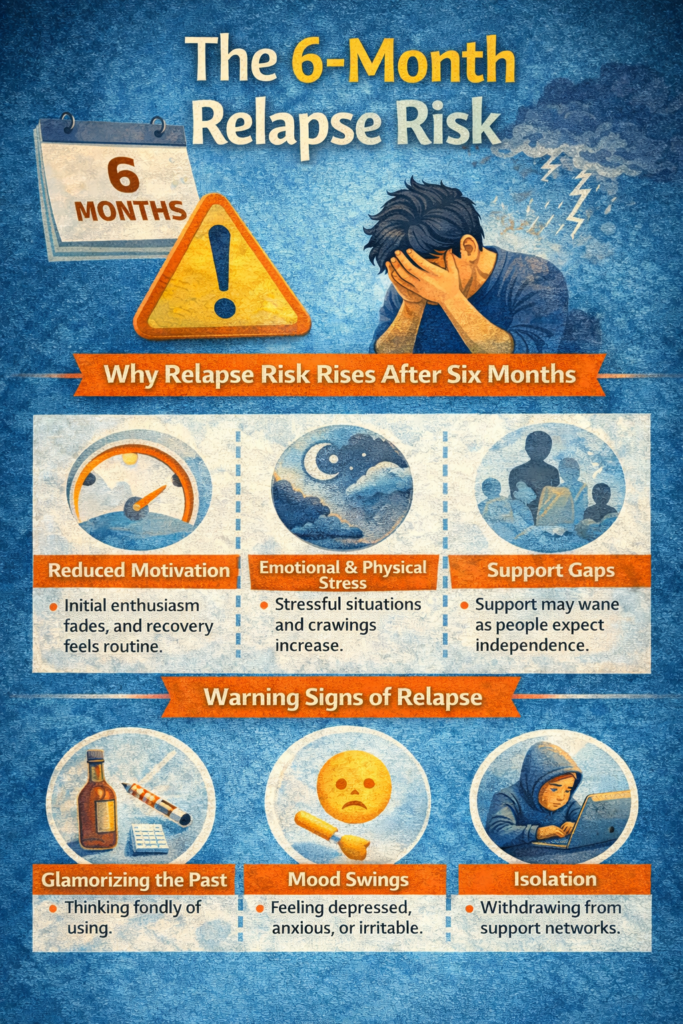
Once you hit that six-month milestone, a lot of things start to switch up. Relapse rates actually go up during this timeframe. While some people assume that making it past the first few months is the hardest part, the reality is a little messier. Here’s a look at why the road gets bumpy after half a year:
- Complacency Sets In: With the biggest cravings behind them, people sometimes let their guard down. Skipping a meeting here or there may not seem like a big deal until a new stressor shows up.
- Old Patterns Start Creeping Back: After months of avoiding triggers, it’s easy to forget why those boundaries felt so important. Sometimes, friends or environments that were “off-limits” at first become tempting.
- Emotional Recovery Takes Longer Than Physical Recovery: By six months, the body has often started to heal, but emotional patterns and coping skills might lag behind. That means even if someone feels physically strong, emotionally, things might still feel tough or uneven.
- The “Pink Cloud” Fades: In early recovery, many experience a rush of hope and energy (often called the “pink cloud”). This boost can fade, leaving people feeling flat or burnt out.
A lot of people notice that their thoughts start to change around the halfway point. Perhaps the urgency that drove daily meetings diminishes, or old friends reach out after not hearing from you for a while. The everyday decisions—like where to hang out, which events to attend, even who you text on the weekend—start to have a bigger impact.
Common Triggers After 6 Months
It’s super important to recognize that triggers change over time. What felt dangerous in the early weeks might not be the same six or eight months in. Here are some triggers that tend to pop up after the first half-year:
- Stress from Life Events: Work changes, breakups, and family drama can feel more intense after the initial “protected” period ends. These life events are normal for everyone, but they can hit harder when you’re trying to stay sober.
- Overconfidence: Feeling like addiction is “beaten” or under control can lead to risky decisions. Suddenly, it feels safe to hang out in old places or connect with people who use.
- Boredom: Once things settle down, a sense of monotony can replace the intense focus of early recovery. It’s easy to forget that downtime used to be filled in unhealthy ways.
- Anniversaries or Social Events: Holidays, birthdays, or “recovery anniversaries” sometimes stir up old feelings or the urge to “celebrate” with a drink or drug.
Also, don’t underestimate the power of nostalgia. At this stage, people may long for the “good old days,” remembering only the fun moments. These kinds of memories can create unexpected cravings, even when everything else seems stable.
How Recovery Progress Changes Over Time
Recovery isn’t a straight line, and those post-six-month challenges are pretty unique. Here’s a rough breakdown of what tends to switch up once the half-year mark is reached:
- Support Systems May Shrink: In the first half-year, there’s often a lot of outside accountability—friends, family, counselors check in often. Over time, people may assume things are fine and back off.
- Internal Motivation Gets Tested: There’s a shift from external push (such as fear of withdrawal) to internal drive. Learning to stay motivated when no one is watching is a big part of long-term recovery.
- Old Habits Try to Sneak Back: Without keeping an eye out, subtle habits, negative thinking, or risky behaviors can reappear almost unnoticed.
At this point, it’s important to look at personal goals and routines. Self-discipline matters more than ever. A lot of folks find themselves drifting away from their routines because daily life gets busier or feels familiar, which is why new strategies are especially useful during this time.
What Research Says About Relapse Timing
Studies show an interesting pattern: relapse risk actually spikes between six months and one year after starting recovery. A 2015 review from the National Institutes of Health explains that the brain’s adjustment to sobriety occurs in phases. While some physical cravings disappear, emotional triggers don’t line up on the same schedule.
Experts agree that the brain’s reward system, a part linked to triggers and cravings, is still recalibrating well beyond the first half year. The support systems that seem “safe” at three months might not be enough after six or eight months. This mismatch creates the perfect storm for relapse if support and vigilance aren’t improved as needs change. Understanding this pattern can help people and loved ones approach the six-month mark with fresh eyes and more realistic expectations.
Practical Steps to Stay on Track After Six Months
- Switch Up Your Routine: Monotony can make boredom dangerous. Trying new hobbies, joining a different meeting, or challenging yourself with something creative can help. Take a cooking class, check out a book club, or volunteer—these switches spark new connections and boost motivation.
- Revamp Your Support Network: Reach out to your sponsor, reconnect with mentors, or join online communities if your usual support system is getting too familiar or too thin. Sometimes, adding a new therapist or joining a group outside your comfort zone helps shake things up in a good way.
- Keep Checking in Emotionally: Therapy, journaling, or mindfulness work are great ways to stay aware of feelings before they build up and become overwhelming. Making time every week to process emotions, rather than bottling them up, is crucial.
- Set New Goals: Pick goals not related to sobriety, like fitness, volunteering, or learning something new. This keeps motivation up and creates new sources of pride that don’t tie directly to addiction. Achieving something outside of sobriety strengthens self-worth.
- Celebrate Progress Wisely: Mark sober anniversaries with something positive—a nice meal, a small gift to yourself, or a day trip —rather than dipping back into old habits. Rewarding milestones in a healthy way can reinforce good choices and make the adventure feel more rewarding.
Staying proactive in these ways keeps recovery fresh and helps prevent it from feeling stale or repetitive. Remember, small changes made thoughtfully can have a lasting impact.
Pitfalls to Watch Out For
- Isolation: Pulling back from friends or support groups can make relapse more likely. If you catch yourself making excuses to skip meetings or gatherings, it’s time to check in.
- Minimizing Past Struggles: Glossing over how tough things were before can lead to romanticizing drug or alcohol use. Staying honest about the past is key, even when things feel less intense.
- Letting Smaller Habits Slide: Sometimes it starts with little things (not getting enough sleep, skipping meals, or letting stress build up). These small changes can snowball into big problems.
- Ignoring Personal Health: Forgetting to exercise, skipping time outdoors, or missing doctor appointments can slowly sap your energy and outlook, potentially making old habits seem more appealing. Staying healthy supports a strong mind and better coping skills.
The Role of New Challenges
Life doesn’t slow down while you’re recovering. Big life transitions like changing jobs, moving, or relationship changes often happen months into recovery, not right away. It’s no surprise that many relapses are triggered by “normal” life drama rather than only drug-focused cravings.
Learning how to face new challenges with different tools is a major part of long-term recovery. Support groups like SMART Recovery emphasize future-proofing recovery by focusing on problem-solving, goal-setting, and learning new coping skills. Discovering creative outlets, mindfulness exercises, and physical activities can all provide relief. For more ideas, check out SAMHSA resources for additional strategies. Being willing to check in, share struggles openly, and ask for help when you need it are key skills along the way.
Frequently Asked Questions
Question: Is it normal to still have cravings after six months?
Answer: Absolutely. While cravings usually drop in intensity, they can still pop up, sometimes triggered by stress, memories, or even dreams. Being ready for these moments is part of the process; developing ways to ride out cravings, like reaching out for support or using distraction techniques, can help.
Question: What if people around me think I’m “over it” by now?
Answer: It’s pretty common for friends and family to assume you’re totally fine by six months. Have honest conversations about how recovery is ongoing, and don’t hesitate to ask for support when you need it. Try to spell out your needs clearly so your support system can respond better.
Question: How do I handle setbacks without completely losing motivation?
Answer: Setbacks happen, even after months of progress. The key is reaching out quickly. Tell a trusted friend, sponsor, or therapist. Remember, one rough patch doesn’t erase all your progress, and getting support right away can help keep things from spiraling.
Building Lasting Recovery Skills
Staying sober after the initial high of early recovery passes means building life skills that stick. Things like communication, stress management, honest self-reflection, and real problem-solving aren’t just for people with addiction issues—they’re solid tools for anyone who wants to keep growing. Strengthening these areas not only supports recovery but also boosts overall wellbeing.
- Communication: Learning how to share honestly about struggles, without shame or fear, keeps relapse risk lower and forges deeper connections with others.
- Routine: Healthy routines around sleep, food, and balance make it easier to ride out tough days and prevent minor slip-ups from turning into bigger issues.
- Flexibility: If something isn’t working, like a support group or coping strategy, trying something new can keep things fresh and build resilience.
- Self-Compassion: Being gentle with yourself during setbacks allows you to bounce back rather than spiral into guilt or shame. Learning to talk kindly to yourself is a lifelong skill that boosts recovery and mental health alike.
Even after a year or longer, regular check-ins with yourself, staying connected with others in recovery, and being open about your adventure help make sobriety sustainable for the long haul. Bottom line: staying sober for six months is a major win, but it’s normal for challenges to change as you move forward. Staying aware, adaptable, and willing to reach out makes every milestone more meaningful.
Video: 6 Months In and Now What? The Critical Phase #SobrietySupport #HealingJourney