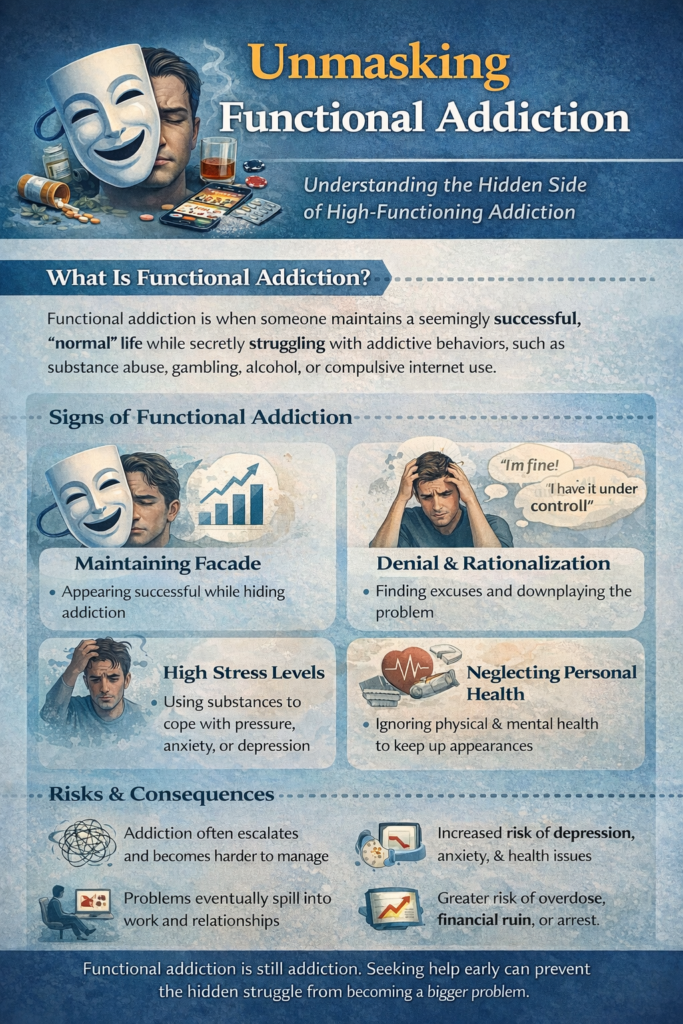
If you’ve ever noticed someone keeping up with their job, relationships, and daily responsibilities while still struggling privately with a powerful craving, whether that’s for alcohol, drugs, gambling, or even technology, then you’ve seen what functional addiction looks like. Functional addiction is often misunderstood, and it doesn’t always fit the stereotype most of us see in the media. I want to unpack what’s really going on when someone is “high-functioning” yet still dealing with addiction, why it flies under the radar, and how to spot the signs even when everything on the surface seems fine.
What Does “Functional Addiction” Mean?
Functional addiction is when a person continues to meet most of life’s big expectations, like holding down a job, caring for family, and managing social obligations, despite regularly using a substance or engaging in a behavior that is quietly taking a toll. The common myth is that addiction always means a total loss of control, but many people live for years hiding their struggle while “functioning” just enough to avoid suspicion. From the outside, things might even look normal. Privately, there could be a cycle of craving, guilt, and continued use or behavior that never really stops.
This isn’t just about alcohol or recreational drugs. Functional addiction can crop up with gambling, prescription medications, nicotine, overeating, and even things like social media or work. While the causes aren’t always the same, the underlying pattern is pretty similar: there’s a regular habit that brings short-term relief or pleasure but, over time, begins to create negative effects emotionally, physically, or relationally.
How Functional Addiction Really Works
The brain’s reward system is always seeking out things that make us feel good or help us manage stress. With functional addiction, the rewards are strong enough that a person develops a pattern: use, relief, guilt, control, and repeat. What sets functional addiction apart is that the person manages to keep up appearances, sometimes even fooling themselves that they’re not addicted because they haven’t hit “rock bottom.”
The cycle can look like this:
- Use or Behavior: The person regularly turns to a substance (like alcohol, stimulants, painkillers) or action (like online betting or gaming) to cope with emotions or pressure.
- Short-Term Relief: There’s a temporary improvement in mood, energy, or confidence.
- Guilt or Shame: Afterward, feelings of regret or a need to hide kick in.
- ‘Proving’ Control: They might pull back for a while, or overcompensate at work or home to mask the problem.
- Return to Use: The stress cycle or cravings build up again, and the behavior repeats.
This cycle can go on for years. Sometimes, nobody notices until there’s a big disruption, such as sudden health issues or trouble at work. The gradual toll is often hidden behind a competent exterior.
The Hidden Signs of Functional Addiction
Recognizing functional addiction can be tricky because so much of the evidence is private. A few signs that might pop up include:
- Secretive use or hiding behavior (like sneaking drinks or medications, or gambling in private)
- Excusing or justifying the habit (“I work hard, so I deserve this”)
- Shifting routines to protect time for the habit
- Becoming irritable, anxious, or restless if not able to engage in the behavior
- Neglecting self-care or showing physical signs like tiredness, weight changes, or headaches
- Downplaying the problem when questioned
The person might have a track record of success professionally or seem involved in family matters, so friends or colleagues might miss the signs. This actually makes functional addiction risky, because it lets the problem last much longer without anyone getting help. The habit can persist in the shadows, leaving a person to struggle alone.
The Differences Between Functional and Non-Functional Addiction
Understanding the difference helps when figuring out which support or treatment could work best. Functional addiction means daily life keeps going, at least on the surface. With non-functional addiction, life starts unraveling more noticeably. Jobs might be lost, relationships can fall apart, or there could be legal or financial trouble. Functional addiction is harder to spot, but the risks can be just as serious down the road.
It’s also worth pointing out that these are not black-and-white categories. Functional addiction can turn into non-functional addiction over time if the habit gets stronger and starts affecting important parts of life. Early intervention makes a big difference, so recognizing the shift, however subtle, is crucial for long-term health.
Why Some People Hide Their Struggles So Well
There’s a mix of reasons someone can keep up appearances:
- High Responsibility Roles: High-Responsibility Roles: People with demanding careers or caregiving roles are accustomed
- Stigma and Fear: The fear of being seen as “weak” or unreliable can keep people from sharing their struggles. Society sometimes sends the message that showing vulnerability is a flaw.
- Strong Support Networks: Sometimes friends, family, or partners unknowingly enable addiction by covering for the person or ignoring the problem because it doesn’t seem “bad enough.” Having trusted people who want to maintain harmony can sometimes encourage secrecy rather than solutions.
Society often rewards high performance, so few people ask what’s going on behind the scenes. This makes it super important for everyone, including employers, friends, and loved ones, to pay attention to less obvious clues and offer support before there’s a real fallout. Compassion and non-judgmental listening are key components.
What Are the Most Common Functional Addictions?
Certain substances and behaviors are more likely to fly under the radar:
- Alcohol: Many people who meet the definition of alcohol use disorder still keep their jobs and family lives intact, especially if there’s a “drinking culture.” Regular use can be normalized, making it harder to spot when it becomes harmful.
- Prescription Stimulants or Painkillers: Especially common for professionals who use medications to boost performance or deal with chronic pain while still handling responsibilities. These medications can seem “necessary,” but dependence can build over time.
- Work or Exercise Addiction: Sometimes overworking or overtraining can actually win praise, but it masks personal struggles or health problems. Recognition from others can reinforce the pattern.
- Digital Technology: Regular but hidden online gambling, excessive gaming, or endless social scrolling can slip under the radar because screens are now everywhere. Habits around devices can be explained away as “normal.”
- Food: Emotional or binge eating sometimes goes unnoticed, especially if there aren’t obvious weight changes. Food-related behaviors can be very private, even from close loved ones.
If you’re curious about how these are officially defined, the Diagnostic and Statistical Manual of Mental Disorders (DSM-5) and the World Health Organization both have guides for healthcare pros, but the day-to-day impact is often what brings people to realize they need a change. Even functional addictions eventually create enough discomfort to spark self-reflection.
Steps to Breaking the Cycle
Functional addiction doesn’t have a one-size-fits-all fix, but there are approaches that can really help. Here are some steps that make a strong starting point:
- Recognize the patterns: Writing down when, why, and how much you use or engage in your habit is simple but super important for raising awareness. Looking at your own notes can make denial harder.
- Check in honestly: Ask yourself what you might be hiding from others—and from yourself. Even if things “look fine,” it’s about feeling good for real, not just maintaining appearances. Self-honesty is key.
- Talk to trusted people: Being open with someone you trust, whether it’s a friend, therapist, or sponsor, helps break the secrecy and shame that keeps functional addiction going. You don’t have to go through it alone.
- Set realistic goals: For some, cutting back can work as a first step. For others, seeking professional help or a support program is needed to disrupt the routine and build new habits. There’s no shame in asking for help—support is out there.
- Keep track of progress: Celebrating small wins and being patient with setbacks can build real confidence for lasting change. Progress often comes in waves, not straight lines, and every effort counts.
Professional help isn’t just for those who’ve hit bottom. Therapists trained in addiction, recovery coaches, and some group programs (like SMART Recovery or Alcoholics Anonymous) can all be resources for functioning individuals who want to stop the cycle before bigger problems start. Reaching out early can mean a faster, smoother recovery journey.
Frequently Asked Questions
How can I tell if I have a functional addiction?
If you notice strong cravings, spend a lot of energy hiding a behavior, or feel anxious or guilty about your use—even if life seems to be going well—there’s a chance you’re dealing with functional addiction. Tracking patterns and being honest about your emotions are good first steps.
Can functional addiction be just as serious as other types?
Absolutely. Even if life looks put-together for now, the long-term effects on health, relationships, and self-esteem can be really serious. Sometimes the delay in getting help means more damage accumulates before it is noticed. Functional addiction deserves as much attention as any other kind.
Is it possible to stop a functional addiction without anyone knowing?
Some people do make changes quietly, but reaching out for support, whether professionally or through trusted friends, tends to have better results. Dealing with the secrecy part is really important for making lasting changes. You don’t have to handle everything alone.
What treatments work best for functional addiction?
Treatment options depend on the specific addiction. Behavioral therapy, support groups, counseling, or sometimes medication (prescribed by a professional) can all play a role. The most important part is tailoring the solution to fit you, rather than hoping willpower alone will solve the problem. Flexibility and honesty help build lasting recovery.
Taking Functional Addiction Seriously
Being highly capable or successful on the outside doesn’t protect anyone from the struggles of addiction on the inside. Spotting functional addiction and bringing it into the open is really important; there’s no need to wait for life to fall apart before reaching out for help or making changes. Long-term well-being is about living honestly and feeling good in all parts of life, not just looking good on the surface. If you or someone you know seems to be keeping everything together but is struggling privately, remember—help and understanding are always within reach, and new, healthier patterns are possible with the right encouragement and support.
Video: Functioning Fine While Falling Apart Inside #SilentStruggle #Recovery