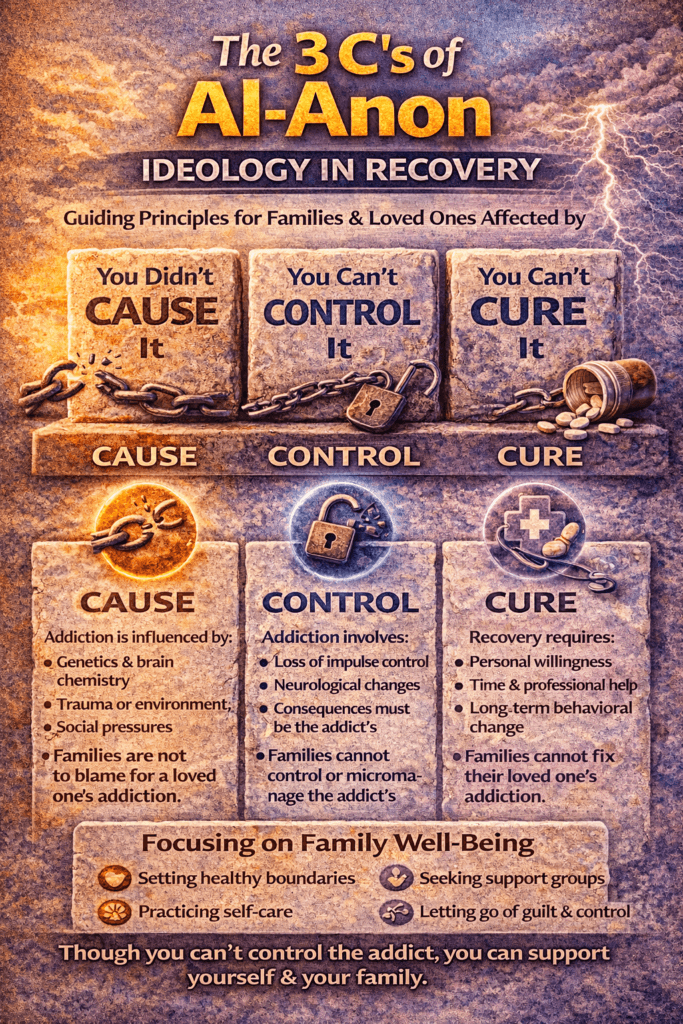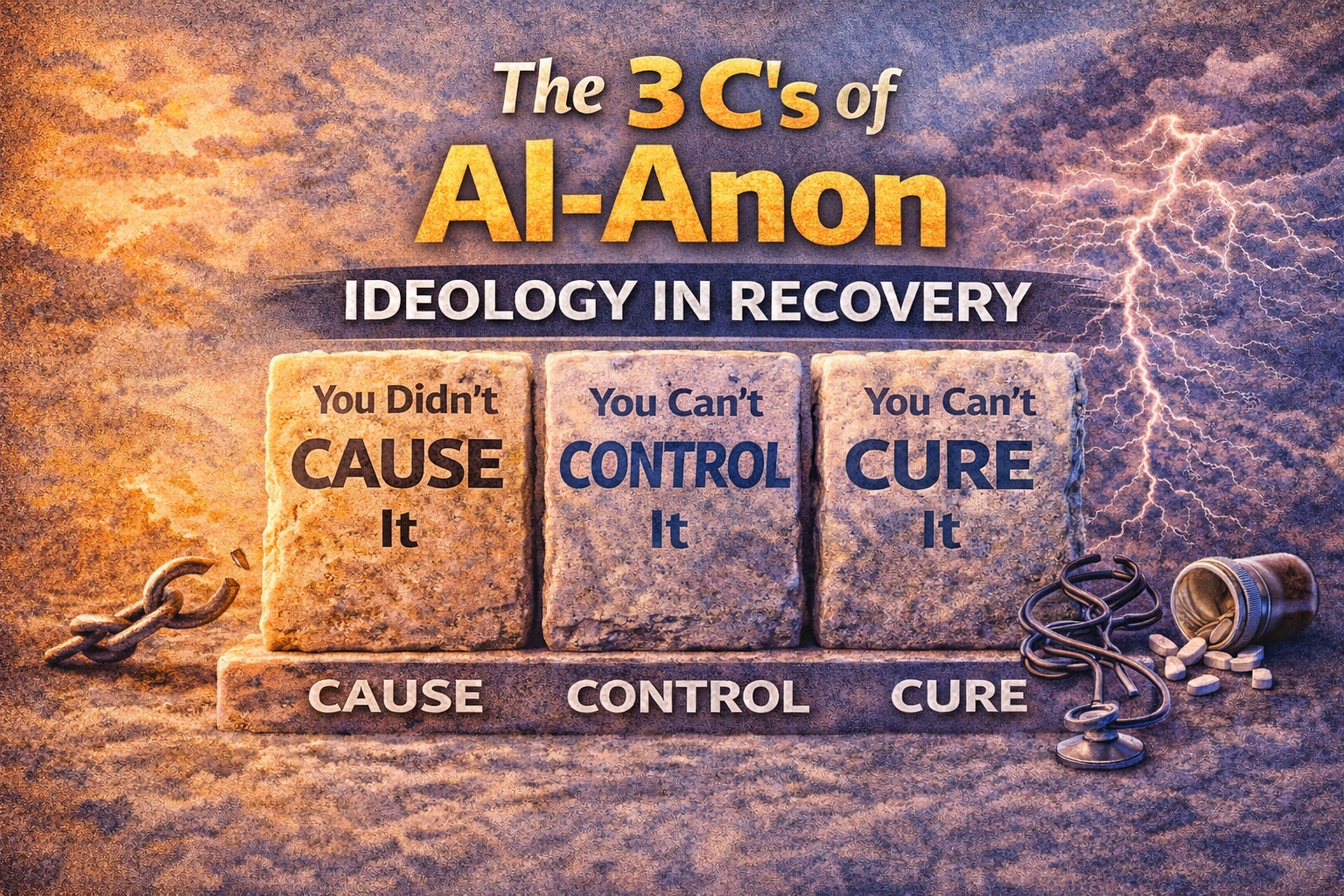
The 3 C’s of Al-Anon Family Groups—You didn’t Cause it, You can’t Control it, and You can’t Cure it—form a foundational philosophy for families and loved ones affected by addiction. These principles were developed to help individuals detach from misplaced guilt, excessive responsibility, and the emotional exhaustion that often accompanies supporting someone with a substance use disorder. In the context of recovery, the 3 C’s shift the focus from managing another person’s behavior to fostering personal emotional health, healthy boundaries, and self-awareness. By understanding and applying these principles, families begin their own healing process alongside their loved one’s recovery journey.
Understanding the 3 C’s of Al-Anon: A Guide for Families Affected by Addiction
When a loved one struggles with addiction, family members often experience confusion, guilt, frustration, and emotional exhaustion. In response to these challenges, Al-Anon Family Groups developed a simple yet powerful framework known as the 3 C’s. These principles help families detach from blame and regain emotional stability while supporting their own recovery.
The 3 C’s are:
- You didn’t Cause it.
- You can’t Control it.
- You can’t Cure it.
Though simple in wording, these statements carry profound psychological and emotional significance.
1. You Didn’t Cause It
Family members often internalize responsibility for a loved one’s addiction. Parents may wonder if they were too strict or too lenient. Partners may question whether they failed emotionally. Children may believe they contributed to the problem.
The first C reminds families that addiction is a complex condition influenced by:
- Genetics
- Brain chemistry
- Environmental factors
- Trauma
- Social influences
Addiction is not the result of one argument, parenting style, or relationship conflict. Removing self-blame reduces guilt and allows family members to focus on healthy coping rather than shame.
2. You Can’t Control It
Many families attempt to manage a loved one’s substance use by:
- Monitoring behavior
- Issuing ultimatums
- Searching belongings
- Covering up consequences
- Providing financial rescue
While these actions are often motivated by love and fear, they can lead to emotional burnout and codependent patterns. Addiction involves neurological changes that impair impulse control and decision-making. External control attempts rarely produce lasting change.
Accepting the second C helps families shift from controlling behaviors to setting healthy boundaries.
3. You Can’t Cure It
Families often feel responsible for “fixing” the problem. They may believe that if they say the right thing, provide enough support, or make enough sacrifices, their loved one will recover.
However, recovery requires:
- Personal willingness
- Professional treatment
- Behavioral change
- Long-term commitment
Family support can encourage recovery, but it cannot cure addiction. Recognizing this reduces unrealistic expectations and prevents emotional exhaustion.
Why the 3 C’s Matter
The 3 C’s protect families from:
- Chronic guilt
- Anxiety
- Emotional overfunctioning
- Enabling behaviors
- Codependency
They also promote healthier responses, such as:
- Setting boundaries
- Practicing self-care
- Seeking support
- Focusing on personal well-being
Al-Anon emphasizes that family members deserve recovery too—even if their loved one is not ready for change.
Detachment with Love
A key concept connected to the 3 C’s is “detachment with love.” This means:
- Caring about the person
- Refusing to participate in destructive behaviors
- Allowing natural consequences
- Maintaining emotional stability
Detachment is not abandonment; it is protecting one’s mental health while acknowledging limits.
The Psychological Impact of the 3 C’s
From a mental health perspective, the 3 C’s:
- Reduce cognitive distortions (e.g., “It’s my fault”)
- Decrease anxiety related to control
- Increase emotional regulation
- Encourage personal accountability
By accepting these principles, families shift from reactive survival mode to intentional coping.
Conclusion
The 3 C’s of Al-Anon—You didn’t Cause it, You can’t Control it, and You can’t Cure it—provide a foundational framework for families affected by addiction. These principles release individuals from misplaced responsibility and empower them to focus on their own emotional health.
Addiction is a complex condition that requires personal commitment and professional support. While families cannot cause, control, or cure addiction, they can choose healthy boundaries, compassionate detachment, and their own path toward healing.
Self-Management Strategies for Implementing the 3 C’s of Al-Anon in Recovery
The 3 C’s of Al-Anon Family Groups—You didn’t Cause it, You can’t Control it, and You can’t Cure it—provide a foundational framework for families affected by addiction. While these principles are simple in wording, implementing them consistently requires intentional self-management. Emotional habits such as guilt, over-responsibility, and control often develop over time, and unlearning them takes practice.
This article explores practical self-management strategies that help individuals apply the 3 C’s in daily life while supporting long-term emotional recovery.
Understanding the Psychological Shift
The 3 C’s require a shift from:
- Blame → Acceptance
- Control → Boundaries
- Fixing → Detachment with love
Self-management means regulating thoughts, emotions, and behaviors in alignment with these principles rather than reacting impulsively to fear or anxiety.
Implementing the First C: You Didn’t Cause It
1. Challenge Guilt-Based Thinking
Many family members internalize responsibility for a loved one’s addiction. To counter this:
- Identify guilt-driven thoughts (“If I had been stricter…”).
- Replace them with evidence-based reasoning (“Addiction is influenced by multiple biological and environmental factors.”).
- Use journaling to track recurring self-blame patterns.
Cognitive restructuring reduces emotional burden and increases clarity.
2. Practice Self-Compassion
Self-compassion includes:
- Acknowledging emotional pain without judgment
- Recognizing that addiction is complex and not caused by one person
- Treating yourself with the same understanding you would offer a friend
Self-compassion strengthens resilience and reduces chronic anxiety.
Implementing the Second C: You Can’t Control It
3. Develop Boundary-Setting Skills
Healthy boundaries protect emotional and physical well-being. Examples include:
- Refusing to provide money for substances
- Not covering up legal or financial consequences
- Setting clear household expectations
Boundaries are not punishments; they are protective structures.
4. Monitor Control Behaviors
Self-management involves recognizing control-driven actions such as:
- Constantly checking on the person
- Searching belongings
- Repeatedly lecturing
- Threatening consequences without follow-through
Ask: Is this action rooted in fear or in healthy boundary-setting?
Implementing the Third C: You Can’t Cure It
5. Release the “Fixer” Role
Families often adopt overfunctioning roles, believing they can solve the problem through effort alone. Self-management includes:
- Accepting that recovery requires personal willingness
- Encouraging professional treatment rather than replacing it
- Letting natural consequences occur
This reduces burnout and resentment.
6. Focus on Personal Growth
Redirect energy toward:
- Individual therapy or counseling
- Support group attendance
- Physical health
- Career or personal goals
- Stress management practices
Recovery is not only for the person with addiction, but it also applies to family members.
Emotional Regulation Techniques for Applying the 3 C’s
7. Pause Before Reacting
When triggered:
- Take slow, deep breaths
- Wait before responding
- Reflect on whether your response aligns with the 3 C’s
Impulse control supports consistent boundary enforcement.
8. Practice Detachment with Love
Detachment means:
- Caring without rescuing
- Supporting without enabling
- Allowing responsibility to remain with the individual
It reduces emotional volatility while maintaining compassion.
Preventing Relapse into Codependent Patterns
Implementing the 3 C’s is ongoing. Common setbacks include:
- Rescuing during crises
- Over-monitoring behavior
- Internalizing relapse as personal failure
- Ignoring personal needs
Regular self-reflection helps prevent reverting to unhealthy coping mechanisms.
Long-Term Benefits of Implementing the 3 C’s
Consistent self-management leads to:
- Reduced anxiety
- Improved emotional regulation
- Stronger boundaries
- Increased self-respect
- Healthier relationships
The 3 C’s do not eliminate pain, but they reduce unnecessary emotional suffering.
Conclusion
Implementing the 3 C’s of Al-Anon requires intentional self-management rooted in awareness, emotional regulation, and boundary-setting. Accepting that you did not cause the addiction, cannot control it, and cannot cure it frees you from misplaced responsibility. It allows you to redirect energy toward your own healing and stability.
Recovery is not only about the individual struggling with substance use—it is also about the family learning healthier ways to cope, respond, and live. By consistently applying the 3 C’s through structured self-management strategies, families create a foundation for resilience, clarity, and long-term emotional well-being.
Family Support Strategies for Implementing the 3 C’s of Al-Anon in Recovery
When addiction affects a loved one, families often experience confusion, fear, anger, and deep emotional exhaustion. In response to these challenges, the 3 C’s of Al-Anon Family Groups—You didn’t Cause it, You can’t Control it, and You can’t Cure it—offer a structured framework for emotional recovery. While these principles are simple in wording, applying them within a family system requires intentional strategies, clear communication, and consistent boundaries.
This article outlines practical family support strategies for implementing the 3 C’s in a healthy and sustainable way.
Understanding the Family Dynamic in Addiction
Addiction affects the entire family system. Common patterns may include:
- Over-responsibility
- Enabling behaviors
- Chronic conflict
- Emotional withdrawal
- Codependency
The 3 C’s help shift families from reactive survival behaviors to intentional, boundary-based support.
Implementing the First C: You Didn’t Cause It
1. Educate the Family About Addiction
Understanding addiction as a complex condition influenced by genetics, brain chemistry, trauma, and environment reduces misplaced blame. Family education can occur through:
- Attending support meetings
- Reading evidence-based materials
- Participating in family therapy
Education replaces guilt with understanding.
2. Eliminate Blame-Based Communication
Family members should avoid statements such as:
- “If I had done better, this wouldn’t have happened.”
- “You’re doing this to hurt us.”
Instead, promote language rooted in facts and emotional responsibility. Reducing blame lowers defensiveness and increases productive dialogue.
Implementing the Second C: You Can’t Control It
3. Establish Clear, Consistent Boundaries
Healthy boundaries might include:
- No financial support for substance use
- No covering up legal or employment consequences
- Clear expectations for respectful behavior
Boundaries should be communicated calmly and enforced consistently. They protect the family’s well-being while encouraging accountability.
4. Avoid Monitoring and Surveillance Behaviors
Constantly checking phones, searching belongings, or issuing threats can increase tension and erode trust. Instead of control, families should focus on:
- Expressing concerns respectfully
- Encouraging treatment
- Maintaining household rules
Control attempts often escalate conflict without changing behavior.
Implementing the Third C: You Can’t Cure It
5. Encourage Professional Treatment
Families can support recovery by:
- Providing information about treatment options
- Offering transportation to appointments
- Supporting therapy participation
However, families must recognize that motivation and commitment to recovery must come from the individual.
6. Allow Natural Consequences
Shielding a loved one from consequences may delay recovery. Allowing legal, financial, or relational consequences to occur—when safe to do so—can reinforce accountability.
This does not mean abandoning support; it means refusing to participate in behaviors that sustain the addiction.
Strengthening the Family System
7. Participate in Family Therapy
Family therapy improves communication, addresses resentment, and rebuilds trust. It helps family members understand their roles and develop healthier interaction patterns.
8. Practice Detachment with Love
Detachment means:
- Caring without rescuing
- Supporting without enabling
- Maintaining emotional stability
It allows families to remain compassionate while protecting their mental health.
9. Prioritize Self-Care for Family Members
Family members often neglect their own needs. Effective support includes:
- Attending personal counseling
- Engaging in stress management practices
- Maintaining hobbies and social connections
- Setting aside time for rest
A stable family member is more effective than an emotionally depleted one.
Preventing Relapse into Unhealthy Patterns
Even with good intentions, families may revert to:
- Overfunctioning
- Guilt-driven rescuing
- Emotional outbursts
- Ultimatums without follow-through
Regular self-reflection and continued engagement in support groups reinforce the 3 C’s over time.
Long-Term Impact of Implementing the 3 C’s
Families who consistently apply the 3 C’s often experience:
- Reduced anxiety
- Improved communication
- Stronger boundaries
- Decreased conflict
- Greater emotional resilience
Most importantly, they shift from trying to fix addiction to fostering a healthier environment for everyone involved.
Conclusion
The 3 C’s of Al-Anon provide a powerful framework for families navigating addiction. By recognizing that they did not cause the addiction, cannot control it, and cannot cure it, families release misplaced responsibility and redirect their energy toward healthy boundaries and personal growth.
Implementing these principles requires consistent communication, emotional regulation, and self-care. While families cannot guarantee recovery for their loved one, they can create a stable, supportive environment that encourages accountability and long-term healing.
Community Resource Strategies to Implement the 3 C’s of Al-Anon Ideology in Recovery
Addiction impacts not only individuals and families but also entire communities. The 3 C’s of Al-Anon Family Groups—You didn’t Cause it, You can’t Control it, and You can’t Cure it—provide a foundational philosophy for families navigating a loved one’s substance use. While these principles are often practiced on an individual or family level, communities also play a critical role in reinforcing and supporting this ideology.
Community resource strategies can help families internalize the 3 C’s, reduce stigma, and promote healthier coping mechanisms across systems of care.
Why Community Involvement Matters
Families affected by addiction often experience:
- Isolation
- Shame
- Emotional burnout
- Financial stress
- Confusion about available services
Community-based programs create structured environments where families can gain education, emotional support, and practical tools that align with the 3 C’s philosophy.
Communities shift the focus from blame and control to empowerment and accountability.
Implementing the First C: You Didn’t Cause It
1. Public Education and Awareness Programs
Community workshops and seminars can educate families about:
- The neurobiology of addiction
- Genetic and environmental risk factors
- Trauma-informed perspectives
- The chronic nature of substance use disorders
When families understand that addiction is multifactorial, they are less likely to internalize guilt. Educational initiatives reduce stigma and reinforce that addiction is not caused by one person’s actions.
2. Family Support Groups
Community-based support groups provide shared experiences that normalize feelings of guilt and confusion. Hearing similar stories helps families recognize that they are not responsible for causing addiction.
Peer support reduces self-blame and strengthens emotional resilience.
Implementing the Second C: You Can’t Control It
3. Boundary-Setting Workshops
Community mental health centers and nonprofit organizations can offer training on:
- Healthy communication
- Assertiveness skills
- Conflict resolution
- Boundary development
These workshops teach families how to replace control-based behaviors with structured boundaries that protect their well-being.
4. Legal and Financial Counseling Resources
When families attempt to “fix” problems by rescuing their loved one from consequences, control patterns can intensify. Access to legal guidance, financial counseling, and case management services helps families navigate crises without overstepping healthy limits.
Professional guidance reduces reactive decision-making.
Implementing the Third C: You Can’t Cure It
5. Clear Referral Pathways to Treatment
Communities should maintain coordinated systems that connect families to:
- Detox programs
- Outpatient counseling
- Inpatient treatment centers
- Medication-Assisted Treatment (MAT) providers
- Recovery coaching services
This reinforces that professional treatment—not family intervention alone—is necessary for recovery.
6. Integrated Behavioral Health Services
Community clinics offering co-occurring disorder treatment address both addiction and mental health conditions simultaneously. Families learn that recovery is a clinical process requiring structured care, not solely emotional support.
Strengthening Community-Based Recovery Networks
7. Faith-Based and Cultural Organizations
Culturally responsive programs and faith-based initiatives can reinforce the 3 C’s while respecting diverse values and belief systems. These organizations often provide:
- Emotional support
- Spiritual counseling
- Community accountability
- Volunteer opportunities
Community belonging reduces isolation and promotes healthy detachment.
8. Recovery Community Centers
Recovery centers provide ongoing resources such as:
- Peer mentoring
- Life skills classes
- Employment assistance
- Wellness programs
These services shift responsibility for recovery back to the individual while offering structured support.
Reducing Stigma at the Community Level
Stigma often fuels the belief that families caused the addiction or should be able to fix it. Community-wide campaigns that frame addiction as a public health issue rather than a moral failing align directly with the 3 C’s ideology.
Reducing stigma encourages early help-seeking and healthier coping patterns.
Long-Term Impact of Community Implementation
When communities actively promote the 3 C’s philosophy, families experience:
- Reduced guilt
- Decreased codependency
- Improved boundary-setting
- Greater access to professional resources
- Increased emotional resilience
Communities that reinforce shared responsibility—rather than misplaced blame—create sustainable recovery ecosystems.
Conclusion
The 3 C’s of Al-Anon provide essential guidance for families affected by addiction, but their implementation is strengthened through community resource strategies. Public education, structured support groups, boundary-setting workshops, professional treatment referrals, and stigma reduction efforts collectively reinforce that families did not cause the addiction, cannot control it, and cannot cure it.
Recovery is most effective when supported by coordinated community systems that promote accountability, professional care, and emotional well-being. By embedding the 3 C’s ideology into community-level initiatives, we foster environments where families and individuals alike can pursue healing with clarity, structure, and support.
Frequently Asked Questions
Here are some common questions:
1. What are the 3 C’s of Al-Anon?
Answer:
The 3 C’s are foundational principles of Al-Anon Family Groups:
- You didn’t Cause it.
- You can’t Control it.
- You can’t Cure it.
These statements help family members detach from guilt, over-responsibility, and attempts to fix a loved one’s addiction.
2. Why were the 3 C’s created?
Answer:
The 3 C’s were developed to address the emotional burden families carry when a loved one struggles with addiction. Many family members internalize blame, attempt to control behavior, or feel responsible for curing the problem. The 3 C’s provide psychological clarity and emotional relief.
3. Does “You didn’t cause it” mean families have no influence at all?
Answer:
No. While family environments can influence behavior, addiction is a complex condition involving genetics, neurobiology, trauma, and environmental factors. The principle emphasizes that no single person is solely responsible for causing addiction.
4. What does “You can’t control it” mean in practical terms?
Answer:
It means that monitoring, threatening, rescuing, or pleading cannot force someone into recovery. Addiction involves changes in brain function that impair impulse control and decision-making. Families can set boundaries, but they cannot control another person’s choices.
5. What does “You can’t cure it” mean?
Answer:
Addiction recovery requires personal willingness and professional treatment. Family members can offer support, but they cannot cure addiction through effort, sacrifice, or persuasion alone.
6. How do the 3 C’s reduce codependency?
Answer:
Codependency often involves overfunctioning, rescuing, and deriving self-worth from fixing others. The 3 C’s shift responsibility back to the individual struggling with addiction, encouraging families to focus on their own emotional health instead of controlling outcomes.
7. Are the 3 C’s about giving up on the person?
Answer:
No. The 3 C’s promote detachment with love, not abandonment. Families are encouraged to care while maintaining boundaries and avoiding enabling behaviors.
8. How do the 3 C’s support mental health?
Answer:
They reduce:
- Chronic guilt
- Anxiety about control
- Emotional exhaustion
- Resentment
By releasing unrealistic responsibility, families improve emotional regulation and psychological stability.
9. Can the 3 C’s apply even if the person is in recovery?
Answer:
Yes. Even during recovery, families cannot control or cure relapse risk. The principles remain relevant throughout the recovery process.
10. How do families implement the 3 C’s daily?
Answer:
Practical implementation includes:
- Setting consistent boundaries
- Avoiding rescue behaviors
- Encouraging professional treatment
- Practicing self-care
- Attending support groups
Consistency is key.
11. What is “detachment with love”?
Answer:
Detachment with love means:
- Caring without rescuing
- Supporting without enabling
- Allowing natural consequences
- Protecting one’s own emotional well-being
It aligns directly with the 3 C’s philosophy.
12. Do the 3 C’s remove accountability from the person with addiction?
Answer:
No. In fact, they increase accountability. By stepping back from attempts to control, families allow the individual to face the natural consequences of their actions, which can motivate change.
13. Are the 3 C’s only for substance addiction?
Answer:
While originally developed for families affected by alcoholism, the principles apply broadly to other substance use disorders and behavioral addictions.
14. Why are the 3 C’s important in long-term recovery?
Answer:
Long-term recovery involves ongoing responsibility on the individual’s part. The 3 C’s prevent families from returning to unhealthy patterns during stress or relapse. They promote sustainable, healthy relationship dynamics.
15. Can someone practice the 3 C’s without attending Al-Anon?
Answer:
Yes, but structured support through Al-Anon meetings or similar groups often strengthens understanding and consistent application of these principles.
Conclusion
In recovery, the 3 C’s serve as both protection and empowerment for families navigating the challenges of addiction. Accepting that they did not cause the addiction, cannot control it, and cannot cure it allows individuals to release guilt and redirect their energy toward constructive support and self-care. Rather than attempting to fix the problem, families learn to establish boundaries, practice detachment with compassion, and encourage professional treatment. Ultimately, the 3 C’s reinforce a healthier dynamic within the family system—one grounded in accountability, emotional balance, and sustainable recovery for everyone involved.
Video: The 3 C’s That Can Change Your Life #AlAnon #CodependencyRecovery