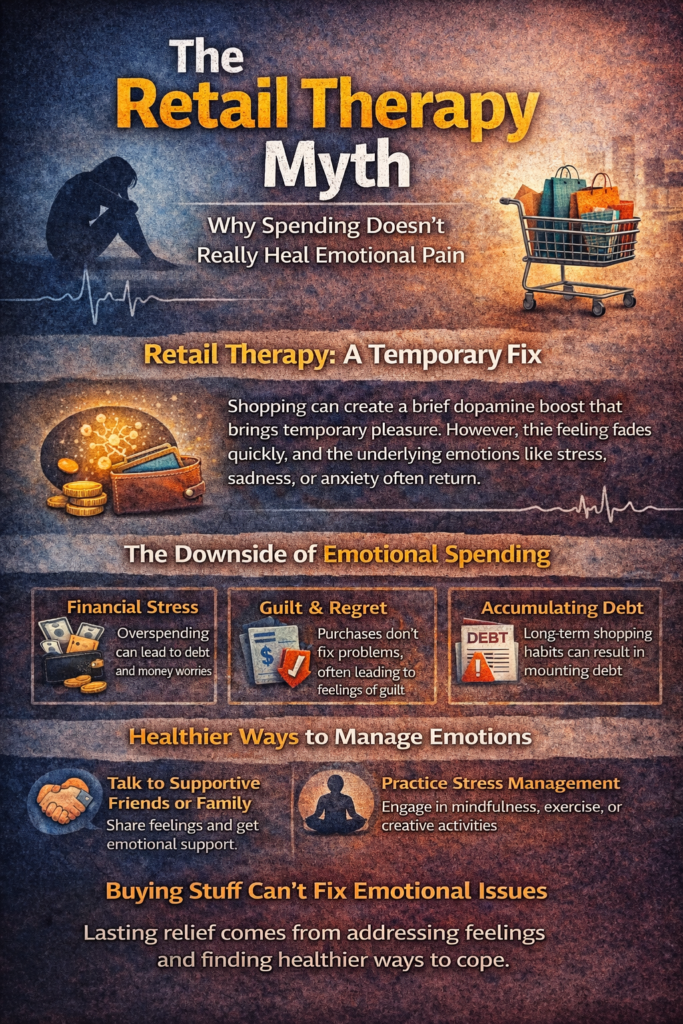
The concept of retail therapy has become a widely used phrase to describe shopping as a way to lift one’s mood or cope with emotional stress. Many people believe that purchasing new items can provide comfort during moments of sadness, anxiety, boredom, or frustration. The excitement of choosing and buying something new can create a temporary sense of pleasure and control, often making individuals feel better in the moment. However, this emotional boost is usually short-lived because shopping does not address the deeper causes of stress or emotional discomfort. Once the initial excitement fades, the underlying feelings—such as worry, loneliness, or sadness—often return. In some situations, repeatedly using spending as a coping strategy can lead to financial strain, feelings of guilt, and patterns of emotional spending that become difficult to control. Over time, these habits may replace healthier coping mechanisms and create additional stress related to money or debt. Understanding the retail therapy myth helps individuals recognize that while shopping may offer a temporary distraction, lasting emotional well-being comes from addressing the underlying emotions and developing healthier ways to manage stress and difficult feelings.
The Retail Therapy Myth: Why Spending Doesn’t Really Heal Emotional Pain
Many people are familiar with the phrase “retail therapy.” It suggests that shopping can lift your mood, reduce stress, and provide comfort during difficult times. While buying something new may create a temporary sense of relief or excitement, the idea that spending money can truly solve emotional problems is largely a myth. In reality, relying on shopping as a way to cope with emotions can sometimes lead to financial stress, guilt, and unhealthy behavioral patterns.
Why Shopping Feels Good at First
Shopping often produces a short-term emotional boost. When people purchase something new, the brain releases dopamine, a chemical associated with pleasure and reward. This reaction can create feelings of excitement, satisfaction, or temporary escape from stress.
For a brief moment, buying something may distract from feelings such as sadness, anxiety, loneliness, or frustration. However, these emotional effects usually fade quickly once the excitement of the purchase wears off.
The Cycle of Emotional Spending
When shopping becomes a regular coping mechanism, individuals may enter a cycle of emotional spending. This pattern often follows a predictable sequence:
- A person experiences stress or emotional discomfort.
- They turn to shopping for temporary relief.
- The purchase provides a short-term mood boost.
- Financial stress or guilt may follow.
- Emotional discomfort returns, restarting the cycle.
Over time, this pattern can lead to financial problems and reinforce unhealthy coping habits.
When Retail Therapy Becomes Problematic
While occasional shopping for enjoyment is normal, problems arise when spending becomes a way to manage difficult emotions. Warning signs of problematic emotional spending may include:
- Buying items impulsively to cope with stress or sadness
- Feeling regret or guilt after purchases
- Hiding purchases or financial problems from others
- Accumulating debt related to emotional spending
- Relying on shopping to improve mood repeatedly
In some cases, these behaviors can develop into compulsive buying, a pattern that resembles other behavioral addictions.
Healthier Ways to Cope with Emotions
Instead of relying on retail therapy, healthier coping strategies can help address emotional challenges more effectively. These strategies might include:
- Talking with supportive friends or family
- Practicing stress-management techniques such as mindfulness or exercise
- Engaging in hobbies or creative activities
- Seeking professional counseling when needed
- Building routines that support emotional well-being
These approaches address the underlying emotions rather than temporarily masking them.
Rethinking the Idea of Retail Therapy
The myth of retail therapy persists because shopping can provide a quick emotional lift. However, long-term emotional well-being comes from developing healthy coping skills and addressing the causes of stress directly.
By recognizing the difference between temporary relief and genuine emotional healing, individuals can make more mindful spending decisions and build healthier ways to manage life’s challenges.
Self-Management and the Retail Therapy Myth: Learning Healthier Ways to Cope
The idea of “retail therapy” suggests that shopping can improve mood, reduce stress, and help people cope with emotional challenges. While buying something new may provide a short burst of excitement, this feeling is often temporary. Over time, relying on shopping to manage emotions can lead to financial stress, guilt, and unhealthy habits. Understanding the retail therapy myth through self-management strategies can help individuals recognize emotional spending patterns and develop healthier ways to respond to stress.
Understanding Emotional Spending
Many people turn to shopping during moments of emotional discomfort, such as sadness, boredom, loneliness, or anxiety. The act of purchasing something new can temporarily distract from these feelings and create a sense of control or reward.
However, the emotional relief that comes from shopping is usually short-lived. Once the excitement fades, the original feelings often return, sometimes accompanied by regret over unnecessary spending. Recognizing this cycle is an important step in managing emotional spending.
What Is Self-Management?
Self-management involves the ability to monitor thoughts, emotions, and behaviors and make intentional choices that support long-term well-being. In the context of emotional spending, self-management helps individuals become aware of triggers that lead to unnecessary purchases and develop strategies to respond differently.
By practicing self-management, individuals learn to pause, reflect, and choose healthier ways to cope rather than relying on impulsive spending.
Identifying Spending Triggers
One key self-management strategy is identifying the emotional triggers that lead to shopping. These triggers might include:
- Stress from work or school
- Feelings of loneliness or boredom
- Social pressure or comparison with others
- Emotional distress, such as sadness or frustration
Keeping track of when and why spending urges occur can help individuals better understand their behavior and make more mindful decisions.
Developing Healthier Coping Strategies
Instead of turning to retail therapy, self-management encourages alternative coping strategies to support emotional well-being. These might include:
- Engaging in physical activity or exercise
- Practicing mindfulness or relaxation techniques
- Talking with supportive friends or family members
- Pursuing hobbies or creative activities
- Setting financial goals and budgeting plans
These strategies address emotional needs without creating financial stress.
Building Financial Awareness
Self-management also includes becoming more aware of personal financial habits. Creating a budget, tracking expenses, and setting limits for discretionary spending can help individuals maintain better control over their finances.
This awareness reduces impulsive decisions and encourages thoughtful spending choices.
Moving Beyond the Retail Therapy Myth
The belief that shopping can solve emotional problems is a powerful cultural message, but lasting emotional well-being requires deeper coping skills. By practicing self-management, individuals can recognize emotional spending patterns and replace them with healthier responses.
Understanding the retail therapy myth does not mean eliminating enjoyment from shopping altogether. Instead, it encourages mindful spending, in which purchases are made intentionally rather than in response to emotional stress. Through awareness and self-management, people can build both emotional resilience and financial stability.
Family Support in Understanding the Retail Therapy Myth
The idea of “retail therapy” is widely accepted in popular culture, suggesting that shopping can improve mood and help people cope with stress or emotional discomfort. While buying something new may create a temporary sense of excitement or relief, it rarely addresses the deeper emotional issues behind the behavior. In some cases, relying on shopping as a coping mechanism can lead to financial strain and unhealthy habits. Families play an important role in helping individuals understand the retail therapy myth and develop healthier ways to manage emotions.
Recognizing Emotional Spending
Family members are often among the first to notice patterns of emotional spending. This may include frequent impulse purchases, shopping after stressful events, or using buying as a way to escape difficult feelings. Recognizing these patterns early can help families gently guide conversations about the reasons behind the behavior.
Approaching the topic with empathy rather than criticism is essential. Emotional spending is often connected to stress, loneliness, or other emotional struggles, and supportive conversations can help individuals feel understood rather than judged.
Encouraging Open and Supportive Communication
Healthy communication within families can make it easier to address emotional spending. When individuals feel comfortable discussing stress, financial concerns, or emotional challenges, they are less likely to rely on shopping as an escape.
Families can encourage open dialogue by listening actively, avoiding blame, and focusing on understanding the underlying emotions that may lead to spending habits.
Promoting Healthy Coping Strategies
Families can also help by encouraging healthier ways to manage stress and emotions. Instead of turning to shopping, individuals can benefit from activities that provide meaningful relief and emotional support.
Examples of healthier coping strategies include:
- Spending time together through shared activities
- Encouraging hobbies, exercise, or creative outlets
- Supporting stress-management practices such as mindfulness or relaxation techniques
- Seeking professional counseling when needed
These alternatives help address emotional needs without creating financial pressure.
Building Financial Awareness Together
Families can also promote financial awareness and responsible spending habits. Conversations about budgeting, financial goals, and mindful spending can help individuals become more aware of their relationship with money.
Working together on financial planning can strengthen accountability and create a supportive environment for making healthier financial decisions.
Creating a Supportive Environment
When families provide encouragement, patience, and understanding, they help create an environment where individuals can develop healthier coping habits. Rather than focusing solely on shopping behavior, families can help address the emotional factors that may drive it.
Understanding the retail therapy myth allows families to shift the focus from temporary emotional relief to long-term well-being. With support, communication, and healthy coping strategies, families can help loved ones build stronger emotional resilience and healthier financial habits.
Community Resources for Understanding the Retail Therapy Myth
The idea of “retail therapy”—the belief that shopping can improve mood and relieve stress—has become a common cultural message. While purchasing something new can provide a brief emotional lift, it rarely addresses the deeper causes of stress, sadness, or anxiety. Over time, relying on shopping as a coping mechanism can lead to financial strain and emotional frustration. Community resources play an important role in helping individuals understand the retail therapy myth and develop healthier ways to manage emotions and spending habits.
Raising Awareness Through Education
Community education programs help individuals distinguish between normal shopping behavior and emotional spending. Workshops, seminars, and public awareness campaigns offered through community centers, schools, and local organizations can teach people about the psychological factors that influence spending habits.
These educational efforts often focus on topics such as financial literacy, stress management, and emotional well-being. By increasing awareness, communities empower individuals to make more informed and mindful decisions about their spending.
Access to Financial Counseling
Financial counseling services offered through community organizations, nonprofit groups, and local financial institutions can help individuals better understand their relationship with money. Counselors can assist with budgeting, debt management, and goal setting, helping people build healthier financial habits.
For individuals who frequently turn to shopping as a coping mechanism, financial counseling can also provide strategies to reduce impulsive spending and develop greater financial stability.
Mental Health and Emotional Support Services
Emotional spending is often connected to underlying stress, anxiety, loneliness, or depression. Community mental health services can help individuals address these underlying issues in healthier ways. Access to counseling, support groups, and wellness programs allows individuals to explore emotional challenges without relying on shopping for relief.
When emotional needs are addressed through supportive services, the urge to use spending as a coping strategy may decrease.
Peer Support and Community Programs
Peer support groups and community wellness programs create opportunities for individuals to connect with others who may be experiencing similar challenges. Sharing experiences and coping strategies can help normalize discussions about emotional spending and reduce feelings of isolation.
Community programs that promote healthy activities—such as exercise classes, art programs, volunteer opportunities, and social groups—also provide meaningful alternatives to shopping for emotional fulfillment.
Promoting Healthy Financial Habits
Communities that prioritize financial education and support can help individuals develop long-term financial resilience. Local libraries, nonprofit organizations, and community centers often offer resources such as budgeting workshops, financial planning courses, and educational materials.
These resources encourage responsible spending habits and help individuals make thoughtful financial decisions rather than impulsive purchases driven by emotional stress.
Building Supportive Communities
Understanding the retail therapy myth requires recognizing that emotional well-being and financial health are closely connected. Communities that provide accessible resources, education, and emotional support can help individuals develop healthier coping strategies.
By promoting awareness, offering financial and mental health services, and creating supportive social environments, communities play a vital role in helping people move beyond the myth of retail therapy and toward more sustainable approaches to emotional and financial well-being.
Frequently Asked Questions
Here are some common questions:
1. What is the retail therapy myth?
The retail therapy myth is the belief that shopping can effectively relieve emotional distress such as stress, sadness, or anxiety. While buying something new may create temporary pleasure, it usually does not address the underlying emotional issues.
2. Why does shopping sometimes make people feel better?
Shopping can temporarily improve mood because purchasing something new can trigger the release of dopamine, a brain chemical associated with pleasure and reward. However, this effect is typically short-lived.
3. What is emotional spending?
Emotional spending occurs when people buy things to cope with their feelings rather than because they need the item. People may shop when they feel bored, lonely, stressed, or upset.
4. Why is retail therapy considered a myth?
Retail therapy is considered a myth because the relief it provides is temporary and often followed by negative consequences, such as financial stress, regret, or guilt. It does not solve the emotional problems that triggered the spending.
5. Can emotional spending become a problem?
Yes. When shopping becomes a frequent coping strategy, it can lead to compulsive buying, debt, and financial instability. It may also reinforce unhealthy emotional habits.
6. What are the signs of emotional spending?
Common signs include:
- Shopping when feeling stressed, sad, or lonely
- Buying items impulsively without planning
- Feeling regret or guilt after purchases
- Hiding purchases or financial problems from others
- Accumulating unnecessary items or debt
7. What emotions commonly trigger retail therapy?
Emotional spending is often triggered by:
- Stress or anxiety
- Sadness or loneliness
- Boredom
- Frustration or anger
- Social pressure or comparison
Recognizing these triggers can help people develop healthier responses.
8. What are healthier alternatives to retail therapy?
Instead of shopping, individuals can manage emotions through healthier activities such as:
- Talking with friends or family
- Exercising or engaging in physical activity
- Practicing mindfulness or relaxation techniques
- Participating in hobbies or creative activities
- Seeking counseling or professional support
9. How can someone avoid emotional spending?
Strategies to reduce emotional spending include:
- Creating a personal budget
- Waiting before making purchases
- Identifying emotional triggers
- Setting financial goals
- Tracking spending habits
These approaches encourage more mindful financial decisions.
10. What is the key lesson behind the retail therapy myth?
The key lesson is that lasting emotional well-being cannot be bought. While shopping may provide short-term pleasure, real emotional relief comes from addressing underlying feelings and building healthy coping strategies.
Conclusion
Recognizing the limits of retail therapy is an important step toward developing healthier emotional and financial habits. Although shopping can provide brief enjoyment, lasting well-being comes from addressing the underlying emotions that drive stress and discomfort. By becoming more aware of emotional spending patterns and adopting healthier coping strategies, individuals can build stronger emotional resilience and make more mindful financial decisions. Moving beyond the myth of retail therapy encourages a more balanced approach to managing emotions and maintaining long-term well-being.
Video: I didn’t realize shopping was my addiction until… #FinancialWellness #Psychology