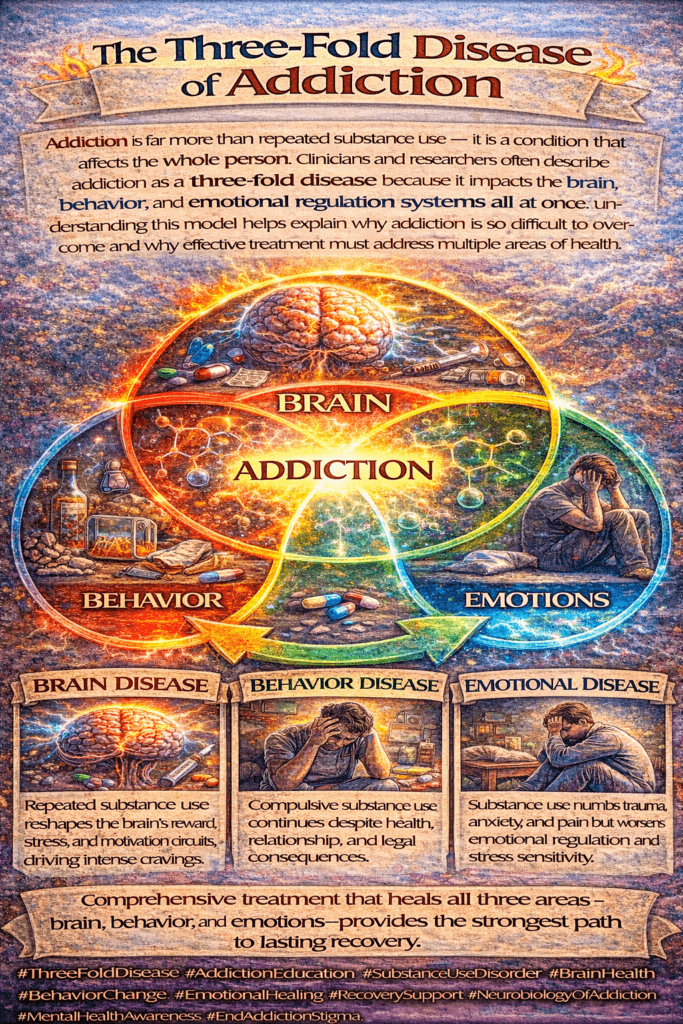
Addiction can be a tough and confusing topic to understand because it isn’t just about what someone is using or doing too much. It’s about what’s happening inside a person on different levels. When people talk about the “threefold disease of addiction,” they’re pointing to a way of understanding addiction that covers the body, mind, and spirit. Seeing things from all three angles helps people get why addiction feels so overwhelming and why recovery usually takes more than just willpower or stopping a behavior.
What is the Threefold Disease of Addiction?
The threefold disease is a framework that breaks addiction down into three main parts: physical, mental, and spiritual. It’s not a new idea; the core of this way of thinking comes from people in recovery communities such as Alcoholics Anonymous and other addiction support groups. If you’re new to this, it might sound strange to think of addiction as something bigger than cravings or habits, but looking at it from these three different directions can make a lot of sense.
For starters, each part—body, mind, and spirit—works together, and when addiction hits, all three get tangled up. It’s really tough to move forward unless all those areas get some attention. Working with this idea, recovery programs often aim at the whole person, not just the physical problem or stopping the use of a substance.
The Physical Part: How Addiction Affects the Body
The physical side is probably what most people think about first when it comes to addiction. This is about how the body reacts to a substance, like alcohol, nicotine, or drugs, or even behaviors like gambling. Over time, repeated use or behavior changes how the brain functions and can lead to physical dependence. The body starts expecting the substance just to feel normal, and cravings can show up when it isn’t there.
Withdrawal symptoms are a good example of what happens physically. Depending on the substance or behavior, people might feel sick, anxious, shaky, or even in pain when the addiction is taken away. For many folks, this part is so uncomfortable that it drives them right back to using, even when they really want to stop.
- Tolerance: The body adjusts, so the person needs more to get the same feeling.
- Dependence: The body expects the substance and may react strongly if it’s gone.
- Craving: Intense physical urge or hunger for the substance.
Taking care of the physical part often means getting medical help, sometimes through supervised detox or medication, to manage withdrawal and cravings safely and comfortably. Physical recovery is a major step, but it’s just one piece of the larger puzzle.
The Mental Side: How Addiction Impacts Thoughts and Emotions
The mental aspect is about the way addiction shapes a person’s thoughts, emotions, and behaviors. This side can be sneaky because, even after the body isn’t dependent anymore, the mind can keep reaching for the substance or behavior.
Most people dealing with addiction struggle with repetitive thoughts, rationalizations, and what’s called obsession. Their mind keeps circling back, looking for ways or excuses to use again, even when they remember the negative consequences. This is where you see patterns like denial, where someone downplays their usage or convinces themselves it’s not a problem.
- Obsession: The mind can’t stop thinking about the next drink, hit, or risky behavior.
- Denial: The belief that it isn’t a big deal or that control is still there.
- Emotional Ups and Downs: Mood swings, irritability, and depression are all common.
Even after stopping for a period, this mental tug-of-war makes relapse a real risk. Breaking these thought cycles usually needs solid support, therapy, and working on ways to handle triggers and stress. Cognitive behavioral therapy (CBT) and other counseling methods are pretty helpful for rewiring those thought patterns.
The Spiritual Part: Healing Something Deeper
The spiritual angle is probably the hardest one for many people to define. It isn’t necessarily about religion; it’s more about how addiction disconnects a person from themselves, from others, and often from a sense of purpose or meaning. This is why you’ll hear a lot of people in recovery talk about feeling “empty” or “lost” while they were in active addiction.
Addiction can shrink a person’s world until the only thing that matters is the next drink, pill, or bet. Relationships, values, and a sense of direction get left behind. The spiritual side of healing is all about finding new connections and meaning beyond addiction. For some, this might come from a traditional faith; for others, it’s about rebuilding trust, discovering new values, or finding joy in small things again.
- Isolation: Addiction often pushes people away from their loved ones and community.
- Loss of Purpose: The sense of meaning in life takes a back seat to the addiction.
- Reconnecting: Finding support, community, or inner peace becomes a big part of recovery.
Support groups, volunteering, creative activities, and spiritual practices like meditation or mindfulness are all ways to breathe new life into this part of life. Healing spiritually is a gradual process, but it can bring a lot of hope and motivation to keep going. Adding in journaling, nature walks, or working on forgiveness and gratitude can also be surprisingly helpful for the spiritual side. Over time, these activities can help people rediscover a sense of joy, connection, and meaning, transforming recovery into a more rewarding and lasting adventure.
Why the Threefold Approach Matters in Recovery
Trying to fix just one part of addiction usually doesn’t stick. For example, someone might detox and get through withdrawal but still find themselves pulled back into old thought patterns or feeling isolated. That’s why many recovery programs, especially those in the 12-step tradition, aim at helping people grow in all three areas. This all-in-one approach boosts the chances of lasting change and turns recovery into a ride that’s about more than just putting something down. It’s about picking up a new way of living and building a stronger, more resilient foundation for life.
- Medical Care: Detox programs and medications for withdrawal or cravings help the physical side.
- Therapy and Counseling: Addressing thoughts, triggers, and emotional habits covers the mental part.
- Building Community and Meaning: Support groups, peer connections, and personal hobbies help with the spiritual side.
From my own experience in recovery groups, focusing on body, mind, and spirit made a huge difference. I saw how just stopping wasn’t enough. Growing new thoughts and reconnecting with others filled in the gaps and made recovery feel possible and worthwhile.
Real-Life Examples: How the Threefold Disease Shows Up
Here are some examples of how addiction can affect these three areas:
- Physical: Someone trying to quit smoking deals with cravings and irritability when they don’t have a cigarette.
- Mental: A person might constantly justify having “just one” drink, even knowing it rarely stops at one.
- Spiritual: After a period of heavy gambling, someone might feel alone, hopeless, and cut off from friends and family.
These examples show how real and overlapping the physical, mental, and spiritual aspects are, and why tackling just one rarely works for long. In many cases, recovery means slowly untangling all three layers, taking time to heal both the obvious problems and the ones that are harder to spot.
Common Questions About the Threefold Disease
Question: Can I recover by only addressing the physical part?
Answer: While getting through withdrawal is important, most people find they need to address mental habits and rebuild a sense of purpose or community to avoid relapse. Ignoring the other side could make recovery a lot harder.
Question: What if I’m not religious—does the spiritual part still apply?
Answer: The spiritual part isn’t only about religion. It’s also about connection, meaning, and hope. Even simple activities or caring relationships can count as spiritual healing for many people.
Question: Does everyone experience all three parts equally?
Answer: Everyone’s mix is a little different, but almost everyone sees some impact in each area. Support and recovery plans can be tailored to each person’s needs.
Resources to Explore for Understanding and Support
If you or someone you care about is dealing with addiction, here are some helpful resources that address all three aspects of the condition:
- SAMHSA National Helpline – For confidential, free help and referral in the US.
- Alcoholics Anonymous and Narcotics Anonymous – Support groups that approach addiction from the threefold model.
- MentalHealth.gov – Information and support for the mental and behavioral health aspects of addiction.
Taking action in all three areas of addiction—physical, mental, and spiritual—makes recovery more well-rounded and lasting. Even if one part feels like the biggest challenge, getting help and support for body, mind, and spirit builds a stronger foundation for real change. Everyone’s adventure is different, but healing on all three levels often leads to the best results. Remember, the process isn’t always linear or quick, but with the right support and a focus on all these aspects, recovery is absolutely possible.
Video: The Three-Fold Disease of Addiction