Gossip might seem like a harmless way to pass the time, but it can actually have a pretty big impact on mental health. This is true for both the people talking and the people being talked about. Most of us have experienced the effects of gossip, whether it’s at work, among friends, or even in families. I’m going to break down how gossip works, the real ways it affects well-being, and some practical steps to protect yourself from its negative effects.
The Nature of Gossip and Why We Do It
Gossip isn’t just casual chatter. It’s information (often about someone not present) and can serve many different social purposes. Some researchers say gossip is as old as language itself, acting as a kind of “social glue” that helps people form bonds, share warnings, or clarify behavioral norms. But not all gossip is the same.
I’ve noticed that gossip can be playful or lighthearted, but it can also become negative, targeting others, spreading rumors, or exaggerating the facts. This second kind is where problems usually start. It’s really important to remember that even seemingly small comments can snowball and stick with someone for a long time. Sometimes what starts out as an innocent remark gets echoed and shifted, becoming something much more harmful the more it spreads.
Understanding the Ripple Effect
When gossip starts, it rarely stops at one conversation. It tends to spread, reaching people far beyond the original circle. Think of it as a stone tossed into a pond. One quick splash can set off ripples that travel way further than you expect. The effects hit not only the person at the center but everyone else who hears the story.
Sometimes I hear friends say, “They’ll never find out,” or “It’s not a big deal,” but the reality is that news tends to travel fast, especially in tight-knit communities or workplaces. When negative talk spreads, it can create an environment full of mistrust, anxiety, and miscommunication. People start to get wary, wondering what’s being said about them when they’re not around, which only fuels the fire and can change the mood of an entire group.
How Gossip Affects Mental Health
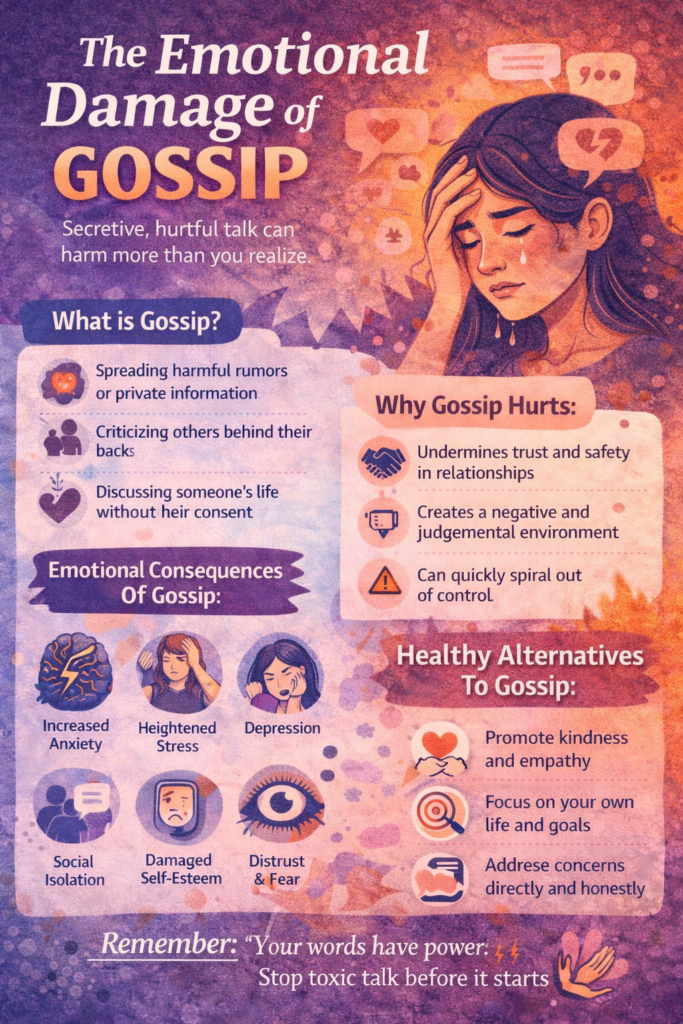
The mental health impact of gossip isn’t always obvious at first, but it can be pretty heavy in the long run. Here are some of the main ways gossip affects mental well-being:
- Increased Anxiety: People who feel targeted by gossip often become more anxious about how others see them. Worrying about what’s being said can lead to a sense of paranoia or staying sharp, where you’re always looking over your shoulder.
- Lowered Self-esteem: Hearing untrue or unkind things can chip away at self-confidence. Even people who seem confident on the outside can internalize negative messages over time.
- Social Isolation: Gossip makes it tough to trust others. If you think people are talking behind your back, you might withdraw from social situations, which can lead to loneliness and hurt your mood.
- Negative Workplace Culture: Constant gossip at work can make people feel unsafe, unsupported, or unmotivated. Studies have linked toxic work environments to higher stress levels, more sick days, and even burnout (APA on workplace stress).
I’ve seen how quickly someone’s enthusiasm for work or a social group can fade when negativity becomes the norm, and it’s something worth paying attention to no matter where it happens. Sometimes, people may end up dreading going to a place they once enjoyed simply because the atmosphere has grown tense from all the talk. It’s surprising how much gossip can color our perception of others and the places we hang out.
How Gossip Can Backfire on the Gossiper
It’s easy to focus on what gossip does to the person being discussed, but it can ricochet back to the people spreading it. Being in an environment full of gossip usually brings more stress and drama. There’s also the risk that others will stop trusting you if you’re known for talking behind people’s backs.
After seeing a few friendships break down because of repeated rumors or backbiting, I realized it’s not always easy to rebuild trust once it’s been lost. Chronic gossipers sometimes end up on the outside, struggling with regret or awkwardness later on. What seems like something to joke about in the short term can end up affecting your own relationships and how people view you over time. For many people, that realization doesn’t set in until it’s too late.
Steps to Avoid the Trap of Gossip
Avoiding gossip completely isn’t always realistic, but there are some good ways to keep it from taking over your social life or workplace. Here are a few things I’ve found helpful:
- Pause Before Speaking: When you catch yourself about to share a juicy update, stop and ask if it’s helpful, kind, or necessary. Try to picture how your words might land if the person being talked about heard them.
- Change the Subject: If others start gossiping, you don’t have to join in. Redirecting the conversation or downplaying the topic can signal that you’re not interested without causing drama. You might say something like “Let’s talk about something else,” or bring up a neutral subject.
- Be Direct: If you hear a rumor about yourself, gently ask the person involved to clear it up instead of letting anxiety build up. Sometimes the story is way less dramatic than you thought. Addressing things head-on usually cuts off unnecessary stress early.
- Practice Empathy: Try to picture how you’d feel hearing the same comments about yourself. This simple act can reduce the urge to talk about others and help you choose your words more thoughtfully.
- Build Up Support: Surrounding yourself with people who value kindness and open communication can reduce the risk of negative gossip spirals. Shared values reinforce good habits.
In addition, if you’re caught in the middle of a conversation that’s heading into gossip territory, don’t feel afraid to make a polite excuse to step away. Sometimes just leaving sends a strong enough message, and over time, people will learn that you don’t want to be part of that culture.
Common Challenges People Face with Gossip
It’s one thing to know about the dangers of gossip, but another to manage it when it happens. Here are a couple of tricky situations and ways I’ve learned to handle them:
- Anonymous Rumors: When nobody knows who started a rumor, it can be super frustrating. Sometimes it’s best not to push back directly, but instead to talk to a trusted friend or counselor for support and perspective.
- Workplace Gossip: If gossip is part of the company culture, it might feel impossible to ignore. Keeping your head down helps for a while, but sometimes reporting things to HR or a manager can make a big difference, especially if the situation is affecting your work or well-being.
- Family Drama: Family gossip has its own challenges, since you can’t always avoid those relationships. Setting boundaries and letting family members know you don’t want to talk negatively about others helps maintain peace of mind and keeps family interactions healthier overall.
Anonymous Rumors
These are especially tough because you can’t address the source. If rumors are affecting your mental health, talking to someone you trust (like a counselor or close friend) can help. Sometimes just saying things out loud puts them into perspective, making them feel a bit less overwhelming.
Workplace Tactics
I use the “focus on facts, not people” rule at work. If a conversation turns into speculation, I try to steer it back to what’s actually relevant. This approach helps keep relationships professional and reduces stress in the long run. Documenting your own work and interactions can also help if you need a record for HR in serious cases.
Setting Family Boundaries
Family gatherings can get uncomfortable when gossip takes over. I’ve found that saying something like “I’d like to change the subject” or politely excusing myself works wonders. Ignoring negative talk can also signal that you’re not interested in fueling the drama, and over time, relatives may come to respect your stance.
Positive Alternatives to Gossip
Replacing gossip with something positive won’t just help others; it’ll actually leave you feeling better, too. There are plenty of ways to keep conversations meaningful and supportive instead:
- Share Good News: Swap updates about accomplishments or fun plans instead of complaints or rumors. This changes the group dynamic in a more uplifting direction.
- Give Genuine Compliments: Lifting others up spreads good energy and builds stronger relationships. Over time, you might notice your group becomes more supportive overall.
- Practice Active Listening: Get involved in real conversations by asking questions about someone’s hobbies or interests, rather than relying on others’ stories. Listening closely makes people feel valued and strengthens connections.
I’ve found that focusing on positive topics usually leads to deeper, more enjoyable conversations, and friends start to follow your example over time. It’s a small change that can have big payoffs for everyone involved—and make your social life genuinely more fun and fulfilling.
Why Addressing Gossip Matters for Mental Health
Ignoring the impact of gossip doesn’t work. Stress, anxiety, and mistrust can creep in anyway. Tackling gossip head-on can improve not only your own mental health but also the atmosphere for everyone around you. Encouraging honest, kind communication makes social and work groups a lot more supportive and less stressful for everyone involved. Setting a better example, even if others don’t follow right away, slowly shifts the culture in a positive direction.
If things ever get overwhelming or if you find yourself affected by gossip-related anxiety or depression, reaching out to a mental health professional is a smart step. The National Alliance on Mental Illness (NAMI) and similar organizations provide lots of resources and support for those looking to give a boost to their well-being.
Frequently Asked Questions
Here are some common questions that come up around gossip and mental health:
Does all gossip have a negative impact?
Not all gossip is bad. Sometimes it’s just a way to bond. The real problem starts when it turns negative, spreads rumors, or unfairly targets others.
How do I know if gossip is affecting my mental health?
If you notice feeling more anxious, stressed, or withdrawn after hearing negative stories about yourself or others, gossip could be a big factor. Trouble sleeping or feeling nervous around certain people are other warning signs.
What should I do if I’m being gossiped about?
It helps to talk to a trusted friend or counselor. If it’s at work or school, there might be a formal way to report it. Sometimes confronting the person who started it can clear things up, but that’s not always possible or safe, so trust your gut on what feels right.
Takeaway Thoughts
The impact of gossip goes much deeper than most people realize. Focusing on open, kind communication and setting clear boundaries can lift a huge weight off your mind. The more you model healthy behavior, the more others will do the same, making every environment a lot more enjoyable for everyone.
Video: One Rumor Changes Everything #consequences #shorts