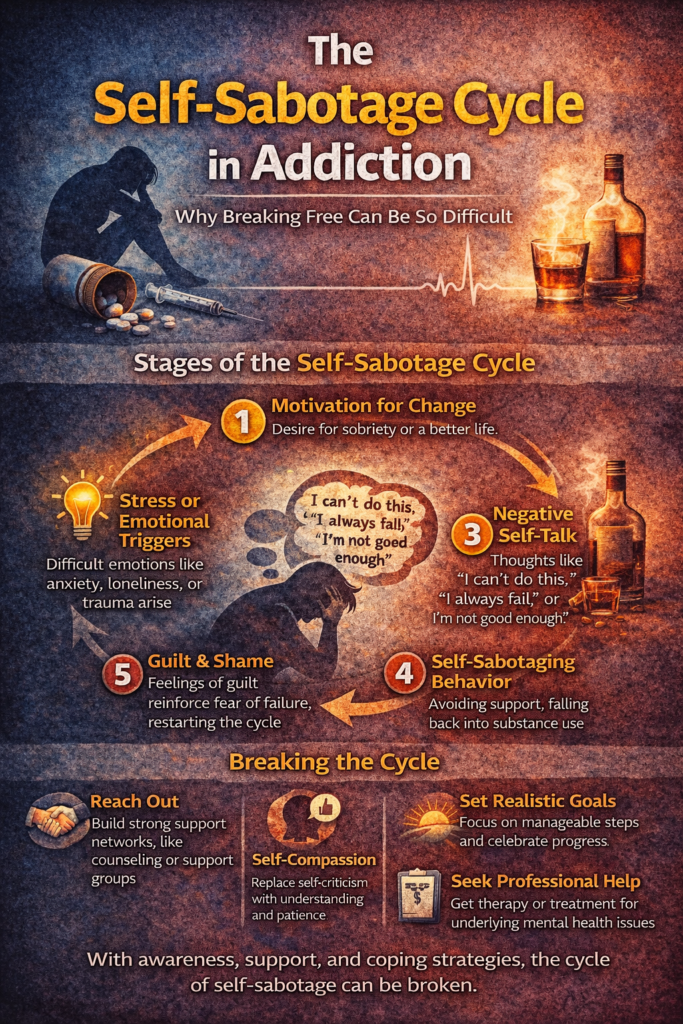
Addiction recovery involves far more than simply stopping the use of substances—it requires individuals to understand and change the thoughts, emotions, and behaviors that may interfere with their progress. One of the most difficult challenges many people encounter during recovery is the self-sabotage cycle, a repeating pattern in which actions and beliefs unintentionally undermine the goal of sobriety. This cycle often develops when difficult emotions such as fear, shame, stress, or low self-worth begin to surface. These feelings can trigger negative self-talk, such as believing that change is impossible or that past mistakes define one’s future. As these thoughts grow stronger, individuals may engage in behaviors that distance them from recovery supports, such as avoiding counseling, isolating from supportive relationships, or returning to environments associated with substance use. Over time, these actions can increase vulnerability to relapse or other unhealthy coping strategies. However, recognizing how the self-sabotage cycle develops is a crucial step in recovery. When individuals learn to identify emotional triggers, challenge harmful beliefs, and seek support during difficult moments, they can begin to interrupt this pattern. By developing healthier coping strategies and building self-awareness, individuals strengthen their ability to move beyond self-sabotage and work toward lasting recovery and personal growth.
The Self-Sabotage Cycle in Addiction: Why Breaking Free Can Be So Difficult
Addiction recovery is often described as a process of overcoming physical dependence, but many people discover that the greatest challenge lies in changing deeply ingrained behavioral patterns. One of the most common patterns is the self-sabotage cycle, in which individuals unintentionally engage in behaviors that undermine their recovery. Understanding how this cycle works can help people recognize harmful patterns and take meaningful steps toward long-term recovery.
What Is the Self-Sabotage Cycle in Addiction?
The self-sabotage cycle in addiction refers to a repeating pattern in which a person’s thoughts, emotions, and behaviors work against their goal of recovery. Even when individuals genuinely want to stop using substances, internal struggles such as fear, shame, or low self-worth can lead them back into harmful habits.
This cycle often creates feelings of frustration and discouragement, making it seem as though recovery is impossible. In reality, these patterns are common and can be changed with awareness and support.
The Stages of the Self-Sabotage Cycle
The self-sabotage cycle in addiction often follows a predictable sequence:
- Motivation for Change
The individual decides to pursue sobriety or make positive life changes. - Stress or Emotional Triggers
Difficult emotions such as anxiety, loneliness, trauma, or stress begin to build. - Negative Self-Talk
Thoughts such as “I can’t do this,” “I always fail,” or “I’m not good enough” begin to emerge. - Self-Sabotaging Behavior
The person may avoid support systems, isolate themselves, or return to substance use. - Guilt and Shame
After the setback, feelings of guilt and shame reinforce negative beliefs, restarting the cycle.
This repeating pattern can make recovery feel like a constant struggle.
Why Self-Sabotage Happens in Addiction
Self-sabotage in addiction is often connected to deeper psychological factors. Many individuals struggling with addiction experience:
- Low self-esteem or feelings of unworthiness
- Fear of failure or fear of success
- Trauma or unresolved emotional pain
- Difficulty coping with stress or strong emotions
- Habitual patterns developed during active addiction
Substances may have once served as a way to escape or numb emotional pain, making it difficult to replace those behaviors without learning new coping strategies.
Recognizing the Warning Signs
Recognizing early signs of self-sabotage can help prevent relapse. Warning signs may include:
- Avoiding recovery meetings or counseling
- Isolating from supportive friends or family
- Engaging in risky situations or environments
- Increasing negative self-talk
- Ignoring healthy routines and coping strategies
Awareness of these behaviors allows individuals to intervene before the cycle fully develops.
Breaking the Self-Sabotage Cycle
Breaking the cycle requires a combination of self-awareness, support, and new coping skills. Helpful strategies include:
- Practicing self-compassion rather than self-criticism
- Building strong support networks through recovery groups or counseling
- Identifying triggers and developing coping strategies
- Setting realistic goals and celebrating progress
- Seeking professional help for underlying mental health challenges
These strategies help individuals replace harmful patterns with healthier responses.
Moving Toward Lasting Recovery
Recovery from addiction is not simply about stopping substance use—it also involves reshaping the thoughts and behaviors that sustain addiction. By understanding the self-sabotage cycle, individuals can recognize when old patterns begin to appear and respond with healthier choices.
With patience, support, and persistence, the cycle of self-sabotage can be broken, allowing individuals to build a stronger foundation for lasting recovery and personal growth.
Self-Management Strategies to Understand the Self-Sabotage Cycle
Many people experience moments when their own behaviors seem to work against their goals. Whether it involves procrastination, negative thinking, or returning to unhealthy habits, these patterns are often part of what psychologists call the self-sabotage cycle. This cycle occurs when thoughts, emotions, and behaviors unintentionally interfere with personal growth. One of the most effective ways to break this pattern is through self-management, which helps individuals become more aware of their habits and make intentional choices that support long-term success.
Understanding the Self-Sabotage Cycle
The self-sabotage cycle usually begins when a person sets an important goal, such as improving health, maintaining recovery, or achieving personal success. As progress begins, feelings of fear, self-doubt, or pressure may arise. These emotions can trigger behaviors such as avoidance, procrastination, or returning to familiar but unhelpful habits.
Over time, these behaviors can lead to setbacks, reinforcing negative beliefs about oneself, and restarting the cycle. Self-management strategies help individuals recognize these patterns early and respond in healthier ways.
What Is Self-Management?
Self-management refers to the ability to monitor one’s thoughts, emotions, and behaviors while making choices that align with personal goals. It involves developing awareness, emotional regulation, and practical strategies for handling challenges.
Rather than reacting automatically to stress or self-doubt, individuals practicing self-management learn to pause, reflect, and choose responses that support their long-term well-being.
Identifying Personal Triggers
A key step in self-management is identifying the situations or emotions that trigger self-sabotaging behaviors. These triggers might include stress, fear of failure, perfectionism, or feelings of inadequacy.
Keeping a journal or reflecting on difficult moments can help individuals recognize patterns in their behavior. Once these triggers are understood, it becomes easier to prepare strategies for responding differently.
Challenging Negative Self-Talk
Self-sabotage is often fueled by negative thoughts such as “I’m not good enough,” “I always fail,” or “There’s no point in trying.” These beliefs can weaken motivation and increase the likelihood of avoidance or harmful behaviors.
Self-management encourages individuals to challenge these thoughts and replace them with more balanced and supportive perspectives. Developing self-compassion and realistic expectations can reduce the power of negative self-talk.
Setting Realistic and Achievable Goals
Large or overwhelming goals can sometimes trigger self-sabotage because they create pressure or fear of failure. Breaking goals into smaller, manageable steps allows individuals to experience consistent progress.
Celebrating small achievements can build confidence and strengthen motivation to continue moving forward.
Building Healthy Coping Strategies
Self-management also involves developing healthy ways to cope with stress and emotional discomfort. Techniques such as mindfulness, physical activity, relaxation exercises, and social support can help individuals manage difficult emotions without resorting to self-sabotaging behaviors.
These coping strategies provide constructive alternatives when challenges arise.
Developing Long-Term Awareness
Breaking the self-sabotage cycle does not happen instantly. It requires ongoing awareness and practice. As individuals develop stronger self-management skills, they become better able to recognize early warning signs of harmful patterns and redirect their behavior toward healthier choices.
Moving Toward Personal Growth
Understanding the self-sabotage cycle through self-management allows individuals to transform setbacks into learning experiences. Instead of viewing mistakes as failures, they can become opportunities for growth and self-understanding.
With patience, self-awareness, and consistent effort, individuals can gradually replace self-defeating patterns with behaviors that support lasting progress and personal success.
Family Support Strategies for Understanding the Self-Sabotage Cycle
The self-sabotage cycle occurs when individuals unintentionally engage in behaviors that undermine their own goals, well-being, or recovery. These behaviors may include procrastination, avoidance, negative self-talk, or returning to harmful habits. While self-sabotage can be frustrating for both individuals and their loved ones, it often stems from deeper emotional struggles such as fear, low self-confidence, or unresolved stress. Families can play a powerful role in helping individuals recognize and break this cycle by providing understanding, guidance, and supportive strategies.
Recognizing Patterns of Self-Sabotage
Family members are often in a position to notice patterns that individuals may overlook themselves. For example, a loved one may repeatedly set goals but struggle to follow through, avoid opportunities for growth, or engage in behaviors that create unnecessary obstacles.
Recognizing these patterns is an important first step. However, it is essential for families to approach the topic with empathy rather than criticism. Self-sabotaging behaviors are often connected to emotional challenges rather than a lack of effort or motivation.
Encouraging Open and Supportive Communication
Healthy communication within families helps create an environment where individuals feel safe discussing their struggles. When people feel judged or criticized, they may become defensive or withdraw from support.
Families can help by listening actively, asking thoughtful questions, and expressing concern in a supportive way. Conversations that focus on understanding rather than blaming can help individuals reflect on their behaviors and consider healthier alternatives.
Promoting Self-Awareness
Family support can also help individuals develop greater self-awareness about their thoughts and behaviors. Gentle encouragement to reflect on situations—such as asking what emotions or fears may have contributed to a setback—can help individuals identify the triggers behind self-sabotage.
This awareness allows individuals to begin recognizing patterns and making more intentional decisions.
Encouraging Healthy Coping Strategies
Families can support positive change by encouraging healthier ways to manage stress and emotional challenges. These strategies might include:
- Engaging in physical activity or shared recreational activities
- Practicing relaxation techniques such as mindfulness or deep breathing
- Encouraging participation in hobbies or creative outlets
- Supporting professional counseling or coaching when needed
These activities help individuals develop constructive ways to handle difficult emotions without resorting to self-defeating behaviors.
Setting Healthy Boundaries
While support is important, families must also maintain healthy boundaries. Supporting someone does not mean removing all consequences or taking responsibility for their choices. Balanced support involves encouragement while allowing individuals to remain accountable for their actions.
Healthy boundaries create an environment where growth and responsibility can develop together.
Creating a Supportive Environment for Growth
Breaking the self-sabotage cycle often requires patience and ongoing support. Families who provide encouragement, understanding, and stability can help individuals build confidence and resilience over time.
By fostering open communication, promoting self-awareness, and encouraging healthy coping strategies, families play an important role in overcoming self-sabotage and moving toward personal growth and lasting change.
Community Resource Strategies for Understanding the Self-Sabotage Cycle
The self-sabotage cycle occurs when individuals unintentionally engage in behaviors that undermine their own goals, well-being, or progress. These behaviors may include procrastination, avoidance, negative self-talk, or returning to harmful habits even when someone genuinely wants to improve their life. Because these patterns are often connected to emotional stress, fear, or past experiences, breaking the cycle can be difficult to do on one’s own. Community resources play an important role in helping individuals understand self-sabotage and develop healthier strategies for personal growth.
Raising Awareness Through Community Education
Community education programs help people recognize how self-sabotaging behaviors develop and how they affect personal progress. Workshops, seminars, and public awareness campaigns offered through community centers, schools, and local organizations can teach individuals about the psychological patterns behind self-sabotage.
These programs often focus on topics such as emotional regulation, goal setting, stress management, and building confidence. By raising awareness, communities help individuals identify self-sabotaging behaviors and understand that these patterns can change.
Access to Counseling and Mental Health Services
Many self-sabotaging behaviors are connected to deeper emotional challenges such as anxiety, trauma, low self-esteem, or fear of failure. Community mental health services provide individuals with professional support to explore these underlying issues.
Counseling and therapy programs help people develop coping strategies, challenge negative thinking patterns, and build healthier behavioral habits. Access to these services can be a critical step in breaking the cycle of self-sabotage.
Peer Support and Community Groups
Peer support groups create opportunities for individuals to connect with others who may be experiencing similar struggles. Sharing experiences and listening to others’ stories can help normalize challenges and reduce feelings of isolation.
Community groups focused on personal growth, recovery, or emotional well-being offer individuals encouragement, accountability, and practical advice from peers who understand the challenges of overcoming self-sabotage.
Skill-Building and Personal Development Programs
Many communities offer programs designed to help individuals develop life skills that support positive change. These may include workshops on communication skills, stress management, goal setting, and time management.
By learning practical strategies for managing responsibilities and emotions, individuals can build the confidence needed to overcome patterns of avoidance and self-doubt.
Creating Supportive Community Environments
Communities that promote mental health awareness, social connection, and accessible resources create environments where individuals feel supported in their personal growth. Libraries, nonprofit organizations, wellness centers, and educational institutions often provide safe spaces where people can access information and support.
These environments encourage individuals to seek help early and remain connected to supportive networks while working to overcome self-sabotage.
Encouraging Long-Term Personal Growth
Understanding the self-sabotage cycle is not only about recognizing harmful behaviors but also about building the tools needed for lasting change. Community resources provide education, professional support, and peer connections that help individuals develop healthier habits and stronger self-awareness.
When communities invest in these resources, they empower individuals to break the cycle of self-sabotage and move toward greater confidence, resilience, and long-term personal success.
Frequently Asked Questions
Here are some common questions:
1. What is the self-sabotage cycle in addiction?
The self-sabotage cycle in addiction refers to a repeating pattern where thoughts, emotions, and behaviors unintentionally undermine recovery efforts. Even when individuals want to change, fear, stress, or negative beliefs may lead them back to harmful habits, restarting the cycle.
2. Why do people self-sabotage during addiction recovery?
Self-sabotage often happens because recovery can bring difficult emotions and life changes. People may experience:
- Fear of failure or fear of success
- Low self-esteem or self-doubt
- Stress or emotional pain
- Unresolved trauma
- Lack of coping skills
These challenges can make old behaviors feel familiar and temporarily comforting.
3. What are common signs of self-sabotage in addiction?
Common warning signs may include:
- Avoiding recovery meetings or counseling
- Isolating from supportive friends or family
- Returning to high-risk environments
- Negative self-talk, such as “I can’t change.”
- Ignoring healthy routines or coping strategies
Recognizing these behaviors early can help prevent relapse.
4. How does negative self-talk contribute to self-sabotage?
Negative self-talk can reinforce feelings of failure and hopelessness. Thoughts such as “I always mess things up” or “I’m not strong enough to recover” can weaken motivation and increase the likelihood of returning to substance use.
5. Is self-sabotage the same as relapse?
Not exactly. Self-sabotage is a pattern of behaviors that may lead to relapse, but it can occur before substance use actually happens. Recognizing self-sabotaging behaviors early allows individuals to intervene before relapse occurs.
6. Can someone break the self-sabotage cycle?
Yes. The cycle can be broken through awareness, support, and new coping strategies. Learning to recognize triggers and developing healthier responses can help individuals interrupt the pattern.
7. What strategies help break the self-sabotage cycle?
Helpful strategies may include:
- Building strong support systems
- Practicing self-compassion instead of self-criticism
- Identifying triggers and high-risk situations
- Setting realistic recovery goals
- Seeking professional counseling or therapy
These approaches strengthen long-term recovery.
8. How can family members help someone experiencing self-sabotage?
Families can help by offering encouragement, practicing patience, and avoiding blame. Supporting treatment efforts, encouraging open communication, and helping maintain healthy routines can make recovery more stable.
9. Why are guilt and shame part of the self-sabotage cycle?
After a setback, people often feel guilt or shame about their behavior. These feelings can reinforce negative beliefs and discourage individuals from seeking help, thereby restarting the cycle.
10. What is the most important thing to remember about self-sabotage in addiction?
The most important thing to remember is that self-sabotage is a pattern, not a permanent identity. With awareness, support, and persistence, individuals can learn to recognize harmful patterns and replace them with behaviors that support lasting recovery.
Conclusion
Breaking the self-sabotage cycle in addiction is a gradual process that requires awareness, patience, and consistent support. By identifying triggers, challenging negative self-beliefs, and developing healthier coping skills, individuals can begin to replace destructive patterns with behaviors that support recovery. Support from family, communities, and professional treatment programs also plays a vital role in helping individuals stay on track. Ultimately, understanding the self-sabotage cycle allows individuals to view setbacks not as failures but as opportunities to learn, grow, and continue moving forward in their recovery journey.
Video: You’re Sabotaging Without Realizing It #psychology #shorts