America’s “War on Drugs” didn’t just pop up out of nowhere. It emerged from a set of decisions, policies, and attitudes that have influenced U.S. law and society for decades. While multiple presidents stamped their influence on the nation’s drug policy, one leader’s name surfaces repeatedly as the one who set this movement in motion: Richard Nixon. I’m here to break down exactly how the War on Drugs took off under his administration, why it mattered, and what ripple effects are still being felt today.
The Origins of the War on Drugs
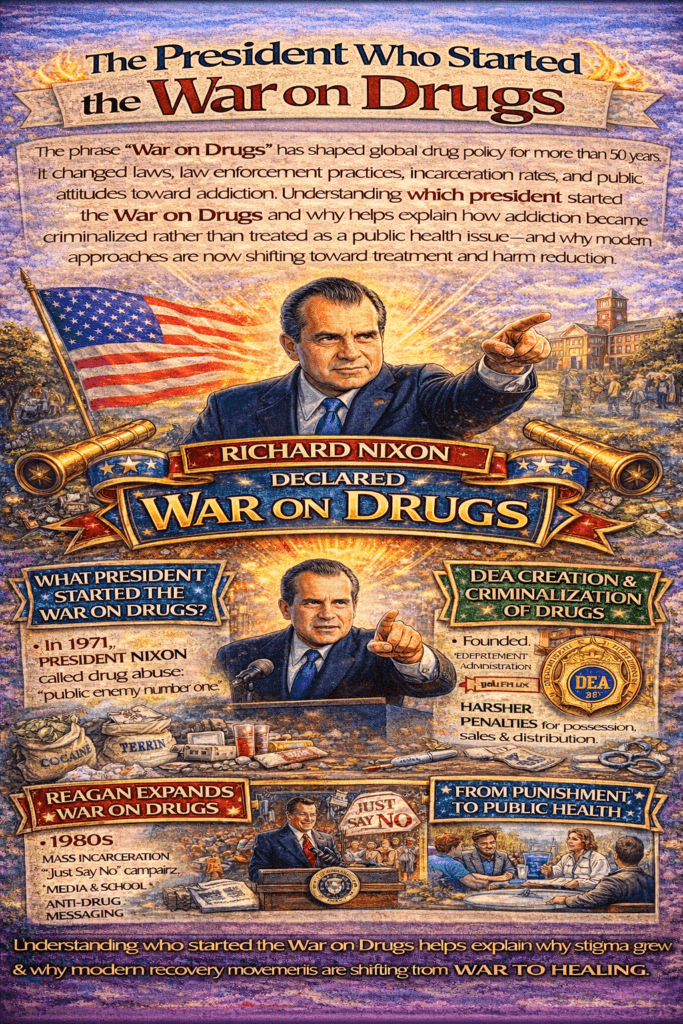
The “War on Drugs” as a phrase was publicly launched by President Richard Nixon in the early 1970s. On June 17, 1971, Nixon delivered a speech that gave national focus to drug control, declaring drug abuse to be “public enemy number one.” This wasn’t just a bold statement—it marked the beginning of a government-led campaign around enforcement, treatment, and policy choices that would touch almost every aspect of American life.
Before Nixon, illegal drug use was mostly policed at the local level. There wasn’t a widespread, coordinated national push. However, growing concerns about heroin use among troops in Vietnam and the rise in drug-related crime at home made drugs dominate headlines. Nixon’s administration saw this as a growing crisis, deciding that a far more direct federal response was needed.
What Did Nixon Actually Do?
Nixon’s approach wasn’t only about talking tough; he pushed for immediate action. One of the first steps was the establishment of government agencies dedicated to coordinating the drug response. In 1973, Nixon established the Drug Enforcement Administration (DEA), consolidating several smaller agencies under a single agency to centralize drug law enforcement.
Nixon also approved more programs to treat drug addiction, increasing federal investment in methadone clinics and rehab centers. However, the administration’s policies leaned heavily toward a law enforcement approach. This meant more arrests, longer sentences, and broad criminal penalties for possession and distribution of drugs—especially those classified as “hard drugs” like heroin and cocaine.
- Special Action Office for Drug Abuse Prevention: Worked to centralize anti-drug treatment efforts and grow treatment access.
- Anti-Drug Task Forces: Local police began receiving increased federal funding and training for anti-drug work, which was expanded in both urban and rural areas.
- Federal Schedules for Drugs: Nixon’s administration pushed the Controlled Substances Act of 1970, setting up categories for drugs and assigning penalties for each type.
The Mix Up in Public Perception
Once Nixon put the War on Drugs front and center on the national stage, the public discourse around drugs switched up fast. Drugs were no longer viewed as just a personal vice; they became seen as a major threat to families, communities, and public safety. This pivot affected people’s attitudes toward criminal justice, healthcare, and even pop culture. Movies, music, and news coverage jumped on the “drug crisis” theme, amplifying public concern and support for strong government action.
TV shows warning about the danger of drugs became common; public service announcements popped up more and more. Popular slogans such as “Just Say No,” which became popular under Reagan, trace their origins to the kind of messaging first promoted during Nixon’s term. Community initiatives and public education campaigns began at this time, reinforcing a sense of national emergency.
How Nixon’s War on Drugs Still Impacts Us
While Nixon’s campaign drew strong approval at the time, the long-term effects remain debated and are felt today. Prisons filled up as arrests soared, especially for drug possession offenses. Over the years, the War on Drugs has hit communities of color the hardest, sparking ongoing debates about racial fairness in law enforcement and criminal justice.
The focus on punishment over rehabilitation set the tone for U.S. drug policy for decades. Later presidents built on Nixon’s foundation, with some enforcing harsher penalties and others taking steps toward treatment. The basic framework, though, traces back to Nixon’s era:
- Mass Incarceration: Sentencing rules for drug offenses ballooned prison populations, especially through the 1980s and 1990s.
- Global Drug Policing: The U.S. started exporting its war-on-drugs model to Latin American countries, pushing for crop destruction and cross-border policing efforts.
- Stigma and Access to Treatment: Strong anti-drug rhetoric has sometimes made it harder for people to seek help; lots of programs have been underfunded or carry stigma.
To this day, states still argue about the right balance between law enforcement and treatment, and debates continue over how to address drug problems in America. Organizations such as the Drug Policy Alliance and policy studies from the Brookings Institution offer thoughtful analyses of Nixon’s legacy (Brookings).
Bigger Picture: Why Did Nixon Focus on Drugs?
Nixon decided to focus on drugs for various reasons. On one hand, some were political. Drugs had become closely linked with the counterculture movement, protests, and rising crime—developments Nixon wanted to rein in. Putting drug control at the center of his platform united voters who were worried about all the social changes happening in America, especially older and more traditional folks.
On the other hand, Nixon’s staff truly viewed drug use as a public health crisis demanding urgent action. Reports of troops in Vietnam hooked on heroin and concerns about spiking addiction rates back home gave the administration plenty of motivation. For a broader history, the History Channel offers lots more details.
Key Terms and Agencies to Know
The Nixon-era War on Drugs introduced lots of vocabulary into the news and political talk. Here’s a simple explanation of the main terms and agencies you’ll hear when people talk about these events:
- DEA (Drug Enforcement Administration): The primary federal agency for drug enforcement, still operating across the country.
- Controlled Substances Act (CSA): Passed in 1970, it established the system of drug “schedules” that continues to classify everything from marijuana to heroin and prescription opioids.
- Drug Schedules: Drugs are ranked from Schedule I (most tightly controlled, like heroin and LSD) to Schedule V (least restricted, such as certain cough medicines).
- Methadone Clinics: Clinics established to treat opioid addiction, funded through Nixon’s push for increased treatment infrastructure.
Knowing these basics is key to understanding why drug policy looks the way it does today and why some policies seem hard to change.
Common Challenges and Criticisms
Nixon’s policy choices came with major controversies. People frequently ask whether the War on Drugs did more harm than good, or if it meaningfully reduced addiction. Here are a few key criticisms:
- Prison Overcrowding: More arrests filled up state and federal prisons at a pace they couldn’t keep up with.
- Social Divides: Communities of color faced higher rates of arrest and punishment for similar drug use compared to white communities.
- Resource Allocation: Critics say that prioritizing criminal penalties over healthcare led to a shortage of addiction treatment options.
- Ineffective Outcomes: Drug use and drug-related deaths stayed high, suggesting that harsh enforcement alone was not a cure.
New policies promoting drug decriminalization, legal marijuana, and expanded treatment arise as direct responses to these shortcomings that began under Nixon’s original blueprint.
Real-World Examples of Nixon’s Impact
Over the decades, real stories from Americans highlight the ongoing tension between enforcement and rehabilitation. In many cities, more police presence and less emphasis on addiction services increased arrests but didn’t dent overdose numbers. Cities that invested in community health programs, meanwhile, often saw fewer drug-related deaths.
I’ve spoken to people who experienced the justice system during this era. They often felt that the focus was more on punishment than on help, a pattern that can be traced back to Nixon’s approach. Even today, federal grants set up by Nixon’s administration continue to support programs for law enforcement, rehab clinics, and drug courts.
- Police Training: Local departments received better equipment and specialized instruction for drug investigations.
- Community Health Centers: Some clinics provided meaningful support and changed lives; others struggled due to limited funding and negative attitudes about addiction.
Frequently Asked Questions
Who started the War on Drugs?
Richard Nixon, the 37th President of the United States, is most often credited as the leader who launched the War on Drugs, especially because of his 1971 declaration and sweeping federal action that followed.
Why did Nixon focus so much on drugs?
His attention was fueled by public safety concerns, rising addiction rates (especially among Vietnam vets), and political goals to respond to social unrest and rising crime.
What is the Controlled Substances Act?
This law, passed in 1970, organized drugs by “schedule,” setting the rules for how restricted each would be and which penalties would come with possession, sale, or distribution.
Did the War on Drugs work?
The results are mixed. Drugs haven’t disappeared, and addiction is still a big issue. Critics point out the downsides, like mass incarceration and racial disparities. Some progress has been made in funding treatment, but the legacy remains complex and unresolved.
Looking Back at Nixon and the War on Drugs
No matter how you look at it, Nixon’s War on Drugs forever shaped U.S. policy. The balance between law enforcement and actual treatment, public attitudes about drug use, and ongoing debates over fairness start here. If you want to understand America’s approach to drug laws, health debates, or the reasons behind current reform movements, realizing what started under Nixon is key. The choices made in the 1970s continue to shape laws, debates, and the push for change today.
Video: Nixon Didn’t Care About Addiction, He Cared About This #history #politics #shorts