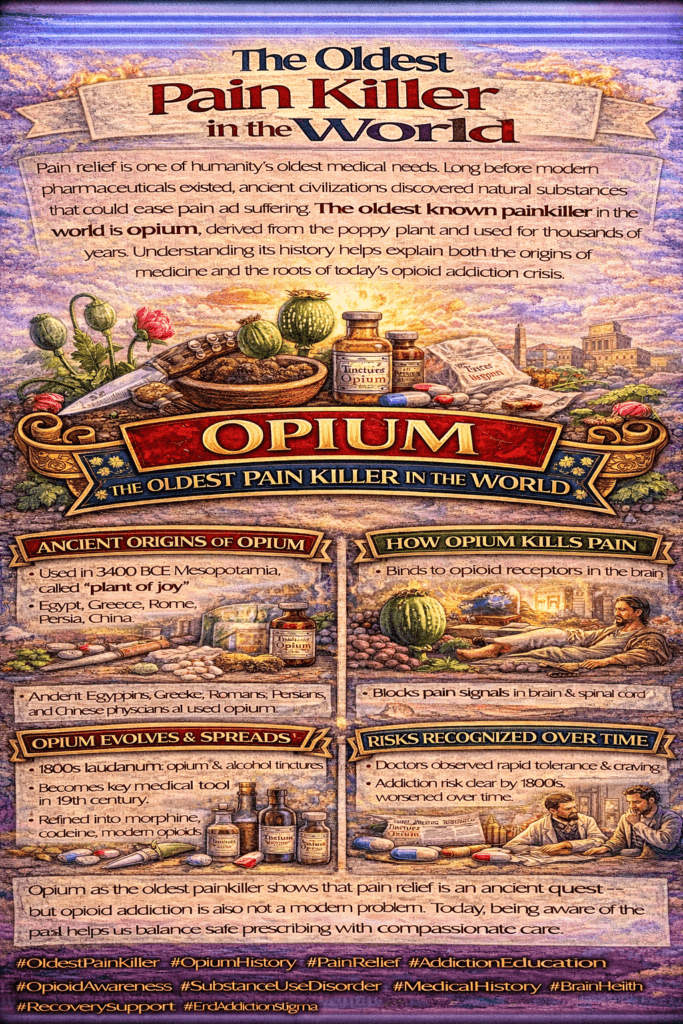
The story of pain relief goes way back, long before prescription bottles lined our medicine cabinets. If you’ve ever wondered what people reached for when pain struck in ancient times, you’re about to find out. I’m walking you through the world’s oldest painkiller, sharing how it shaped traditional remedies and even modern medicine.
The Origin of Ancient Pain Relief
Humans have been battling pain since the dawn of time. Hundreds of years before pharmacies existed, ancient healers and everyday folks found ways to soothe aches with what they had around them. When it comes to natural painkillers, the opium poppy stands out as the oldest one mentioned in history. Papaver somniferum, which is the scientific name for the opium poppy, has been used for thousands of years to treat pain, cough, and sometimes even help people sleep.
The opium poppy first grew in wild fields stretching from the Mediterranean to western Asia. Way before modern surgery and painkillers, people would harvest the latex (the sticky substance from the seed pod) and either eat it, brew it, or sometimes rub it onto wounds. It’s striking to think how such a small flower brought so much relief, as well as causing a fair bit of trouble.
Ancient Civilizations and Their Use of Pain Killers
Ancient cultures left pretty clear evidence that pain relief mattered just as much then as it does now. From stone tablets to medical papyrus, I’ve read some fascinating historical records on this subject.
- Mesopotamia: Archaeologists dug up clay tablets from as early as 3400 BCE showing that Sumerians saw the opium poppy as the “joy plant.” They described recipes for brewing poppy-based mixtures to dull pain and chase away troubles.
- Egypt: Jumping forward, ancient Egyptians made poppy juice a staple in their medicine chests. A famous scroll called the Ebers Papyrus, written around 1550 BCE, lists opium as a key pain remedy for everything from headaches to surgeries.
- Greece and Rome: Greek doctors like Hippocrates gave opium credit for its wide use, but he also warned about how potent it could be. By Roman times, surgeons like Galen often relied on poppy extracts during operations and to help with chronic pain.
Elsewhere, in Persia and surrounding regions, opium was included in early pharmacopeias and used in both civilian and military medicine. Sometimes it was even traded along the Silk Road, spreading these ancient pain remedies across continents. Such exchanges also helped introduce other herbal painkillers to different civilizations.
What Made the Ancient Painkiller So Effective?
The power behind the poppy is chemistry. The latex from the seed pods is loaded with alkaloids, with morphine and codeine being the main pain-busting ingredients. Ancient healers didn’t know these names, but they figured out pretty quickly that certain preparations of the plant could do a good job at stopping pain in its tracks.
Opium naturally interacts with the body’s opioid receptors. These are the same spots that modern-day morphine, codeine, and similar medications go to work. That’s why even back then, people who used poppy juice noticed a clear, reliable sense of relief. Early records talk about improved comfort and even euphoria after use, which led some cultures to believe the plant offered supernatural benefits.
What Ancient Pain Relief Practices Evolved Over Time
Pain relief didn’t just stay the same over the centuries. Instead, different regions put their own spin on things. For instance, in ancient China, opium was blended into herbal medicine recipes, often mixed with other plants for different effects. In India, the use of opium as a painkiller became part of Ayurvedic texts, and it also played a role in spiritual rituals.
By medieval times, poppy-based remedies spread widely across the Middle East, eventually reaching much of Europe. Doctors of the Middle Ages, like Avicenna, described opium for pain relief in super detailed medical texts. As travel increased, so did the plant’s role in medicine cabinets everywhere, right up until the modern era. During the Renaissance, European doctors tried to determine the right dose, and apothecaries began selling standardized preparations such as laudanum.
In other parts of the world, South American cultures experimented with local painkillers derived from coca leaves, and Native Americans used willow bark extracts and other plant-based remedies for toothaches and injuries. The flow of ideas and exchange of plant knowledge between ancient cultures fueled the ongoing development of pain management strategies.
What Did Ancient Remedies Look Like?
- Poppy Juice Extract: The sticky, milky latex scratched from the poppy pod was collected, dried, and shaped into small balls or cakes for storage and later use.
- Brewed Teas: Healers sometimes made tea using dried poppy capsules or seeds, especially for headaches and toothaches.
- Topical Pastes: Opium can be blended into a simple ointment and applied to sore muscles and joints for a more localized effect.
- Combination Remedies: Many ancient texts suggest combining poppy with herbs such as willow bark (an early source of aspirin) or mandrake root for stronger pain relief.
- Infused Wines: In Greco-Roman days, opiated wine was sometimes prescribed by doctors to dull pain from battle wounds during or after war.
In some ancient cultures, ritual was woven into the process of preparing and taking these painkillers. Offerings, chants, or fasting sometimes accompanied the use of these potent mixes in order to gain favor from the gods or ancestors. This spiritual aspect highlights how pain relief was often tied to larger beliefs about health and healing.
Problems and Risks with the Oldest Painkiller
It’s worth mentioning that the poppy’s magic came with a dark side. Ancient texts recognized that taking too much opium risked addiction and, in some cases, death. Even Hippocrates and Galen hinted that using it too often or in large amounts could backfire.
- Addictive Properties: Regular use often led to dependency, a pattern seen in both ancient and modern times.
- Side Effects: Overuse could bring on confusion, stomach issues, and sometimes respiratory problems, which were serious side effects before the days of modern medicine.
- Spiritual and Social Concerns: Some societies warned against using the poppy for “pleasure alone.” Misuse was sometimes frowned upon, especially once the harms became obvious.
Over the centuries, a lot of debate surrounded whether or not to continue using opium, especially as evidence of harm grew. Some religious and civic leaders banned its use, while others emphasized moderation and careful record-keeping.
The Switch to Other Natural Painkillers
The poppy wasn’t the only ancient painkiller around. Over time, healers from all over the world experimented with other plants and natural extracts to treat pain and inflammation. Here are a few that made a lasting impression:
- Willow Bark: Harvested and brewed into teas, this bark contains salicin, the natural forerunner to aspirin.
- Turmeric: Used mainly in India, turmeric was added to poultices and teas to calm swelling and joint pain.
- Mandrake Root: Another classic remedy, prized for its sedative and pain-relieving properties in ancient Greece and Rome.
- Cannabis: Ancient Chinese texts mention cannabis for its ability to soothe pain and ease discomfort from injuries or arthritis.
- Myrrh and Frankincense: Used in the Middle East and Africa, these resins were blended into salves and drinks to ease discomfort and swelling.
Over time, the toolbox of pain relief grew wider and deeper. By combining, swapping, and adjusting remedies, ancient healers ensured they covered a range of symptoms and hopes for recovery.
What Ancient Pain Relief Teaches Us Today
Most of us probably reach for over-the-counter meds nowadays, but there’s real value in understanding how ancient people managed pain. These early experiments show how trial and error, observation, and careful recordkeeping shaped everything we know about pain management now. Even the Food and Drug Administration and the World Health Organization reference these longstanding traditions when reviewing the safety and effectiveness of modern drugs (WHO).
As someone interested in both history and health, it’s fascinating to see these patterns. People always sought relief, adapted remedies to their environment, and sometimes faced problems that we’re still dealing with today. Looking at these stories can even guide the search for safer and more effective pain relief options down the line.
FAQ
What is the oldest painkiller known to humans?
Opium, derived from the poppy plant, is widely recognized as the world’s oldest documented painkiller. Ancient civilizations used it long before today’s modern medicine.
How did ancient people use opium as a painkiller?
They harvested poppy latex and consumed it directly, brewed it into teas, mixed it with wine, or applied it to wounds. Some preparations were stronger than others, and you can still find traces of these methods in traditional medicine.
Were there risks to using ancient painkillers?
Definitely. Ancient healers observed risks of dependence, overdose, and sometimes fatal side effects. This helped shape early warnings and laid the groundwork for safe-dosing guidelines later on.
Are any ancient remedies still in use today?
Willow bark is a great example; it’s the root of what became aspirin, and many herbal pain remedies found in ancient texts still show up in alternative medicine today. Opium derivatives continue to be used as powerful prescription painkillers, though now they’re tightly regulated.
Takeaway: The Ongoing Ride of Pain Relief
The oldest painkiller isn’t just a relic from ancient history. Its story gives us a window into how far we’ve come, and the tradeoffs people have faced along the way.
Even now, doctors and researchers look back at these early remedies for ideas and warnings. While science has made things much safer, the quest for reliable pain relief continues to unfold, blending tradition with discovery at every step.
Video: The 4,000-Year-Old Pain Relief Nobody Talks About #history #medicine #interesting