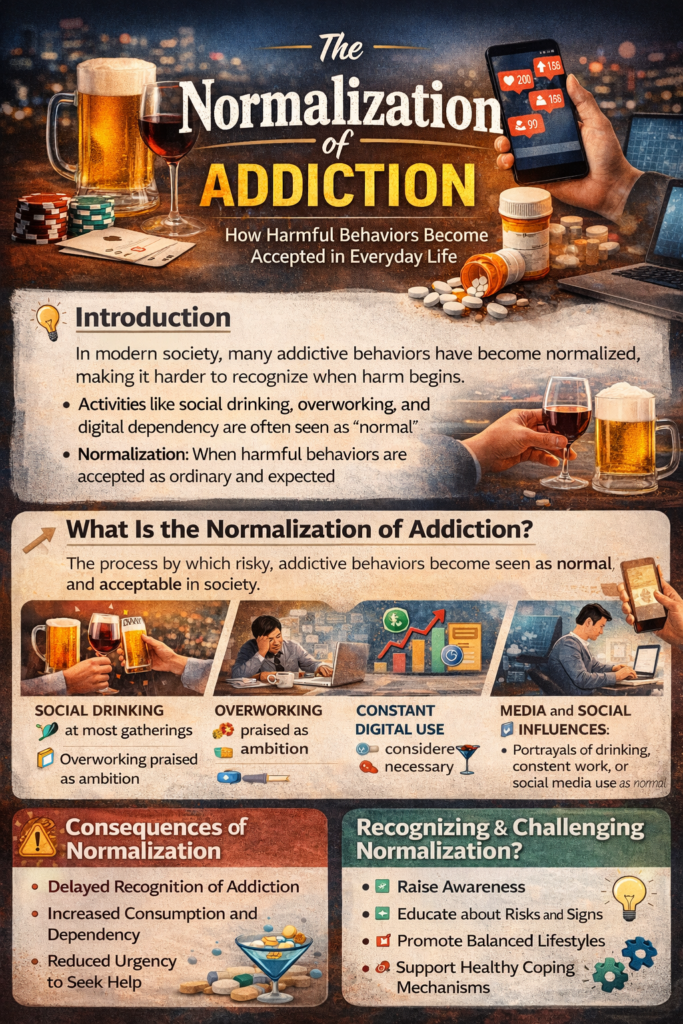
Addiction is typically viewed as a serious and harmful condition, yet in modern society, many addictive behaviors have become normalized. Activities such as social drinking, excessive work, and constant digital engagement are often accepted as part of everyday life, making it difficult to distinguish between healthy behavior and harmful dependency. This normalization is shaped by cultural values, social expectations, and economic influences that promote and sustain certain habits. As a result, addiction can become hidden in plain sight, delaying recognition and intervention. Understanding the normalization of addiction requires a critical examination of how society defines what is “acceptable” and how those definitions impact individual behavior.
Blurring the Line: The Normalization of Addiction in Modern Society
Addiction is often viewed as a serious and harmful condition, yet many addictive behaviors have become increasingly normalized in modern society. From alcohol use and prescription medications to workaholism and digital dependency, certain forms of addiction are widely accepted—even encouraged. This normalization can obscure the risks associated with these behaviors and make it more difficult to recognize when use becomes harmful. Understanding the normalization of addiction requires examining how cultural values, social norms, and economic systems shape what is considered acceptable behavior.
- Addiction is influenced by:
- Cultural norms
- Social acceptance
- Economic and institutional factors
- Normalization can make harmful behaviors seem ordinary or expected
What Does “Normalization of Addiction” Mean?
Normalization refers to the process by which behaviors that were once seen as problematic become accepted as part of everyday life.
- Examples include:
- Social drinking is a standard part of social interaction
- Overworking is being praised as ambition
- Constant digital use seen as necessary
- These behaviors may:
- Mask underlying dependency
- Reduce awareness of potential harm
Why Does Society Normalize Certain Addictions?
Not all addictions are treated equally. Some are normalized due to cultural, economic, or social factors.
- Contributing factors:
- Cultural traditions (e.g., alcohol in celebrations)
- Economic interests (industries that profit from consumption)
- Social pressures to conform
- Result:
- Some addictions are accepted, while others are stigmatized
The Role of Media and Culture
Media and popular culture often reinforce the normalization of addictive behaviors.
- Examples:
- Portrayal of drinking as fun or glamorous
- A productivity culture that rewards overwork
- Social media encourages constant engagement
- Impact:
- Shapes perceptions of what is “normal.”
- Influences behavior, especially among younger individuals
Consequences of Normalization
While normalization may reduce stigma in some cases, it can also have harmful effects.
- Risks include:
- Delayed recognition of addiction
- Increased consumption and dependency
- Reduced urgency to seek help
- It may also:
- Blur the line between use and misuse
The Double Standard in Addiction
Society often applies inconsistent standards when judging addiction.
- Examples:
- Alcohol use is widely accepted
- Drug addiction is heavily stigmatized
- This creates:
- Unequal treatment of individuals
- Bias in policy and healthcare responses
Challenging the Normalization
Addressing normalized addiction requires awareness and critical reflection on societal values.
- Strategies include:
- Education about risks and signs of addiction
- Promoting healthier coping mechanisms
- Encouraging balanced lifestyles
- Goal:
- Distinguish between healthy behavior and harmful patterns
Balancing Awareness and Stigma
While it is important to challenge normalization, it is equally important to avoid increasing stigma.
- Key balance:
- Recognize harmful behaviors
- Maintain compassion for individuals
- Effective approach:
- Awareness + empathy
Conclusion
The normalization of addiction highlights how strongly social and cultural forces influence our perceptions of harmful behavior. While some forms of addiction are accepted and overlooked, and others are stigmatized, both require thoughtful and compassionate responses. Recognizing when addiction is normalized is an important step in addressing it, as it encourages individuals and society to question what is considered “normal” and why. Ultimately, creating healthier environments depends on increasing awareness and having the willingness to challenge the systems and norms that allow harmful behaviors to persist.
Awareness in a Culture of Acceptance: Self-Management Strategies for Understanding the Normalization of Addiction
In modern society, many addictive behaviors have become normalized, making them difficult to recognize and address. From social drinking to constant digital engagement, these behaviors are often seen as acceptable or even expected. This normalization can blur the line between healthy use and harmful dependency. Self-management strategies are essential in helping individuals critically evaluate these norms, recognize potential risks, and take control of their behaviors. By developing awareness and intentional habits, individuals can navigate a culture where addiction is often hidden in plain sight.
- Normalization can:
- Mask harmful behaviors
- Delay recognition of addiction
- Self-management helps individuals:
- Develop awareness
- Make intentional choices
Understanding Self-Management in This Context
Self-management involves actively monitoring and regulating one’s thoughts, behaviors, and habits. When applied to normalized addiction, it helps individuals question what is considered “normal” and assess its impact.
- Key components:
- Self-awareness
- Critical thinking
- Behavioral regulation
- Goal:
- Distinguish between social norms and personal well-being
Strategy 1: Developing Awareness of Personal Habits
The first step is recognizing patterns that may be normalized but potentially harmful.
- Reflect on:
- Frequency of substance use or behaviors
- Situations that encourage use
- Ask:
- “Is this a choice or a habit I feel dependent on?”
- Outcome:
- Increased awareness of hidden patterns
Strategy 2: Questioning Social Norms
Not all socially accepted behaviors are healthy. Self-management involves critically evaluating these norms.
- Consider:
- Why certain behaviors are encouraged
- Who benefits from their normalization
- Examples:
- Social pressure to drink
- Constant productivity expectations
- Goal:
- Shift from automatic acceptance → intentional decision-making
Strategy 3: Identifying Personal Triggers
Even normalized behaviors can be driven by emotional or psychological triggers.
- Common triggers:
- Stress
- Social anxiety
- Boredom
- Self-management involves:
- Recognizing these triggers
- Finding alternative responses
- Helps prevent:
- Unconscious reliance on addictive behaviors
Strategy 4: Setting Personal Boundaries
In a culture that normalizes certain behaviors, boundaries are essential.
- Examples:
- Limiting alcohol consumption
- Setting screen time limits
- Prioritizing rest over overwork
- Benefits:
- Maintains control over behavior
- Reduces risk of dependency
Strategy 5: Developing Healthy Alternatives
Replacing normalized but harmful behaviors with healthier options supports long-term well-being.
- Alternatives include:
- Physical activity
- Mindfulness practices
- Social activities that do not involve substances
- Goal:
- Build habits that support balance and health
Strategy 6: Practicing Self-Reflection and Accountability
Ongoing reflection helps individuals stay aware of their behavior and adjust when necessary.
- Methods:
- Journaling
- Regular self-check-ins
- Questions to ask:
- “Is this behavior helping or harming me?”
- Promotes:
- Continuous growth and adjustment
Strategy 7: Managing External Influences
External pressures often reinforce normalized behaviors, making them harder to resist.
- Influences include:
- Peer pressure
- Media messaging
- Cultural expectations
- Strategy:
- Limit exposure to unhealthy influences
- Surround yourself with supportive environments
Limits of Self-Management
While self-management is important, it is not always sufficient on its own.
- Limitations include:
- Strong social pressure
- Lack of awareness or education
- Underlying mental health issues
- Additional support may include:
- Therapy
- Community resources
Conclusion
Understanding the normalization of addiction requires both awareness and intentional action. Self-management strategies empower individuals to question societal norms, recognize harmful patterns, and make choices that prioritize well-being over conformity. In a culture where addiction can be hidden behind acceptance, taking control of one’s habits becomes a critical step toward prevention and long-term health. Self-management promotes awareness, control, and healthier decision-making, allowing individuals to navigate their environments more consciously. Ultimately, true balance requires not only questioning norms but also setting clear boundaries that support sustainable and responsible living.
Guiding Awareness at Home: Family Support Strategies for Understanding the Normalization of Addiction
In today’s society, many addictive behaviors are normalized, making them difficult to recognize within everyday life. Families play a critical role in shaping how these behaviors are understood, addressed, or even overlooked. When addiction is hidden behind social acceptance—such as casual drinking, overworking, or excessive screen use—families may unintentionally reinforce harmful patterns. By adopting intentional and informed strategies, families can help identify these behaviors early, promote awareness, and support healthier choices. Understanding the normalization of addiction begins at home, where attitudes and behaviors are often formed and reinforced.
- Families influence:
- Perceptions of “normal” behavior
- Early recognition of harmful patterns
- Responses to addiction
- Support must focus on awareness, communication, and balance
Understanding Normalization in Family Contexts
Families may unknowingly normalize certain behaviors by treating them as routine or acceptable.
- Examples include:
- Encouraging alcohol use at social events
- Praising overwork or constant productivity
- Overlooking excessive screen time
- These patterns can:
- Blur the line between use and misuse
- Delay recognition of addiction
Awareness is the first step in changing these dynamics.
Strategy 1: Promoting Open and Honest Communication
Open communication allows family members to discuss behaviors without fear of judgment.
- Encourage:
- Conversations about habits and coping mechanisms
- Sharing concerns in a supportive way
- Avoid:
- Dismissive or minimizing responses
- Outcome:
- Builds trust and early awareness of potential issues
Strategy 2: Modeling Healthy Behaviors
Family members influence each other through their own actions.
- Examples of modeling:
- Practicing moderation
- Demonstrating healthy coping strategies
- Impact:
- Sets a standard for what is truly healthy
- Reinforces:
- Conscious behavior rather than automatic habits
Strategy 3: Questioning “Normal” Together
Families can work together to critically examine what is considered acceptable behavior.
- Discuss:
- Why certain behaviors are normalized
- Whether they are beneficial or harmful
- Helps:
- Develop critical thinking
- Encourage intentional choices
Strategy 4: Setting Family Boundaries
Establishing clear boundaries helps prevent normalized behaviors from becoming harmful.
- Examples:
- Limiting substance use at home
- Setting screen time expectations
- Prioritizing rest and balance
- Benefits:
- Creates structure
- Reduces risk of dependency
Strategy 5: Recognizing Early Warning Signs
Families are often the first to notice changes in behavior.
- Warning signs may include:
- Increased reliance on substances or habits
- Changes in mood or behavior
- Withdrawal from family or responsibilities
- Early recognition allows:
- Timely support and intervention
Strategy 6: Encouraging Healthy Alternatives
Families can promote activities that support well-being instead of reinforcing normalized addictive behaviors.
- Alternatives include:
- Physical activities
- Family bonding activities
- Stress-reducing practices
- Goal:
- Replace harmful patterns with positive habits
Strategy 7: Reducing Judgment and Stigma
Even normalized addiction can carry hidden stigma, especially when it becomes problematic.
- Families should:
- Approach concerns with empathy
- Avoid blame or shame
- Outcome:
- Encourages openness and willingness to seek help
Challenges Families May Face
Families may struggle to address normalized behaviors due to cultural and social influences.
- Common challenges:
- Social pressure to conform
- Lack of awareness about risks
- Difficulty changing long-standing habits
- These challenges require:
- Patience
- Education
- Consistent effort
Conclusion
Family support is essential in understanding and addressing the normalization of addiction. By fostering awareness, encouraging open communication, and setting healthy boundaries, families can help distinguish between acceptable behavior and harmful patterns. In a society where addiction is often hidden within everyday norms, families play a critical role in building a culture of intentional living that prioritizes well-being over habit. Effective family strategies include communication, awareness, and boundaries, all of which support healthier choices and early recognition of risk. Lasting impact comes from challenging normalized behaviors and consistently reinforcing positive, balanced lifestyles that promote long-term health and stability.
From Awareness to Action: Community Resource Strategies for Understanding the Normalization of Addiction
In many communities, addictive behaviors have become normalized, making them difficult to identify and address. From social drinking to digital overuse, these behaviors are often embedded in everyday life and reinforced by cultural and social norms. Community resources play a critical role in helping individuals recognize these patterns, understand their risks, and access support when needed. By promoting awareness, education, and accessible services, communities can challenge harmful norms and foster healthier environments.
- Community resources shape:
- Public understanding of addiction
- Access to education and support
- Social attitudes toward behavior
- Effective strategies promote awareness, prevention, and informed action
Understanding Normalization at the Community Level
Communities influence what is considered “normal” behavior, often reinforcing patterns that may be harmful over time.
- Normalization occurs through:
- Cultural traditions
- Social expectations
- Media and local environments
- Community impact:
- Can either reinforce or challenge harmful behaviors
- Goal:
- Shift from unquestioned acceptance → informed awareness
Strategy 1: Community Education and Awareness Campaigns
Education is one of the most effective ways to address normalized addiction.
- Initiatives include:
- Workshops and seminars
- Public health campaigns
- School-based education programs
- Focus on:
- Recognizing early signs of addiction
- Understanding risks of normalized behaviors
- Outcome:
- Increased awareness and prevention
Strategy 2: Promoting Healthy Social Norms
Communities can reshape what is considered acceptable behavior by encouraging healthier alternatives.
- Examples:
- Alcohol-free social events
- Wellness-focused community programs
- Benefits:
- Reduces pressure to engage in harmful behaviors
- Encourages balanced lifestyles
Strategy 3: Expanding Access to Support Services
Accessible resources help individuals address issues before they escalate.
- Services include:
- Counseling centers
- Support groups
- Outreach programs
- Importance:
- Early intervention
- Reduced barriers to seeking help
Strategy 4: Creating Safe and Inclusive Spaces
Safe environments encourage individuals to reflect on their behaviors without fear of judgment.
- Examples:
- Peer support groups
- Community wellness spaces
- Benefits:
- Reduces stigma
- Encourages open discussion
- Supports:
- Honest self-reflection and growth
Strategy 5: Addressing Media and Cultural Influences
Communities must critically examine how media and culture promote normalized addiction.
- Strategies:
- Media literacy programs
- Public discussions on cultural norms
- Goal:
- Help individuals question messages that glamorize harmful behaviors
Strategy 6: Integrating Preventive and Holistic Programs
Addressing normalized addiction requires focusing on overall well-being, not just substance use.
- Programs may include:
- Mental health services
- Stress management workshops
- Youth engagement activities
- Benefit:
- Reduces reliance on harmful coping mechanisms
Challenges in Community Efforts
Communities often face barriers in addressing normalized addiction.
- Common challenges:
- Cultural resistance to change
- Limited funding and resources
- Lack of awareness or education
- These challenges can:
- Slow progress
- Reinforce existing norms
Conclusion
Community resources are essential in challenging the normalization of addiction and promoting healthier behaviors. By emphasizing education, improving access to support, and encouraging cultural reflection, communities can shift perceptions and foster a stronger commitment to healthier norms. Addressing normalized addiction requires collective responsibility, where individuals, families, and institutions work together to redefine what is considered acceptable. Lasting impact depends on ongoing awareness and active community engagement, ensuring that prevention and recovery are supported through consistent, informed, and unified efforts.
Frequently Asked Questions
Here are some common questions:
1. What does “normalization of addiction” mean?
It refers to the process where behaviors that can be addictive become socially accepted or expected, making them seem harmless or routine, even when they may be risky.
2. What are examples of normalized addictive behaviors?
Common examples include:
- Social drinking
- Excessive work (workaholism)
- Constant social media or phone use
- Overuse of prescription medications
These behaviors are often seen as “normal” despite potential harm.
3. Why does society normalize certain addictions?
Normalization happens due to:
- Cultural traditions (e.g., alcohol in celebrations)
- Economic interests (industries profiting from consumption)
- Social pressure to conform
These factors make some behaviors more acceptable than others.
4. Does normalization make addiction less harmful?
No. Normalization changes perception, not reality.
- The risks and consequences remain
- It may actually increase harm by delaying recognition
5. How does normalization affect individuals?
It can:
- Make harmful behaviors harder to recognize
- Increase frequency of use
- Reduce motivation to seek help
People may not realize they have a problem because it feels “normal.”
6. Why are some addictions accepted while others are stigmatized?
This is due to:
- Cultural values
- Legal status
- Economic and social power
For example:
- Alcohol is widely accepted
- Illicit drugs are heavily stigmatized
This creates a double standard.
7. What role does the media play in normalization?
Media often:
- Portrays addictive behaviors as fun or glamorous
- Reinforces social norms
This influences how people perceive and engage in these behaviors.
8. Can normalization delay addiction treatment?
Yes. When behaviors are normalized:
- Warning signs may be ignored
- Individuals may not seek help early
- Problems may worsen over time
9. How can someone recognize normalized addiction?
Ask:
- Is this behavior frequent or difficult to control?
- Am I using it to cope with stress or emotions?
- Is it affecting my health, relationships, or responsibilities?
Awareness is key to identifying hidden patterns.
10. What is the difference between use and misuse?
- Use: Controlled and does not negatively impact life
- Misuse: Leads to negative consequences or loss of control
Normalization can blur this distinction.
11. Can normalization reduce stigma?
In some cases, yes—but it can also:
- Minimize the seriousness of addiction
- Prevent honest discussions about harm
Balance is needed between awareness and compassion.
12. What role do families play in normalization?
Families can:
- Reinforce certain behaviors as acceptable
- Help identify and challenge harmful patterns
They are often the first to influence what is considered “normal.”
13. How can communities address normalized addiction?
Communities can:
- Provide education and awareness programs
- Promote healthier norms
- Increase access to support services
This helps shift perceptions and behaviors.
14. Is it possible to change normalized behaviors?
Yes, but it requires:
- Awareness
- Intentional choices
- Support systems
Change can be gradual but meaningful.
15. What is the key takeaway about normalization of addiction?
Normalization can hide risk and delay action.
- Just because something is common does not mean it is healthy
- Awareness and critical thinking are essential
Conclusion
The normalization of addiction reveals the powerful role that society plays in shaping perceptions of harmful behavior. While some forms of addiction are widely accepted and others are heavily stigmatized, both can have serious consequences if left unaddressed. Recognizing normalized addiction is an essential step toward creating greater awareness and encouraging healthier choices. Moving forward, it is important to balance awareness with compassion, ensuring that individuals are supported rather than judged. Ultimately, challenging the normalization of addiction requires both personal reflection and collective change, as societies redefine what it means to live in a healthy and balanced way.
Video: