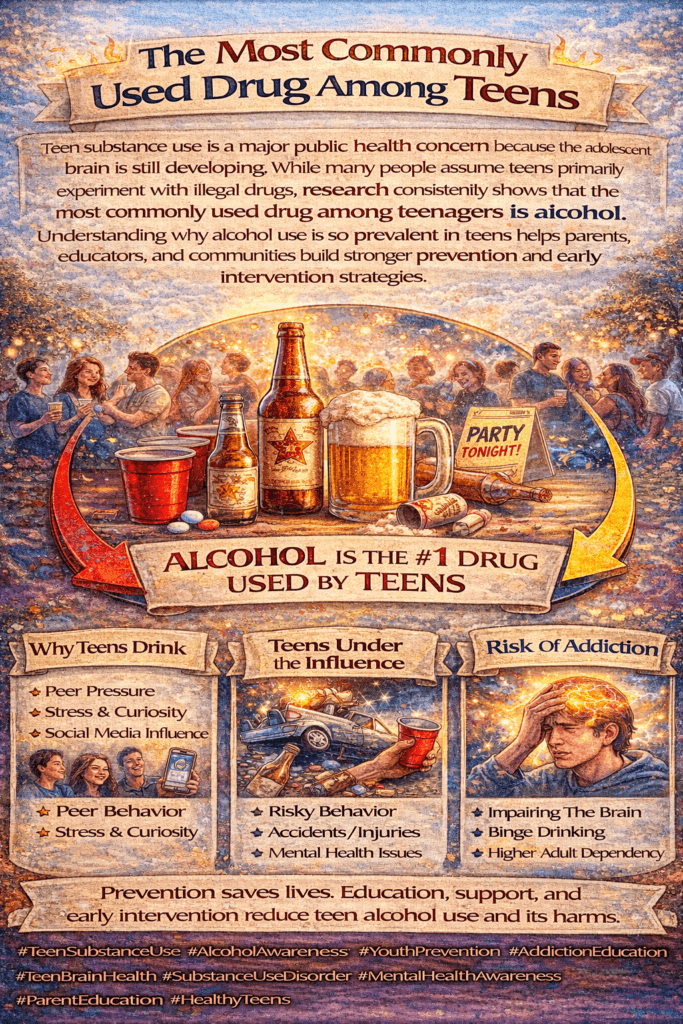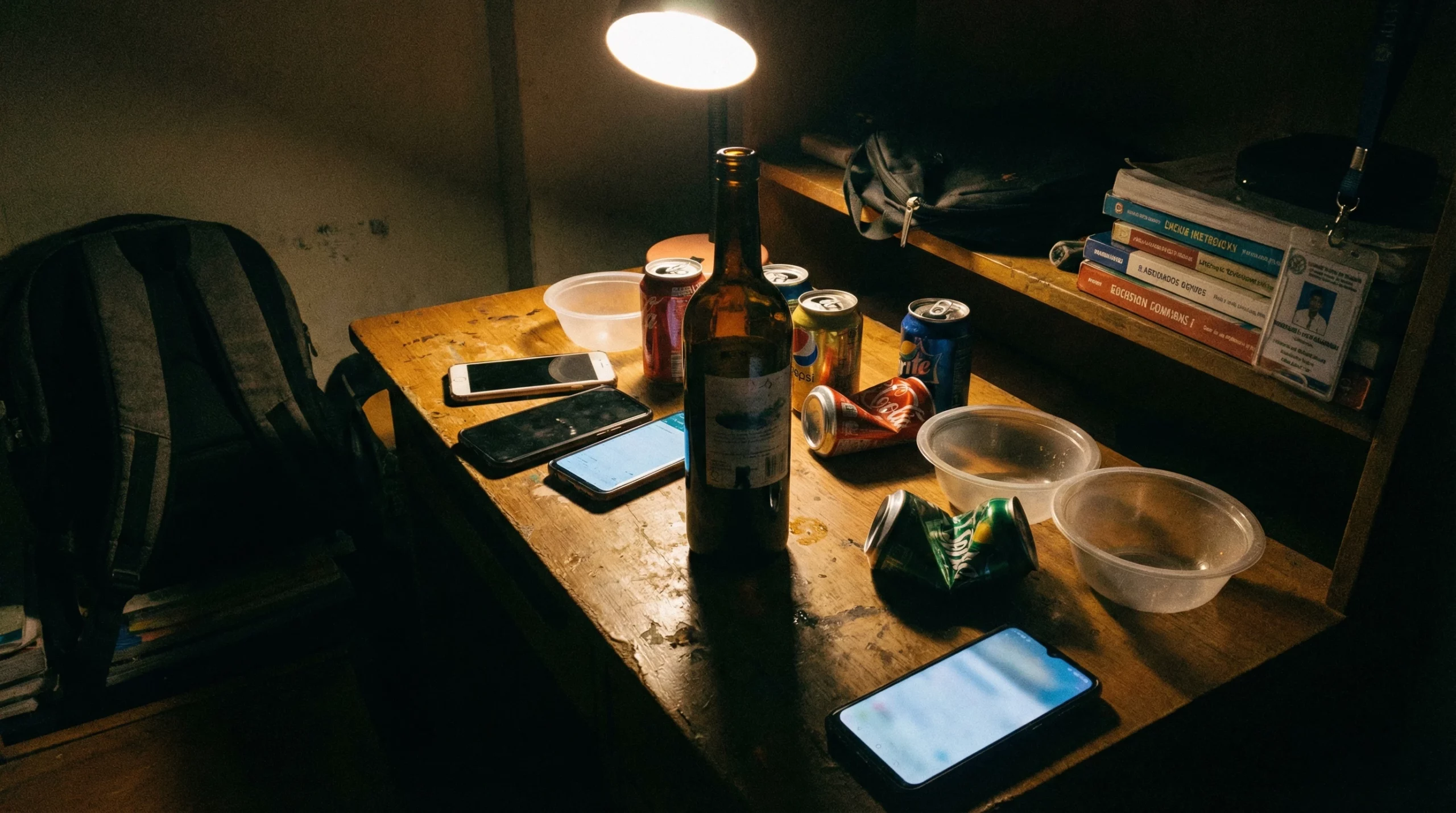
Teen drug use is something I’ve spent a fair bit of time thinking about, mostly because it comes up so often in conversations among parents, teachers, and people working with young folks. Plenty of stories and headlines seem to focus on “hard” drugs, but the real picture is a little different. The most commonly used drug among teens in the United States is actually alcohol, not marijuana, vaping products, or prescription pills. Knowing why this is the case, what the trends look like, and how it all affects families can help put things into perspective and guide folks toward practical answers.
Understanding Teen Drug Use: What’s Really Going On?
Alcohol gets most of the attention for a pretty clear reason. It’s legal for adults, readily available, and has deep roots in American culture. Based on yearly surveys like the Monitoring the Future Study (from the University of Michigan and the National Institute on Drug Abuse), alcohol consistently ranks as the most-used substance among teenagers, even outpacing marijuana and nicotine, though vaping those substances has climbed in recent years.
This doesn’t mean teens aren’t experimenting with other drugs, but if you look at the statistics, about 30-40% of high school seniors report having consumed alcohol in the past month, while the numbers for marijuana or vaping consistently land lower. What this shows is that alcohol isn’t just an issue among adults—it’s a presence in teen social circles as well.
When people talk about “drug use,” they sometimes mean illegal drugs only, but in most health surveys, alcohol is included right alongside the rest. It’s important to recognize this because leaving out alcohol paints a pretty different and less accurate view of what’s happening with young people.
The reasons behind teen alcohol use are worth a closer look. Alcohol is part of many social events, family functions, and even media portrayals. Its image is often more relaxed than that of other substances, making it feel less risky or taboo to curious teens. Additionally, there is peer influence—many young people feel excluded if they decline a drink at a gathering. This blend of social pressure and normalizing cues makes alcohol a top choice among teens.
Why Alcohol is so Accessible and Appealing for Teens
I’ve noticed that lots of teens see alcohol as less risky than other substances, sometimes because they see it at home, and other times because movies and TV treat drinking as a pretty normal part of life. It’s a social thing for many, sort of a rite of passage or a way to bond with friends.
Accessibility plays a big role. Getting a bottle of liquor or some beers isn’t usually too tough for a determined teen, either from sneaking from home, getting an older sibling to help, or buying from someone willing to sell without checking ID. Plus, family norms have a big influence. A relaxed family attitude toward drinking often shapes how safe teens feel about trying it themselves.
The idea that alcohol is “natural” or “not as bad” as other drugs makes it easier for teens to justify experimenting, and the legal status for adults can give the impression that it’s less likely to be harmful. But the facts show that teenage brains are still developing, and alcohol has a direct effect on growth, decision-making, and even risk for dependency down the road.
Cultural traditions play their part too. In some families, alcohol shows up at celebrations and holidays. Sometimes, parents even let teens have a sip here and there, thinking it’s better to introduce drinking at home than have kids try it secretly. However, research shows that setting clear boundaries often reduces risky behavior over time.
Trends and Stats: How Teen Drug Use Has Switched Up
If I look at long-term trends, the rate of adolescent drinking has declined since the 1970s and 1980s, when laws and attitudes were somewhat more lenient. Programs in schools, public-service campaigns, and stricter identification policies have all contributed to lowering those numbers. Still, even with this good news, underage drinking remains pretty common, especially in high school environments or at teen parties.
It’s also really interesting to see how other substances have moved on the popularity charts. For instance, vaping showed up quickly within the last decade, and marijuana use has edged up as some states have legalized adult cannabis. Despite the new focus on these trends, alcohol continues to lead the pack among underage users.
- Alcohol Use: Around one in four high school students reports drinking alcohol in the last 30 days.
- Marijuana Use: Roughly one in five teens reports using marijuana in the same time frame.
- Vaping: Numbers for nicotine vaping keep shifting, but peaked near 25% for high school seniors in some of the recent Monitoring the Future surveys.
- Prescription Drugs: Less common, but misuse, especially of painkillers or stimulants, still pops up in certain circles.
It’s worth adding that recent years have seen some impacts from the COVID-19 pandemic. With less access to social events, some surveys saw a dip in casual alcohol use among teens during lockdowns. Still, as events recur, so does access—and so does the need for families and communities to remain vigilant.
Risks Linked with Early Alcohol Use
I often see people minimize the downsides of teen alcohol use, but research tells a different story. Drinking before the age of 21 can affect memory, learning, and decision-making because the brain is still developing. Risky behavior, like driving under the influence, unsafe sex, or fights, goes up with even a little bit of drinking, especially for kids who are already impulsive or dealing with stress.
Long-term habits are more likely to stick when they start early. Studies from the Centers for Disease Control and Prevention (CDC) and the Substance Abuse and Mental Health Services Administration (SAMHSA) show that people who drink as teens are more likely to have trouble with addiction as adults. There are also real risks for mental health. Alcohol can play into depression and anxiety, even if it feels like a social “escape” at first.
Besides addiction, underage alcohol use can affect school performance and relationships with family and friends. Teens might miss school, lose interest in hobbies, or start to pull away from people who aren’t drinking. These shifts can exacerbate the challenges inherent to adolescence. Health professionals point out that early intervention—catching problems sooner rather than later—gives teens a better shot at staying healthy.
Spotting the Early Warning Signs
For anyone working with or caring for teens, there are some early signs of alcohol use that come up pretty frequently. Spotting these isn’t about snooping or overreacting, but it does help to know what to watch for:
- Changes in Friend Groups: If a teen suddenly has a new set of friends or is away from home more often, it’s worth checking in.
- Hiding Behaviors: Being secretive about plans, locking bedroom doors, or acting defensive about going out at night could be a red flag.
- Personality Shifts: Mood swings, sudden drop in grades, skipping school, or losing interest in hobbies sometimes signal a problem.
- Physical Clues: Smelling like alcohol, slurred speech, or unsteady movement. These sometimes crop up after parties or sleepovers.
If you notice several of these happening at once, it’s a good idea to ask open questions and keep the door open for conversations. Teens who feel supported are more likely to share what’s going on.
Good Ways to Respond and Prevent Teen Drinking
Open conversations tend to work best. From what I’ve seen, adolescents are much more likely to listen when they feel heard rather than judged. Having honest discussions about risks, without exaggeration, goes a long way further than scare tactics. Teens appreciate real examples and a direct, up-front tone.
Parents setting clear expectations can be huge. Letting teens know your stance isn’t about laying down the law, but about sharing values and reasons in a way that feels personal and believable. Inviting adolescents to help set rules, rather than lecturing, often goes over much better.
- Modeling Healthy Choices: Adults who show safe drinking habits or choose not to drink send strong messages about what’s normal and what’s safe.
- Making Plans Together: If your teen is headed to a party, talk through what they’ll do if offered a drink and how they’ll get home safely. Having a plan helps.
- Keeping Track: This doesn’t mean constant surveillance, but knowing where your teen is and who they’re with shows care and concern.
Regular family meals and check-ins can help adolescents feel anchored, reducing the likelihood that they’ll turn to substances for comfort or excitement. Encouragement to participate in sports, clubs, or other activities can provide positive alternatives that reduce alcohol’s centrality in their social lives.
How Schools and Communities Can Make a Difference
Prevention is most effective when everyone gets involved: schools, communities, and families. Programs in health class, for instance, that teach life skills and cover everything from coping with stress to making decisions under peer pressure, are pretty handy.
Many communities hold informational nights for parents or offer safe spaces where teens can hang out without being pushed toward risky behavior. Active after-school clubs, sports teams, and creative outlets are another way to provide young people with options beyond parties centered on drinking.
Some schools also connect families with local services or offer support for teens who are already experimenting with alcohol. Early support can mean the difference between occasional use and serious problems later on.
Frequently Asked Questions
Question: Is it really a big deal if my teen tries alcohol once or twice?
Answer: Occasional use might not cause long-term damage by itself, but early alcohol use can open the door to more frequent drinking and bigger risks. Teens who start early are statistically more likely to have problems with alcohol later on.
Question: What should I do if I think my teen has been drinking?
Answer: Stay calm and talk openly. Ask questions without accusing, and let your teen share their side. If you see a pattern, don’t hesitate to reach out for help, either from a school counselor or a healthcare provider.
Question: Are other drugs as common as alcohol among teens these days?
Answer: Alcohol still leads the way among teens. Marijuana and vaping come next in terms of regular use, while other illegal or prescription drugs are less common but can pose bigger risks.
Wrapping It Up: Key Takeaways for Families
Teen drug use is a complicated topic, but the facts show that alcohol is still the number one substance used by teenagers. Understanding why teens are drawn to alcohol, what puts them at risk, and how to spot the signs can help families feel better equipped to handle the situation. Being honest and keeping communication lines open are super important, and both schools and communities have a practical role to play, too. Staying proactive and involved makes a real difference in helping teens make healthier choices.
Video: Parents Have No Idea What Their Teens Are Drinking #TeenDrugs #Warning #Parenting