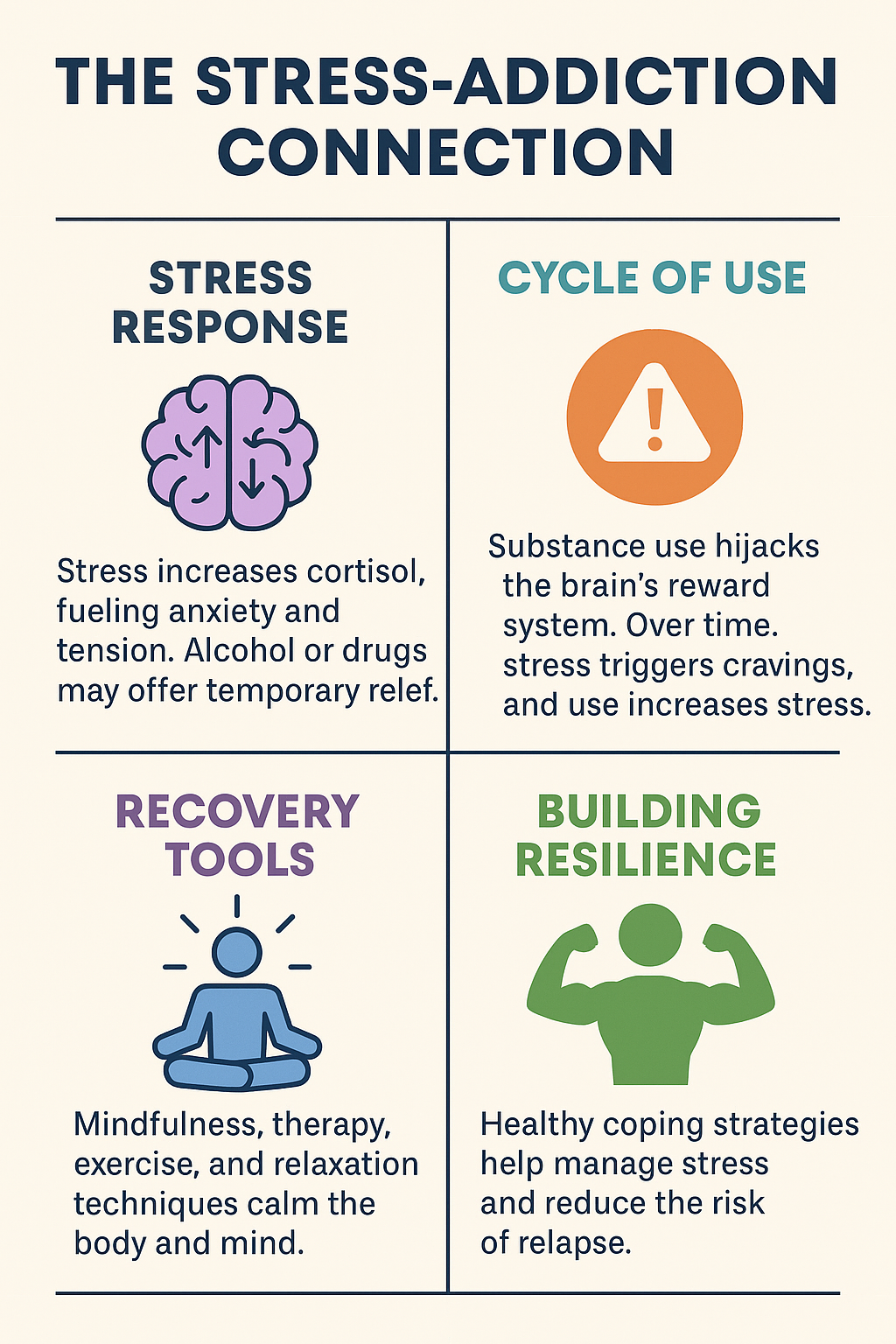
Stress and substance abuse often form a tough cycle to break. Many turn to substances to cope, but this usually deepens both stress and dependence. Understanding how stress affects the brain helps spot warning signs and build healthier coping skills. In this guide, we’ll explore why stress can trigger substance use, who’s most at risk, and practical steps to manage both for lasting recovery.
The Basics: How Stress and Substance Abuse Connect
When life gets challenging and stressful, it’s standard for people to look for ways to feel better quickly. Some might turn to alcohol, prescription drugs, or other substances to find relief. This is partly because stress doesn’t just affect your mood; it actually changes how your brain works. Stress hormones like cortisol get pumped up, throwing off your natural balance and messing with sleep, focus, and memory.
Substances like alcohol or stimulants might seem to help at first because they take the edge off. But over time, using these substances to deal with stress brings new problems, including dependence and a bigger risk of addiction. The tricky part is that their relief is short-lived, and the bounce-back can worsen stress afterwards.
Researchers have found that repeated stress can make the brain’s reward circuits more sensitive. This increases the appeal of risky or impulsive behaviors, substance use included. That’s why stress and substance abuse become so tangled up for many people.
Why Some People Are More Vulnerable
Stress affects everyone, but not everyone turns to substances when life gets heavy. Genetics, environment, personality, and even previous experiences with trauma all play a role in how someone responds to stress.
For example, people with a family history of addiction might have a stronger biological response to drugs or alcohol. Past trauma or chronic stress can also boost the risk. When life has been tough for a long time, your brain might be wired to crave the fastest relief possible.
- Biology: Genes influence how your body handles both stress and substances. Some folks feel the relaxing effects more strongly, while others barely notice.
- Mental Health: Anxiety, depression, or other mood disorders make coping even harder, which sometimes leads people to use substances as an escape.
- Social Circles: Being around people who use or abuse substances makes it more likely you’ll try them too when you feel overwhelmed.
- Past Trauma: Childhood adversity or trauma can wire the brain toward wanting to self-soothe, even if those attempts lead down an unhealthy path.
In addition, how someone copes with stress day to day matters a lot. Some people have found positive outlets, such as exercise, reaching out to friends, or creative hobbies, while others might feel stuck or unsupported. If healthy routines aren’t in place, it’s easier to slip into substance use as a quick fix. Over time, small stresses stack up, draining energy and weakening the willpower needed to make better choices.
Common Signs Stress is Fueling Substance Use
Spotting when stress is causing substance use to switch from casual to risky is really important. Here are some warnings I’ve seen (and heard people talk about):
- You’re drinking or using drugs to unwind after every stressful day or event
- Use happens more often or in larger amounts, especially after arguments or work problems
- Life feels overwhelming without a substance “break.”
- Other coping tools (like hobbies, friends, or exercise) start to slide away
- You notice withdrawal symptoms or cravings as stress rises
If this sounds familiar, it’s a good time to pause and examine the pattern. Early awareness can prevent small slips from turning into bigger problems.
How Stress Makes Substance Abuse More Likely
I’ve seen firsthand how stress and substance use keep each other going in a frustrating cycle. Here’s a simple breakdown:
- Stress Hits: Deadlines, fights, money worries, or emotional pain trigger your body’s stress response.
- Looking for Relief: Alcohol or drugs offer fast, temporary comfort.
- Temporary Improvement: Stress fades for a bit, which convinces your brain that this method works.
- Rebound Effect: After the high, stress comes back stronger (sometimes with shame, anxiety, or withdrawal).
- Tolerance and Escalation: Higher doses are required over time to achieve the same effect, increasing the risk of dependence.
Over months or years, this routine can feel almost automatic, and much harder to stop. Understanding this pattern is the first step toward breaking free.
Healthy Ways to Cope with Stress Instead
Learning other ways to chill out is really valuable if you notice yourself leaning on substances for relief. Not every technique works for everyone, but here are some that people find helpful and practical:
- Physical Activity: Moving your body (walking, stretching, yoga, team sports) changes your chemistry and releases feel-good endorphins.
- Breathing or Meditation: Slow breathing or mindfulness practices calm the nervous system and help slow racing thoughts.
- Connecting with Others: Hanging out with supportive friends or family, or joining a club, keeps you busy in a healthy way and builds resilience.
- Creative Hobbies: Drawing, writing, music, or cooking can all serve as great “escape” valves that don’t bring regret later.
- Getting Outside: Nature is a powerful stressbuster; even just a few minutes in sunlight can make a difference on tough days.
- Talking to a Professional: Therapists or counselors have many tools to help people manage stress and learn better coping skills.
Sleep is another huge piece that often gets overlooked. When well-rested, making clear choices and handling what comes your way is more straightforward. Try to set a regular bedtime and put screens away before sleeping. Over time, improved sleep strengthens resilience against stress and substance cravings.
Barriers to Healthier Coping and How to Get Through Them
It’s not always easy to swap old habits for new ones, especially when stress is high. Some barriers come up for almost everyone:
- Lack of Time: It can feel impossible to fit in self-care when swamped, but even five-minute breaks add up over time.
- Feeling Skeptical: If hobbies or meditation sound “silly” or unhelpful, start small and notice the difference; sometimes it shows up faster than expected.
- Social Pressure: If you worry about fitting in, saying no to a drink or turning down a party invite can be tough. Practicing “scripts” or finding supportive allies helps.
- Mental Health Challenges: If depression or anxiety is making it hard to try new things, a mental health provider can support you with small, manageable steps.
Remember, setbacks will happen, but that doesn’t erase progress. Building new habits is tough, yet setbacks are part of the ride. Celebrate persistence and keep tweaking your methods until something sticks. The smallest moments of self-care, like taking a deep breath or reaching out to someone, can keep you moving forward even on the rough days.
The Value of Getting Help Early
The earlier stress-driven substance use gets attention, the easier it is to switch course. I’ve heard from many people who said the most challenging part was making the first call or admitting they needed help. Once they did, though, their toolkit expanded fast; therapy, rehab, group support, or even a close friend’s text message became the beginning of real change.
Real-Life Applications: Breaking the Cycle Every Day
Daily routines and simple check-ins make a big difference in creating new habits. Here’s what that can look like:
- Keeping a journal for a few weeks to spot stress triggers and patterns connected to substance use
- Setting up a “toolbox” of alternative coping strategies, like playing a favorite playlist, grabbing a book, or texting a buddy when stress hits
- Committing to minor lifestyle tweaks, like having water or tea instead of a drink after work, or heading outside before reaching for anything else
- Replacing harsh self-talk with more patient, compassionate reminders (“Rough day? I’ll handle this with a walk first”)
- Celebrating even small wins, like one less drink or one day choosing creativity over the old routine
It helps to jot down what works and what doesn’t. Over time, you’ll spot patterns—maybe Friday nights or a particular coworker are triggers—and you can make a game plan for those moments. Sharing your progress with someone who cares offers added motivation and support, lifting you on the rough days and cheering you on during the good times.
Frequently Asked Questions
People ask me about this connection all the time, so here are some straightforward answers to common questions:
Question: Why do I crave a drink or drug more when stressed?
Answer: Stress switches up brain chemicals and can trigger cravings for fast relief. Once your body learns that substances “work” for a few minutes, the craving can become automatic when stress returns.
Question: Can stress alone cause addiction?
Answer: Stress by itself doesn’t create addiction, but combined with genetic or social risks, it can play a significant role in starting and reinforcing the habit.
Question: What should I do if I notice myself reaching for substances every time I’m stressed?
Answer: Start by recognizing your triggers and trying some alternative coping tools. If it feels out of control or your health is changing, talk to someone you trust or a professional. Early support often leads to better outcomes.
Steps Forward: Creating a Healthy Relationship with Stress
Building healthier ways to handle stress doesn’t happen overnight, but each small change adds up. Understanding how stress and substance use connect puts you in a better position to make choices that match your real goals and values. Lots of support is available, and there are always ways to start fresh, no matter how tough things feel.
Learning more about your stress patterns, experimenting with new coping strategies, and reaching out for help when needed give you a much better chance of feeling good today and in the future. Making these changes takes patience, self-kindness, and sometimes outside guidance. Everyone’s journey looks a little different, but progress is absolutely possible.
Video: Break FREE from Stress and Addiction NOW