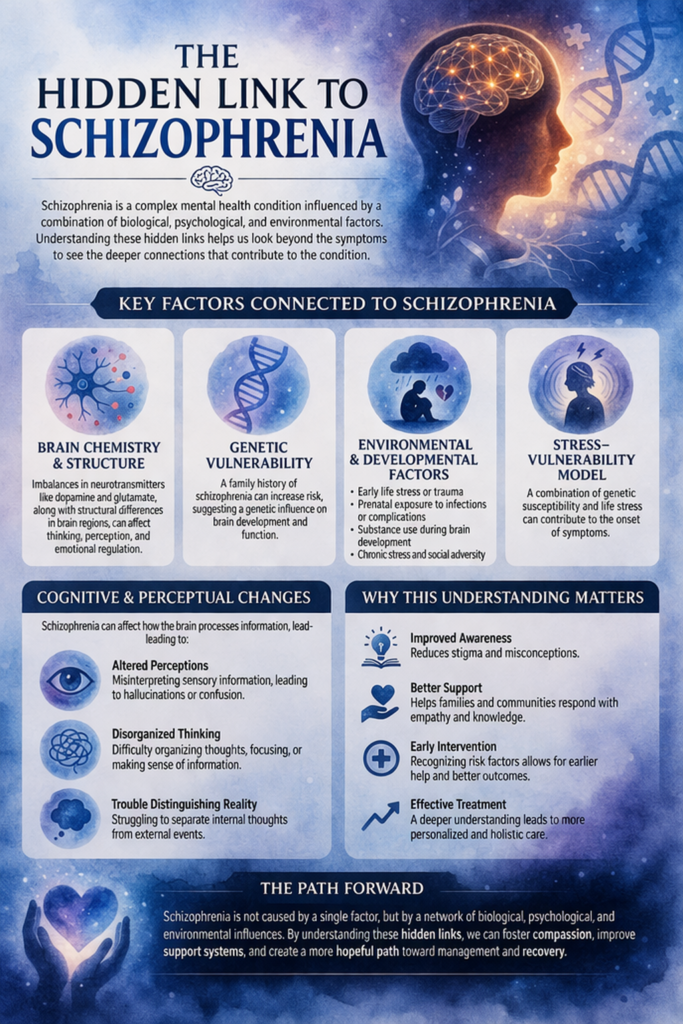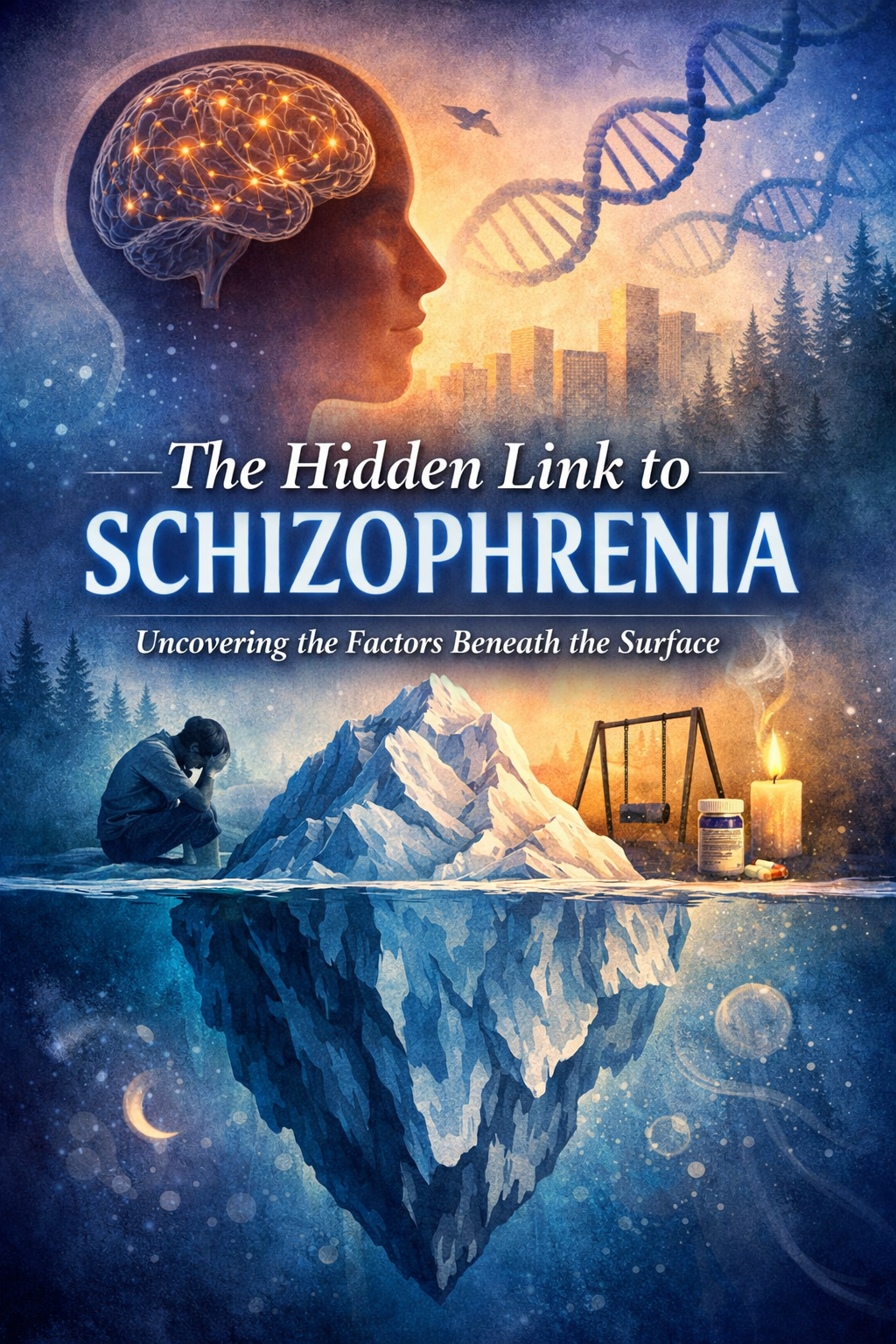
Schizophrenia is frequently perceived as a straightforward mental illness, characterized solely by its obvious symptoms, such as hallucinations or disorganized thoughts. However, beneath these outward signs lies a complex web of contributing factors, often referred to as the hidden links to schizophrenia. These factors include interactions between brain chemistry, genetic predisposition, environmental influences, and stress. Gaining an understanding of these underlying connections is crucial for developing a more accurate and compassionate perspective on the condition. By delving deeper than the visible symptoms, we can better understand how schizophrenia develops and discover more effective ways to manage it.
The Hidden Link to Schizophrenia: Understanding the Factors Beneath the Surface
Schizophrenia is often viewed as a complex and mysterious mental health condition, characterized by symptoms such as hallucinations, delusions, and disorganized thinking. While these symptoms are widely recognized, the underlying causes are less visible and far more intricate. Research suggests that schizophrenia does not arise from a single source, but rather from a combination of biological, psychological, and environmental factors. Exploring these hidden links is essential for developing a deeper understanding of the condition and improving approaches to treatment and support.
The Role of Brain Chemistry and Structure
One of the most significant underlying factors in schizophrenia involves changes in brain chemistry. Imbalances in neurotransmitters—particularly dopamine and glutamate—can affect how the brain processes information, leading to altered perceptions and thinking patterns.
Additionally, structural differences in certain brain regions have been observed in individuals with schizophrenia. These changes can influence memory, emotional regulation, and cognitive functioning, contributing to the symptoms experienced.
Genetics and Vulnerability
Genetics plays a strong role in increasing susceptibility to schizophrenia. Individuals with a family history of the condition are at a higher risk, suggesting that inherited traits can influence brain development and function.
However, genetics alone does not determine outcomes. Many people with a genetic predisposition never develop schizophrenia, highlighting the importance of other contributing factors.
Environmental and Developmental Influences
Environmental factors can act as triggers, especially when combined with genetic vulnerability. These may include:
- Early life stress or trauma
- Prenatal exposure to infections or complications
- Substance use during critical periods of brain development
- Chronic stress or social adversity
These influences can affect how the brain develops and responds to stress later in life.
The Stress-Vulnerability Connection
A key concept in understanding schizophrenia is the stress-vulnerability model. According to this model, individuals may have an underlying vulnerability (genetic or biological), and when exposed to significant stress, symptoms may emerge.
Stress can disrupt brain function, increase emotional sensitivity, and overwhelm coping mechanisms, making it harder to maintain stable mental functioning.
Cognitive and Perceptual Changes
Schizophrenia also involves differences in how individuals interpret reality. This includes:
- Difficulty distinguishing between internal thoughts and external events
- Altered perception of sensory information
- Challenges with attention, memory, and organization
These cognitive changes can make everyday experiences feel confusing or overwhelming.
The Importance of Early Understanding and Support
Recognizing the hidden links behind schizophrenia is crucial for early intervention and effective support. When individuals receive timely care—including therapy, medication, and social support—they are more likely to manage symptoms and maintain stability.
Understanding the condition also helps reduce stigma, encouraging more compassionate and informed responses.
A Multifaceted Perspective
Schizophrenia is not caused by a single factor, but by an interaction of multiple influences. By examining the biological, psychological, and environmental connections, we gain a clearer picture of how the condition develops.
Ultimately, uncovering the hidden links to schizophrenia allows for a more informed and empathetic approach. Rather than viewing it as an isolated condition, it can be understood as the result of complex processes within the brain and environment. With this perspective, individuals can receive better support, and the path toward management and recovery becomes more achievable.
Understanding from Within: Self-Management Strategies for Exploring the Hidden Link to Schizophrenia
Schizophrenia is a complex condition shaped by a combination of biological, psychological, and environmental factors. While medical treatment and professional support are essential, developing self-management strategies can empower individuals to better understand their experiences and reduce the impact of underlying triggers. By building awareness, structure, and coping skills, individuals can take an active role in managing symptoms and supporting long-term stability.
Building Awareness of Early Signs
Self-management begins with recognizing patterns. Many individuals experience early warning signs before symptoms intensify, such as:
- Changes in thinking or perception
- Increased stress or emotional sensitivity
- Difficulty concentrating or organizing thoughts
- Social withdrawal or changes in behavior
Identifying these signs early allows for quicker intervention and better symptom management.
Understanding Personal Triggers
While schizophrenia has biological roots, environmental and emotional triggers can influence symptom intensity. Common triggers may include:
- High levels of stress
- Disrupted sleep patterns
- Substance use
- Social isolation
Tracking these triggers through journaling or reflection helps individuals understand how different factors affect their mental state.
Managing Stress Effectively
Stress plays a major role in symptom flare-ups. Learning to regulate stress can reduce vulnerability and improve stability.
Helpful strategies include:
- Practicing deep breathing or mindfulness
- Engaging in regular physical activity
- Creating quiet, low-stimulation environments when overwhelmed
Reducing stress helps support clearer thinking and emotional balance.
Establishing Daily Structure
Routine provides predictability, which can be especially beneficial for individuals managing complex mental health conditions. A structured day can include:
- Consistent sleep and wake times
- Scheduled meals and activities
- Time for rest and relaxation
Structure reduces uncertainty and supports cognitive stability.
Strengthening Reality-Checking Skills
Some individuals may experience difficulty distinguishing between thoughts and external reality. Self-management can include gentle “reality-checking” strategies, such as:
- Asking, “Is there evidence for this thought?”
- Checking perceptions with a trusted person
- Writing down thoughts to evaluate them more clearly
These practices can help ground thinking and reduce confusion.
Encouraging Social Connection
Isolation can increase vulnerability to symptoms. Maintaining supportive relationships can provide:
- Emotional reassurance
- Feedback and perspective
- A sense of belonging and stability
Even small, consistent interactions can make a meaningful difference.
Supporting Treatment and Professional Care
Self-management works best alongside professional support. This includes:
- Taking prescribed medications as directed
- Attending therapy or counseling sessions
- Communicating openly with healthcare providers
Active participation in treatment strengthens overall outcomes.
Practicing Self-Compassion
Living with schizophrenia or related symptoms can be challenging. Self-compassion is essential in managing setbacks and maintaining motivation.
This involves:
- Avoiding harsh self-judgment
- Recognizing effort and progress
- Understanding that setbacks are part of the process
A compassionate mindset supports resilience and long-term growth.
A Balanced Approach to Understanding
Understanding the hidden links to schizophrenia is not about finding a single cause—it is about recognizing patterns and influences. Self-management strategies allow individuals to better navigate these complexities with awareness and intention.
In summary, while schizophrenia involves factors beyond personal control, individuals can still play an active role in managing their experiences. Through awareness, structure, stress management, and support, it is possible to reduce the impact of triggers and build a more stable and empowered path forward.
Supporting Understanding Together: Family Strategies for Exploring the Hidden Link to Schizophrenia
Schizophrenia is a complex mental health condition influenced by a combination of biological, psychological, and environmental factors. While individuals may experience the symptoms directly, families play a crucial role in understanding and supporting the underlying processes. By learning about the hidden links to schizophrenia—such as stress, brain function, and environmental triggers—families can provide meaningful, informed support that նպ fosters stability, reduces confusion, and strengthens recovery.
Building Awareness as a Family
Understanding schizophrenia begins with education. Families who take the time to learn about the condition are better equipped to respond with empathy rather than fear or misunderstanding.
This includes recognizing:
- That schizophrenia is not caused by a single factor
- The role of brain chemistry and genetics
- How stress and environment can influence symptoms
Increased awareness helps families move from uncertainty to informed support.
Creating a Supportive and Low-Stress Environment
Stress is a significant factor that can worsen symptoms. Families can help by creating an environment that promotes calm and predictability.
Helpful strategies include:
- Maintaining consistent routines
- Reducing conflict and high-pressure situations
- Encouraging a quiet, stable home atmosphere
A low-stress environment supports emotional regulation and mental clarity.
Encouraging Open Communication
Communication is essential in understanding how schizophrenia affects an individual. Families can foster trust by:
- Listening without judgment or interruption
- Asking gentle, open-ended questions
- Validating the individual’s feelings and experiences
Open communication allows individuals to feel safe sharing their thoughts and challenges.
Recognizing Early Warning Signs
Family members are often the first to notice changes in behavior or mood. Being aware of early signs—such as withdrawal, confusion, or increased stress—can help families respond quickly and seek appropriate support.
Early intervention can make a significant difference in managing symptoms.
Supporting Treatment and Professional Care
Families can play a key role in encouraging and supporting treatment plans, including:
- Helping with appointment scheduling
- Encouraging medication adherence (when prescribed)
- Supporting participation in therapy or counseling
Collaboration with healthcare providers ensures a more comprehensive approach to care.
Promoting Healthy Routines
Daily habits have a strong impact on mental stability. Families can support:
- Regular sleep schedules
- Balanced meals
- Opportunities for physical activity
These routines contribute to overall well-being and reduce vulnerability to symptom flare-ups.
Reducing Stigma and Building Understanding
Stigma can create barriers to support and recovery. Families who approach schizophrenia with understanding and acceptance help reduce shame and encourage openness.
This involves:
- Avoiding blame or labeling
- Using respectful, supportive language
- Educating others when appropriate
A stigma-free environment fosters confidence and trust.
Practicing Patience and Compassion
Recovery and symptom management are ongoing processes. Families should expect ups and downs and respond with patience.
This includes:
- Acknowledging progress, even if small
- Avoiding frustration when challenges arise
- Offering consistent emotional support
Compassion strengthens relationships and encourages resilience.
A Shared Path Toward Understanding
Understanding the hidden links to schizophrenia is not something individuals must do alone. When families engage in learning, communication, and support, they become an essential part of the healing process.
In summary, schizophrenia may be complex, but with informed and compassionate family support, it becomes more manageable. By creating a stable environment, encouraging open dialogue, and supporting treatment, families can help individuals navigate their experiences with greater confidence, understanding, and hope.
Community Matters: Resource Strategies for Understanding the Hidden Link to Schizophrenia
Schizophrenia is a complex condition influenced by a combination of biological, psychological, and environmental factors. While individuals and families play important roles in understanding and managing the condition, community resources provide essential support, education, and connection that deepen awareness of these underlying links. By engaging with community-based strategies, individuals can better understand triggers, access professional guidance, and build a supportive network that promotes stability and recovery.
The Importance of Community in Mental Health
Understanding schizophrenia can feel overwhelming when approached alone. Community resources help by:
- Providing shared knowledge and education
- Offering a connection with others who have similar experiences
- Reducing isolation and stigma
- Creating access to ongoing support systems
These elements make it easier to understand the condition and navigate its challenges.
Educational Programs and Public Awareness
Community organizations often offer workshops, seminars, and informational sessions focused on mental health. These programs help individuals and families:
- Learn about the biological and environmental factors linked to schizophrenia
- Understand early warning signs and symptom patterns
- Develop informed perspectives that reduce fear and confusion
Education empowers individuals to respond to schizophrenia with clarity rather than uncertainty.
Peer Support and Advocacy Groups
Peer support groups create a space where individuals can share experiences and learn from others who understand the condition firsthand.
These groups provide:
- Emotional support and validation
- Practical coping strategies
- A sense of belonging and connection
Advocacy organizations also help raise awareness and promote better understanding within the community.
Access to Professional Services
Community resources often include access to mental health professionals such as therapists, psychiatrists, and case managers. These professionals can:
- Provide accurate diagnosis and treatment planning
- Help identify personal triggers and environmental influences
- Offer therapy and medication management when needed
Professional support ensures that individuals receive evidence-based care tailored to their needs.
Digital and Online Resources
Online platforms have expanded access to mental health support and education. Through apps, forums, and virtual communities, individuals can:
- Access information about schizophrenia at any time
- Connect with others for support and shared experiences
- Track symptoms, stress levels, and triggers
These tools provide flexibility and continuous support outside traditional settings.
Community-Based Programs and Services
Many communities offer structured programs designed to support individuals living with schizophrenia, such as:
- Day programs or rehabilitation services
- Skills training and life management workshops
- Housing and employment support services
These programs help individuals build independence while maintaining stability.
Reducing Stigma Through Community Engagement
Stigma can prevent individuals from seeking help or discussing their experiences. Community efforts that promote awareness and understanding help:
- Normalize conversations about mental health
- Encourage early intervention and support
- Create a more inclusive and accepting environment
Reducing stigma strengthens the overall support system.
Taking the First Step
Engaging with community resources can start with small actions:
- Attending a local workshop or support group
- Exploring online mental health platforms
- Reaching out to community health centers
Each step increases knowledge, connection, and confidence.
A Collective Approach to Understanding
Schizophrenia is not something that should be faced in isolation. Community resource strategies provide a bridge between understanding and action, offering tools and support that make managing the condition more achievable.
By connecting with community resources, individuals and families can gain a deeper understanding of the hidden links to schizophrenia while building a strong network of support. In this shared space, knowledge grows, stigma decreases, and recovery becomes a more supported and sustainable journey.
Frequently Asked Questions
Here are some common questions:
1. What does “hidden link” mean in schizophrenia?
Answer:
The “hidden link” refers to the underlying factors that are not immediately visible, such as brain chemistry, genetics, environmental influences, and stress. These factors interact to contribute to the development of schizophrenia.
2. Is schizophrenia caused by one single factor?
Answer:
No. Schizophrenia is not caused by a single factor. It develops from a combination of biological, psychological, and environmental influences that work together over time.
3. How do genetics influence schizophrenia?
Answer:
Genetics can increase vulnerability. Individuals with a family history of schizophrenia have a higher risk, but having a genetic predisposition does not guarantee that someone will develop the condition.
4. What role does brain chemistry play?
Answer:
Imbalances in neurotransmitters like dopamine and glutamate can affect how the brain processes thoughts, emotions, and perceptions, contributing to symptoms such as hallucinations or disorganized thinking.
5. Can environmental factors trigger schizophrenia?
Answer:
Yes. Environmental factors such as early life stress, trauma, prenatal complications, or substance use can act as triggers, especially in individuals who are already biologically vulnerable.
6. What is the stress-vulnerability model?
Answer:
This model explains that schizophrenia can develop when a person with underlying vulnerability (genetic or biological) experiences significant stress. Stress can activate or worsen symptoms.
7. What are the early warning signs of schizophrenia?
Answer:
Early signs may include:
- Social withdrawal
- Changes in thinking or perception
- Difficulty concentrating
- Unusual beliefs or suspiciousness
- Emotional changes
Recognizing these signs early can lead to better outcomes.
8. Why is early understanding important?
Answer:
Early understanding allows for early intervention, which can reduce symptom severity, improve treatment outcomes, and support long-term stability.
9. Can schizophrenia be managed?
Answer:
Yes. While it is a long-term condition, schizophrenia can be managed with a combination of medication, therapy, lifestyle strategies, and support systems.
10. How can families and communities help?
Answer:
They can provide emotional support, encourage treatment, reduce stress, and promote understanding. Education and compassion play a major role in supporting individuals with schizophrenia.
11. Does stress always cause schizophrenia?
Answer:
No. Stress alone does not cause schizophrenia, but it can trigger symptoms in individuals who are already vulnerable due to genetic or biological factors.
12. Why is reducing stigma important?
Answer:
Reducing stigma encourages people to seek help, promotes understanding, and creates a more supportive environment for recovery and management.
Conclusion
Exploring the hidden links to schizophrenia reveals that the condition is not caused by a single factor, but by a combination of biological, psychological, and environmental influences. This broader understanding helps reduce stigma and highlights the importance of early intervention, support systems, and comprehensive care. By recognizing these underlying connections, individuals, families, and communities can approach schizophrenia with greater empathy and knowledge. Ultimately, understanding what lies beneath the surface allows for more effective support, improved outcomes, and a more hopeful path forward.
Video: Schizophrenia Starts Before You Know It #psychology #awareness