The first stage of sobriety is a critical turning point in the recovery journey. It is the period immediately following the decision to stop using substances, where individuals begin adjusting physically, emotionally, and mentally to a new way of living. This phase is often marked by discomfort, uncertainty, and vulnerability, as old coping mechanisms are removed and new ones have not yet fully developed. Despite its challenges, this stage is where the foundation of recovery is built. With the right support, structure, and self-awareness, individuals can begin to move from instability toward a more grounded and intentional life.
The First Stage of Sobriety: Navigating the Most Critical Phase of Recovery
The first stage of sobriety is often the most challenging—and the most important—part of the recovery journey. It is a time marked by physical adjustment, emotional instability, and significant lifestyle change. For many individuals, this phase begins immediately after stopping substance use and can last weeks to months, depending on the person and their circumstances. While it can feel overwhelming, this stage lays the foundation for everything that follows in long-term recovery.
Understanding the Early Sobriety Phase
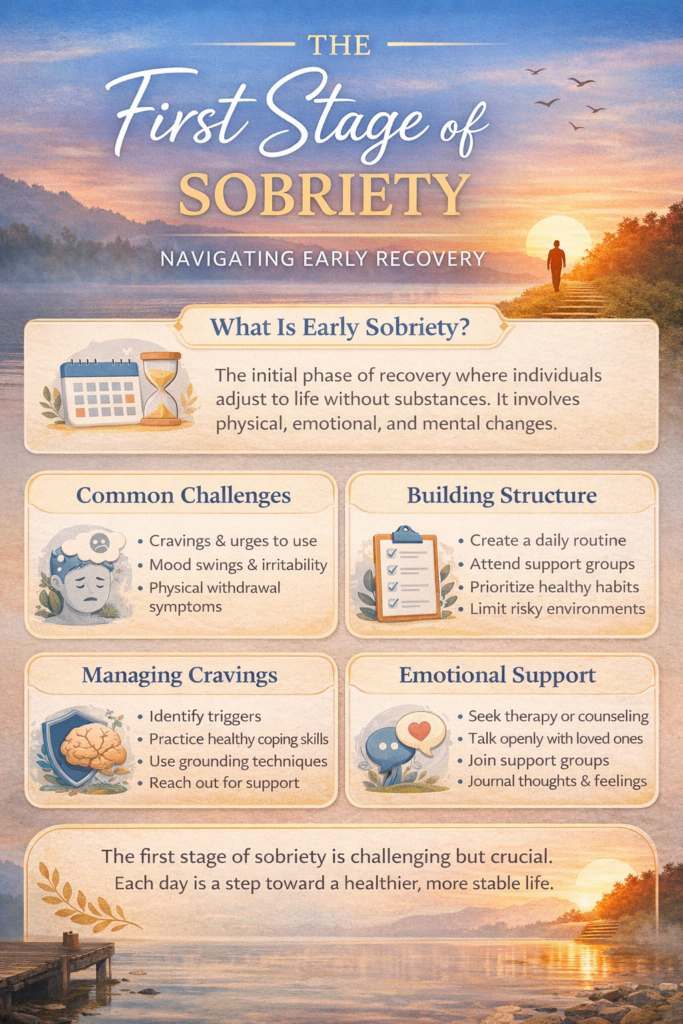
Early sobriety is more than just abstaining from substances—it is a complete shift in how a person copes, thinks, and functions. During this time, the brain and body are adjusting to the absence of substances, often leading to withdrawal symptoms, cravings, and mood fluctuations.
Common experiences include:
- Intense cravings or urges to use
- Anxiety, irritability, or depression
- Difficulty sleeping or concentrating
- Emotional highs and lows
These experiences are normal, but they can feel discouraging without proper support and understanding.
Why This Stage Is So Critical
The first stage of sobriety is often referred to as a “high-risk” period because the likelihood of relapse is greatest during this time. Old habits, environments, and coping mechanisms are still fresh, while new skills and routines are still developing.
This phase is critical because it:
- Establishes initial recovery habits
- Builds awareness of triggers
- Sets the tone for long-term success
- Requires the most intentional effort and support
What is done during this stage can significantly influence the trajectory of recovery.
Building Structure and Stability
One of the most important strategies in early sobriety is creating structure. Without it, individuals may feel lost or overwhelmed by unstructured time and lingering urges.
Helpful practices include:
- Maintaining a consistent daily routine
- Prioritizing sleep, nutrition, and physical health
- Attending therapy or support groups regularly
- Limiting exposure to high-risk environments
Structure provides a sense of control and predictability during a time that often feels uncertain.
Managing Cravings and Triggers
Cravings are a natural part of early recovery, but they do not have to lead to relapse. Learning how to respond to them is key.
Effective approaches include:
- Identifying personal triggers (people, places, emotions)
- Using grounding or distraction techniques
- Reaching out to a support person
- Reminding oneself that cravings are temporary
Over time, cravings become less intense and more manageable.
Emotional Regulation and Self-Awareness
Without substances, emotions can feel stronger and more difficult to manage. Early sobriety requires learning new ways to cope with stress, frustration, and discomfort.
This might involve:
- Practicing mindfulness or breathing exercises
- Journaling thoughts and feelings
- Taking breaks during emotional overwhelm
- Developing healthier coping strategies
Emotional regulation is a skill that strengthens with practice and patience.
The Role of Support
No one succeeds in recovery alone. Support during the first stage of sobriety is essential for both accountability and encouragement.
Support can come from:
- Therapists or counselors
- Support groups or recovery communities
- Trusted friends or family members
Having people who understand and support the process can make a significant difference in staying on track.
Moving Forward
The first stage of sobriety is not easy—but it is temporary. With time, consistency, and support, the intensity of this phase decreases. What once felt overwhelming becomes more manageable, and new habits start to feel more natural.
This stage is not just about surviving without substances—it’s about beginning to build a life that no longer depends on them. It is the starting point of real, lasting change.
Final Thoughts
Early sobriety is the foundation of recovery. It requires courage, patience, and persistence. While it may feel like the hardest part, it is also the most transformative. By committing to this stage and utilizing the right strategies and support systems, individuals can move from instability to strength—and from surviving to truly living.
Taking Control Early: Self-Management Strategies in the First Stage of Sobriety
The first stage of sobriety is often described as the most fragile and demanding phase of recovery. During this time, individuals are not only abstaining from substances but also learning how to function without the coping mechanisms they once relied on. This is where self-management becomes essential. The ability to manage thoughts, emotions, behaviors, and daily routines can make the difference between relapse and sustained progress. Developing these skills early creates a strong foundation for long-term recovery.
Why Self-Management Is Critical in Early Sobriety
In the early stages, external structure (therapy, support groups, accountability) plays an important role—but internal structure is just as vital. Self-management allows individuals to respond intentionally rather than react impulsively.
Without these skills, individuals may:
- Feel overwhelmed by cravings and emotions
- Struggle with unstructured time
- Fall back into automatic, unhealthy patterns
With self-management, recovery becomes active rather than passive.
1. Creating a Structured Daily Routine
Unstructured time is one of the biggest risks in early sobriety. A consistent routine provides stability and reduces opportunities for impulsive decisions.
Effective routines include:
- Regular sleep and wake times
- Scheduled meals and physical activity
- Planned recovery activities (meetings, therapy)
- Intentional downtime
Structure helps reduce anxiety and creates predictability in an otherwise uncertain phase.
2. Monitoring Thoughts and Triggers
Self-awareness is a key component of self-management. In early sobriety, individuals must learn to recognize what leads to cravings or emotional distress.
This involves:
- Identifying personal triggers (stress, people, environments)
- Noticing thought patterns that justify or minimize use
- Tracking emotional states throughout the day
Awareness creates the opportunity to intervene before a situation escalates.
3. Managing Cravings in the Moment
Cravings are inevitable in early recovery, but they are temporary. Self-management means having strategies ready when urges arise.
Helpful techniques include:
- Delaying the urge (“wait 10–15 minutes”)
- Distracting with a healthy activity
- Reaching out to a support person
- Using grounding or breathing exercises
Learning to sit with discomfort without acting on it is a critical skill.
4. Emotional Regulation Skills
Substances often mask or suppress emotions. In sobriety, those emotions return—sometimes intensely.
Self-management strategies for emotions include:
- Naming and acknowledging feelings
- Practicing mindfulness or relaxation techniques
- Taking breaks when overwhelmed
- Avoiding impulsive reactions
Emotional regulation builds resilience and reduces the need to escape through substance use.
5. Setting Boundaries and Avoiding High-Risk Situations
Early sobriety requires intentional decision-making about environments and relationships.
This may involve:
- Avoiding people or places associated with past use
- Saying no to situations that feel unsafe
- Creating physical and emotional distance when needed
Boundaries are not about isolation—they are about protection during a vulnerable phase.
6. Practicing Accountability
Self-management includes being honest with oneself and others. Accountability helps prevent denial and keeps recovery on track.
This can look like:
- Checking in with a sponsor, therapist, or trusted person
- Being honest about struggles or cravings
- Following through on commitments
Accountability reinforces responsibility and consistency.
7. Reinforcing Progress and Small Wins
Early recovery can feel overwhelming if the focus is only on challenges. Recognizing progress helps maintain motivation.
Examples include:
- A full day or week of sobriety
- Successfully managing a craving
- Handling a difficult emotion without using
Small wins build confidence and momentum.
Moving Forward with Intention
Self-management in early sobriety is not about perfection—it’s about consistency. There will be difficult days, setbacks, and moments of doubt. What matters is the ability to pause, reflect, and choose a different response.
Over time, these strategies become habits. And those habits become a new way of living—one grounded in awareness, stability, and control.
Final Thoughts
The first stage of sobriety is where change truly begins. By developing strong self-management skills, individuals move from reacting to life to actively shaping it. These early efforts may feel challenging, but they are building something lasting—a recovery that is not just maintained, but owned.
Taking control early doesn’t guarantee an easy path—but it creates a stronger one.
Supporting Recovery at Home: Family Strategies in the First Stage of Sobriety
The first stage of sobriety is not only a critical time for the individual in recovery—it is also a pivotal period for the family. Early recovery often brings emotional instability, vulnerability, and significant change, which can impact the entire household. Families may feel unsure of how to help, fearful of relapse, or overwhelmed by past experiences. However, when families adopt healthy, informed support strategies, they can become a powerful force in stabilizing and strengthening early sobriety.
Why Family Support Matters in Early Sobriety
During the initial phase of recovery, individuals are learning how to function without substances while managing cravings, emotions, and new routines. This adjustment period can feel fragile. Family support provides:
- Emotional reassurance during difficult moments
- Structure and stability in the home environment
- Encouragement to stay engaged in recovery
When done correctly, family involvement can significantly reduce the risk of relapse and increase confidence in the recovery process.
1. Educating the Family About Early Recovery
Understanding what early sobriety looks like is essential. Without education, families may misinterpret behaviors such as mood swings, withdrawal, or fatigue.
Families should learn:
- Common symptoms of early recovery (cravings, irritability, low energy)
- The difference between recovery struggles and intentional behavior
- The non-linear nature of recovery
Education fosters empathy and reduces blame or unrealistic expectations.
2. Creating a Stable and Supportive Environment
The home environment plays a major role in early sobriety. Chaos, conflict, or exposure to substances can increase stress and trigger relapse.
Supportive environments include:
- Removing substances from the home
- Reducing unnecessary stress or conflict
- Encouraging calm, predictable routines
A stable environment helps the individual feel safe and focused on recovery.
3. Encouraging Structure Without Control
Structure is critical in early sobriety, but it should not come from control or pressure. Families can support routines while respecting autonomy.
Helpful approaches:
- Encouraging attendance at therapy or support groups
- Supporting healthy daily habits (sleep, meals, activities)
- Offering reminders without demanding compliance
The goal is to support—not manage—the individual’s recovery.
4. Practicing Healthy Communication
Communication in early recovery should be intentional and respectful. Families often struggle with either being overly critical or avoiding difficult conversations altogether.
Effective communication includes:
- Expressing concern without blame
- Listening without interrupting or fixing
- Using calm, clear language
This creates emotional safety and reduces defensiveness.
5. Setting and Maintaining Boundaries
Boundaries protect both the individual in recovery and the family. Without them, patterns like enabling or over-involvement can re-emerge.
Examples of healthy boundaries:
- Not covering up or minimizing substance use
- Not taking responsibility for the individual’s recovery
- Protecting one’s own emotional and physical well-being
Boundaries create clarity and accountability.
6. Avoiding Enabling Behaviors
Families often want to help, but some actions can unintentionally support the addiction rather than recovery.
Enabling may include:
- Making excuses for behavior
- Providing money without accountability
- Shielding the individual from consequences
Support, in contrast, encourages responsibility and growth.
7. Taking Care of the Family System
Family members are also affected by addiction and need their own support. Ignoring their needs can lead to burnout, resentment, or emotional exhaustion.
Self-care for families includes:
- Attending support groups (e.g., family recovery groups)
- Seeking individual therapy if needed
- Maintaining personal boundaries and well-being
A healthier family system creates a stronger recovery environment.
Moving Forward Together
The first stage of sobriety is a time of adjustment for everyone involved. Families who approach this phase with patience, education, and intentional support can make a meaningful difference in the recovery process.
It’s not about being perfect—it’s about being consistent, supportive, and willing to grow alongside the individual in recovery.
Final Thoughts
Family support in early sobriety is both powerful and delicate. When families learn how to support without controlling, communicate without blaming, and set boundaries without disconnecting, they create a foundation for lasting change.
Recovery is not just an individual journey—it is a system-wide transformation. And in the earliest stage, family support can help turn instability into strength and uncertainty into hope.
Building a Support Network Early: Community Resource Strategies in the First Stage of Sobriety
The first stage of sobriety is often the most vulnerable period in recovery. During this time, individuals are adjusting physically, emotionally, and mentally to life without substances. While personal motivation and family support are important, community resources play a critical role in providing structure, accountability, and connection. Engaging with these resources early can significantly strengthen the foundation of recovery and reduce the risk of relapse.
Why Community Resources Matter in Early Sobriety
Addiction often thrives in isolation, but recovery requires connection. In the early stage of sobriety, individuals may feel alone, overwhelmed, or unsure of how to navigate daily life without substances. Community resources offer:
- External support and accountability
- Access to professional guidance
- A sense of belonging and shared experience
- Structured environments that reinforce recovery
These supports help individuals move from instability to a more grounded and supported recovery process.
1. Engaging in Support Groups
Support groups are one of the most effective and accessible community resources in early sobriety. They provide a space where individuals can connect with others who understand their experiences.
Benefits include:
- Shared understanding and reduced isolation
- Learning from others in different stages of recovery
- Accountability through regular attendance
- Opportunities to build sober relationships
Consistency in attending meetings is key to gaining the full benefit.
2. Accessing Professional Treatment Services
Early sobriety often requires more structured support than individuals can provide for themselves. Community-based treatment services offer guidance and stability during this phase.
These may include:
- Outpatient or intensive outpatient programs (IOP)
- Individual counseling or therapy
- Medication-assisted treatment (when appropriate)
- Case management or recovery coaching
Professional services help address both the physical and psychological aspects of recovery.
3. Utilizing Crisis and Immediate Support Resources
Moments of intense craving, emotional distress, or potential relapse can occur unexpectedly. Having immediate access to support can make a critical difference.
Important resources include:
- 24/7 crisis hotlines
- Emergency mental health services
- Detox or stabilization centers
- Walk-in counseling services
Planning for these situations ahead of time helps individuals respond quickly and safely.
4. Building a Sober Support Network
Recovery is strengthened by relationships with people who support sobriety. Community resources provide opportunities to build these connections.
This can include:
- Sponsors or mentors
- Peer support partners
- Friends met through recovery programs
A strong network offers encouragement, accountability, and guidance during difficult moments.
5. Participating in Recovery-Focused Activities
Early sobriety involves not only removing substances but also replacing old habits with healthier ones. Communities often provide sober-friendly activities that support this transition.
Examples include:
- Fitness or wellness programs
- Volunteer opportunities
- Faith-based or spiritual groups
- Sober social events
These activities help individuals rediscover enjoyment and purpose without substance use.
6. Addressing Practical Needs Through Community Services
Unmet basic needs—such as housing, employment, or financial stress—can increase vulnerability in early recovery. Community resources can help stabilize these areas.
Support may include:
- Job training or employment services
- Housing assistance or sober living programs
- Financial counseling
- Legal aid
Meeting these needs reduces stress and allows individuals to focus more fully on recovery.
7. Staying Consistent and Connected
The effectiveness of community resources depends on consistent engagement. Sporadic use may provide temporary support, but regular involvement builds lasting change.
Individuals can:
- Schedule weekly meetings or sessions
- Make recovery activities part of their routine
- Stay connected even when feeling stable
Consistency transforms support into a reliable foundation.
Moving Forward with Support
The first stage of sobriety is not meant to be navigated alone. Community resources provide the structure, connection, and support necessary to move through this phase more safely and effectively.
By actively engaging with these resources, individuals create a network that supports not only their sobriety but also their overall well-being.
Final Thoughts
Early sobriety is a time of vulnerability—but also opportunity. Community resources offer a path out of isolation and into connection, stability, and growth. When individuals take advantage of these supports early on, they strengthen their chances of long-term recovery.
Recovery begins with a decision—but it is sustained through connection. And in the first stage, the community can make all the difference.
Frequently Asked Questions
Here are some common questions:
1. What is the first stage of sobriety?
The first stage of sobriety is the initial period after stopping substance use. It involves physical withdrawal, emotional adjustment, and learning how to function without substances. This stage can last from a few weeks to several months.
2. Why is early sobriety considered the hardest stage?
Early sobriety is often the hardest because:
- The body and brain are adjusting
- Cravings are strong
- Emotions can feel overwhelming
- New coping skills are not fully developed
It’s a period of high vulnerability but also important growth.
3. How long does the first stage of sobriety last?
There is no exact timeline, but it typically lasts:
- First few days to weeks: Physical withdrawal and acute symptoms
- First 1–3 months: Emotional and behavioral adjustment
The intensity gradually decreases over time.
4. What are common symptoms in early sobriety?
Common experiences include:
- Cravings or urges to use
- Anxiety, irritability, or depression
- Sleep disturbances
- Mood swings
- Difficulty concentrating
These symptoms are normal and usually improve with time.
5. How can I manage cravings during this stage?
Effective strategies include:
- Delaying the urge and letting it pass
- Distracting yourself with activities
- Using grounding or breathing techniques
- Reaching out to someone for support
Cravings are temporary—they rise and fall like waves.
6. Is relapse common in the first stage of sobriety?
Yes, relapse risk is highest in early sobriety. This is why structure, support, and awareness of triggers are so important during this phase. Relapse doesn’t mean failure—it’s often part of the learning process.
7. Why do emotions feel so intense in early recovery?
Substances often numb or suppress emotions. When they are removed, emotions return—sometimes strongly. This is part of the brain healing and relearning how to process feelings naturally.
8. What role does routine play in early sobriety?
Routine is critical. It helps:
- Reduce unstructured time (a major relapse risk)
- Create stability and predictability
- Support healthy habits
A structured day makes recovery more manageable.
9. Should I avoid certain people or places?
Yes. In early sobriety, it’s important to avoid:
- People who use substances
- Environments associated with past use
- High-risk situations
This is not permanent—it’s about protecting recovery during a vulnerable stage.
10. Do I need support, or can I do this on my own?
Support is strongly recommended. Recovery is much more sustainable with:
- Therapy or counseling
- Support groups
- Trusted friends or family
Trying to do it alone increases the risk of relapse.
11. What are the most important habits to build early on?
Key habits include:
- Daily structure and routine
- Honest self-reflection
- Attending support meetings or therapy
- Practicing emotional regulation
- Staying connected to others
These habits form the foundation of long-term recovery.
12. Why do I feel exhausted or unmotivated?
Early sobriety can be physically and mentally draining. The body is healing, and the brain is adjusting. Fatigue and low motivation are common and usually improve with time and self-care.
13. How do I deal with boredom in early sobriety?
Boredom is common because substance use often fills time and energy. Helpful strategies include:
- Trying new hobbies or activities
- Exercising or spending time outdoors
- Volunteering or engaging in the community
Recovery involves rebuilding a meaningful life.
14. When will things start to feel “normal” again?
There’s no exact timeline, but most people begin to feel more stable after a few months. Emotional balance, clearer thinking, and improved energy gradually return with consistent sobriety.
15. What is the most important mindset in early sobriety?
Focus on:
- Taking it one day at a time
- Being patient with yourself
- Progress, not perfection
Recovery is a process—not a quick fix.
Conclusion
While the first stage of sobriety can feel overwhelming, it is also a powerful time of transformation. Each day without substance use strengthens new habits, builds resilience, and reinforces the possibility of long-term recovery. Progress may be slow and nonlinear, but consistency and support make a meaningful difference. This stage is not just about abstaining—it is about learning how to live differently. By staying committed through the early challenges, individuals set the stage for deeper healing, greater stability, and a more fulfilling life beyond addiction.
Video: