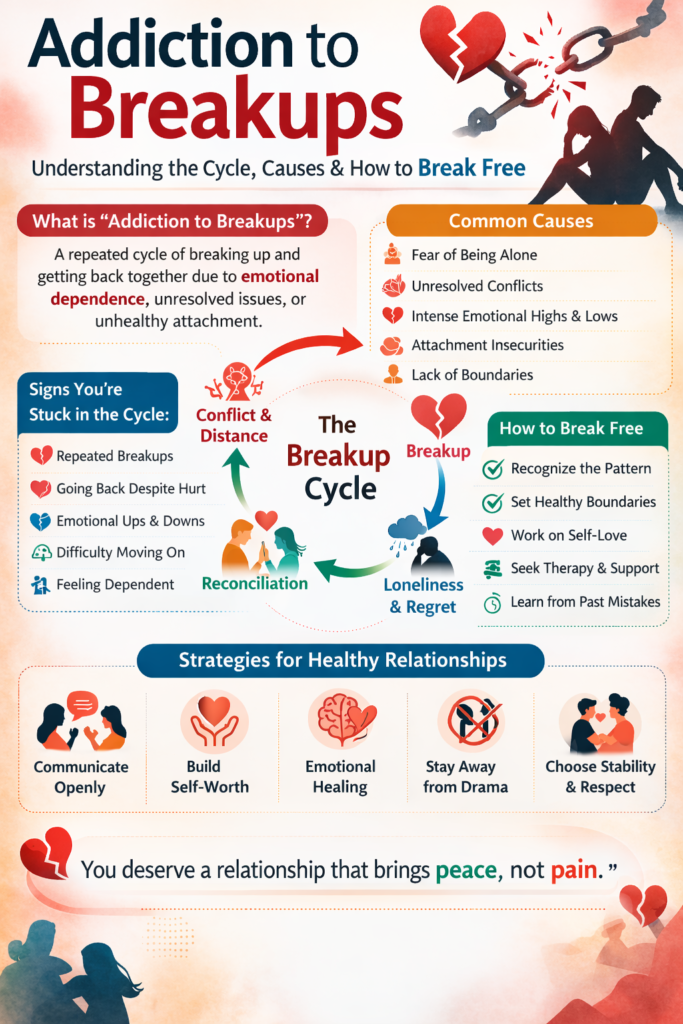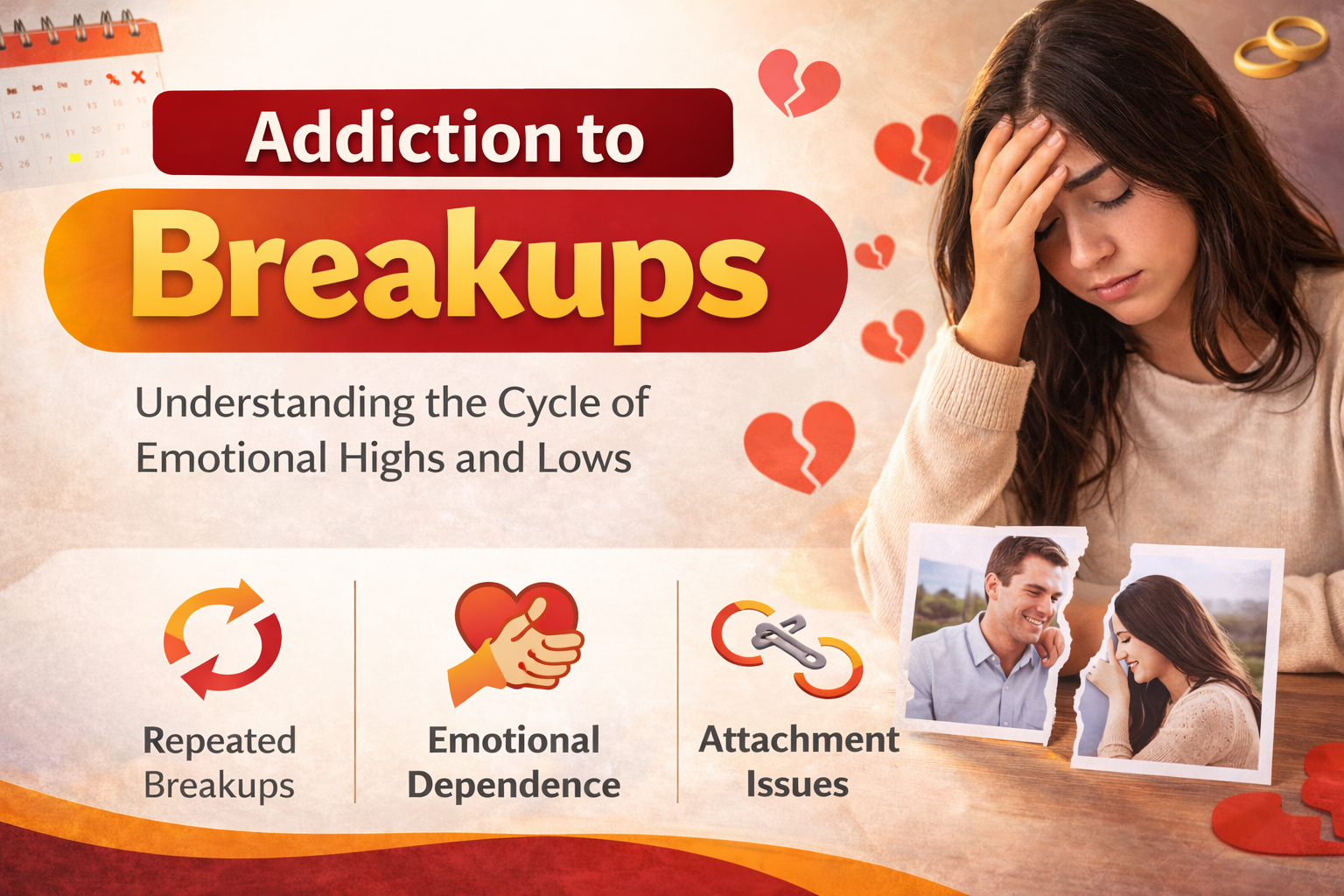
Romantic relationships can bring joy, companionship, and emotional support, but they can also involve challenges and conflicts. For some individuals, relationships may follow a repeated pattern of breaking up and getting back together. This cycle, sometimes referred to as “addiction to breakups,” involves repeated separations and reconciliations that create emotional highs and lows. While it is not a clinical addiction, the intense emotions associated with conflict and reconciliation can make the pattern difficult to break. Factors such as attachment styles, fear of loneliness, emotional dependence, and unresolved relationship issues often contribute to this cycle. Understanding why people become trapped in repeated breakup patterns is an important step toward developing healthier relationship habits and emotional stability.
Addicted to Breakups
Breakups are often seen as painful endings to romantic relationships. However, for some individuals, the cycle of breaking up and getting back together can become a repeated pattern that feels difficult to escape. This pattern can create emotional highs and lows that resemble an addictive cycle. While people are not literally addicted to breakups in the same way as substances, the emotional intensity associated with relationship conflict and reconciliation can make the cycle feel compelling and hard to break.
One reason this pattern occurs is the emotional intensity that accompanies relationship conflict. During a breakup, individuals may experience sadness, anger, loneliness, or anxiety. When reconciliation occurs, these feelings are often replaced by relief, excitement, and renewed hope. This dramatic shift in emotions can create a powerful psychological reward, making the reunion feel especially meaningful and reinforcing the cycle.
Another factor is attachment styles. People with anxious attachment styles may fear abandonment and struggle with insecurity in relationships. They may repeatedly return to relationships even when they are unhealthy because the fear of being alone outweighs the difficulties within the relationship. Similarly, partners with avoidant attachment styles may create distance during conflict, which can trigger cycles of breaking up and reconnecting.
Unresolved relationship issues can also contribute to repeated breakups. When couples do not fully address underlying problems such as communication difficulties, trust issues, or unmet emotional needs, these problems tend to resurface. As a result, the relationship may move through repeated cycles of conflict, separation, and reconciliation without meaningful change.
The role of emotional dependence can also be significant. In some cases, individuals rely heavily on their partner for validation, comfort, or identity. When the relationship ends, the loss of emotional support can feel overwhelming, leading them to return to the relationship quickly, even if the same problems remain unresolved.
Breaking the cycle of repeated breakups often requires self-awareness and reflection. Individuals may benefit from examining their relationship patterns, identifying emotional triggers, and developing healthier coping strategies. Open communication, relationship counseling, or individual therapy can help people understand their attachment styles and improve conflict resolution skills.
Healthy relationships are built on stability, trust, and mutual respect rather than cycles of emotional turmoil. By recognizing patterns that lead to repeated breakups, individuals can begin to make more intentional choices about their relationships and work toward building stronger, healthier connections.
Self-Management Strategies for Addiction to Breakups
Repeated breakups in a relationship can create a cycle of emotional highs and lows that becomes difficult to escape. Individuals who repeatedly break up and reconcile with the same partner may feel trapped in a pattern that resembles emotional dependence. This pattern can be driven by strong attachment, fear of loneliness, or the temporary relief that comes with reconciliation after conflict. Developing effective self-management strategies can help individuals recognize unhealthy relationship patterns and build healthier emotional habits.
One important strategy is developing self-awareness. Recognizing patterns in past relationships can help individuals understand why breakups and reunions keep happening. Reflecting on personal triggers, emotional responses, and relationship behaviors helps individuals identify the underlying reasons for repeated breakups. Journaling or self-reflection exercises can help people become more aware of their feelings and relationship habits.
Another helpful strategy is learning to manage emotional triggers. Breakups often create intense feelings of loneliness, anxiety, or sadness that may push individuals to reconnect quickly with a partner. Learning alternative ways to cope with these emotions—such as exercising, engaging in hobbies, or talking with supportive friends—can reduce the urge to return to an unhealthy relationship.
Setting clear boundaries is also an important self-management strategy. After a breakup, maintaining distance and limiting communication can help individuals gain emotional clarity. Constant contact, social media monitoring, or frequent conversations with an ex-partner may make it harder to move forward and may prolong the cycle of breaking up and reconciling.
Another key approach is focusing on personal growth and independence. Developing a strong sense of identity outside of a romantic relationship helps reduce emotional dependence on a partner. Spending time pursuing personal goals, strengthening friendships, and engaging in meaningful activities can help individuals feel more confident and fulfilled on their own.
Practicing healthy relationship skills is also essential. Improving communication, conflict resolution, and emotional regulation skills can help individuals build more stable relationships in the future. Learning how to address problems directly and constructively can prevent unresolved issues from leading to repeated breakups.
Finally, seeking professional support can be beneficial for individuals struggling with repeated breakup patterns. Therapists or relationship counselors can help individuals explore attachment styles, past relationship experiences, and emotional coping strategies. Professional guidance can provide tools to break unhealthy cycles and build healthier relationship dynamics.
Self-management strategies play a critical role in overcoming patterns of repeated breakups. By developing self-awareness, managing emotional triggers, setting boundaries, and focusing on personal growth, individuals can break free from the cycle of relationship instability and move toward healthier and more fulfilling connections.
Family Support Strategies for Addiction to Breakups
Repeated breakups and reconciliations in relationships can create an emotional cycle that is difficult to escape. This pattern, sometimes described as being “addicted to breakups,” often involves intense emotional highs and lows, unresolved conflicts, and difficulty letting go of unhealthy relationships. While personal awareness and self-management are important, family support can also play a key role in helping individuals recognize unhealthy patterns and develop healthier relationship habits.
One important family support strategy is encouraging open and supportive communication. Family members can create a safe space where individuals feel comfortable discussing their relationship struggles without fear of judgment or criticism. When someone feels heard and understood, they may be more willing to reflect on their relationship patterns and consider healthier choices.
Another helpful approach is providing emotional stability during breakups. After a breakup, individuals often experience feelings of loneliness, sadness, or uncertainty. Family members can offer reassurance, companionship, and emotional support during this time. This support can reduce the urge to quickly return to the relationship simply to avoid emotional discomfort.
Families can also assist by helping individuals recognize unhealthy relationship patterns. Loved ones may sometimes notice repeated cycles of conflict, breakups, and reunions that the individual may overlook. By gently discussing these patterns and encouraging reflection, families can help individuals gain a clearer perspective on their relationships.
Encouraging healthy activities and personal growth is another effective family support strategy. Family members can motivate individuals to focus on hobbies, career goals, education, or social activities that strengthen their sense of identity outside of the relationship. This focus on personal development can reduce emotional dependence on romantic partners.
Families can also help by promoting healthy relationship values such as respect, trust, communication, and emotional stability. Through positive role modeling and supportive conversations, families can influence how individuals view and approach relationships.
It is also important for families to avoid judgment or pressure when offering support. Harsh criticism of a partner or forcing someone to leave a relationship may cause resistance or emotional conflict. Instead, families should focus on offering guidance, empathy, and encouragement while allowing individuals to make their own decisions.
Family support strategies can play an important role in helping individuals break the cycle of repeated breakups. Through open communication, emotional support, encouragement of personal growth, and gentle guidance, families can help loved ones develop healthier relationship patterns and build stronger, more stable connections in the future.
Community Resource Strategies for Addiction to Breakups
Repeated breakups and reconciliations in relationships can create emotional stress and instability. Individuals who feel trapped in this cycle may struggle with attachment issues, emotional dependence, or difficulty maintaining healthy boundaries. While personal effort and family support are important, community resources can also provide valuable guidance and assistance. Community-based programs and services can help individuals gain insight into their relationship patterns and develop healthier emotional habits.
One important community strategy is access to relationship counseling and mental health services. Community counseling centers, therapists, and relationship specialists can help individuals explore the underlying causes of repeated breakups. Professional support allows individuals to understand emotional triggers, improve communication skills, and learn healthier ways to manage relationship conflicts.
Another helpful resource is support groups and peer discussion programs. Community support groups provide safe environments where individuals can share their experiences and learn from others facing similar relationship challenges. Listening to others’ stories can help individuals recognize patterns in their own relationships and gain encouragement to break unhealthy cycles.
Community organizations often provide educational workshops and relationship skill programs. These workshops may focus on topics such as healthy communication, emotional regulation, conflict resolution, and recognizing unhealthy relationship dynamics. Learning these skills can help individuals build more stable and respectful relationships.
Access to community wellness and personal development programs can also be beneficial. Activities such as stress management classes, mindfulness training, or self-improvement workshops help individuals strengthen emotional resilience and self-confidence. When individuals develop stronger emotional independence, they may feel less dependent on unstable relationships.
Community programs that promote social connection and healthy activities can also reduce the emotional impact of repeated breakups. Volunteer opportunities, recreational groups, and social clubs help individuals build supportive friendships and a sense of belonging outside of romantic relationships. This broader support network can reduce feelings of loneliness and encourage healthier emotional choices.
Finally, community awareness initiatives can help promote healthy relationship education. Public health campaigns and community outreach programs can provide information about recognizing unhealthy relationship patterns and seeking professional support when needed.
Community resource strategies play an important role in helping individuals break the cycle of repeated breakups. By providing counseling services, educational programs, peer support, and opportunities for personal growth, communities can help individuals develop healthier relationships and stronger emotional well-being.
Frequently Asked Questions
Here are some common questions:
1. What does “addiction to breakups” mean?
Addiction to breakups refers to a repeated pattern of ending and restarting the same relationship. The cycle often involves emotional highs and lows, making it difficult for individuals to leave the relationship permanently.
2. Is addiction to breakups a real addiction?
It is not considered a clinical addiction like substance addiction. However, the emotional intensity, attachment, and relief that occur after reconciliation can create a cycle that feels addictive.
3. Why do some people repeatedly break up and get back together?
This pattern can occur due to emotional dependence, fear of loneliness, unresolved relationship conflicts, or strong attachment styles. These factors can make it difficult to move on even when the relationship is unhealthy.
4. What are common signs of addiction to breakups?
Signs may include repeated breakups with the same partner, ongoing relationship conflicts, difficulty letting go after a breakup, and a quick return to the relationship despite past problems.
5. How can repeated breakups affect emotional well-being?
Repeated breakups can lead to stress, emotional exhaustion, anxiety, and confusion. The constant emotional ups and downs may also affect self-esteem and mental health.
6. Why is it hard to leave a relationship even when it is unhealthy?
People may stay because they fear being alone, feel emotionally dependent on their partner, or believe the relationship will improve over time. Emotional attachment and memories of positive moments can also make it difficult to move on.
7. Can communication help prevent repeated breakups?
Yes. Open and honest communication can help partners address problems before they lead to separation. Learning healthy conflict resolution skills can reduce misunderstandings and relationship instability.
8. What strategies can help break the cycle of repeated breakups?
Helpful strategies include setting healthy boundaries, focusing on personal growth, reflecting on relationship patterns, and limiting contact after a breakup to allow emotional healing.
9. How can family and friends help someone stuck in a breakup cycle?
Family and friends can provide emotional support, encourage healthy decision-making, and help individuals recognize unhealthy relationship patterns.
10. When should someone seek professional help?
If repeated breakups cause significant emotional distress or interfere with daily life, it may be helpful to seek support from a therapist or relationship counselor who can help explore underlying relationship patterns.
Conclusion
Addiction to breakups highlights the complexity of human relationships and the powerful role emotions play in decision-making. Repeated cycles of separation and reconciliation can lead to emotional stress, confusion, and difficulty maintaining stable relationships. Recognizing these patterns allows individuals to reflect on their relationship behaviors and identify the underlying causes of repeated breakups. Through self-awareness, supportive relationships, and access to helpful resources, individuals can learn to set healthy boundaries, improve communication, and build more stable connections. Breaking the cycle of repeated breakups ultimately allows people to develop healthier relationships and strengthen their emotional well-being.
Video: The Emotional Trap After Every Breakup #Psychology #EmotionalHealth