Dopamine is a brain chemical that gets talked about a lot, and for good reason. It’s deeply involved in our motivation, pleasure, focus, and even movement. Whenever someone brings up the idea of a drug that “releases the most dopamine,” it’s clear they’re curious about what really gets those reward circuits firing in the brain. So, I want to break down what this actually means, what drugs are known for powerful dopamine releases, and what this can mean for the body and mind.
Understanding Dopamine: What It Is and Why It Matters
Dopamine is often called the “feel-good” neurotransmitter, but it does way more than just put a smile on your face. It’s involved in learning, habit building, movement regulation, and even addictive behaviors. Every time you eat your favorite food or accomplish something tough, your brain rewards you with a little burst of dopamine.
When talking about drugs, the focus shifts to substances that push the brain to release much higher amounts of dopamine than usual. That’s where the “rush” or high comes from, and also what leads to cravings or even addiction for some.
Even social media and technology can spark small, repeated increases in dopamine, which keeps us coming back for more. But it’s drugs that really crank the volume up beyond what our natural behaviors typically do.
Which Drug Releases the Most Dopamine?
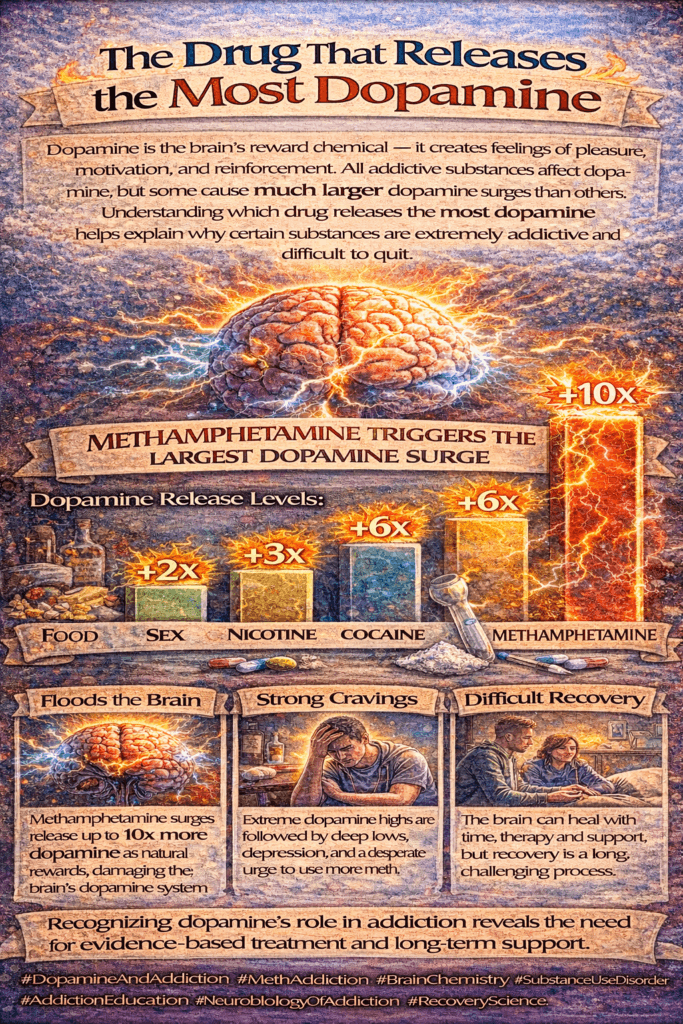
When I’ve checked out this question, there’s a pretty clear winner in the dopamine release game: methamphetamine. Research has shown that methamphetamine causes one of the most intense spikes in dopamine ever recorded from a drug (see National Institutes of Health for detailed data). Unlike many other drugs that just trigger a little extra dopamine, meth floods the brain’s reward centers with much more than what’s released during other rewarding activities.
Some other drugs, like cocaine, also release a lot of dopamine, but methamphetamine’s effect lasts longer and is stronger in most head-to-head studies. Here’s a quick rundown of how different drugs stack up for dopamine release:
- Methamphetamine: Produces massive and rapid increases in dopamine, far above natural levels.
- Cocaine: Blocks dopamine reuptake, leading to high but typically shorter-lasting spikes.
- Nicotine: Also boosts dopamine, but doesn’t reach anywhere near the levels triggered by meth or cocaine.
- Prescription stimulants (like Adderall): Increase dopamine, but at much lower and slower rates when taken as prescribed.
While methamphetamine is often pointed out in research as the drug that releases the most dopamine, it comes with really dangerous effects that are worth understanding. More on that just ahead.
How Methamphetamine Changes the Brain’s Dopamine System
Methamphetamine is notorious not just for how much dopamine it releases but also for the way it does the job. It forces dopamine out of nerve cells, then blocks the normal process that would take it back in. This isn’t just a little push; it’s like opening all the floodgates at once.
The result: people using meth experience extreme euphoria and motivation, but the brain quickly tries to balance things out. Repeated use can deplete the dopamine system, making it difficult to experience pleasure from everyday activities. That’s one of the big reasons why addiction to methamphetamine can hit so fast and so hard (see National Institute on Drug Abuse).
Scientists have tracked how meth physically changes the brain’s structure, shrinking areas that control memory and emotion. The changes can linger long after someone stops taking the drug, which is why recovery can require a lot of patience and support.
The Dopamine “High” vs. Natural Rewards
Methamphetamine and drugs like it give a way bigger dopamine boost than anything you could get from a nice meal, a funny movie, or acing a big test. Those natural rewards are important for balance; they keep us motivated and help us learn what’s enjoyable or valuable in life.
Drugs that release huge amounts of dopamine basically hijack that system and tell your brain that nothing else really compares. This is why everyday life can seem “flat” for people who keep using, making it tough to quit. Here’s a side-by-side look:
- Natural rewards: Gradual, moderate elevations of dopamine; helps build healthy habits.
- Methamphetamine: Sudden, massive spike; can rewire the brain’s response to rewards.
Even activities such as eating, listening to music, or winning a game release dopamine, but they do so in a balanced, controlled manner that helps us maintain perspective and derive enjoyment from many sources.
Risks and Long-Term Effects of Big Dopamine Surges
The short-term feeling might be really powerful, but flooding the brain with so much dopamine isn’t without downsides. Here are a few important risks I think everyone should keep in mind:
- Crash and low mood: The high is usually followed by a serious low, sometimes lasting days or weeks.
- Tolerance: The more often the brain gets flooded, the less sensitive it becomes. It starts to take more of the drug to create any effect at all.
- Brain changes: After enough use, some people lose the ability to enjoy things that used to make them happy, even after stopping the drug.
- Mental health issues: Intense dopamine swings can lead to anxiety, paranoia, depression, and even hallucinations.
On top of all that, methamphetamine is physically harmful to the brain and the rest of the body. It’s linked to memory loss and problems with thinking, as well as serious dental and skin issues, increased heart risk, and more.
Things to Consider with Dopamine-Boosting Drugs
If you’re trying to learn about dopamine for personal reasons or out of curiosity about how different substances work, there are a few points I always keep in mind:
- Dopamine plays many positive roles in the brain. It’s possible to boost it in smaller, safer ways (like exercise or challenging hobbies) without the problems created by drugs.
- Not all dopamine-releasing drugs create the same long-term risk. Some prescription medications, used responsibly, don’t cause the brain damage or dependency issues connected to methamphetamine.
- Once someone’s dopamine system takes a hit from major drug use, recovering balance can take months or even years. Professional help, healthy routines, and patience can really help during recovery.
It’s important to remember that everyone’s brain and body react differently. Genetics, mental health history, and environment can all affect how risky drug use can be for each person.
The Limits of Research and What We Still Don’t Know
Even though methamphetamine is the drug most famous for releasing giant amounts of dopamine, everyone’s brain is a little different. Genetics, previous experiences, and even small changes in brain chemistry can change how it feels to use these drugs. Research continues, but the basic facts around dopamine surges hold up across many studies. Future studies might show us more about how different people respond and why some are at greater risk for addiction than others.
Some Alternatives: Safe Ways to Boost Dopamine Naturally
You don’t need drugs to get your dopamine system humming. The brain responds positively to a variety of everyday activities that involve reward, novelty, challenge, or accomplishment. Here’s what works:
- Exercise: Even light activity can increase dopamine and boost mood.
- Learning something new: Tackling new skills and hobbies gives the brain a sense of achievement.
- Social interaction: Having meaningful conversations, spending time with friends, and receiving positive feedback from others can naturally increase dopamine levels.
- Music: Listening to music you love can light up dopamine pathways in the brain.
- Healthy diet and sleep: Consistent sleep and nutritious food help keep your dopamine system working well.
- Spending time outdoors: Nature walks and sunlight stimulate brain chemistry, including dopamine release.
Frequently Asked Questions
Question: Can prescription drugs prescribed for ADHD release as much dopamine as methamphetamine?
Answer: Even though medications like Adderall and Ritalin can increase dopamine, their effects aren’t nearly as intense as methamphetamine, especially when taken as directed by a doctor. The body absorbs them more slowly, and the resulting dopamine rise is much smaller and safer.
Question: Are there any permanent effects after lots of high-dopamine drug use?
Answer: Some people experience long-lasting problems with pleasure, motivation, or memory after years of heavy methamphetamine use. The brain typically recovers at least partially over time, particularly with professional support, though not always completely.
Question: Can diet or supplements safely boost dopamine?
Answer: Certain foods (like those rich in tyrosine, such as eggs, dairy, and nuts) support healthy dopamine levels, but there are no quick fixes that safely spike dopamine to the levels caused by drugs. Supplements should be discussed with a healthcare provider.
Question: Can caffeine or chocolate spike dopamine levels like harder drugs?
Answer: Caffeine and chocolate can boost dopamine a little, lifting mood or alertness, but their effects are mild compared to powerful drugs and don’t carry the same risks.
Final Thoughts
Methamphetamine releases more dopamine than almost any other drug, but this doesn’t make it desirable or safe. Understanding what’s happening in the brain can help people avoid dangerous choices and focus on routines and activities that work with their natural dopamine system, not against it. Keeping dopamine in balance isn’t just about the risks of drugs; it’s about finding ways to be happy, focused, and motivated that last. Stay curious and be kind to your brain; there are plenty of ways to feel good without putting your well-being in harm’s way.
Video: Which stimulant destroys dopamine fastest #drugfacts #addiction #brainhealth