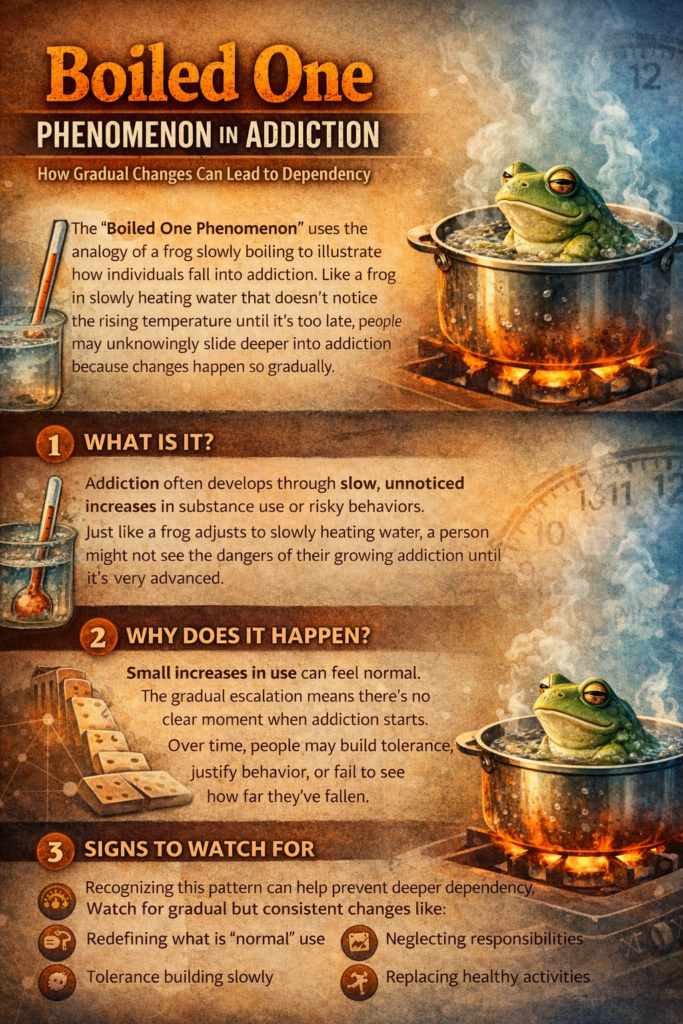
The Boiled One Phenomenon is often mentioned in conversations about addiction, yet it can be easy to miss—especially for those new to the topic. It refers to the gradual, almost unnoticed shift in personal boundaries, habits, or tolerance over time, much like a frog in slowly warming water that doesn’t perceive the danger until it’s too late. Many people affected by addiction, whether personally or through someone they care about, only recognize this pattern in hindsight. Gaining awareness of how this slow acclimation occurs can be key to identifying early warning signs and making intentional choices to support long-term health.
Getting a Handle on the Boiled One Phenomenon
The Boiled One Phenomenon gets its name from that overused yet surprisingly fitting idea of a frog that doesn’t jump out of water as it turns from warm to scalding. In addiction, this is all about gradual changes. People don’t go from casual use to a full-blown problem in one wild leap. It’s more of a small steps thing, where each change feels normal until everything’s different.
Experts in addiction science see this subtle switch-up as one of the reasons people can get so deep into trouble before spotting what’s happened. During my time working with people recovering from substance use, I’ve seen plenty describe how old lines of “I’ll never do that” eventually get crossed in ways that felt harmless at first. The change is barely noticeable in the moment but becomes obvious over time.
Research in psychology often refers to this as maladaptive normalization. When something uncomfortable happens often enough, it can start to feel routine. This isn’t just a theoretical idea. Real-world stories from support groups highlight how a gradual uptick in drinking or drug use rarely feels alarming right away, which makes it pretty tough to spot early on.
How the Boiled One Phenomenon Shows Up in Addiction
Addiction isn’t usually a sudden, “fall off a cliff” event. Most of the time, it’s more like a slow walk down a hill where you hardly notice the slope. Here are some ways that gradual change can look in real life:
- Slowly Increasing Use: Maybe it starts with drinks at parties, then moves to drinking at home after work, and eventually it’s a nightly habit. The switch doesn’t seem huge when it happens step by step.
- Changing Social Circles: Old friends who didn’t use much might drift away, replaced by new friends with different habits. At the time, it just feels like growing apart, not a warning sign.
- Switching Up Personal Rules: Things like “I’ll only drink on weekends” or “I won’t use at work” can start to fade. Each time the rule is broken, it feels easier to justify the next step.
People experiencing these changes often talk about a sort of tunnel vision. Day-to-day choices feel separate, so the overall picture doesn’t come into focus easily. That’s one reason why early intervention is so tricky. Most folks don’t realize when things are tipping in the wrong direction.
Signs You Might Be Getting “Boiled”
Catching the Boiled One Phenomenon early is super important because it gives you more options and a better shot at making changes before things get out of hand. Here are some clues you can look for in yourself or someone you care about:
- Excuses Multiply: Finding more and more reasons why it’s OK to break old promises or bend the rules you set for yourself.
- Routine Switch Ups: Drinking or using substances in places or times you wouldn’t have considered a few months ago.
- Disappearing Limits: Feeling like your “hard lines” keep moving farther than you ever planned.
- New Baseline: Realizing your normal now would’ve shocked you a year ago.
I’ve found that journaling or checking in with someone you trust can be handy for keeping these changes from sneaking up on you. It’s easy to forget what felt normal before if you’re only focused on the present. Looking back through old conversations or notes can be an eye-opener. Sometimes, an old text to a friend where you set a rule for yourself becomes an important reminder of how far things have drifted.
Why the Boiled One Pattern Happens
This creeping switch-up is actually hardwired into how our brains handle routine, reward, and risk. Each time you repeat a behavior, like using a substance, your brain gets a little bit more comfortable with it. Habits form circuits in our brains, and over time, it just doesn’t feel strange to do today what would’ve felt wrong six months ago.
There’s also social and environmental stuff that plays a part. If the people you spend time with see heavy use as normal, it’s way easier to go with the flow until their “normal” becomes your own. Stress and everyday pressures can speed up this process, since people are more likely to slip into routine use when overwhelmed or tired.
To add on, even positive changes, like getting a new job or moving to a different place, can unintentionally make people more open to new routines—sometimes including riskier ones. That’s why major life events, whether stressful or exciting, often spark a slow boil.
Breaking the Cycle of Gradual Change
Recognizing the Boiled One Phenomenon is the first step, but there are some practical tools for putting on the brakes before things go south:
- Set Clear Boundaries: Write down personal rules and check in on them regularly. Share them with someone you trust.
- Routine Reviews: Take a weekly or monthly stock of your habits. Ask yourself questions like, “Have I started doing things I said I wouldn’t?”
- External Checks: Get input from people outside your usual circle. Sometimes, friends or family who aren’t caught up in the day-to-day can offer a fresh perspective.
- Know Your Triggers: Pay attention to the situations that most likely make you relax your rules. Building awareness around these patterns helps you plan for tricky moments.
Support groups and therapy are really helpful in this stage because they give you a way to double-check your progress and spot early warning signs before they become everyday habits.
Challenges of Pushing Back Against Gradual Change
Even after spotting the problem, putting on the brakes can be tough, especially when people around you reinforce old ways. Here are some common hurdles:
- Denial: Admitting tiny changes add up isn’t easy. It’s tempting to believe, “I’m still in control.”
- Fear of Change: Switching up routines, even when risky, can be unsettling. The familiar, even when harmful, feels safer than the unknown.
- Peer Influence: Social circles that support or encourage unhealthy habits can slow progress or encourage slippery choices.
Denial
Denying the impact of these little switch-ups is pretty common. I’ve seen lots of people resist help until things hit a breaking point. Having honest (and nonjudgmental) conversations can make a huge difference when you’re worried someone’s on a dangerous track.
Fear of Change
No one loves admitting they need to switch up their routines. It feels risky. What will life look like without that daily ritual or those friends who get it even when things are rocky? Getting comfortable with discomfort is a big part of stopping the slow boil process.
Peer Influence
People often don’t get how much their environment shapes decision-making. If everyone around you normalizes risk, finding community or support groups outside those circles can help you reset what “normal” means. Sometimes the best move is seeking new environments where healthier habits are part of daily life.
Practical Tips to Stay Ahead of the Boil
Putting ideas into action is what makes all the difference. Here are some specific things that help break the cycle:
- Accountability Partnerships: Find someone willing to check in with you on goals and boundaries. It doesn’t need to be formal; a quick text or regular coffee can do the trick.
- Keep Track: Use an app or journal to monitor your habits. If you spot trends in use upward, you can act sooner rather than later.
- Healthy Replacements: When you spot rising stress or cravings, swap in positive routines like exercise, hobbies, or social activities that don’t trigger cravings.
I’ve seen even small changes, like swapping in a different after-work activity, snowball into bigger, positive switch-ups. The earlier you jump in, the easier it is. Remember, habits strengthen the more they’re repeated, so any step toward healthier routines is a win.
Common Questions about the Boiled One Phenomenon
People new to this topic always want a bit more clarity on what’s happening and what to expect. Here are the most common questions I get:
Question: How do I know if it’s happening to me?
Answer: If rules or boundaries keep moving and you’re using substances in ways that surprise your past self, there’s a good chance you’re seeing this slow switch-up.
Question: Does everyone who develops an addiction go through this process?
Answer: Most people show some form of gradual increase, but how fast and noticeable it is can vary a lot between individuals and types of substances.
Question: Can I reverse the changes?
Answer: Yes, with support, self-awareness, and sometimes professional help, people can reset their baselines and get back on track, even if it feels tough at first.
RealWorld Applications and Insights
Stories from recovery groups, therapists, and people who’ve faced addiction show that naming the Boiled One Phenomenon is a big step toward change. Whether you’re trying to help yourself or support someone else, being able to spot these patterns builds hope that things can switch up for the better. Consistent self-checks, honest conversations, and finding outside perspectives are super important for avoiding that hidden “boil.”
Understanding the slow changes in addiction isn’t about blame. It helps people feel less alone and better equipped to take action before things really heat up. Building a community that encourages small, healthy changes goes a long way in keeping everyone safe and thriving.
Wrapping up, the Boiled One Phenomenon teaches us just how powerful small shifts can be. The key is staying aware, trusting your gut, and not being afraid to ask for help. The earlier you spot the pattern, the easier it is to step in and move toward a healthier direction. Keep checking in with yourself, lean on supportive folks, and remember—tiny steps forward matter.
Video: