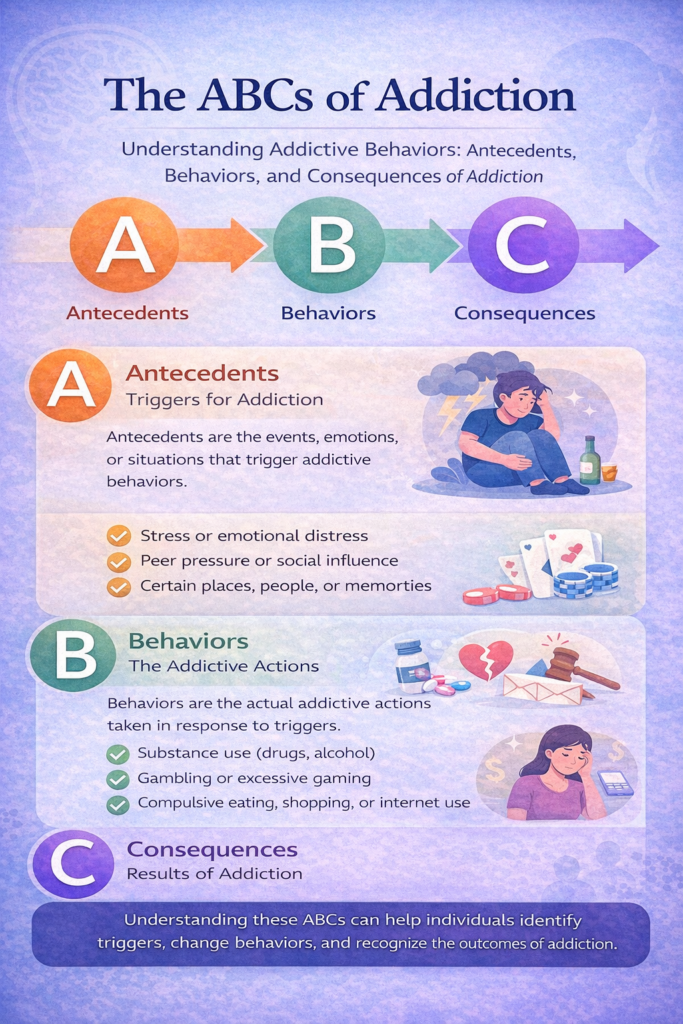
Understanding addiction can be challenging because it involves complex patterns of thoughts, emotions, and behaviors that develop over time. Addiction does not happen suddenly; instead, it often follows a cycle in which certain situations or feelings lead to specific actions that are reinforced by their outcomes. One useful way to explain how addiction develops and continues is through the ABC model of addiction, which stands for Antecedents, Behaviors, and Consequences. This model helps break down the cycle of addiction by identifying the antecedents, or triggers, that occur before addictive behaviors. These triggers may include stress, emotional distress, social pressure, or certain environments associated with past substance use. The behavior refers to the addictive action itself, such as using substances or engaging in compulsive activities to cope with those triggers. The consequences are the results that follow the behavior, which may include short-term relief, pleasure, or escape from emotional pain. Although these consequences may feel positive in the moment, they often reinforce the behavior and make it more likely to happen again, strengthening the cycle of addiction. By examining these three components, individuals, families, and professionals can better understand why addictive behaviors occur, recognize patterns that maintain the cycle, and develop strategies to interrupt it. This understanding can support prevention, encourage healthier coping mechanisms, and promote more effective approaches to recovery.
The ABCs of Addiction: Understanding the Basics of Addictive Behavior
Addiction is a complex condition that affects millions of individuals and families around the world. To better understand how addiction develops and why it can be so difficult to overcome, many professionals use a simple framework known as the ABCs of addiction. The ABC model helps explain how Antecedents, Behaviors, and Consequences interact to create and maintain addictive patterns.
By breaking addiction into these three components, individuals and healthcare professionals can better identify triggers, understand behaviors, and develop effective strategies for prevention and recovery.
A – Antecedents (Triggers or Causes)
Antecedents are the events, emotions, situations, or environmental factors that precede addictive behavior. These triggers often influence a person’s decision to engage in substance use or other addictive behaviors.
Common antecedents may include:
- Stress or emotional distress
- Anxiety, depression, or loneliness
- Peer pressure or social influence
- Exposure to substances or addictive activities
- Certain places, people, or memories associated with past use
For example, a person who feels overwhelmed after a difficult day at work may turn to alcohol or another substance to cope with their stress. In this situation, the stressful event is the antecedent that triggers the behavior.
Recognizing antecedents is an important step in recovery because it allows individuals to identify high-risk situations and develop healthier coping strategies.
B – Behavior (The Addictive Action)
The second component of the ABC model is the behavior, which refers to the actual addictive action a person engages in. This could involve substance use or compulsive activities that stimulate the brain’s reward system.
Examples of addictive behaviors include:
- Drinking alcohol excessively
- Using drugs or misusing prescription medications
- Gambling or excessive gaming
- Compulsive shopping
- Excessive use of social media
These behaviors often provide temporary relief or pleasure, reinforcing the pattern and encouraging the individual to repeat them when similar triggers occur.
Over time, the brain becomes conditioned to associate certain situations with the addictive behavior, making the cycle more difficult to break.
C – Consequences (Results of the Behavior)
Consequences are the outcomes that occur after addictive behavior. These consequences can be both short-term and long-term, and they play a significant role in maintaining addiction.
Short-term consequences may include:
- Temporary relief from stress or emotional pain
- Feelings of pleasure or relaxation
- Escape from difficult thoughts or situations
However, long-term consequences are often harmful and may include:
- Health problems
- Relationship conflicts
- Financial difficulties
- Legal issues
- Declining mental health
Even though negative consequences may occur, the short-term relief or pleasure can reinforce the addictive cycle. This reinforcement makes it more likely that the person will repeat the behavior in the future.
Using the ABC Model in Addiction Recovery
Understanding the ABCs of addiction can help individuals become more aware of the patterns that contribute to addictive behaviors. By identifying triggers, examining behaviors, and recognizing consequences, individuals can begin to break the cycle.
For example, if someone identifies stress as a trigger for substance use, they can replace that behavior with healthier coping strategies such as exercise, meditation, or seeking social support.
Therapists and counselors often use the ABC model to help individuals develop practical strategies for managing triggers and preventing relapse.
Conclusion
The ABCs of addiction—Antecedents, Behaviors, and Consequences—provide a simple yet powerful framework for understanding how addiction develops and persists. By recognizing the triggers that lead to addictive behaviors and understanding the consequences that reinforce them, individuals can begin to make meaningful changes in their lives.
With increased awareness, support, and healthier coping strategies, it becomes possible to interrupt the cycle of addiction and move toward recovery and long-term well-being.
Self-Management Strategies for Understanding the ABCs of Addiction
Addiction often follows recognizable patterns that can make it difficult to break without awareness and intentional change. One helpful way to understand these patterns is through the ABC model of addiction, which stands for Antecedents, Behaviors, and Consequences. This framework helps individuals identify the triggers that lead to addictive behaviors, understand the actions they take, and recognize the outcomes that reinforce those behaviors.
Self-management strategies allow individuals to take an active role in recognizing these patterns and developing healthier responses. By understanding the ABCs of addiction and learning how to manage each part of the cycle, people can strengthen their ability to prevent relapse and maintain long-term recovery.
Recognizing Antecedents Through Self-Awareness
The first step in managing addiction is identifying antecedents, or the triggers that occur before addictive behaviors. These triggers may include emotional stress, social pressure, certain environments, or specific people associated with past substance use.
Self-management strategies for recognizing antecedents include:
- Keeping a journal to track emotions and situations that trigger cravings
- Practicing mindfulness to become more aware of thoughts and feelings
- Reflecting on patterns that lead to risky situations
- Identifying high-risk environments or social settings
By increasing self-awareness, individuals can anticipate triggers and prepare healthier responses.
Managing Addictive Behaviors
The second part of the ABC model focuses on the behavior, which refers to the addictive action itself. Self-management involves developing strategies that help individuals resist or replace harmful behaviors.
Some helpful strategies include:
- Replacing addictive behaviors with healthier activities such as exercise, hobbies, or social engagement
- Using delay techniques, such as waiting several minutes before acting on an urge
- Practicing stress-reduction methods like deep breathing or meditation
- Setting personal goals that encourage positive lifestyle changes
These techniques help individuals interrupt the automatic response to triggers and create healthier behavioral patterns.
Evaluating Consequences and Reinforcement
The final part of the ABC model involves understanding the consequences that follow addictive behavior. Many addictions continue because the short-term effects provide temporary relief, even though the long-term outcomes may be harmful.
Self-management strategies for evaluating consequences include:
- Reflecting on both the short-term and long-term outcomes of behavior
- Writing down personal reasons for recovery and reviewing them regularly
- Recognizing how addiction impacts health, relationships, and personal goals
- Celebrating positive consequences of healthy choices
This reflection helps individuals strengthen motivation and reinforce healthier decisions.
Building Healthy Coping Skills
Developing strong coping skills is an essential part of self-management. When individuals learn healthier ways to handle stress and emotional challenges, they reduce the likelihood of returning to addictive behaviors.
Examples of healthy coping strategies include:
- Physical activity and exercise
- Meditation or relaxation techniques
- Creative outlets such as writing or art
- Seeking support from friends, family, or counselors
These tools provide constructive ways to manage difficult emotions without relying on substances or harmful behaviors.
Conclusion
Understanding the **ABCs of addiction—Antecedents, Behaviors, and Consequences—**helps individuals recognize the patterns that contribute to addiction. Through self-management strategies such as self-awareness, healthy coping skills, behavior replacement, and reflection on consequences, individuals can take meaningful steps toward breaking the cycle of addiction.
Although recovery can be challenging, developing these skills empowers individuals to gain greater control over their actions and build healthier habits that support long-term well-being.
Family Support Strategies for Understanding the ABCs of Addiction
Addiction affects not only individuals but also their families and loved ones around them. Understanding how addiction develops can help families respond with compassion and effective support. One helpful framework for understanding addictive patterns is the ABC model of addiction, which stands for Antecedents, Behaviors, and Consequences. This model explains how triggers lead to addictive behaviors and how the outcomes of those behaviors reinforce the cycle.
Families who understand the ABC model can better recognize warning signs, support healthier coping strategies, and create an environment that encourages recovery. By learning how each part of the cycle works, families can become an important source of encouragement and stability during the recovery process.
Helping Identify Antecedents (Triggers)
Antecedents are the situations, emotions, or environments that occur before addictive behavior begins. These triggers may include stress, anxiety, social pressure, or certain places associated with substance use.
Family members can help identify antecedents by:
- Encouraging open conversations about emotional struggles
- Observing patterns that lead to risky behaviors
- Helping loved ones recognize stressful situations or environments that trigger cravings
- Supporting healthier routines that reduce exposure to high-risk situations
By helping individuals recognize their triggers, families can assist them in preparing healthier ways to respond.
Supporting Positive Behavioral Changes
The second part of the ABC model focuses on behavior, which refers to the addictive action itself. Families can play an important role in supporting healthier behavioral choices.
Helpful strategies include:
- Encouraging participation in positive activities such as exercise, hobbies, or community involvement
- Reinforcing healthy routines and structured daily schedules
- Avoiding enabling behaviors that unintentionally support addiction
- Providing encouragement when individuals make positive choices
These actions help individuals replace harmful behaviors with healthier alternatives that support recovery.
Helping Individuals Understand Consequences
The final part of the ABC model involves consequences, or the results that follow addictive behaviors. Consequences can include both short-term relief and long-term negative outcomes such as health problems, relationship difficulties, or financial stress.
Families can support awareness of consequences by:
- Discussing how addictive behaviors affect personal goals and relationships
- Encouraging reflection on the long-term impact of addiction
- Celebrating progress and positive changes during recovery
- Maintaining consistent boundaries to discourage harmful behaviors
This approach helps individuals recognize the real impact of addiction while also reinforcing the benefits of healthier choices.
Encouraging Healthy Communication and Support
Strong communication is essential for family support. Families who maintain open, respectful conversations can help individuals feel safe discussing their challenges and seeking help.
Effective communication strategies include:
- Listening without judgment or criticism
- Expressing concern with empathy and understanding
- Encouraging professional help when needed
- Participating in family counseling or support groups, if appropriate
Healthy communication builds trust and strengthens the support system that individuals need during recovery.
Conclusion
Understanding the **ABCs of addiction—Antecedents, Behaviors, and Consequences—**can help families better recognize the patterns that contribute to addiction. By identifying triggers, encouraging healthier behaviors, and reinforcing awareness of consequences, families can play an important role in supporting recovery.
When families combine knowledge, compassion, and consistent support, they create a foundation that helps individuals break the cycle of addiction and move toward healthier, more stable lives.
Community Resource Strategies for Understanding the ABCs of Addiction
Addiction is a complex issue that affects individuals, families, and entire communities. One helpful way to understand how addiction develops and continues is through the ABC model of addiction, which stands for Antecedents, Behaviors, and Consequences. This model explains how certain triggers lead to addictive behaviors and how the outcomes of those behaviors reinforce the cycle. While individuals and families play an important role in recognizing these patterns, community resources are essential in helping people understand and manage the ABCs of addiction.
Communities can provide education, support systems, and prevention programs that help individuals identify triggers, change harmful behaviors, and recognize the consequences of addiction. By strengthening these resources, communities can play a major role in promoting prevention and supporting recovery.
Community Education on Addiction Awareness
One of the most important community strategies is providing education about addiction and its behavioral patterns. Schools, healthcare organizations, and community centers often offer educational programs that explain how addiction develops and how the ABC model works.
These programs help individuals understand:
- Antecedents: common triggers such as stress, trauma, or peer pressure
- Behaviors: actions such as substance use or compulsive activities
- Consequences: both short-term relief and long-term negative outcomes
Community education programs can increase awareness and help individuals recognize early warning signs before addiction becomes severe.
Access to Counseling and Mental Health Services
Mental health services are essential resources that help individuals identify and manage the antecedents of addiction. Counseling services allow individuals to explore emotional triggers such as anxiety, depression, or trauma that may lead to addictive behaviors.
Community mental health resources may include:
- Counseling and therapy services
- Community mental health clinics
- Crisis support services
- Substance use counseling programs
These services help individuals develop healthier coping strategies that prevent triggers from leading to harmful behaviors.
Support Groups and Peer Recovery Programs
Community-based support groups allow individuals to share experiences and learn from others who have faced similar challenges. These groups often help individuals understand the behavioral patterns involved in addiction and how to change them.
Peer support programs provide:
- Accountability and encouragement
- Opportunities to discuss triggers and coping strategies
- Shared experiences that reduce feelings of isolation
- Guidance from individuals who have experienced recovery
These networks help individuals break the cycle of addictive behavior by providing consistent support.
Prevention Programs for Youth and High-Risk Groups
Young people are especially vulnerable to addiction because they may experience social pressure and emotional challenges while their brains are still developing. Community programs designed for youth can help them recognize the ABC patterns of addiction early in life.
Prevention programs often include:
- School-based substance use education
- Mentoring and leadership programs
- Recreational and after-school activities
- Workshops on stress management and decision-making
These programs teach young people healthier ways to respond to triggers and reduce the likelihood of engaging in addictive behaviors.
Community Collaboration and Support Networks
Effective community strategies often involve collaboration between schools, healthcare providers, law enforcement, and community organizations. When these groups work together, they can create stronger systems that support prevention, treatment, and recovery.
Community collaboration can provide:
- Access to treatment and recovery resources
- Public health campaigns that reduce stigma around addiction
- Outreach programs that connect individuals to support services
- Safer environments that reduce exposure to substances and risky behaviors
These efforts help communities create environments where individuals are better supported in understanding and managing addiction.
Conclusion
Understanding the **ABCs of addiction—Antecedents, Behaviors, and Consequences—**is an important step in recognizing how addiction develops and continues. Community resources play a vital role in helping individuals learn about these patterns and access the support they need to break the cycle.
Through education, counseling services, peer support, prevention programs, and community collaboration, communities can help individuals better understand addiction and develop healthier coping strategies. By strengthening these resources, communities can support prevention, encourage recovery, and promote healthier futures for everyone.
Frequently Asked Questions
Here are some common questions:
1. What are the ABCs of addiction?
The ABCs of addiction refer to a model used to understand addictive behavior. ABC stands for Antecedents, Behaviors, and Consequences. This framework helps explain how certain triggers lead to addictive actions and how the outcomes of those actions reinforce the cycle of addiction.
2. What are antecedents in the ABC model?
Antecedents are the events, emotions, or situations that occur before an addictive behavior. These triggers can include stress, anxiety, social pressure, or specific places or people associated with past substance use.
3. What does behavior mean in the ABC model?
Behavior refers to the addictive action itself, such as drinking alcohol, using drugs, gambling, or engaging in other compulsive activities. These behaviors often occur as a response to triggers or difficult emotions.
4. What are the consequences in the ABC model?
Consequences are the results that follow addictive behavior. These may include short-term effects like temporary relief or pleasure, as well as long-term effects such as health problems, relationship issues, or financial difficulties.
5. Why is the ABC model helpful for understanding addiction?
The ABC model helps individuals and professionals identify patterns in addictive behavior. By recognizing triggers, actions, and outcomes, people can better understand why addiction occurs and how to interrupt the cycle.
6. Can the ABC model help with addiction recovery?
Yes. The ABC model is often used in counseling and therapy to help individuals identify triggers, change behaviors, and understand the consequences of their actions. This awareness helps people develop healthier coping strategies.
7. What are some common antecedents of addiction?
Common triggers may include:
- Emotional stress or anxiety
- Peer pressure
- Certain environments or social settings
- Trauma or painful memories
- Feelings of loneliness or boredom
Recognizing these triggers is an important step in prevention and recovery.
8. How can someone change addictive behaviors using the ABC model?
Individuals can reduce addictive behaviors by identifying triggers, avoiding high-risk situations, and replacing harmful behaviors with healthier activities such as exercise, hobbies, or seeking social support.
9. What role do consequences play in addiction?
Consequences play a major role because short-term rewards, such as relief from stress or emotional pain, often reinforce addictive behavior. Over time, the brain learns to repeat the behavior to experience that temporary relief.
10. Why is understanding the ABCs of addiction important?
Understanding the ABCs of addiction helps individuals, families, and professionals recognize addiction patterns, develop prevention strategies, and support recovery efforts. It provides a clear framework for understanding how addiction forms and how it can be addressed.
Conclusion
The ABCs of addiction—Antecedents, Behaviors, and Consequences—provide a clear framework for understanding the cycle of addictive behavior. Recognizing triggers, understanding the behaviors they lead to, and evaluating the consequences that reinforce them can help individuals gain greater awareness of their patterns. This understanding is an important step in prevention and recovery, as it allows people to develop healthier coping strategies and make more informed decisions. With increased awareness and support, the ABC model can help individuals break the cycle of addiction and move toward healthier and more balanced lives.
Video: The 3-Step Cycle Behind Every Addiction #psychology #triggers #mentalhealth