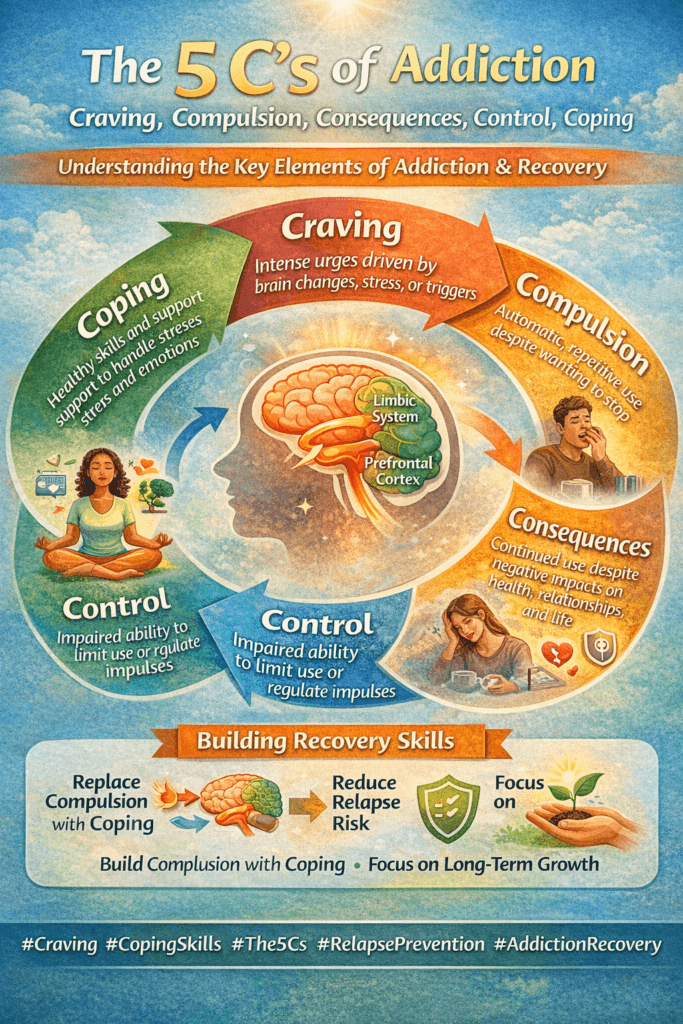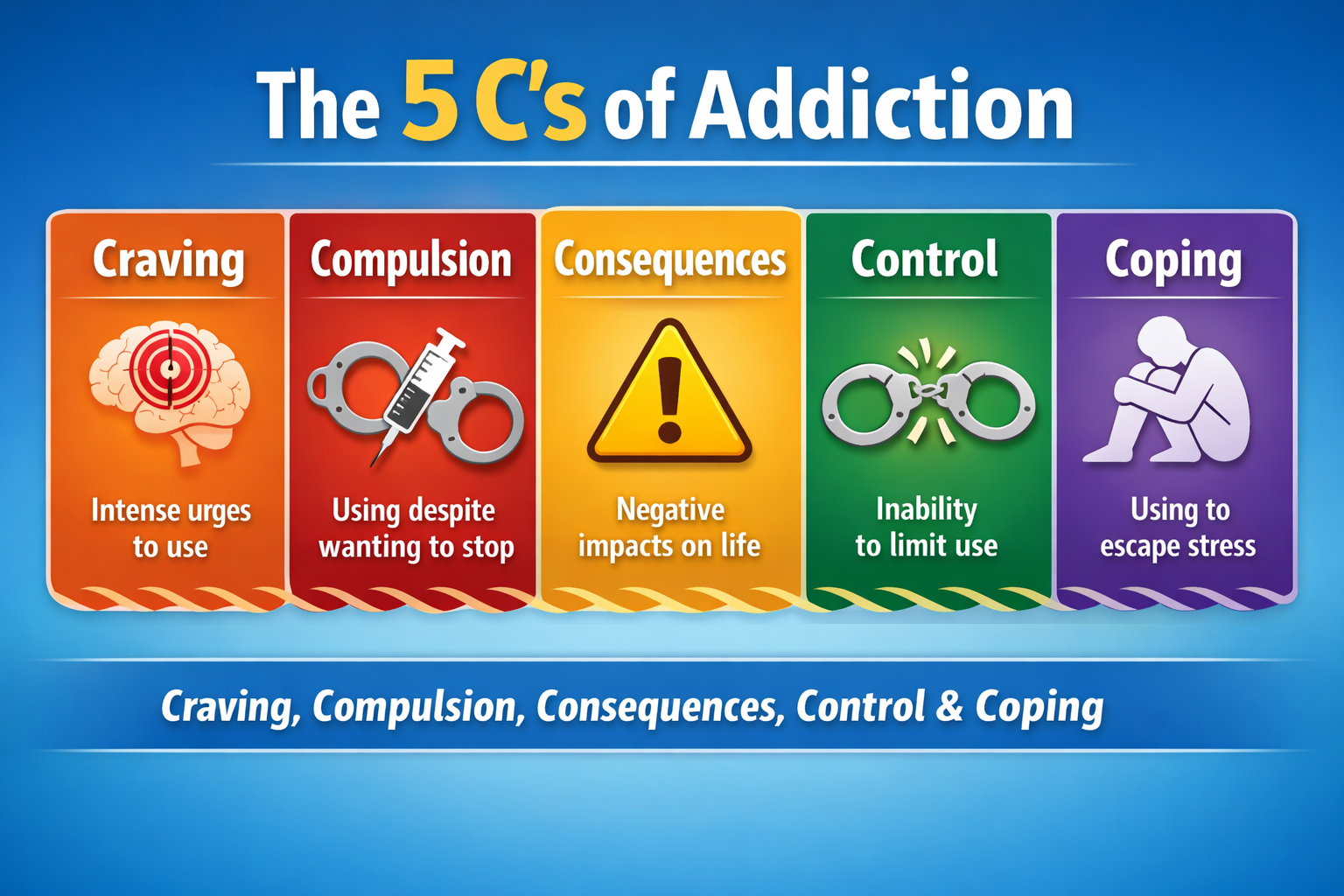
Addiction is far more than repeated substance use or harmful behavior—it is a complex condition that reshapes how a person thinks, feels, relates to others, and understands themselves. Beneath the visible actions lies a powerful cycle driven by brain chemistry, emotional needs, learned habits, and life experiences. Through studying what happens below the surface, it becomes clear that addiction follows recognizable patterns rather than random choices or lack of willpower. The “5 C’s” framework offers a practical way to understand this cycle by breaking it into five key processes: Craving, Compulsion, Consequences, Control, and Coping. Each of these elements represents a distinct piece of the addiction puzzle, showing how urges form, behaviors repeat, harm accumulates, self-regulation weakens, and substances or behaviors become tools for emotional survival. Whether the addiction involves drugs, alcohol, gambling, or other compulsive behaviors, the 5 C’s provide a clear lens for understanding why addiction persists and how recovery can begin.
The Five C’s: A Snapshot of Addiction
The 5 C’s offer an easy framework to understand how addiction takes root and why it feels so hard to break. These aren’t just medical terms; they’re noticeable patterns and feelings that show up in daily life, often before someone even realizes what’s changed.
Not everyone who uses a substance or exhibits a behavior will develop an addiction. What sets addiction apart is the steady buildup of these five factors. When you look at addiction this way, it’s easier to notice struggles, support people earlier, and look for ways to rebuild healthier routines.
Getting Into the 5 C’s of Addiction
Let’s get into what each “C” really means and how you might spot them in yourself or someone you care about.
- Craving: An intense urge or desire that takes over thoughts.
- Compulsion: A feeling of being driven to act, even when not wanting to.
- Consequences: Negative impacts that show up in daily life, work, relationships, and health.
- Control: Struggling to limit or stop the behavior, despite wishing to.
- Coping: Turning to the addictive behavior as a way to deal with stress, pain, or difficult emotions.
Seeing how these pieces are linked helps anyone, affected individuals, loved ones, or professionals, spot warning signs and think about new approaches to healing.
Breaking Down Each “C” of Addiction
I’m going to walk through each of the five C’s, giving real-world examples and explaining why each one is so important for understanding addiction.
Craving
Craving goes way beyond “just wanting something.” It’s a really strong, sometimes overwhelming, urge. For someone battling addiction, cravings can come out of nowhere, triggered by certain people, places, stress, or even boredom.
Cravings aren’t just mental. The body gets involved, making the desire feel almost impossible to ignore. I’ve spoken with people who say it’s almost as though their minds have been hijacked. These urges can get worse under stress or after periods of abstinence; that makes relapse feel surprisingly easy.
In many cases, cravings become tied to routines. For example, someone may always crave a cigarette with coffee or a drink after work. These patterns become ingrained, making it feel like the craving is an automatic response to certain triggers. Recognizing these cues can be a key step in breaking the cycle.
Compulsion
While craving starts as a desire, compulsion is about action. Even if someone desperately wants to stop, the feeling that they “have to” is so strong that it overrides good intentions or plans.
This is the point where addiction can feel out of control. Someone finds themselves repeating patterns, the ritual of pouring a drink, driving to a casino, or logging into a website, without even realizing they made the choice. When looking at the difference between a bad habit and addiction, this sense of compulsion is a major clue.
Compulsive behavior can feel mechanical. Some people describe it as being on autopilot, watching themselves do things they promised not to do. Over time, the compulsion grows stronger, and breaking the routine gets harder. It can erase the distinction between want and need, making even simple choices feel out of reach.
Consequences
Addiction always brings consequences. These can be obvious, like job loss, relationship issues, legal trouble, or health scares, or more hidden, like creeping isolation, feeling ashamed, or losing touch with things that used to matter.
I’ve met people who justified their behavior for years because they hadn’t yet lost a job or crashed a car. But the smaller consequences, like distancing from friends, a drop in motivation, or mood swings, pile up. Often, it’s these slow-building, everyday problems that hurt the most, becoming obvious only after looking back.
Some people also face emotional consequences; they might lose confidence or start to feel hopeless. These invisible effects can be just as damaging as the more concrete ones, and sometimes they’re harder to talk about or admit.
Control
Loss of control is really at the heart of addiction. This isn’t about “weak willpower” or not caring enough; it’s about the brain’s reward system getting rewired. Rational plans to cut back or stop are often no match for the combination of craving and compulsion, especially after a stressful day.
Someone might set rules: “Just one drink,” “Only on weekends,” or “Never at work,” only to break those rules over and over. The frustration and shame from these slips make it tougher to try again—so the cycle keeps repeating.
Regaining control can feel like climbing a steep hill. For many, the first step is admitting things are out of control, opening up to support, and recognizing it’s a process, not a one-time event. Many treatment approaches focus on small, achievable steps to rebuild belief in one’s ability to influence choices again.
Coping
A lot of addictions start (and stick) because the behavior brings relief, at least for a while. When pain, anxiety, old wounds, or daily stress feel too big to handle, escaping with a drink, a pill, or other behaviors offers a break. This creates a pattern: tough feelings pop up, and the addictive behavior follows.
Over time, other methods for handling stress or emotions fade away. People get stuck, relying more and more on what feels comforting, even as the negatives pile up. Learning new coping skills can make a huge difference, but it’s often the last thing someone thinks of when they’re deep in the struggle.
Turning to an addictive behavior for comfort slowly takes the place of hobbies, friendships, or activities that once helped with stress. Recovering often means rebuilding these lost connections and discovering new, healthier ways to unwind or manage difficult feelings.
Challenges in Addressing the 5 C’s
Breaking out of the cycle of addiction often means dealing with every one of these C’s, sometimes all at once. The biggest challenges I’ve noticed for people dealing with addiction are:
- Managing cravings without giving in. Developing techniques (like mindfulness, distraction, or reaching out to friends) can really help, but cravings are tough and can catch you off guard when everything seems fine.
- Interrupting compulsive routines. Changing up daily habits, things as simple as the route home from work or how weekends start, can reduce opportunities for old patterns to creep back in.
- Facing consequences and repairing relationships. Dealing with fallout is hard, but facing it directly can open up support and begin the healing process. Apologizing or rebuilding trust takes time and honesty, not just promises.
- Finding genuine control again. Small wins (skipping a trigger situation, making it through a tough night) help restore faith in personal control. Professional support, like counseling or support groups, makes this much easier.
- Learning new coping strategies. Building a toolkit of healthy stressbusters and emotional outlets (exercise, art, talking to friends, therapy) can start to switch things up away from addiction.
Dealing with these areas takes practice and patience. Support from friends, family, or professionals really helps make the hard days a little lighter.
It’s also important to realize that setbacks and relapses are common on the road to recovery. Instead of seeing these moments as failures, they can become learning experiences. Each one offers a chance to spot what triggered the slip and find new ways to respond in the future.
Frequently Asked Questions
I know people have a lot of questions about addiction and how the 5 C’s fit together, so here are a few common ones I hear.
Question: Is craving always a sign of addiction?
Answer: Not necessarily. People can experience cravings without having an addiction. The difference is how strong the urge is, how often it shows up, and whether it leads to compulsive behavior or negative consequences.
Question: What’s the best way to regain control?
Answer: Building up small successes is super important. Support from others, therapy, and sometimes medication (especially for substance addictions) make this process smoother. Self-forgiveness plays a role, too.
Question: Can someone learn new coping strategies if addictive behavior is the main way they deal with stress?
Answer: Absolutely. Coping skills can be strengthened at any age. It often takes support, practice, and patience, but new habits form when old ones are crowded out by better options.
Question: What’s the difference between compulsion and just having a bad habit?
Answer: Compulsion is about losing the sense of choice—the action happens almost automatically, even when it causes harm or regret. Habits might be tough to change, but compulsions feel driven by something stronger than simple routine.
How Understanding the 5 C’s Helps Recovery
Spotting the cycle of these five features makes it easier to identify addiction early and find the right kind of help. For people in recovery or considering making a change, tackling each C with support is a more manageable approach than trying to quit “cold turkey.” Progress usually comes in steps, with slips and restarts being totally normal.
Knowing the 5 C’s can also help families, teachers, and friends spot when someone’s in trouble, well before the biggest consequences show up. Openness, compassion, and honesty can go a long way in supporting someone through the rough patches.
Addiction is tough, but it isn’t unbreakable. New patterns, supportive communities, and healthier ways of coping really can take hold, one step at a time. When you break down the process into these five key areas, recovery starts to feel possible, and hope begins to grow. The best thing you can do, whether supporting someone or facing addiction yourself, is to remember that no one has to tackle this struggle alone.
Video: This is How Addiction Actually Works #Psychology #BrainBased #Recovery