The 2-2-2 rule for alcohol use is a simple, structured approach designed to promote mindful decision-making and healthier drinking habits. Built around three checkpoints—two questions before drinking, two limits during, and two reflections after—this framework helps individuals pause, think intentionally, and stay aware of their choices. Alcohol use can easily become automatic or emotionally driven, especially in social or stressful situations. By introducing brief moments of reflection and planning, the 2-2-2 rule shifts behavior from impulse to intention, giving individuals practical tools to maintain balance, reduce risk, and strengthen self-control.
The 2-2-2 Rule for Alcohol Use: A Simple Framework for Safer Drinking Decisions
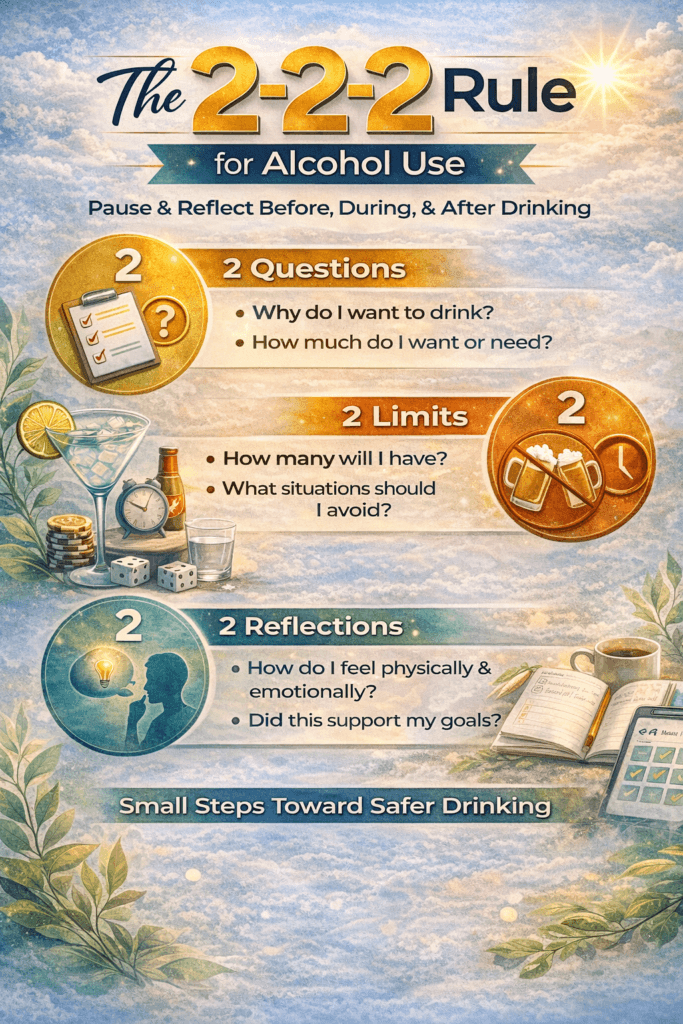
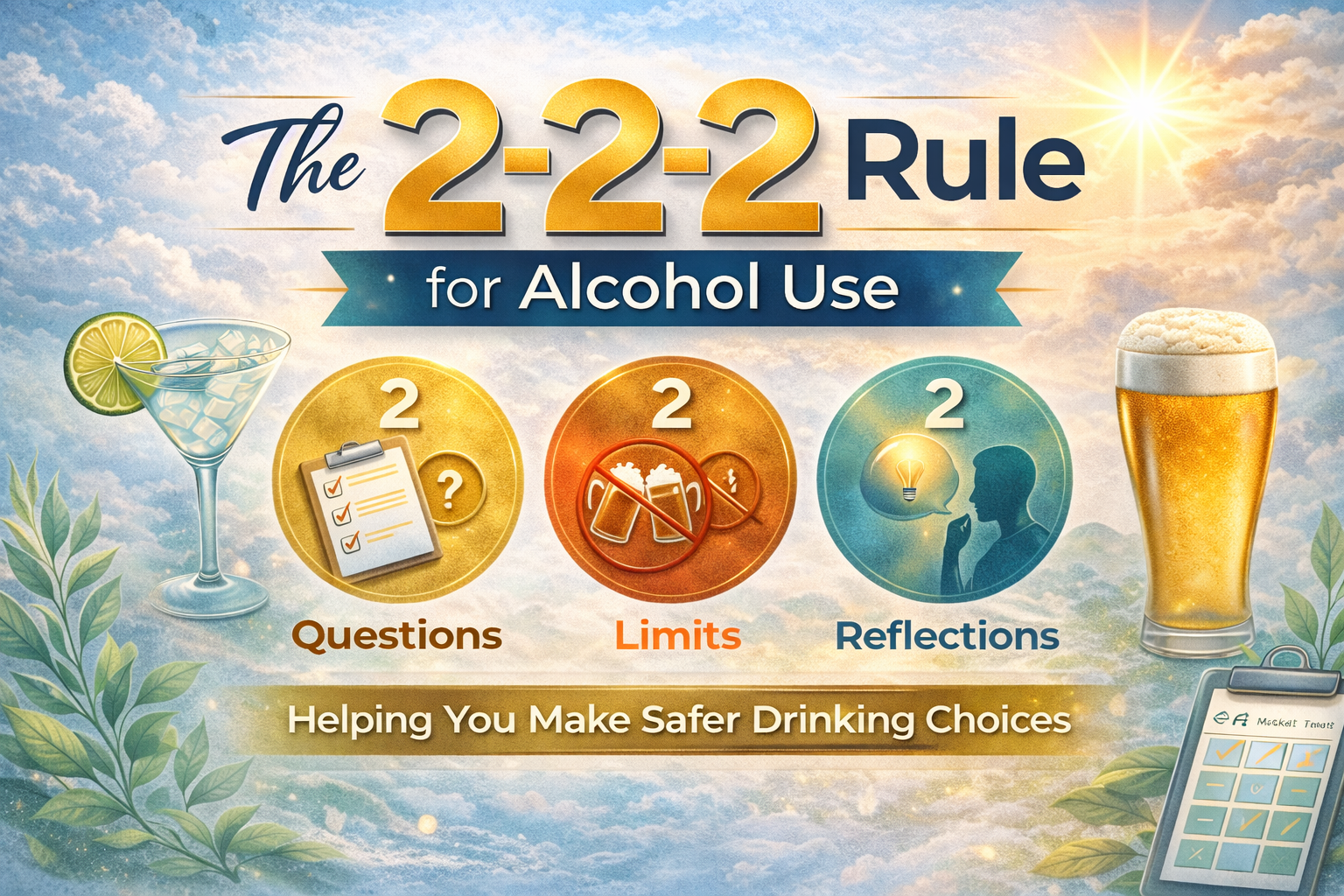
The 2-2-2 rule for alcohol use is a practical self-management guideline designed to promote mindful drinking, reduce risk, and strengthen personal awareness. While not a medical formula, it serves as an easy-to-remember structure that helps individuals pause, reflect, and make intentional choices about alcohol. The rule focuses on three checkpoints: 2 questions, 2 limits, and 2 reflections—each aimed at preventing impulsive use and encouraging responsible habits.
The first step is asking 2 key questions before drinking: Why am I drinking right now? and How much do I actually want or need? These questions help distinguish intentional use from emotional or automatic drinking. Many people discover they reach for alcohol out of stress, boredom, or social pressure rather than genuine desire. This awareness alone can significantly reduce overconsumption.
The second step involves setting 2 personal limits. One is a quantity limit, such as a predetermined number of drinks. The other is a situational limit, like deciding not to drink when feeling emotionally overwhelmed or fatigued. Establishing boundaries ahead of time strengthens self-control by enabling rational rather than impulsive decisions.
The final step is practicing 2 reflections after drinking: How did I feel physically and emotionally? And did this align with my goals? Reflection builds insight and helps individuals notice patterns between drinking habits and outcomes. Over time, this process strengthens self-regulation and supports healthier decision-making.
What makes the 2-2-2 rule effective is its simplicity. Alcohol misuse often develops gradually through repeated automatic choices. Structured check-ins interrupt that cycle and replace it with awareness. Instead of relying solely on willpower, individuals use a system that guides their thinking before, during, and after drinking.
Ultimately, the 2-2-2 rule is not about restriction—it’s about intention. By asking thoughtful questions, setting clear limits, and reflecting honestly, people can develop a more balanced relationship with alcohol. Small, consistent moments of awareness can lead to lasting change, improved well-being, and greater confidence in personal choices.
Taking Control: Self-Management Strategies to Apply the 2-2-2 Rule for Alcohol Use
The 2-2-2 rule for alcohol use is a simple framework designed to help individuals drink more intentionally and safely. Built around 2 questions before drinking, 2 limits during, and 2 reflections after, this approach turns alcohol decisions from impulsive reactions into mindful choices. While the rule itself is straightforward, its effectiveness depends on how well it’s applied in daily life. That’s where self-management strategies come in—practical tools that strengthen awareness, consistency, and personal accountability.
The first strategy is pre-decision planning. Before entering situations where alcohol is present, decide your answers to the two questions: Why am I drinking? and How much will I have? Writing this down in a note app or journal reinforces commitment. Planning ahead reduces the influence of peer pressure, emotional triggers, or spur-of-the-moment decisions.
The second strategy is clear limit setting. Choose your two limits in advance: a quantity limit and a situational limit. For example, you might decide to have no more than two drinks and to skip alcohol entirely if you feel stressed or upset. Pairing limits with cues—such as alternating water between drinks or setting a timer—helps you stay aware of pacing and prevent automatic overconsumption.
Another key technique is environmental awareness. Certain environments increase the likelihood of exceeding limits, such as loud social gatherings or high-stress events. Identifying these settings allows you to prepare coping strategies, bring a nonalcoholic alternative, or plan an exit time. Adjusting your surroundings is often more effective than relying solely on willpower.
Equally important is post-use reflection, the final part of the 2-2-2 rule. After drinking, take a moment to ask: How did I feel? And did this support my goals? Tracking answers over time reveals patterns between drinking habits and emotional or physical outcomes. This feedback loop helps refine future decisions and builds long-term self-control.
Finally, accountability systems strengthen success. Sharing your goals with a trusted friend, therapist, or support group can provide encouragement and accountability. Even digital tools—such as habit trackers, reminders, or wellness apps—can reinforce consistency.
The strength of the 2-2-2 rule lies in its practicality. Instead of demanding drastic lifestyle changes, it focuses on small, intentional actions that compound over time. With thoughtful planning, realistic limits, and honest reflection, individuals can develop a healthier relationship with alcohol—one guided not by impulse, but by self-awareness and choice.
Stronger Together: Family Support Strategies for Using the 2-2-2 Rule in Alcohol Use
Families play a powerful role in shaping healthier habits, especially when a loved one is working to manage alcohol use. One practical framework families can support is the 2-2-2 rule—a simple method built on 2 questions before drinking, 2 limits during, and 2 reflections after. While the rule is designed for individual self-management, family encouragement can make it far more effective by providing accountability, emotional safety, and structure.
The first way families can help is by encouraging the two pre-drinking questions: Why am I drinking? and How much do I plan to have? Loved ones can foster this step by promoting open, judgment-free conversations about intentions rather than criticizing behavior. When individuals feel safe discussing their motivations, they are more likely to make thoughtful decisions rather than react impulsively or defensively.
Families can also support the two-limits portion of the rule. This might involve respecting agreed-upon drink limits, offering nonalcoholic alternatives at gatherings, or helping create environments where moderation feels normal rather than pressured. For example, hosting events focused on food, games, or conversation rather than alcohol can reduce temptation and reinforce healthy boundaries.
Another key strategy is helping with the two reflections after drinking: How did I feel? And did this align with my goals? Families can gently ask supportive questions the next day, not to judge but to encourage insight. Reflective conversations build awareness and help individuals connect their choices to outcomes, strengthening self-regulation over time.
It’s also important for families to maintain supportive boundaries. Encouragement should never become enabling. This means avoiding behaviors such as minimizing consequences, covering up mistakes, or pressuring someone to drink. Healthy support balances compassion with accountability, showing care while reinforcing responsibility.
Ultimately, the 2-2-2 rule works best when individuals feel supported rather than monitored. Families who model healthy coping skills, communicate openly, and celebrate progress create an environment where positive change can take root. With patience, understanding, and consistent encouragement, families can transform a simple rule into a shared pathway toward healthier choices, stronger relationships, and lasting well-being.
Community Support in Action: Strategies to Implement the 2-2-2 Rule for Alcohol Use
Healthy change rarely happens in isolation. While the 2-2-2 rule for alcohol use—2 questions before drinking, 2 limits during, and 2 reflections after—is designed as a personal self-management tool, community resources can significantly strengthen its effectiveness. When local systems provide education, structure, and support, they make it easier for individuals to apply this rule consistently and realistically in everyday life.
One of the most powerful community strategies is providing accessible education and awareness programs. Workshops, health campaigns, and counseling services can teach individuals how to use the two pre-drinking questions: Why am I drinking? and How much do I plan to have? When communities normalize mindful decision-making instead of an impulsive drinking culture, individuals feel more confident setting intentions before they drink.
Communities can also support the two-limits component by shaping safer environments. Local venues, event organizers, and organizations can provide alcohol-free social spaces, clearly labeled drink sizes, and appealing nonalcoholic options. Policies such as responsible beverage service training or designated-driver initiatives reinforce personal limits, making moderation easier to maintain.
Another essential resource is structured reflection support. Counseling centers, peer groups, and recovery meetings provide safe places for individuals to discuss their two reflection questions: How did I feel? And didthis match my goals? These discussions help people learn from experience without shame, turning reflection into growth rather than self-criticism. Community mentors and peer leaders can guide these conversations and model accountability.
Communities also strengthen implementation through support networks and accountability systems. Support groups, wellness programs, and digital community platforms allow individuals to share progress, challenges, and strategies. This connection reduces isolation, a major risk factor for unhealthy alcohol use, and reinforces motivation to stay aligned with personal goals.
Ultimately, community involvement transforms the 2-2-2 rule from a simple guideline into a sustainable lifestyle practice. When neighborhoods, organizations, and health systems work together to promote awareness, provide resources, and encourage reflection, they create an environment where mindful choices become the norm. In that supportive setting, individuals are not just trying to change alone—they are growing within a network that empowers healthier decisions, stronger self-control, and long-term well-being.
Frequently Asked Questions
Here are some common questions:
1. What is the 2-2-2 rule for alcohol use?
It’s a self-management framework that encourages mindful drinking through three steps: asking 2 questions before drinking, setting 2 limits during, and completing 2 reflections after. It helps turn alcohol decisions from impulsive to intentional.
2. What are the two questions to ask before drinking?
Typically: Why am I drinking right now? and How much do I plan to drink? These questions help identify motivation and prevent automatic or emotionally driven choices.
3. What are the two limits?
One is a quantity limit (how many drinks you’ll have), and the other is a situational limit (conditions where you choose not to drink, such as when stressed, tired, or driving).
4. What are the two reflections after drinking?
They usually include: How did I feel physically and emotionally? And did this choice align with my goals or values? Reflection strengthens awareness and supports healthier decisions next time.
5. Who can benefit from using this rule?
Anyone who wants to improve awareness and control around alcohol use—whether they’re moderating intake, reassessing habits, or maintaining recovery goals.
6. Is the 2-2-2 rule a treatment method?
No. It’s a behavioral strategy, not a medical or clinical treatment. It works best when combined with professional guidance if someone struggles with alcohol misuse or dependence.
7. How does this rule reduce risky drinking?
It interrupts automatic behavior patterns. By adding structured pauses before, during, and after drinking, it helps people make conscious decisions rather than reacting to impulses or social pressure.
8. Can the 2-2-2 rule help prevent relapse?
Yes, for some individuals. The reflection and limit-setting components increase self-awareness, helping people recognize warning signs and adjust their behavior early.
9. How can someone remember to use it in real life?
Many people use reminders such as phone notes, habit trackers, or visual cues. Practicing it consistently turns it into a routine rather than something that must be remembered.
10. What makes the 2-2-2 rule effective?
Its simplicity. Complex systems are harder to follow, especially in social settings. The 2-2-2 structure is easy to recall and apply quickly, making it practical in real-world situations.
Conclusion
Ultimately, the strength of the 2-2-2 rule lies in its simplicity and sustainability. Rather than demanding drastic change, it encourages small, consistent actions that build awareness and accountability over time. Asking thoughtful questions, setting clear limits, and reflecting honestly can transform how a person relates to alcohol, promoting healthier patterns and greater confidence in personal choices. When practiced regularly, this approach becomes more than a strategy—it becomes a habit of mindful living that supports long-term well-being and responsible decision-making.
Video: The 2-2-2 Rule Before Every Drink #MindfulDrinking #HealthTips