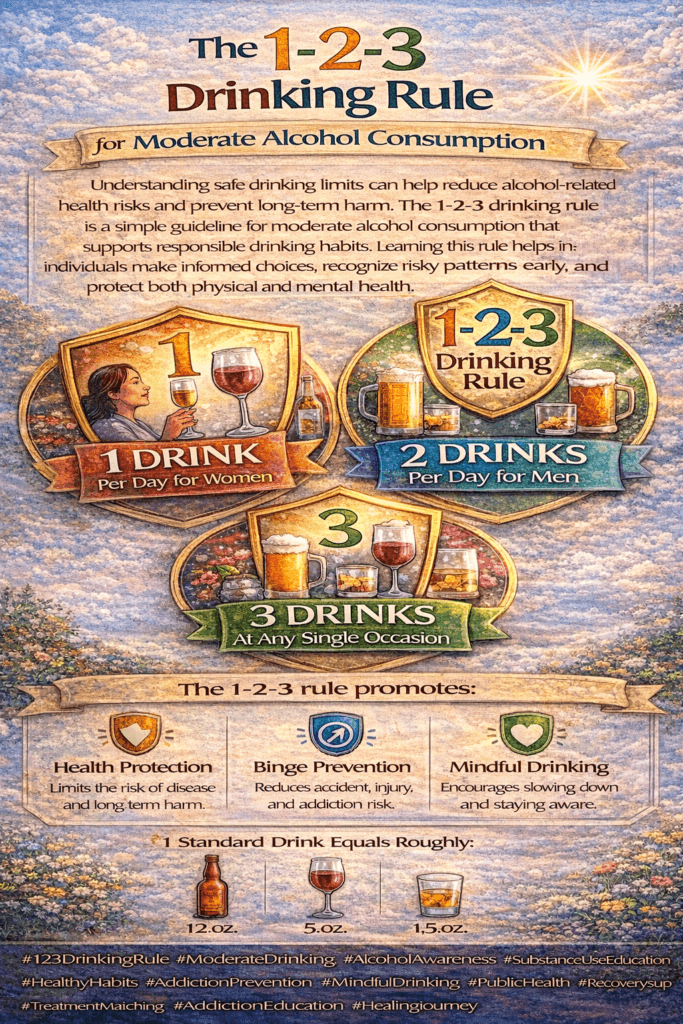
The 1-2-3 drinking rule is a handy guideline for moderating alcohol consumption and keeping social drinking in check. This simple formula, created by addiction experts and encouraged by some health organizations, helps people track how much they drink in a way that’s easy to remember and put to use in real-life settings. I’ve seen this rule work well for keeping nights out fun and safe, and it’s something worth considering if you want to enjoy alcohol without overdoing it.
What Is the 1-2-3 Drinking Rule?
The 1-2-3 drinking rule breaks down like this: stick to 1 standard drink per hour, avoid more than 2 drinks per day, and limit yourself to 3 days a week of drinking. This formula keeps things easy to remember while steering clear of heavy drinking patterns that can sneak up if you’re not staying sharp. I’ve noticed these numbers work for most people trying to balance their social lives and health.
This method isn’t a substitute for medical advice, and risk factors can differ for everyone. But for many adults, it’s a practical way to cut down on binge drinking, hangovers, and the health risks linked with regular alcohol use.
Why Moderate Drinking Matters
Moderating drinking isn’t just about staying away from uncomfortable hangovers. Regularly having more than a few drinks can raise blood pressure, increase cancer risk, and mess with sleep and mood. From my own experience and from what I’ve read, people usually notice they feel fresher and more in control when they drink less often and in smaller amounts.
Public health organizations like the CDC and World Health Organization say that lighter, less frequent drinking is a better bet. They also mention that moderation helps lower the risk of accidents, injuries, and a lot of regrettable moments people face after a wild night out.
Breaking Down the 1-2-3 Drinking Rule: What Each Number Means
- 1 Drink Per Hour: The liver processes about one standard drink every hour. This isn’t exactly right for everyone, but it gives you a safe pace. I know from gatherings where people keep to this pace that problems are pretty rare.
- No More Than 2 Drinks a Day: Keeping it to two drinks or less keeps it less likely you’ll lose control or feel rough the next day. After two, decision-making and coordination already start to drop off for most people.
- Not More Than 3 Days a Week: Giving yourself alcohol free days each week helps your body recover and keeps drinking from becoming a daily routine. It makes a real difference in energy and mental clarity.
How To Put This Rule into Practice
In social settings, especially when drinks are flowing, the 1-2-3 rule helps set boundaries. Here’s how it can fit into real life:
- Keep an Eye on Standard Drinks: A standard drink in the US is 12 oz. of regular beer or 5 oz. of wine. of wine, or 1.5 oz. of distilled spirits. Portions at bars or parties are often bigger, so I like to check serving sizes before pouring.
- Use a Timer or App: Set a timer on your phone for an hour to help prevent back-to-back drinks. Several apps can track time and the number of drinks if you want more structure.
- Plan Alcohol Free Days: Scheduling three or more days a week as “no alcohol” days gives your body a break. I sometimes pair these with hobbies or plans so they don’t feel like a sacrifice.
- Alternate With Water: Having a glass of water between drinks is pretty effective. It slows the pace, keeps you hydrated, and can lower your total drinks over the night.
- Talk About the Rule: Letting friends know about your plan makes it easier. It sets expectations and eliminates awkward explanations for skipping a round.
Who Benefits from the 1-2-3 Drinking Rule?
I’ve found this rule useful for adults who want to enjoy social events without the downsides of heavy drinking. It’s not really meant for people who are pregnant, underage, or have problems with alcohol addiction. These folks should stay away from drinking altogether, and it’s best to check with a doctor for more personalized advice.
For most social drinkers and people trying to keep their health in check, though, this rule is a solid tool. Even people who usually “hold their liquor” report being surprised at how much better they feel keeping to a moderate pace.
Common Questions About the 1-2-3 Drinking Rule
Is the 1-2-3 rule safe for everyone?
It isn’t foolproof for everyone or in every situation. Certain medical conditions, medications, and individual sensitivity to alcohol may need stricter limits or no drinking at all. When unsure, talking with a healthcare professional is the smart move.
What counts as a standard drink?
A standard drink usually means 12 ounces of regular beer (about 5% alcohol), 5 ounces of wine (about 12% alcohol), or 1.5 ounces of spirits (about 40% alcohol). Mixed drinks often have more than one standard drink in them, so I like to check the recipe if I’m not sure.
Does it still work for celebrations or special occasions?
If you’re planning to drink more on a holiday or big party, going over the daily part of the rule is common. But sticking to the “3 days a week” part and slowing down to a drink an hour can help keep things under control even on those nights.
Can you use this rule to cut back if you tend to binge drink?
This rule is helpful for people wanting to move away from binge habits. Tracking drinks and drinking days over a week is a smart starting point. However, if sticking to the plan proves tricky, support from a counselor or group may be needed.
Tips for Enjoying Drinks Without Overdoing It
For anyone who likes a glass or two but wants to avoid next-day regrets, here are some ideas to keep things light and fun:
- Eat Before and During: Eating slows down how fast alcohol hits you. It also keeps you from snacking on salty bar food you might regret later.
- Set a Limit Before Going Out: Deciding ahead of time how many drinks you’ll have makes it easier to say no to extras on the spot.
- Try Lower-Alcohol Options: Light beers, wine spritzers, or mocktails can help keep a night enjoyable while reducing the risk of overdoing it.
- Watch Your Mood: Drinking to deal with stress or sadness adds more risk. If you’re not feeling great, it’s wise to stick to the rule or skip drinks altogether.
Challenges and Things to Keep in Mind
Sticking to the 1-2-3 guideline can be tough when you’re out with heavy drinkers, or if you’re used to more than a drink or two a night. Here’s what I like to remember when things get tricky:
- Peer Pressure: Saying no isn’t always comfortable, but most people respect clear boundaries. I find it helps to have an excuse ready, or just say you’re pacing yourself.
- Miscalculating Drinks: Party pours and cocktails almost always have more than a standard drink. When in doubt, ask about your glass, or just sip slowly.
- Social Habits: If you tend to drink by routine, swapping in a seltzer or a fancy nonalcoholic alternative can sometimes trick your brain into thinking you’re still enjoying the ritual.
Slipping Up
Nobody’s perfect. If you blow past your planned drinks one night, it isn’t the end of the world. I usually use it as a time to reflect and focus on my goals, instead of beating myself up about it.
Real Life Example
For many people, following the 1-2-3 rule is easier when drinking is part of special events rather than everyday life. I had a friend track her drinks for a month; she noticed that just the act of scheduling three alcohol free days a week meant she drank less overall and enjoyed the times she did more.
Wrapping Up On the 1-2-3 Rule
The 1-2-3 drinking rule isn’t a strict diet or a one-size-fits-all approach, but it’s an all-in-one tool for anyone wanting to moderate their alcohol use. It’s about making smart choices and staying in control, making sure that a fun night stays fun—even the next morning. If you’re looking for ways to keep drinking socially and safely, this rule is well worth checking out.
Whether you set reminders, mix in mocktails, or get your friends on board, the 1-2-3 rule provides a solid framework for responsible, enjoyable drinking.
Video: The 1 2 3 Rule for Alcohol Use