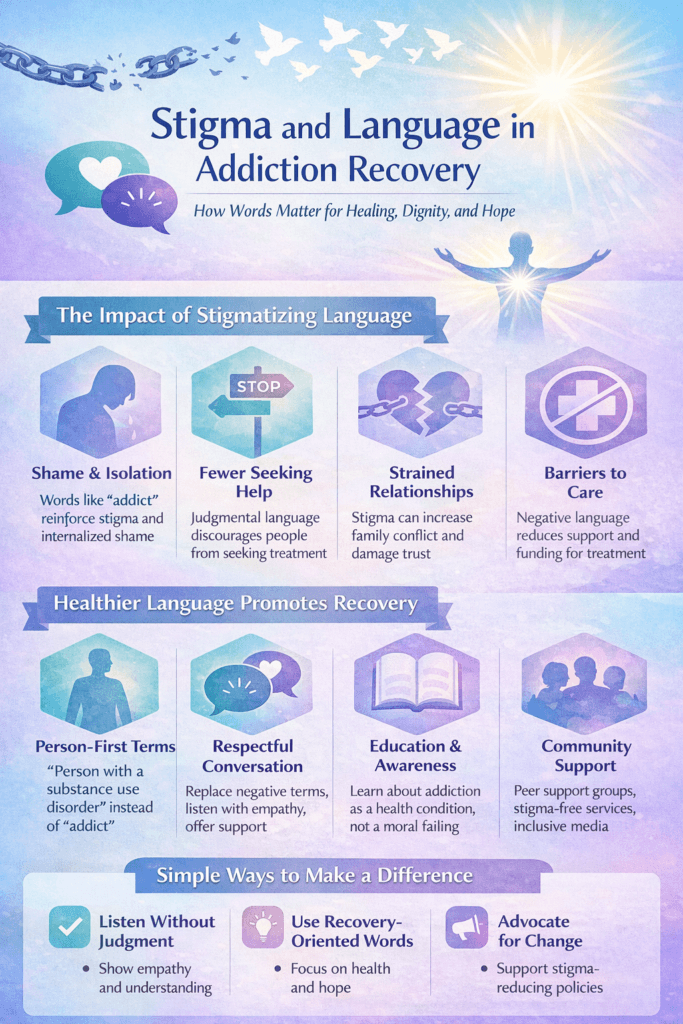
Stigma and language play a powerful role in shaping addiction recovery experiences. Judgmental or blaming words can intensify shame, lower self-esteem, and discourage individuals from seeking treatment or being honest about their struggles, often increasing isolation during vulnerable moments. In contrast, respectful, person-first language promotes dignity, trust, and a sense of safety, encouraging openness and engagement in care. Reducing stigma requires consistent, compassionate communication across all levels—individual self-talk, family conversations, professional interactions, and community messaging. When language shifts from judgment to understanding, it helps remove barriers, supports motivation, and makes recovery more attainable, sustainable, and empowering.
Stigma and the Language of Addiction: Why Words Matter in Recovery
The language we use to talk about addiction has a powerful impact on how individuals view themselves, how society responds, and how willing people are to seek help. Stigma—often fueled by outdated or judgmental language—remains one of the biggest barriers to addiction treatment and recovery. Words can either reinforce shame and isolation or promote understanding, dignity, and hope.
Historically, addiction has been framed as a moral failing or lack of willpower. Terms like “addict,” “junkie,” “abuser,” or “clean/dirty” carry heavy judgment and imply personal blame. This language subtly suggests that a person is the problem, rather than recognizing addiction as a complex, chronic medical condition influenced by biology, psychology, environment, and trauma. Over time, repeated exposure to stigmatizing language can lead individuals to internalize shame, lowering self-esteem and reducing motivation to seek care.
Person-first language is a key step in reducing stigma. Saying “a person with a substance use disorder” instead of “an addict” emphasizes that a person is more than their condition. Similarly, using terms such as “in recovery” rather than “clean” emphasizes health and progress rather than moral judgment. These shifts may seem small, but research shows they meaningfully change attitudes among healthcare providers, families, and the public.
Stigma doesn’t only affect individuals—it influences systems. When addiction is framed negatively, funding for treatment programs may be reduced, policies may become more punitive than therapeutic, and healthcare settings may unintentionally create unwelcoming environments. Patients who sense judgment from providers are less likely to disclose substance use honestly, which can compromise care and safety.
Changing the language of addiction is not about being politically correct; it’s about being clinically effective and humane. Compassionate, accurate language supports engagement, builds trust, and reinforces the idea that recovery is possible. Families, clinicians, educators, media outlets, and communities all play a role in shaping this narrative.
By choosing words that reflect respect, science, and empathy, we help dismantle stigma and open doors to treatment. Language can either be a barrier or a bridge. In addiction recovery, that difference can save lives.
Self-Management Strategies to Improve Stigma and Language in Addiction Recovery
Stigma around addiction often begins externally but can quickly become internalized, shaping how individuals talk to themselves and how they engage with recovery. While changing society’s views takes time, people in recovery can actively use self-management strategies to challenge stigma and adopt healthier, more empowering language. These personal shifts play a powerful role in improving self-esteem, treatment engagement, and long-term recovery outcomes.
A key self-management strategy is increasing awareness of self-talk. Many people unconsciously repeat stigmatizing labels such as “I’m an addict” or “I’m broken,” especially after relapse or setbacks. Reframing this internal language to person-first and recovery-oriented statements—such as “I’m a person with a substance use disorder” or “I’m working on my recovery”—helps separate identity from illness. This cognitive shift reduces shame and supports resilience.
Education is another essential tool. Learning that addiction is a chronic, treatable medical condition—not a moral failure—allows individuals to replace blame with understanding. Reading evidence-based materials, attending educational groups, or working with a counselor can reinforce accurate language and counter harmful myths. Knowledge empowers individuals to advocate for themselves in healthcare, the workplace, and family settings.
Setting boundaries around conversations is also an important self-management skill. Individuals can choose when and how to discuss their recovery, correct stigmatizing language when they feel safe, or disengage from conversations that reinforce shame. Practicing simple, prepared responses can reduce anxiety and increase confidence when stigma arises.
Self-compassion practices further reduce the impact of stigma. Mindfulness, journaling, and reflective exercises help individuals recognize that struggle is part of healing, not proof of failure. Using recovery-affirming language in personal goals, affirmations, and daily reflections strengthens a healthier self-identity over time.
Finally, connecting with supportive communities reinforces positive language. Peer recovery groups, therapy, and recovery-friendly spaces model respectful, non-judgmental communication. Hearing others use empowering language normalizes recovery and replaces isolation with belonging.
Through intentional self-management, individuals can challenge stigma from the inside out. By changing the language they use about themselves, they lay a stronger foundation for confidence, engagement in care, and sustained recovery.
Family Support Strategies to Improve Stigma and Language in Addiction Recovery
Families play a critical role in shaping how addiction is understood, discussed, and experienced. The words used at home often carry more emotional weight than those heard anywhere else. When families rely on stigmatizing language—sometimes unintentionally—it can deepen shame, strain relationships, and create barriers to recovery. Conversely, supportive, respectful language can strengthen trust, encourage treatment engagement, and promote healing for everyone involved.
One of the most effective family support strategies is using person-first, recovery-oriented language. Referring to a loved one as “a person with a substance use disorder” rather than labels like “addict” or “junkie” reinforces dignity and separates the individual from the illness. Families who consciously shift their language send a clear message: you are valued, and you are more than your addiction.
Education is another cornerstone of family support. Learning that addiction is a chronic, treatable medical condition helps families move away from blame and toward understanding. When family members understand the science of addiction, they are less likely to use judgmental language and more likely to communicate with empathy. This knowledge also reduces frustration and unrealistic expectations during recovery.
Active listening is equally important. Allowing a loved one to share their experiences without interruption, criticism, or labels fosters emotional safety. Families can practice reflective statements—such as “I hear that you’re struggling” or “I’m glad you told me”—which validate feelings without reinforcing stigma. This approach encourages openness and honest communication.
Families can also model respectful language in everyday conversations. Correcting stigmatizing terms gently, avoiding jokes or casual remarks about addiction, and being mindful of how relapse is discussed all contribute to a healthier environment. Talking about setbacks as part of the recovery process, rather than as failures, reduces fear and shame.
Finally, seeking family-based support—such as family therapy, education groups, or peer support programs—helps relatives process their own emotions and learn healthier communication patterns. These settings provide guidance on using supportive language while maintaining boundaries and accountability.
By intentionally choosing compassionate, accurate language, families can become powerful allies in recovery. When stigma is reduced at home, recovery is more likely to grow, supported by understanding, respect, and hope.
Community Resource Strategies to Improve Stigma and Language in Addiction Recovery
Communities have a powerful influence on how addiction is perceived, discussed, and addressed. Beyond individual and family efforts, community resources play a vital role in reducing stigma and promoting respectful, recovery-oriented language. When communities adopt accurate and compassionate messaging, they create safer environments where individuals are more willing to seek help and sustain recovery.
One key community strategy is education through public programming. Community health centers, schools, libraries, and nonprofit organizations can host workshops, panels, and awareness campaigns that explain addiction as a chronic, treatable medical condition. These initiatives help replace judgmental myths with evidence-based understanding and encourage the use of person-first language. Public education normalizes recovery and shifts conversations away from blame.
Healthcare and social service organizations also shape language norms. Training staff—clinical and non-clinical alike—on stigma-free communication ensures that individuals encounter consistent, respectful language across settings. Intake forms, signage, educational materials, and outreach messaging should avoid labels and instead emphasize health, safety, and recovery. When systems model respectful language, trust, and engagement improve.
Media and local messaging are another powerful tool. Community leaders can collaborate with local media outlets to promote responsible reporting on addiction—avoiding sensationalism and dehumanizing terms. Highlighting recovery stories, community-based solutions, and treatment success reframes addiction from a crisis of character to a public health issue with hope and solutions.
Peer recovery and community support programs further reinforce positive language. Recovery community organizations, mutual-support groups, and peer-led initiatives model respectful communication and empower individuals to share their stories without shame. These spaces provide lived examples of how language can foster belonging, dignity, and motivation.
Policy and advocacy efforts at the community level also matter. Local coalitions can advocate for stigma-free language in public policies, funding proposals, and public statements. When leaders use accurate, compassionate language, it signals that recovery is valued and that people with substance use disorders deserve care—not punishment.
By leveraging education, healthcare systems, media, peer support, and policy advocacy, communities can actively reduce stigma and transform how addiction is discussed. When language becomes more humane and informed, communities become safer and more inclusive places where recovery can take root.
Frequently Asked Questions
Here are some common questions:
1. What does stigma mean in addiction recovery?
Stigma refers to negative beliefs, stereotypes, and attitudes toward people with substance use disorders. In addiction recovery, stigma often frames addiction as a moral failing rather than a medical condition, leading to shame, discrimination, and reduced access to care.
2. Why does language matter in addiction recovery?
Language shapes perception. Judgmental or labeling words can reinforce shame and discourage people from seeking help, while respectful, person-first language promotes dignity, trust, and engagement in treatment. Words influence how individuals see themselves and how society responds to addiction.
3. What is person-first language?
Person-first language emphasizes the individual before the condition. For example, saying “a person with a substance use disorder” instead of “an addict” recognizes that addiction does not define a person’s identity.
4. How does stigmatizing language affect treatment outcomes?
Stigmatizing language is linked to delayed treatment, reduced honesty with healthcare providers, lower self-esteem, and higher dropout rates from care. People who feel judged are less likely to seek help or remain engaged in recovery services.
5. What are common examples of stigmatizing addiction language?
Examples include terms like “addict,” “junkie,” “drug abuser,” “clean,” “dirty,” or describing relapse as a “failure.” These words imply moral judgment rather than medical understanding.
6. What language supports recovery instead of stigma?
Supportive language includes terms such as “person in recovery,” “substance use disorder,” “return to use,” and “recovery progress.” This language focuses on health, growth, and possibility rather than blame.
7. Can stigma affect families and communities, too?
Yes. Stigma can create fear, silence, and misunderstanding within families and communities. It may prevent open conversations, delay early intervention, and reduce community support for treatment programs and recovery services.
8. How can individuals reduce internalized stigma?
Individuals can challenge internalized stigma by learning about addiction as a medical condition, practicing self-compassion, using recovery-oriented self-talk, and connecting with supportive peers or professionals who reinforce respectful language.
9. What role do healthcare providers play in reducing stigma?
Healthcare providers set the tone for recovery. Using non-judgmental, person-first language improves trust, increases honesty, and leads to better health outcomes. Stigma-free care encourages patients to stay engaged in treatment.
10. How can communities help change the language around addiction?
Communities can promote education, support stigma-free policies, train service providers, encourage responsible media coverage, and highlight recovery stories. When communities change their language, they create environments that support recovery rather than hide it.
11. Is changing language really enough to reduce stigma?
Language alone is not enough, but it is a powerful starting point. Changing language can lead to improved attitudes, policies, and care practices. It helps shift addiction from a moral issue to a public health issue.
12. How does reducing stigma improve recovery outcomes?
Reducing stigma increases help-seeking, improves treatment retention, strengthens family and community support, and fosters hope. When people feel respected and understood, they are more likely to pursue and sustain recovery.
Conclusion
Reducing stigma in addiction recovery is not achieved through one change, but through consistent, compassionate action across self-management, family support, and community resources. Individuals can challenge internalized stigma through healthier self-talk and education, families can foster healing by using person-first language and empathetic communication, and communities can reinforce these efforts through public education, stigma-free services, and recovery-focused messaging. Together, these strategies create an environment where addiction is treated as a health condition rather than a personal failure. When language reflects respect and evidence-based understanding, it strengthens engagement in care, supports long-term recovery, and helps restore dignity and hope to individuals and families alike.
Video: Stigma and Language of Addiction- Why Words Shape Recovery