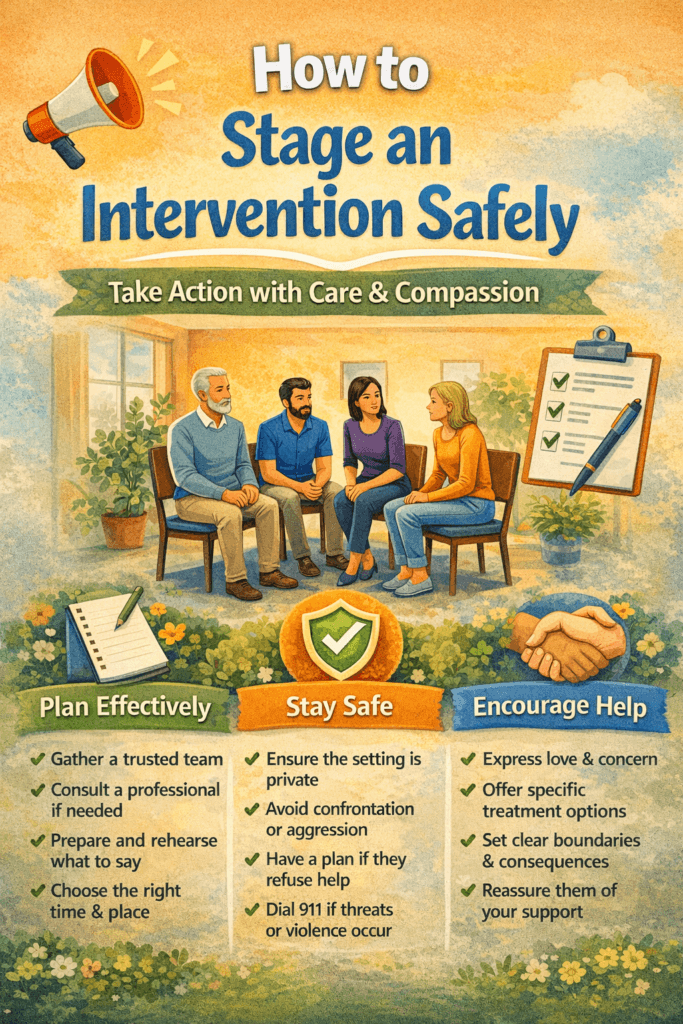
Staging an intervention can be a life-changing moment for someone struggling with addiction or destructive behaviors. However, it is a delicate process that requires careful planning, emotional regulation, and professional support. If done poorly, interventions can cause emotional harm, escalate conflict, or further damage relationships. For an intervention to be effective, it must be conducted in a safe, structured, and compassionate manner. This requires understanding the person’s needs, preparing participants emotionally, and ensuring that a treatment plan is ready. By following a thoughtful, well-prepared strategy, families and loved ones can encourage recovery in a respectful, effective, and supportive way.
How to Stage an Intervention Safely: A Structured and Compassionate Approach
When a loved one struggles with substance use or destructive behavior, families often feel urgency, fear, and frustration. An intervention can be an effective way to encourage treatment—but only when planned carefully and conducted safely. Poorly executed interventions can escalate conflict, damage trust, or even create safety risks.
This guide outlines how to stage an intervention in a structured, ethical, and psychologically informed manner.
What Is an Intervention?
An intervention is a structured, pre-planned conversation in which family members, friends, or colleagues express concern about a person’s substance use or harmful behavior and encourage them to seek professional treatment.
The goal is not confrontation or punishment. The goal is:
- Encouraging treatment
- Establishing clear boundaries
- Presenting unified support
- Communicating concern in a controlled setting
Step 1: Assess Safety First
Before planning an intervention, evaluate risk factors:
- History of violence
- Severe mental health instability (e.g., psychosis, suicidal threats)
- Access to weapons
- Intoxication at the time of discussion
If any safety concerns are present, consult a licensed professional before proceeding. In high-risk cases, a professional interventionist or clinician should guide the process.
Never stage an intervention if the person is intoxicated.
Step 2: Consult a Professional
Whenever possible, involve:
- A licensed addiction counselor
- A therapist
- A social worker
- A certified interventionist
Professionals help:
- Develop a structured plan
- Identify appropriate treatment options
- Coach participants on communication
- Manage emotional escalation
Interventions are most successful when treatment arrangements are pre-scheduled.
Step 3: Select the Right Participants
Choose individuals who:
- Have a meaningful relationship with the person
- Can remain calm
- Are willing to enforce boundaries
- Are not actively enabling the behavior
Avoid including individuals who are highly reactive, judgmental, or have unresolved conflicts with the person.
Keep the group small and focused.
Step 4: Plan and Rehearse the Message
Each participant should prepare a short, structured statement that includes:
- Expressions of care and concern
- Specific examples of harmful behaviors (without exaggeration)
- Emotional impact statements (“I feel worried when…”)
- A clear request to enter treatment
- Consequences if treatment is refused
Statements should be factual and free of blame.
Example structure:
- “I love you and care about your well-being.”
- “When you missed work and were arrested last month…”
- “I felt scared and helpless.”
- “We are asking you to accept treatment today.”
- “If you choose not to go, I will no longer provide financial support.”
Rehearsing reduces emotional escalation during the intervention.
Step 5: Arrange Immediate Treatment Options
Interventions should never be vague. Treatment should already be:
- Researched
- Contacted
- Financially discussed
- Scheduled
Have transportation arranged if needed.
The window of willingness may be brief—be prepared to act immediately.
Step 6: Choose the Right Time and Setting
- Neutral, private location
- Morning or early day (when less likely to be intoxicated)
- Calm environment
- No distractions
Avoid public settings or emotionally charged environments.
Step 7: Conduct the Intervention
During the conversation:
- Remain calm
- Stick to prepared statements
- Avoid arguing
- Do not debate facts
- Redirect back to treatment
If the individual becomes defensive:
- Acknowledge feelings without engaging in argument
- Repeat the request for treatment
- Maintain unity among participants
The group should avoid side conversations or mixed messages.
Step 8: Follow Through on Boundaries
If the person refuses treatment:
- Enforce previously stated consequences
- Avoid emotional bargaining
- Maintain consistency
Failure to follow through undermines credibility and can reinforce enabling patterns.
When Not to Stage an Intervention
Avoid staging an intervention:
- During active intoxication
- During a severe psychiatric crisis without professional guidance
- When participants are unprepared or divided
- If safety risks are present
Professional consultation is critical in complex cases.
Emotional Preparation for Participants
Family members should expect:
- Resistance
- Anger
- Denial
- Emotional manipulation
Preparation includes:
- Practicing emotional regulation
- Setting realistic expectations
- Understanding that acceptance may not occur immediately
An intervention plants a seed—even if immediate acceptance does not occur.
Conclusion
Staging an intervention safely requires planning, professional guidance, emotional regulation, and clear boundaries. It is not a spontaneous confrontation but a structured effort to encourage treatment and accountability.
When conducted thoughtfully, interventions can break through denial and initiate the recovery process. When conducted impulsively, they can increase conflict and risk.
Safety, preparation, and consistency are the foundation of an effective intervention.
Self-Management Strategies for Staging an Intervention Safely
When a loved one is struggling with substance use or a destructive behavior, families often feel compelled to step in and help. An intervention can be a powerful tool to encourage change, but if not done correctly, it can lead to further harm, conflict, or emotional distress. Staging an intervention safely requires careful planning, emotional regulation, and clear boundaries. It’s essential to use self-management strategies to ensure the intervention is conducted in a structured and compassionate way, fostering a positive outcome for everyone involved.
Why Self-Management Is Crucial in an Intervention
Self-management during an intervention involves controlling your emotions, actions, and reactions while maintaining a calm, supportive environment. Without proper emotional regulation, an intervention can quickly spiral into chaos, damage relationships, or escalate the person’s resistance to treatment. For family members and loved ones, self-management is vital to:
- Maintaining clear boundaries
- Avoiding impulsive actions or reactions
- Remaining calm despite emotional pressure
- Staying focused on the goal of getting the individual to seek treatment
By practicing self-management, you create a stable foundation for the intervention and increase the likelihood of a successful outcome.
Step 1: Prepare Emotionally Before the Intervention
An intervention can be an emotionally charged event, especially when dealing with a loved one’s destructive behavior. Emotional regulation starts with self-awareness. Before the intervention, family members should:
1.1 Identify Personal Triggers
Know what might trigger emotional responses such as anger, guilt, or frustration. Recognize these triggers so you can manage your feelings during the intervention. You might:
- Identify personal vulnerabilities (e.g., past feelings of abandonment)
- Acknowledge potential feelings of helplessness or guilt
1.2 Set Realistic Expectations
An intervention is not a quick fix. A loved one may initially resist or refuse treatment. Managing expectations beforehand ensures that everyone understands that change takes time. Aim for progress, not perfection.
1.3 Practice Emotional Grounding
Before the intervention, practice techniques such as deep breathing, visualization, or mindfulness. Staying grounded during the meeting helps prevent emotional escalation.
Step 2: Maintain Calm and Control During the Intervention
The intervention is likely to stir strong emotions. The individual being confronted may become defensive, angry, or dismissive. Family members must remain calm, focused, and avoid engaging in emotional battles. Here are strategies to manage your own emotions during the intervention:
2.1 Stay Centered and Grounded
In moments of heightened tension, consciously slow your breathing and focus on staying calm. This helps prevent your emotions from taking over. You can also use grounding techniques like silently counting to five or focusing on an object in the room.
2.2 Use Neutral and Compassionate Language
Avoid accusatory language like “You always…” or “You never…” Instead, focus on “I feel” statements to express your emotions. For example:
- “I feel concerned when you drink and drive.”
- “I feel helpless when I see you struggling.”
This approach reduces defensiveness and keeps the conversation focused on the person’s behavior, not their character.
2.3 Stick to the Script
Before the intervention, practice your talking points and, as a group, agree on the main messages. Stick to your message of care and concern without deviating into arguments or side discussions. Consistency and focus help prevent chaos.
Step 3: Set Healthy Boundaries
One of the key elements of an intervention is establishing clear, consistent boundaries. Setting boundaries protects you and your family from being drawn into enabling behaviors, and it communicates that change is needed.
3.1 Be Clear About the Consequences
Part of a successful intervention involves offering specific consequences for refusing help. These consequences should be thought out in advance and communicated calmly. Examples include:
- “If you choose not to go to treatment today, I will not be able to continue supporting you financially.”
- “I cannot allow you to live in my home while you are using substances.”
Consequences should be firm, realistic, and enforceable. Be prepared to follow through if necessary.
3.2 Enforce the Boundaries with Compassion
It’s important to enforce boundaries without anger or resentment. Acknowledge the difficulty of the situation, but maintain your stance. Saying, “I love you, and I want you to get better, but I can’t support your addiction anymore,” maintains both compassion and firm boundaries.
Step 4: Manage Stress and Seek Support
Interventions are highly emotional experiences for everyone involved. Family members should not navigate this process alone.
4.1 Seek Support Before and After the Intervention
Consider seeking support from a counselor, therapist, or interventionist prior to the intervention. A professional can guide the process and offer strategies for managing emotions. Additionally, attending Al-Anon or other support groups for families affected by addiction can provide emotional support and validation.
4.2 Have a Plan for Aftercare
Whether the intervention is successful or not, it’s important to have a plan for self-care afterward. Take time to process your own emotions, seek support from trusted friends or family, and reinforce your boundaries.
Step 5: Follow Through on Consequences and Maintain Consistency
After the intervention, it’s crucial to stay consistent with any boundaries or consequences discussed. If the person refuses help, be prepared to follow through with the actions you promised. Inconsistency can undermine the entire intervention process and may lead to further enabling behaviors.
Conclusion
Staging an intervention is a powerful and compassionate way to encourage a loved one to seek treatment. However, to ensure that it is conducted safely and effectively, families must use self-management strategies. Emotional regulation, maintaining calm and boundaries, and seeking support are all vital components of a successful intervention. When families practice self-management and remain focused on the well-being of both the individual and themselves, they create a stronger foundation for recovery and healing.
Self-care and emotional boundaries are not only vital for the person struggling with addiction but also for those who love them. By managing your emotions, expectations, and boundaries, you can help guide the intervention process and ultimately encourage lasting change.
Family Support Strategies for Staging an Intervention Safely
An intervention can be a pivotal moment in a loved one’s journey toward recovery from substance use or destructive behaviors. While well-intentioned, interventions can quickly become overwhelming and even counterproductive if not handled carefully. For families, staging an intervention requires careful planning, emotional regulation, and clear boundaries to ensure the person being confronted feels supported rather than attacked. This blog explores effective family support strategies that help ensure interventions are staged safely, with the goal of promoting positive change while protecting both the individual and the family unit.
Why Staging an Intervention Safely Is Critical
Addiction is a complex disease that often involves deep psychological and physical components. Without the proper support and guidance, interventions can escalate emotions, foster feelings of betrayal or resentment, or even push the person further away from treatment. A safe, structured intervention can encourage the person to seek help while maintaining healthy family dynamics.
Key goals of staging an intervention safely:
- Encourage the individual to seek professional help
- Maintain family emotional well-being
- Provide clear boundaries without escalating conflict
- Offer unwavering support and compassion
By creating a safe environment, families can foster a more receptive atmosphere for treatment and change.
Step 1: Involve a Professional
While family members may feel a sense of urgency to intervene, involving a professional ensures that the intervention is structured and focused on the individual’s well-being. A trained interventionist or therapist can guide the process, providing a neutral and expert perspective.
Why involve a professional?
- Objective facilitation: A professional can manage conflicts, prevent the situation from becoming emotionally charged, and keep the conversation focused on treatment.
- Proper planning: A professional will ensure that all logistical aspects of the intervention are accounted for, including selecting the right participants, choosing an appropriate time and setting, and preparing treatment options.
- Increased effectiveness: Studies show that interventions delivered by trained professionals are more likely to lead individuals to seek treatment.
Step 2: Prepare Emotionally and Mentally
Family members often experience strong emotions before, during, and after an intervention. It’s essential to manage these emotions to prevent them from negatively impacting the outcome.
Preparation strategies include:
- Setting realistic expectations: Recognize that an intervention may not lead to immediate acceptance. Prepare for potential resistance, anger, or defensiveness.
- Identifying personal triggers: Family members may have deep emotional connections with the individual. Acknowledge triggers such as past hurt, disappointment, or frustration to avoid them affecting your behavior during the intervention.
- Engaging in emotional regulation: Practice deep breathing, mindfulness, or relaxation techniques before the intervention to remain calm and composed.
The calmer and more emotionally regulated family members are, the less likely the intervention will escalate into a confrontational or reactive situation.
Step 3: Set Clear Boundaries and Consequences
An effective intervention is rooted in clear boundaries and consequences. These should be established prior to the intervention and communicated calmly to the person struggling with addiction. Boundaries protect the family from emotional or physical harm, while consequences provide the person with the clarity needed to understand the urgency of change.
How to establish boundaries:
- Be specific and consistent: Clearly communicate what behaviors are unacceptable (e.g., substance use, abuse) and how they will be addressed (e.g., refusing financial support, asking them to leave the home).
- Enforce the consequences: Family members must be prepared to follow through on the boundaries set. Inconsistent enforcement can lead to confusion and enable further substance use.
For example, a boundary might look like: “If you refuse to attend treatment, I will not be able to continue to provide financial support.” It is crucial that family members are ready to follow through with any actions discussed.
Step 4: Keep the Intervention Focused on Support, Not Blame
The goal of the intervention is to encourage the person to seek help, not to punish them or make them feel ashamed. When staging the intervention, the language used should always be compassionate, focused on love and concern, and free of blame.
Effective communication strategies:
- Use “I feel” statements: This ensures the focus remains on the family member’s feelings rather than on blaming or accusing the individual. For example, “I feel scared and worried when I see you using drugs” rather than “You’re ruining your life and everyone around you.”
- Avoid criticism and judgment: Keep the tone neutral and supportive. Instead of focusing on the negative behavior, emphasize how it affects you emotionally and why you want them to improve.
- Express care and concern: Let them know that you are there to support them in their recovery journey. For instance, “We love you and want to see you happy and healthy. That’s why we’re asking you to consider treatment.”
Remember, the intervention is not about shame or guilt; it’s about creating an open, supportive space for the person to take the first step toward recovery.
Step 5: Have a Treatment Plan Ready
One of the most important parts of a successful intervention is having a clear treatment plan in place. You should know where you want to send your loved one for treatment and have options lined up. This can include:
- Inpatient or outpatient rehab centers
- Counseling or therapy programs
- Support groups like AA or NA
- Family therapy options
Having this information ready shows the person struggling with addiction that there is a clear, structured path for them to take if they decide to accept help.
Step 6: Follow Through with Consistency
After the intervention, it’s crucial that family members follow through with the consequences and boundaries discussed. If the person refuses treatment, it is essential that families remain consistent with their response to avoid reinforcing destructive behaviors.
Consistency is key:
- Enforce the boundaries calmly: If treatment is refused, family members must be prepared to take the necessary steps to protect themselves, even if that means temporarily distancing themselves from the individual.
- Stay emotionally regulated: It’s easy for family members to become frustrated or discouraged, but it’s important to maintain emotional composure and continue to offer support without enabling the person.
Conclusion
Staging an intervention is not an easy or quick solution, but when done correctly, it can provide a turning point in a loved one’s recovery. Safe, structured interventions require careful planning, emotional regulation, clear boundaries, and professional support. Families who prepare thoughtfully and engage in compassionate communication create an environment where their loved one may feel supported enough to seek the help they need.
Interventions are not about forcing change but encouraging it with care, consistency, and understanding. With the right approach, families can make a meaningful impact on their loved one’s path to recovery, while also maintaining their own emotional well-being.
Community Resource Strategies for Staging an Intervention Safely
When a loved one struggles with addiction or other harmful behaviors, staging an intervention can be a critical step in encouraging them to seek help. However, an intervention is a sensitive and complex process that, if done incorrectly, can escalate conflict, damage relationships, or even cause emotional harm. Community resources play an essential role in ensuring that interventions are staged safely, effectively, and compassionately. By leveraging professional support, local programs, and community services, families can improve their chances of staging a successful intervention that leads to lasting recovery.
Why Community Resources Are Vital for a Safe Intervention
Addiction is not just a personal issue; it’s a family and community issue. The emotional toll on loved ones and the potential for conflict during an intervention underscore the need to use community resources effectively. These resources help provide:
- Emotional support for families
- Professional guidance and structure
- Safe environments for intervention
- Access to treatment options
An intervention is a significant event, and with the right resources in place, families can ensure that the intervention process is handled with care and compassion, offering the best chance for the loved one to accept help.
Step 1: Involve Professional Support
One of the most important community resources when staging an intervention is professional help. Addiction counselors, interventionists, and mental health professionals are crucial for ensuring that the intervention is conducted in a structured, safe, and supportive manner.
Why Professional Support is Essential:
- Expert guidance: Professional interventionists are skilled at managing difficult emotions and guiding the conversation to reduce defensiveness.
- Crisis management: If emotions run high or the person becomes resistant or aggressive, a professional can de-escalate the situation effectively.
- Treatment planning: Professionals can help families prearrange treatment options, including inpatient or outpatient rehabilitation programs, and ensure immediate access to care.
Many organizations offer intervention services or can refer families to licensed interventionists or therapists specializing in addiction.
Step 2: Utilize Support Groups for Families
Family support groups, such as those offered by Al-Anon or Nar-Anon, are invaluable community resources. These groups provide family members with the emotional support and guidance they need to prepare for the intervention process.
Benefits of Family Support Groups:
- Education and awareness: Support groups educate families on addiction, helping them understand the disease and their role in the intervention process.
- Emotional preparedness: Being part of a support group provides family members with emotional tools and coping strategies. This helps them manage their emotions and reduce personal guilt, which could affect the intervention.
- Peer support: Families learn from others who have gone through similar experiences, gaining insights into what has worked and what has not in past interventions.
Support groups also help families avoid enabling behaviors, which could undermine the effectiveness of an intervention.
Step 3: Leverage Local Treatment Resources
Having treatment options lined up before the intervention is crucial. The person being confronted with their addiction may not be ready to seek help immediately, so it’s essential to have local treatment facilities, rehabilitation programs, or outpatient services prepared.
How to Utilize Local Treatment Resources:
- Research local rehab centers and therapists: Know which treatment programs are available in your area, including inpatient and outpatient options, as well as mental health services.
- Pre-schedule appointments: Secure a treatment spot in advance to show the individual that help is readily available.
- Emergency access to care: Ensure there are options for immediate care if the individual agrees to seek help right away.
Having these resources prepared and communicated clearly can make the difference between acceptance and rejection of treatment during the intervention.
Step 4: Create a Safe Environment for the Intervention
The environment where the intervention takes place can significantly impact its success. Choosing a neutral and non-threatening location is important for keeping the conversation calm and productive. Many community centers, therapy offices, or even faith-based organizations offer safe, neutral spaces for staging an intervention.
Why the Right Setting Matters:
- Neutral territory: Avoid staging the intervention at the home of the person affected by addiction, as it may lead to a defensive or combative atmosphere. Instead, choose a neutral space where everyone feels safe and less emotionally triggered.
- Professional setting: Holding the intervention in a therapist’s office or at a community center can help keep the focus on the recovery process, providing a professional and neutral setting.
- Private and comfortable: The setting should be private to ensure the person feels comfortable and can speak freely without fear of judgment or interruption.
Step 5: Encourage Ongoing Support and Aftercare
After the intervention, it’s important to have community resources available for ongoing support. Recovery doesn’t end once the individual accepts treatment. Ongoing therapy, support groups, and aftercare programs are essential to ensure lasting recovery and prevent relapse.
Post-Intervention Community Support:
- Therapy and counseling: Community mental health clinics can provide therapy for both the individual in recovery and their family members.
- Support groups: Continued participation in support groups such as AA or NA helps individuals stay connected to their recovery community.
- Aftercare services: Many treatment centers provide aftercare planning to help individuals adjust back to their everyday lives while maintaining sobriety.
Ensuring these resources are available helps support both the individual and their family as they navigate the recovery journey.
Conclusion
Staging an intervention is a delicate process that requires careful planning, emotional regulation, and community support. By involving professional interventionists, utilizing family support groups, securing local treatment options, creating a safe environment, and encouraging ongoing recovery resources, families can ensure the intervention is both safe and effective.
Community resources play a vital role in supporting both the individual struggling with addiction and the family members involved. With these resources in place, the chances of a positive outcome increase, and the family can help guide their loved one toward lasting recovery while also supporting their own emotional well-being.
Frequently Asked Questions
Here are some common questions:
1. What is the purpose of an intervention?
Answer:
The purpose of an intervention is to help a person recognize the impact of their behavior, particularly related to addiction, and encourage them to seek professional treatment. It is a structured, planned conversation involving loved ones who express concern, offer support, and outline clear treatment options and consequences if help is refused.
2. Why is safety the first consideration when staging an intervention?
Answer:
Safety is the top priority because an intervention can be an emotionally charged event. If the person struggling with addiction is volatile, intoxicated, or experiencing mental health issues, the situation can escalate quickly. Assessing safety ensures that the environment and participants are prepared to handle any potential risks, including physical aggression or emotional distress. Professional guidance is often needed in high-risk situations.
3. Should professional help be involved in every intervention?
Answer:
Yes, professional help is highly recommended in most cases. Addiction counselors, interventionists, or therapists can provide expertise in planning, conducting, and managing the intervention. They help keep the process structured, prevent emotional escalation, and offer treatment options for immediate referral. Professional guidance also ensures that the intervention remains focused on supporting the person rather than blaming or confronting them harshly.
4. Who should be involved in the intervention?
Answer:
The intervention team should consist of people who have a positive, healthy relationship with the person struggling with addiction. These individuals should be calm, empathetic, and committed to the person’s well-being. Avoid participants who might be emotionally reactive or have unresolved conflicts with the individual, as this can undermine the intervention’s success.
5. What is the best setting for an intervention?
Answer:
The intervention should take place in a neutral, private setting where the person feels safe and comfortable, such as a therapy office, community center, or a trusted individual’s home (not the home of the person struggling with addiction). It should be free of distractions, keeping the conversation focused on the goal of seeking help.
6. How should participants prepare for the intervention?
Answer:
Participants should prepare by:
- Rehearsing their statements: Each person should focus on expressing concern without blame, using “I feel” statements.
- Setting realistic expectations: Be prepared for resistance or defensiveness.
- Deciding on the consequences: Pre-discuss clear and enforceable consequences if treatment is refused.
- Understanding the treatment options: Research available treatment centers and have them ready for immediate referral.
7. How should the intervention be conducted?
Answer:
During the intervention:
- Keep the tone calm, compassionate, and focused on the person’s well-being.
- Avoid confrontation or accusations—use “I” statements to express how their behavior affects you.
- Present treatment options and a clear plan for what will happen next, including transportation to treatment if the person agrees.
- Be firm and clear about the boundaries and consequences if treatment is refused, but avoid unrealistic ultimatums.
8. What should be done if the person refuses help?
Answer:
If the person refuses help, it’s essential to follow through with the previously discussed consequences. This might involve enforcing boundaries, such as no longer offering financial support or living arrangements. It’s crucial to remain consistent and not backtrack on set boundaries, as doing so can undermine the intervention process.
After the intervention, offer ongoing emotional support to the family and engage in self-care practices. Be patient and understand that change often takes time.
9. How can family members manage their emotions during the intervention?
Answer:
Family members can manage their emotions by:
- Practicing emotional regulation techniques such as deep breathing and mindfulness.
- Focusing on the goal of encouraging treatment, not on immediate emotional reactions.
- Seeking support for themselves before and after the intervention, either through therapy or support groups such as Al-Anon.
- Keeping in mind that the process might be difficult for both the person in need of help and the family.
10. What happens after the intervention?
Answer:
After the intervention, whether the person agrees to treatment or not, it’s important to continue providing support in a healthy and structured manner. If treatment is accepted, the family can help ensure the person transitions into care smoothly. If treatment is declined, maintaining boundaries and following through with consequences is critical. Family members should also take time for self-care and emotional recovery after such a high-stress event.
11. Can an intervention fail?
Answer:
An intervention may not result in immediate acceptance of treatment, especially if the person is not ready for change. However, the intervention still plays a crucial role by planting a seed for future consideration. Sometimes, it may take several interventions or additional time for the person to come to terms with the need for help. Persistence, love, and healthy boundaries are key to supporting long-term recovery.
12. How can family members prevent enabling behaviors after the intervention?
Answer:
After the intervention, it’s essential to:
- Set clear, consistent boundaries and enforce them.
- Avoid rescuing the person from the consequences of their addiction.
- Provide emotional support without enabling harmful behaviors.
- Stay engaged in family counseling or support groups to learn healthier ways of interacting.
Conclusion
In conclusion, staging an intervention safely requires a balance of emotional preparation, clear communication, professional support, and a well-defined treatment plan. An intervention is not just about confronting someone’s behavior; it’s about offering them the opportunity to make a positive change with the guidance and support they need. When done correctly, an intervention can help individuals realize the need for help and begin their journey toward recovery. By following a structured process and staying focused on the person’s well-being, families can help foster an environment where lasting change is possible.
Video: Safely Stage an Intervention with These Tips #Intervention #AddictionHelp #RecoverySupport