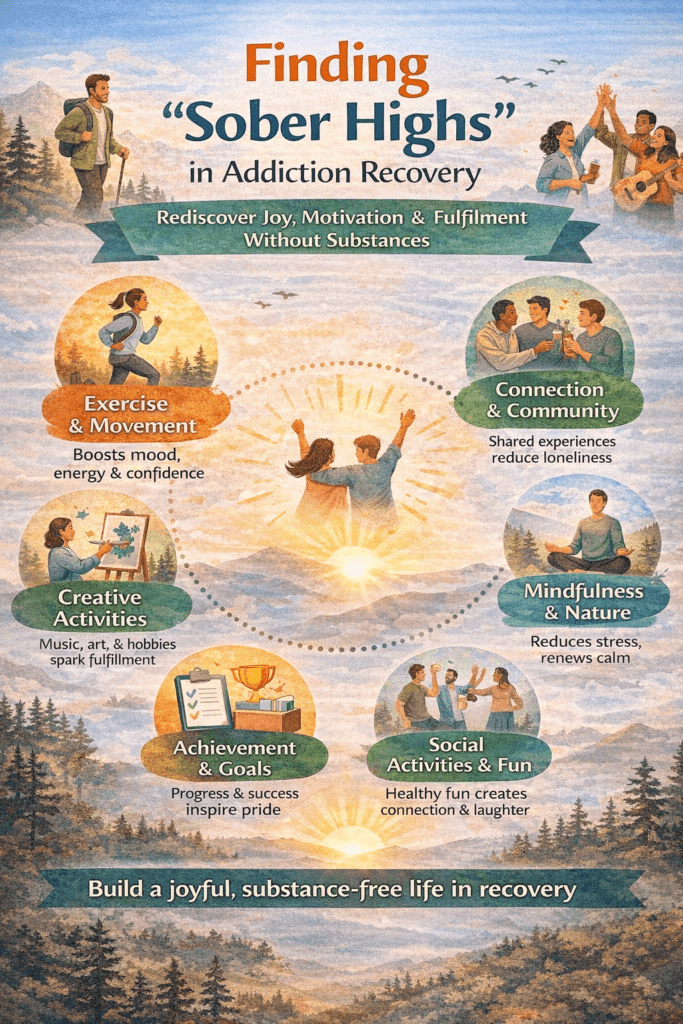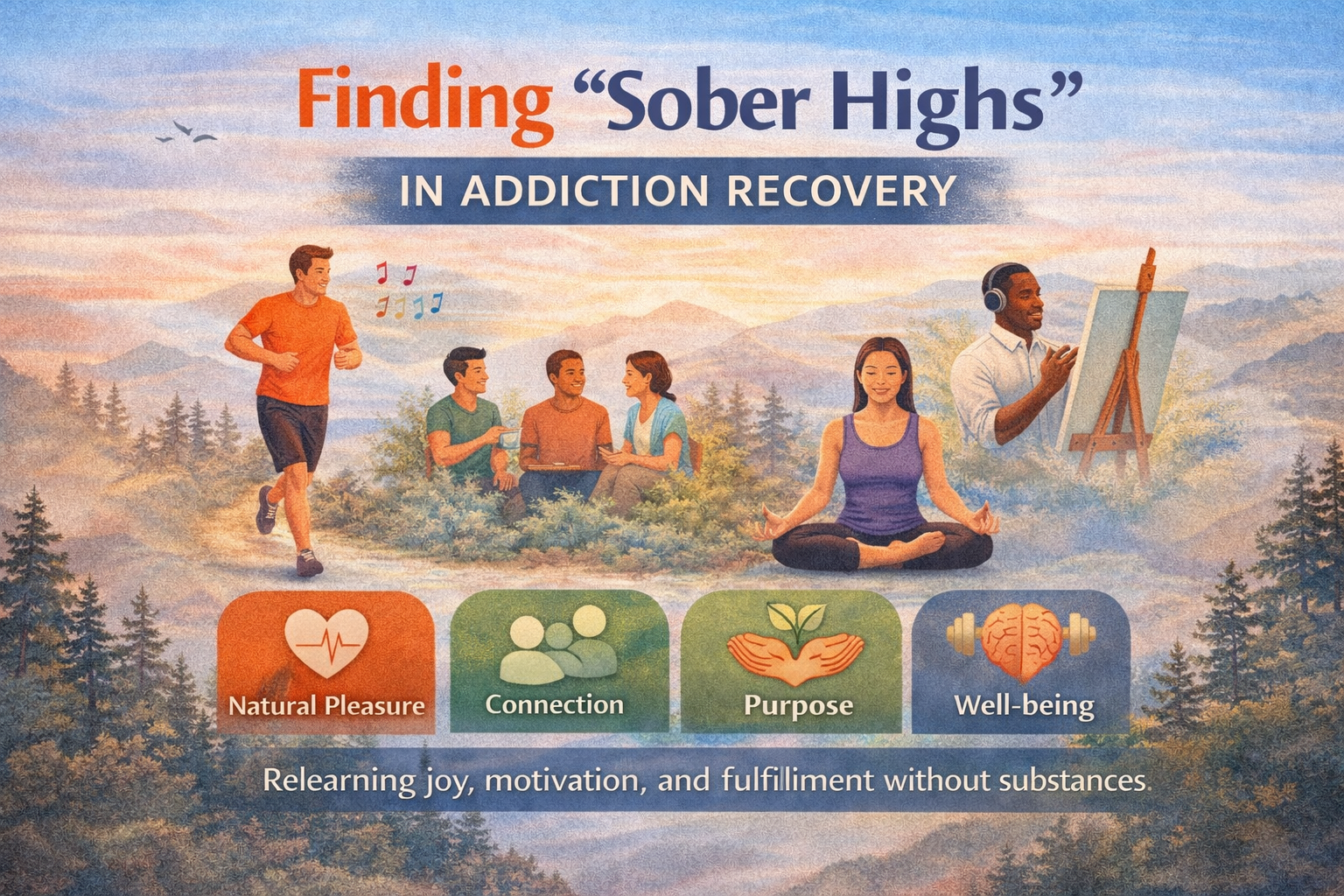
Finding “sober highs” is an important part of addiction recovery, as it helps individuals rediscover joy, motivation, and fulfillment without substances. Addiction often trains the brain to associate pleasure and relief with substance use, leaving many people worried that life in recovery will feel dull or empty. Sober highs are healthy, natural experiences that activate the brain’s reward system and support emotional well-being. Learning to identify and cultivate these experiences helps transform recovery from mere abstinence into a meaningful, satisfying way of life.
Finding “Sober Highs” in Addiction Recovery: Relearning Joy Without Substances
Addiction often trains the brain to associate pleasure, relief, and excitement with substances. In recovery, many people worry that life will feel flat or joyless without them. Finding “sober highs”—natural, healthy sources of pleasure and fulfillment—is a crucial part of healing. These experiences help rewire the brain’s reward system, restore motivation, and prove that joy is possible without substances.
Early recovery can feel emotionally muted as the brain recalibrates dopamine pathways affected by substance use. This phase is temporary. With time and intentional practice, natural rewards begin to register again. Sober highs don’t replicate the intensity of substances; instead, they offer sustainable well-being—energy, connection, meaning, and calm that don’t come with consequences.
Physical movement is one of the most reliable sober highs. Exercise, walking outdoors, yoga, dancing, or strength training releases endorphins, which improve mood and sleep. Even gentle movement can reduce stress and boost confidence, making it a powerful daily tool in recovery.
Connection and belonging create another powerful source of joy. Meaningful conversations, laughter with friends, peer support meetings, and family time activate social bonding chemicals that counter isolation. Recovery thrives in connection, and shared experiences often become deeply rewarding.
Creativity and flow offer immersive, substance-free pleasure. Music, art, writing, cooking, building, or learning new skills can produce a “flow state”—a sense of focus and fulfillment where time fades. These activities help individuals rediscover identity beyond addiction.
Purpose and contribution generate long-lasting satisfaction. Volunteering, mentoring, working toward goals, or helping others in recovery creates meaning that strengthens self-worth. Purpose-driven joy is steady and resilient, supporting long-term recovery.
Mindfulness and nature provide calmer, sober highs. Time outdoors, breathwork, meditation, and gratitude practices reduce anxiety and increase present-moment awareness. These experiences cultivate peace rather than escape, helping regulate emotions safely.
Finding sober highs is a process of exploration and patience. Not every activity will resonate right away, and joy often grows gradually. Over time, as the brain heals and routines stabilize, natural pleasures become richer and more reliable.
In addiction recovery, sober highs remind people that life can be vibrant, meaningful, and enjoyable without substances. By intentionally seeking healthy rewards, individuals rebuild their capacity for joy—and create a recovery that is not just abstinent, but deeply fulfilling.
Self-Management Strategies for Finding “Sober Highs” in Addiction Recovery
Finding “sober highs” is an essential part of addiction recovery, but it doesn’t usually happen by accident. Because substance use reshapes the brain’s reward system, joy and motivation often need to be relearned intentionally. Self-management strategies help individuals actively rebuild pleasure, purpose, and excitement in ways that support long-term recovery rather than threaten it.
Awareness and patience are the starting points. Early recovery can feel emotionally flat while dopamine pathways heal. Self-management means recognizing that this is temporary and resisting the urge to seek quick relief. Tracking mood, energy, and activities helps individuals notice which sober experiences gradually increase well-being—even if the payoff feels subtle at first.
Structured experimentation helps uncover sober highs. Scheduling activities such as exercise, creative projects, learning, or social time allows the brain repeated exposure to healthy rewards. Treating joy like a skill to practice—rather than something to wait for—builds momentum and confidence.
Physical self-care plays a major role in natural pleasure. Regular movement, sleep, hydration, and balanced nutrition stabilize mood and energy, making sober highs more accessible. Exercise, in particular, reliably increases endorphins and reduces stress, offering a powerful, substance-free mood boost.
Emotional regulation skills protect progress. Frustration or boredom can derail the search for sober highs if emotions aren’t managed well. Techniques such as mindfulness, grounding, journaling, and breathwork help individuals stay present and engaged long enough for enjoyment to develop naturally.
Goal-setting and achievement create meaningful rewards. Breaking goals into small, achievable steps—whether fitness, education, work, or personal growth—provides frequent wins that reinforce motivation. Achievement-based sober highs build self-efficacy and pride rather than dependence.
Connection as a daily practice strengthens joy. Self-management includes planning regular contact with supportive people, recovery peers, or community groups. Social connection activates powerful reward pathways and often becomes one of the most consistent sober highs over time.
Reflection and reinforcement are in progress. Noticing and celebrating sober highs—however small—helps the brain register them as rewarding. Writing them down or sharing them with others reinforces positive learning.
In addiction recovery, sober highs are not replacements for substances—they are foundations for a fulfilling life. Through intentional self-management, individuals learn to cultivate pleasure, meaning, and excitement that are sustainable, authentic, and aligned with long-term recovery.
Family Support Strategies for Finding “Sober Highs” in Addiction Recovery
Family support plays an important role in helping individuals discover “sober highs”—healthy, substance-free sources of joy, motivation, and fulfillment. During addiction, pleasure and relief often become narrowly tied to substances. Recovery requires expanding that reward system, and families can help by creating environments that encourage connection, meaning, and positive experiences without pressure or judgment.
Normalizing joy without substances is a powerful family strategy. Early recovery can feel emotionally flat, and families may misinterpret this as a lack of effort or engagement. Understanding that pleasure returns gradually allows families to remain patient and encouraging rather than critical. Validation reduces shame and helps individuals stay open to new experiences.
Creating shared positive experiences helps rebuild healthy reward pathways. Simple activities such as walking together, cooking meals, playing games, watching movies, or spending time outdoors provide connection-based sober highs. These experiences don’t need to be intense—consistency matters more than excitement.
Encouraging exploration without pressure supports autonomy. Families can suggest hobbies, interests, or social opportunities while allowing the individual to choose what feels meaningful. Pressuring someone to “have fun” can backfire, while gentle support invites curiosity and engagement.
Celebrating effort and progress reinforces motivation. Acknowledging small achievements—attending a meeting, completing a workout, trying a new activity—helps the brain associate recovery with positive reinforcement. Recognition builds confidence and encourages continued exploration of sober rewards.
Modeling healthy enjoyment is another key strategy. Families who demonstrate balanced ways of managing stress, relaxing, and celebrating without substances provide powerful examples. Modeling shows that joy can be part of everyday life, not something that requires escape.
Supporting structure and routine makes sober highs more accessible. Predictable schedules around meals, sleep, and shared time reduce stress and emotional exhaustion, creating space for enjoyment to emerge naturally.
Maintaining emotional safety ensures that joy doesn’t feel risky. Avoiding sarcasm, comparisons to the past, or unrealistic expectations allows individuals to experience pleasure without fear of judgment or relapse-related pressure.
In addiction recovery, families don’t need to create excitement—they need to create supportive conditions. By offering patience, connection, and encouragement, families help individuals rediscover sober highs that strengthen recovery, rebuild identity, and support long-term emotional well-being.
Community Resource Strategies for Finding “Sober Highs” in Addiction Recovery
Finding “sober highs” is a critical part of building a meaningful life in addiction recovery, and community resources play a powerful role in making this possible. While individuals and families lay the foundation, communities provide access to connection, purpose, creativity, and healthy stimulation that help rewire the brain’s reward system and sustain long-term recovery.
Peer recovery support services create connection-based sober highs. Recovery coaches, peer specialists, and mutual-help groups offer belonging, shared experience, and encouragement. Social connection activates natural reward pathways and helps replace the isolation that often fuels substance use.
Recovery community centers provide safe, substance-free environments for enjoyment and growth. Many centers offer fitness classes, art workshops, game nights, educational sessions, and social events designed specifically for people in recovery. These spaces allow individuals to experience fun and fulfillment without fear of exposure to substances.
Wellness and recreation programs help individuals rediscover physical joy. Community gyms, yoga studios, walking groups, and outdoor recreation programs promote movement-based sober highs that reduce stress and improve mood. Physical activity also supports sleep, energy, and emotional regulation.
Creative and educational opportunities offer purpose-driven pleasure. Classes in music, art, writing, cooking, or vocational skills help individuals experience flow, a sense of accomplishment, and self-expression. Learning something new strengthens confidence and creates sustainable sources of motivation.
Volunteer and service programs generate meaning-centered sober highs. Helping others, mentoring peers, or contributing to community projects builds self-worth and a sense of purpose. These experiences often produce deep satisfaction and reinforce a sense of identity in recovery.
Employment and life-skills programs reduce stress while increasing reward. Job training, recovery-friendly workplaces, and educational pathways create achievement-based sober highs through progress and independence.
Effective community strategies emphasize accessibility and inclusion. When programs are affordable, welcoming, and recovery-informed, individuals are more likely to engage and find activities that resonate with them.
In addiction recovery, sober highs thrive where opportunity exists. Community resources expand the possibilities for joy, connection, and purpose—helping individuals build lives that are not only substance-free, but meaningful, engaging, and deeply rewarding.
Frequently Asked Questions
Here are some common questions:
What are “sober highs” in addiction recovery?
Sober highs are healthy, substance-free experiences that create feelings of joy, satisfaction, connection, or calm. They activate the brain’s natural reward system without the risks or consequences of substance use.
Why are sober highs important in recovery?
They help retrain the brain to experience pleasure naturally, reduce cravings, and make recovery feel meaningful rather than restrictive.
Is it normal to feel emotionally flat in early recovery?
Yes. Early recovery often involves reduced dopamine activity as the brain heals. This emotional flatness is temporary and improves with time and healthy activities.
Do sober highs feel the same as substance-induced highs?
No. Sober highs are usually calmer and more sustainable. They build long-term well-being rather than intense but short-lived stimulation.
What are examples of sober highs?
Examples include exercise, spending time in nature, creative activities, meaningful conversations, helping others, learning new skills, and achieving personal goals.
How long does it take to start feeling sober highs?
This varies by individual. Some notice benefits within weeks, while others take longer. Consistency and patience are key.
Can boredom interfere with finding sober highs?
Yes. Boredom can increase cravings if not managed. Structured routines, exploration of interests, and connection help reduce boredom.
How does exercise help create sober highs?
Exercise releases endorphins, improves mood, reduces stress, and increases confidence—making it one of the most reliable sober highs.
Can social connection really replace substance-based pleasure?
Over time, yes. Healthy relationships and peer support activate powerful reward pathways and reduce loneliness.
What if nothing feels enjoyable at first?
This is common. Continued engagement, even without immediate pleasure, helps the brain relearn how to experience reward.
How can families support sober highs?
Families can encourage positive activities, celebrate progress, model healthy enjoyment, and avoid pressuring someone to “have fun.”
What role do community resources play?
Community programs provide access to social, creative, wellness, and purpose-driven activities that support sober highs.
Can sober highs reduce relapse risk?
Yes. When life feels rewarding and meaningful, cravings often decrease and motivation for recovery increases.
Are sober highs the same for everyone?
No. Each person’s interests and rewards are unique. Recovery involves discovering what feels meaningful personally.
What is the goal of finding sober highs in recovery?
The goal is to build a fulfilling, balanced life where joy and purpose come from healthy experiences—not substances.
Conclusion
In addiction recovery, sober highs remind individuals that pleasure, connection, and purpose are possible without substances. Through intentional self-care, supportive relationships, and access to community resources, the brain gradually relearns how to experience reward in healthy ways. These experiences may be quieter and more sustainable than substance-induced highs, but they build confidence, resilience, and long-term stability. Finding sober highs supports a recovery that is not just about avoiding relapse, but about creating a life that feels genuinely worth living.
Video: Sober Highs Are Real #soberlife #recovery