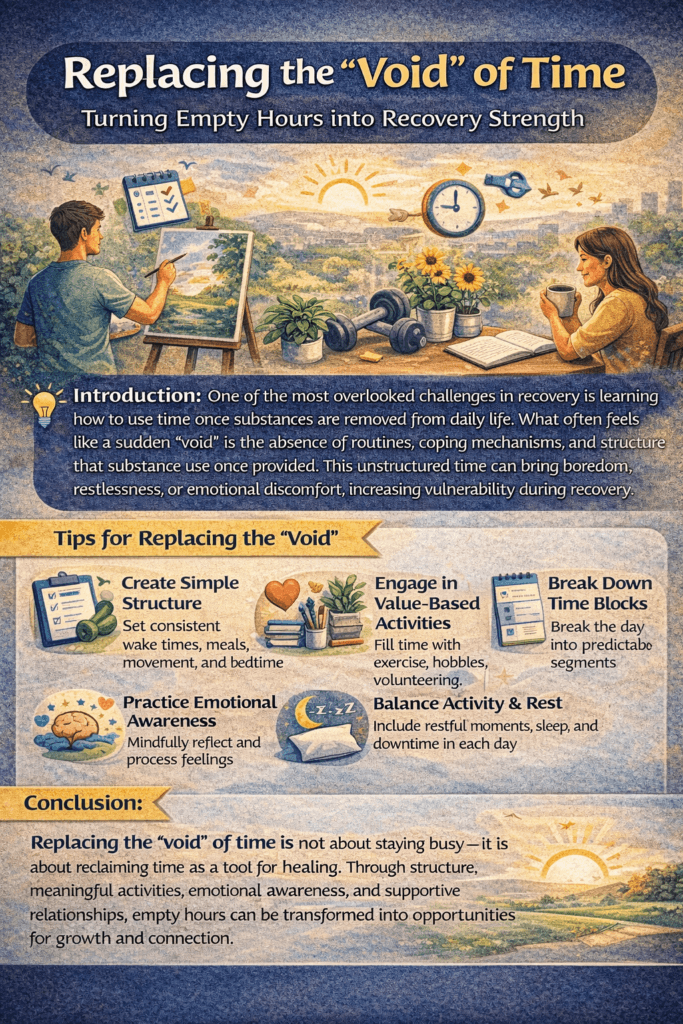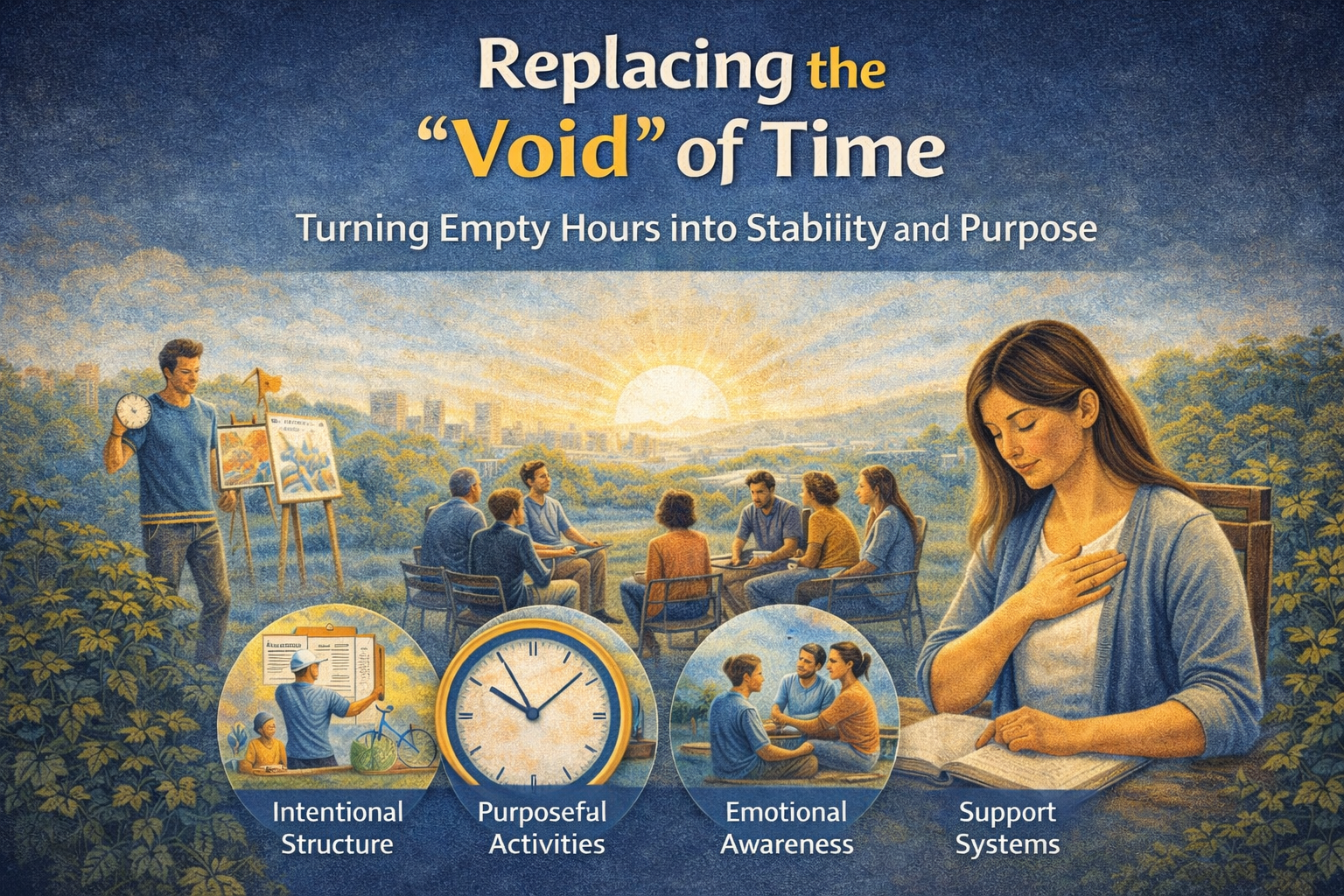
The loss of routines and coping structures once provided by substance use is one of the greatest challenges in recovery. When substances are removed, unstructured time can increase boredom, emotional discomfort, and vulnerability. Intentionally replacing this void with healthy structure and meaningful activities is essential for restoring stability and long-term well-being.
Replacing the “Void” of Time: Turning Empty Hours into Recovery Strength
One of the most unexpected challenges in recovery is not withdrawal or cravings—it is time. When substances are removed, a large “void” often appears. Hours once spent using, recovering from use, or planning the next opportunity suddenly feel empty. This unstructured time can feel uncomfortable, boring, or even distressing, and without intention, it can increase vulnerability to relapse.
Replacing the void of time is a critical recovery skill. Substance use often provided structure, routine, and emotional escape. Recovery requires rebuilding those functions in healthier ways. The goal is not to stay busy at all costs, but to create purposeful structure that supports wellbeing, identity, and emotional regulation.
The first step is recognizing that boredom and restlessness are normal. The brain needs time to recalibrate reward systems that were once artificially stimulated. During this phase, activities may feel less exciting at first. This does not mean recovery is failing—it means the brain is healing. Patience and consistency are essential.
Intentional routines help anchor time. Simple daily structure—such as consistent wake times, meals, movement, and bedtime—reduces the mental strain of “what do I do now?” Routine turns empty time into predictable rhythms that calm the nervous system and reduce impulsive decision-making.
Replacing substance-centered time with value-based activities is especially powerful. This may include exercise, creative hobbies, learning new skills, volunteering, spiritual practices, or sober social connections. These activities rebuild identity and provide natural rewards that strengthen motivation over time.
Recovery-friendly time use also includes rest and reflection. Many people feel pressure to constantly “fill the void,” but recovery is not about nonstop productivity. Mindful rest, journaling, therapy, or quiet moments help process emotions that substances once numbed. A healthy balance prevents burnout.
Support systems play a key role. Community programs, peer groups, family involvement, and structured recovery activities provide external scaffolding while new habits form. Shared time reduces isolation and reinforces accountability.
Over time, the void transforms. What once felt like emptiness becomes opportunity—a space to rebuild life with intention. Replacing the void of time is not about distraction; it is about reclaiming time as a tool for healing. When time is used to support growth, connection, and meaning, recovery becomes not just sustainable but also deeply fulfilling.
Self-Management Strategies for Replacing the “Void” of Time in Recovery
One of the most challenging adjustments in recovery is learning how to manage time once substances are removed. What often feels like a sudden “void” is actually unstructured time that was previously filled by using, recovering from use, or planning the next opportunity. Without intentional self-management, this empty space can lead to boredom, restlessness, emotional discomfort, and increased relapse risk. Developing strategies to replace the void of time is essential for long-term stability.
The first self-management strategy is creating intentional structure. A predictable daily rhythm—wake time, meals, movement, work or personal goals, and evening wind-down—reduces decision fatigue and anxiety. Structure does not need to be rigid; it simply provides a framework that helps the brain feel safe and regulated.
Prioritizing value-based activities is another powerful approach. Instead of filling time at random, individuals benefit from choosing activities that align with their personal values, such as health, learning, creativity, service, or connection. Exercise, hobbies, volunteering, education, and sober social activities replace substance-centered time with meaning and purpose, helping rebuild identity beyond addiction.
Self-management also involves breaking time into manageable blocks. Large amounts of free time can feel overwhelming, especially early in recovery. Planning the day in small segments—morning, afternoon, evening—makes time feel more approachable and reduces impulsive behavior. Even short activities provide momentum and direction.
Emotional awareness and regulation are critical. The void of time often exposes emotions that substances once numbed, such as anxiety, loneliness, or sadness. Mindfulness practices, journaling, breathing exercises, or therapy sessions help individuals sit with emotions rather than escape them. Learning to tolerate discomfort without reacting builds resilience and self-trust.
Another key strategy is balancing activity with rest. Recovery is not about constant productivity. Intentional rest, sleep, and quiet time are necessary for nervous system healing. Scheduling rest prevents burnout and removes the pressure to “stay busy” at all times.
Tracking progress and adjusting plans strengthens self-management. Reflecting on which activities feel supportive and which feel draining allows individuals to refine how they use their time. Recovery evolves, and time use should evolve with it.
Finally, using external supports enhances success. Recovery meetings, peer groups, family routines, and community programs provide structure and accountability while new habits form. Supportive environments help replace isolation with connection.
Replacing the void of time is not about filling every moment—it is about reclaiming time as a resource for healing. With structure, values-based choices, emotional awareness, and flexibility, time becomes an ally in recovery rather than a trigger. Through intentional self-management, empty hours transform into opportunities for growth, stability, and lasting change.
Family Support Strategies for Replacing the “Void” of Time in Recovery
When someone enters recovery, families often notice a sudden shift in daily life. Time once occupied by substance use, recovery from use, or related behaviors becomes unexpectedly open. This “void” of time can feel unsettling not only for the individual in recovery but also for their loved ones. Family support plays a crucial role in helping transform this unstructured time into stability, connection, and growth.
One of the most effective family strategies is helping to create a healthy structure without control. Families can support recovery by encouraging consistent routines—such as shared meals, regular sleep schedules, or planned weekly activities—while respecting autonomy. Structure provides predictability and reduces stress, but it should feel collaborative rather than imposed.
Shared, substance-free activities are especially powerful. Families can help fill empty time with meaningful experiences like walking together, cooking meals, attending community events, exercising, or engaging in hobbies. These activities not only replace substance-centered time but also rebuild trust and strengthen relationships that may have been strained during active addiction.
Families also support recovery by normalizing boredom and emotional discomfort. Loved ones may feel tempted to “fix” restlessness or a low mood, but acknowledging that discomfort is a normal part of healing can help reduce shame. Patience and reassurance allow individuals to sit with emotions rather than escape them.
Another important strategy is encouraging purpose, not just busyness. Families can gently support involvement in work, education, volunteering, or creative pursuits that align with the individual’s interests and values. Purposeful time use helps rebuild identity and confidence, reinforcing recovery motivation.
Respecting boundaries around rest and personal time is equally important. Recovery requires mental and emotional healing, and not all open time needs to be filled. Families who respect the need for rest, quiet, or therapy-related activities help prevent burnout and pressure.
Open communication strengthens these efforts. Regular, calm conversations about how time is being spent—and what feels helpful or overwhelming—allow families to adjust support as recovery evolves. Listening without judgment builds trust and collaboration.
Finally, families benefit from seeking support for themselves. Family education programs, counseling, or peer support groups help loved ones manage their own stress and learn effective ways to support recovery without over-involvement.
Replacing the “void” of time is a shared journey. With patience, structure, connection, and understanding, families can help transform empty hours into opportunities for healing, growth, and renewed relationships—supporting recovery not just for one person, but for the entire family system.
Community Resource Strategies for Replacing the “Void” of Time in Recovery
When substances are removed from daily life, many people in recovery experience a sudden surplus of unstructured time. This “void” can feel uncomfortable, disorienting, or isolating—especially when substances once dictated routines, social circles, and coping strategies. Community resources play a critical role in helping individuals transform this empty time into structure, purpose, and connection.
One of the most effective community strategies is providing structured, predictable programming. Recovery centers, outpatient programs, and community organizations often offer scheduled groups, classes, and activities that give shape to the day. Regular meeting times, workshops, or wellness classes reduce uncertainty and help individuals build new rhythms while the brain and nervous system heal.
Peer recovery support services are especially powerful in filling the void of time. Peer-led groups, recovery meetings, and sober activity clubs offer both structure and belonging. Spending time with others who understand recovery normalizes the experience of boredom and restlessness and models healthy ways to spend time without substances.
Community organizations also support recovery by offering skill-building and enrichment opportunities. Educational programs, job training, creative workshops, and fitness or mindfulness classes help individuals use their time productively while rebuilding confidence and identity. These activities replace substance-centered time with growth-oriented experiences that support long-term stability.
Volunteer and service opportunities are another valuable resource. Many communities connect individuals in recovery with meaningful service roles that foster purpose, accountability, and connection. Helping others not only fills time but also strengthens self-worth and reinforces recovery values.
Accessibility is key to effective community support. Flexible scheduling, low-cost or free programs, transportation assistance, and virtual options ensure that individuals can engage regardless of work schedules, finances, or mobility. When resources fit real-life needs, participation and consistency increase.
Community education initiatives further reduce stigma around recovery and time use. When boredom and unstructured time are recognized as normal parts of healing—not personal failures—individuals feel safer seeking support. Public awareness helps communities respond with inclusion rather than judgment.
Finally, collaboration across systems strengthens impact. Partnerships between healthcare providers, recovery organizations, libraries, recreation centers, and nonprofits create a network of options that individuals can access as their needs evolve. This layered support helps prevent isolation during vulnerable periods.
Replacing the “void” of time is not about constant activity—it is about supported engagement. Through structured programs, peer connection, skill-building, and accessible opportunities, community resources help individuals reclaim time as a tool for healing. When communities invest in meaningful ways to support time use in recovery, empty hours become pathways to purpose, resilience, and lasting change.
Frequently Asked Questions
Here are some common questions:
What does “replacing the void of time” mean in recovery?
It refers to intentionally filling the unstructured time left behind when substance use stops. This time was often spent using, recovering from use, or planning use. Without replacement, this void can increase boredom, emotional discomfort, and relapse risk.
Why does unstructured time feel so uncomfortable in recovery?
Substances previously provided stimulation, routine, and emotional escape. When they are removed, the brain’s reward system needs time to heal. Discomfort during idle time is normal and temporary, not a sign of failure.
Is boredom dangerous in recovery?
Boredom itself is not dangerous, but unmanaged boredom can increase vulnerability to cravings and impulsive decisions. Learning how to respond to boredom in healthy ways is a key recovery skill.
What types of activities help replace the void of time?
Activities that support recovery include structured routines, physical movement, creative hobbies, learning opportunities, volunteering, sober social connections, mindfulness practices, and rest. Purpose matters more than constant activity.
Does replacing the void mean staying busy all the time?
No. Recovery is not about nonstop productivity. Healthy time use includes balance—structured activity, meaningful engagement, and intentional rest. Overscheduling can lead to burnout.
How does routine help with the void of time?
Routine reduces decision fatigue and anxiety by creating predictable rhythms. Simple daily anchors—such as wake times, meals, movement, and bedtime—provide stability in empty hours.
What role do emotions play in the void of time?
Unstructured time often brings emotions that substances once numbed, such as anxiety, loneliness, or sadness. Learning emotional regulation skills helps individuals sit with feelings rather than escape them.
How can breaking time into blocks help?
Large stretches of free time can feel overwhelming. Dividing the day into manageable segments makes time feel more controllable and reduces impulsive behavior.
How do community and peer supports help fill the void?
Recovery meetings, peer groups, classes, volunteer programs, and community activities provide structure, accountability, and social connection. Shared time reduces isolation and normalizes recovery challenges.
How long does it take for the void to feel less intense?
This varies, but as routines form and the brain heals, time often feels fuller and more meaningful. What initially feels like emptiness often becomes opportunity with consistency and support.
What is the biggest benefit of replacing the void of time?
Replacing the void transforms time from a trigger into a recovery asset. It supports emotional stability, relapse prevention, identity rebuilding, and long-term well-being.
Conclusion
Replacing the “void” of time is not about staying busy—it is about reclaiming time as a tool for healing. Through structure, meaningful activities, emotional awareness, and supportive relationships, empty hours can be transformed into opportunities for growth and connection. As recovery progresses, what once felt like emptiness often becomes space for clarity, identity, and renewed purpose. With intention and support, time shifts from a risk factor into one of recovery’s greatest strengths.
Video: The void after quitting #RecoverySkills #AddictionRecovery #SoberLiving