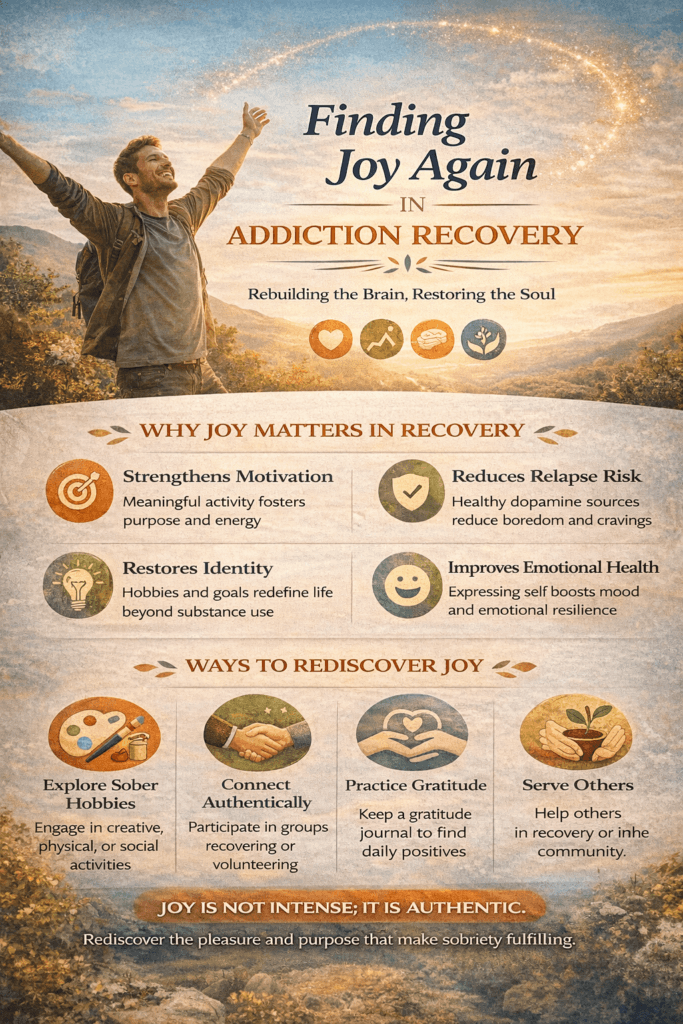
Finding joy again in addiction recovery is one of the most profound and often overlooked milestones in the healing process. Substance use disorders significantly disrupt the brain’s reward system, narrowing pleasure to the substance or behavior of dependence while dulling natural sources of satisfaction. In early recovery, individuals frequently experience emotional flatness, low motivation, or a sense of emptiness as the brain recalibrates. This phase can feel discouraging, yet it represents ongoing neurological healing. Rediscovering joy is not about recreating intense highs—it is about restoring sustainable, meaningful pleasure rooted in connection, purpose, and personal growth. Through intentional self-management, supportive relationships, and engagement with community resources, individuals gradually retrain their brains and rebuild lives that feel vibrant and authentic.
Finding Joy Again in Addiction Recovery: Rebuilding the Brain, Restoring the Soul
Addiction often hijacks the brain’s reward system, narrowing pleasure to one primary source—the substance or behavior of dependence. Over time, natural rewards such as relationships, hobbies, spirituality, and achievement lose their emotional impact. This phenomenon, often linked to dopamine dysregulation, can leave individuals in early recovery feeling flat, unmotivated, or emotionally numb. Finding joy again is not instant—it is a gradual neurobiological and psychological rebuilding process.
In recovery, the brain slowly recalibrates. Dopamine receptors begin to regain sensitivity, and everyday experiences can once again generate authentic satisfaction. However, this process requires intentional engagement. Joy does not simply “return”; it is practiced, nurtured, and rediscovered.
Self-management strategies are foundational. Establishing structured daily routines, engaging in physical activity, practicing mindfulness, and setting achievable goals help stimulate healthy reward pathways. Gratitude journaling and values clarification exercises retrain attention toward meaning rather than intensity. Joy in recovery is often quieter but more sustainable than the artificial highs of substance use.
Family support plays a powerful role. Encouragement, shared activities, and patient understanding create emotionally safe environments. Loved ones can help celebrate small victories—such as consistent attendance at treatment, improved communication, or progress toward employment or educational goals. These affirmations reinforce intrinsic motivation.
Community resources further expand opportunities for joy. Peer support groups, volunteer work, creative workshops, faith-based communities, and sober social events offer connection without intoxication. Social belonging activates the same neural circuits once dominated by substance use, but in healthier, relational ways.
Importantly, joy in recovery is not the absence of struggle. It coexists with grief, regret, and rebuilding. Many individuals report that genuine joy emerges when purpose replaces escape. Service to others, mentoring newcomers, or rebuilding fractured relationships often becomes deeply meaningful.
Finding joy again is one of the most transformative milestones in recovery. It signals not just abstinence, but restoration. The brain heals. Identity evolves. Life regains color. And what once felt impossible becomes sustainable—because joy, rediscovered authentically, is stronger than any temporary high.
Self-Management Strategies for Finding Joy Again in Addiction Recovery
One of the most challenging phases of addiction recovery is emotional flatness. After prolonged substance use, the brain’s reward system requires time to recalibrate. Dopamine pathways that were overstimulated by drugs must relearn how to respond to natural rewards. During this period, individuals may experience low motivation, limited pleasure, or a sense of emptiness. Self-management strategies are essential in actively rebuilding joy rather than passively waiting for it to return.
The first strategy is a structured routine. Consistent sleep, regular meals, scheduled activities, and predictable daily rhythms stabilize the nervous system. Structure reduces emotional volatility and provides repeated exposure to healthy reward cues. Over time, these small, consistent behaviors rebuild trust in the brain’s natural pleasure systems.
Physical activity is another powerful tool. Exercise increases the release of dopamine, serotonin, and endorphins—neurochemicals directly associated with improved mood and motivation. Even moderate movement, such as walking, stretching, or yoga, can stimulate gradual emotional restoration.
Mindfulness and cognitive awareness practices also support the recovery of joy. Techniques such as gratitude journaling, cognitive reframing, and values clarification shift attention from loss to possibility. Instead of focusing on what substances once provided, individuals begin to identify meaningful experiences aligned with their long-term goals and identity.
Goal-setting further strengthens intrinsic motivation. Short-term, achievable goals—attending therapy consistently, rebuilding financial stability, reconnecting with family—can create measurable progress. Achievement activates the brain’s reward circuits in sustainable ways, reinforcing self-efficacy.
Healthy novelty is equally important. Trying new hobbies, learning skills, volunteering, or engaging in creative expression introduces fresh stimulation without intoxication. The brain thrives on safe novelty, and new experiences accelerate the recalibration of rewards.
Finally, emotional self-compassion must be cultivated. Joy does not reappear overnight. Periods of discouragement are normal in early recovery. Practicing patience, recognizing progress, and avoiding self-criticism protect against relapse driven by emotional frustration.
Finding joy again is an intentional neurobehavioral process. Through routine, movement, mindfulness, purposeful goals, healthy novelty, and self-compassion, individuals gradually retrain the brain to experience authentic pleasure. Recovery becomes more than abstinence—it becomes rediscovery of life’s natural rewards.
Family Support Strategies for Finding Joy Again in Addiction Recovery
Addiction recovery is not only about abstaining from substances—it is about rebuilding a life that feels meaningful and emotionally fulfilling. After prolonged substance use, individuals often struggle with emotional numbness, low motivation, and difficulty experiencing pleasure. During this vulnerable phase, family support becomes a powerful catalyst for rediscovering joy.
One foundational strategy is creating a stable, emotionally safe environment. Recovery requires predictability and reduced chaos. Families can support healing by maintaining consistent routines, minimizing conflict, and practicing calm, respectful communication. Emotional safety allows the brain’s stress systems to quiet, making it easier for natural pleasure responses to return.
Celebrating small victories is another critical approach. Joy in recovery often begins with modest milestones—attending therapy sessions, completing a week of sobriety, repairing a relationship, or maintaining employment. Families who acknowledge progress reinforce intrinsic motivation and strengthen positive neural pathways linked to accomplishment.
Shared activities also help reintroduce healthy reward experiences. Simple experiences such as cooking together, outdoor walks, game nights, or faith-based gatherings stimulate connection without substances. Social bonding activates oxytocin and dopamine pathways that support emotional restoration. These shared moments demonstrate that pleasure can exist within sobriety.
Encouraging autonomy while offering support is equally important. Families should avoid over-monitoring or controlling behaviors that may unintentionally undermine confidence. Instead, collaborative goal-setting and open dialogue promote empowerment. Recovery thrives when individuals feel supported—not managed.
Constructive communication skills are essential. Practicing active listening, avoiding shaming language, and expressing empathy reduces defensiveness and strengthens trust. Families who model healthy emotional regulation teach practical coping skills by example.
Finally, families must care for themselves. Participating in support groups, seeking counseling, and setting healthy boundaries prevent burnout. When family members maintain their own emotional well-being, they create a stronger foundation for shared joy.
Finding joy again in recovery is a gradual process, but families play a transformative role. Through emotional safety, shared experiences, encouragement, respectful communication, and balanced support, families help individuals rediscover that life—without substances—can once again feel meaningful, connected, and genuinely fulfilling.
Community Resource Strategies for Finding Joy Again in Addiction Recovery
Finding joy again in addiction recovery often requires more than individual effort or family encouragement. Because addiction narrows social networks and isolates individuals from meaningful engagement, community resources play a critical role in rebuilding connection, purpose, and sustainable pleasure. Recovery flourishes when individuals reconnect with environments that reinforce healthy identity and a sense of belonging.
One of the most impactful community strategies is peer support. Recovery groups—whether 12-step, faith-based, or secular—provide shared experience, accountability, and emotional validation. Being surrounded by others who understand the recovery journey reduces shame and fosters hope. Social bonding within these groups activates natural reward pathways, helping individuals experience a sense of belonging without the need for substances.
Structured recovery programs also provide access to counseling, medication-assisted treatment, and case management. Integrated services address co-occurring mental health conditions, trauma histories, and social instability that may blunt joy. When psychological distress is treated comprehensively, emotional capacity for positive experiences expands.
Volunteer and service opportunities are powerful tools for rediscovering purpose. Serving others shifts focus from self-preoccupation to contribution. Research consistently shows that altruistic engagement enhances mood, strengthens self-worth, and reinforces long-term sobriety. Many individuals report that meaningful service becomes a cornerstone of sustained joy.
Creative and recreational programs—such as art therapy, music workshops, fitness groups, or sober social events—offer healthy novelty and expression. These environments stimulate the release of dopamine and endorphins while fostering community integration. Joy often re-emerges when individuals engage in activities aligned with personal interests and strengths.
Educational and vocational resources are equally essential. Workforce training programs, GED classes, and career counseling restore confidence and long-term stability. Achievement and financial independence contribute significantly to self-efficacy and life satisfaction in recovery.
Finally, faith communities and spiritual organizations can provide a sense of belonging, moral grounding, and shared rituals that cultivate hope and meaning. For many individuals, spiritual connection becomes a stabilizing and joy-enhancing resource.
Community resources expand recovery beyond abstinence into reintegration. Through peer support, integrated care, service opportunities, creative engagement, education, and spiritual connection, communities create ecosystems where joy can gradually return. In recovery, happiness is not just reclaimed—it is rebuilt within connection, contribution, and purpose.
Frequently Asked Questions
Here are some common questions:
1. Why does joy feel difficult in early recovery?
Substance use alters the brain’s reward system, particularly dopamine pathways. After stopping use, the brain needs time to recalibrate. During this period, individuals may experience emotional flatness or reduced pleasure, which is a normal part of neurological healing.
2. How long does it take for joy to return?
There is no universal timeline. Some individuals notice improvement within weeks, while others may take months. Consistent engagement in healthy routines, therapy, and social support accelerates recovery of natural reward responses.
3. Is it normal to feel bored or unmotivated in recovery?
Yes. Boredom and low motivation are common as the brain adjusts. Structured activities, physical activity, and meaningful goals help stimulate healthy dopamine production and reduce the risk of relapse.
4. Can joy return without intense excitement?
Absolutely. Recovery joy is often quieter and more sustainable than substance-induced highs. It comes from connection, purpose, achievement, creativity, and emotional stability rather than intensity.
5. What daily habits help rebuild joy?
Regular sleep, exercise, balanced nutrition, mindfulness practices, gratitude journaling, and achievable goal-setting support emotional regulation and the healing of the reward system.
6. How do relationships influence joy in recovery?
Healthy relationships stimulate bonding hormones like oxytocin and reinforce a positive sense of identity. Supportive family, peers, and recovery communities create a sense of emotional safety and shared experiences that foster authentic happiness.
7. What if I still feel numb after months of sobriety?
Persistent emotional numbness may signal co-occurring depression, trauma, or other mental health conditions. Professional counseling or psychiatric evaluation can identify and treat underlying factors that block joy.
8. Is finding joy necessary for long-term sobriety?
Yes. Sustainable recovery requires more than abstinence. When individuals rediscover meaning, purpose, and satisfaction in sober living, their motivation strengthens, and their risk of relapse decreases.
9. Can service to others help restore joy?
Many individuals report that volunteering, mentoring, or helping others in recovery brings deep fulfillment. Service shifts focus outward and reinforces a sense of purpose and belonging.
10. What is the biggest mindset shift in finding joy again?
Moving from seeking intensity to cultivating meaning. Recovery reframes happiness as connection, growth, contribution, and stability rather than temporary stimulation.
Conclusion
Finding joy again in recovery is both a biological restoration and a psychological transformation. As neural pathways stabilize and emotional regulation improves, everyday experiences—relationships, achievement, creativity, service, and spiritual connection—begin to regain their richness. Joy in recovery often emerges quietly at first, through small wins and shared moments, but over time it becomes deeper and more resilient than substance-induced pleasure. Recovery ultimately shifts the pursuit of intensity to the cultivation of meaning. When individuals commit to growth, connection, and self-compassion, joy is not merely recovered—it is redefined, strengthened, and sustained.
Video: How Long Until Happiness Comes Back #RecoveryTalk #SobrietyCoach #HealingProcess