Addiction recovery is often viewed as a personal journey, yet its effects extend well beyond individual sobriety and into the health of entire communities. When strong recovery support systems are in place—including accessible healthcare, family involvement, peer mentorship, employment assistance, and coordinated community partnerships—the benefits ripple across neighborhoods and local institutions. Individuals who achieve stability are less likely to rely on emergency services, more likely to rebuild family relationships, and better able to return to productive roles in education, employment, and civic life. These changes reduce social strain while increasing community safety, economic stability, and collective well-being.
Investing in structured treatment pathways, stigma reduction efforts, and long-term recovery resources transforms addiction from a crisis-driven issue into a proactive public health priority. Rather than reacting only after harm occurs, communities that prioritize recovery infrastructure create environments that support prevention, early intervention, and sustained healing. Over time, this shift fosters resilience not only for individuals in recovery but also for families, institutions, and society as a whole.
Ways Addiction Recovery Support Strengthens Communities
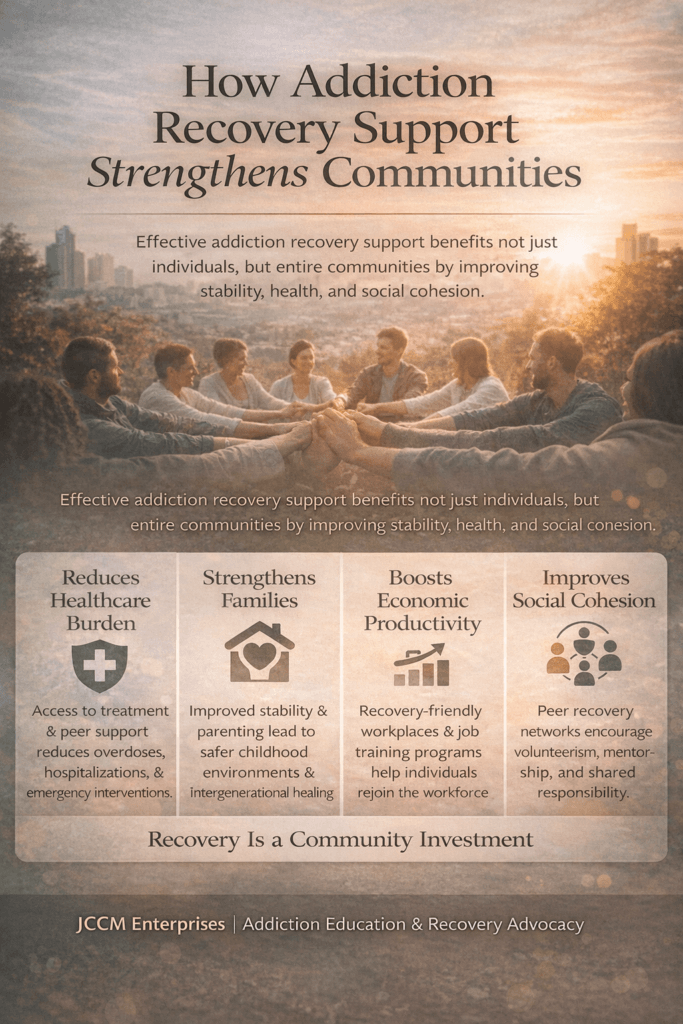
Addiction recovery is often described as a personal journey, but its impact extends far beyond the individual. When recovery support systems are strong—through healthcare services, peer groups, faith communities, and local organizations—entire neighborhoods benefit. Recovery is not only about reducing substance use; it is about rebuilding social stability, economic participation, and collective well-being.
First, recovery support reduces healthcare and emergency burdens. Access to treatment, peer recovery coaching, medication-assisted treatment, and counseling lowers rates of overdose, hospitalizations, and crisis interventions. Communities with accessible recovery resources experience fewer preventable emergencies and improved public health outcomes.
Second, recovery strengthens families. When individuals enter sustained recovery, family systems stabilize. Improved parenting capacity, restored trust, and reduced domestic conflict create safer environments for children. This interruption of intergenerational trauma reduces long-term social costs and promotes healthier developmental outcomes.
Third, economic productivity increases. Individuals in recovery often return to work, pursue education, and contribute to local economies. Employment support programs and recovery-friendly workplaces reduce absenteeism and increase workforce reliability. Communities benefit from both the regained human capital and reduced involvement with the criminal justice system.
Fourth, social cohesion improves. Peer recovery networks foster mentorship, accountability, and volunteerism. Many individuals in long-term recovery become advocates, sponsors, or community leaders. Their lived experience provides powerful prevention messaging and helps reduce stigma.
Finally, recovery-oriented communities shift cultural attitudes. When addiction is treated as a chronic, manageable health condition rather than a moral failure, stigma declines. Compassionate systems promote early intervention, which prevents escalation of harm.
Addiction recovery support is not merely a healthcare initiative—it is a public health and community development strategy. By investing in accessible treatment, peer support, family services, and recovery-friendly policies, communities strengthen resilience, restore dignity, and cultivate long-term social stability.
Self-Management Strategies: How Addiction Recovery Support Strengthens Communities
Addiction recovery begins at the individual level, but its ripple effects extend throughout families, workplaces, and entire communities. When individuals practice effective self-management strategies in recovery, they not only protect their own sobriety but also contribute to safer, more stable, and more resilient neighborhoods. Sustainable recovery strengthens communities by reducing relapse risk, promoting productivity, and modeling healthy coping behaviors.
Self-awareness is foundational. Individuals who monitor triggers, cravings, mood changes, and stress levels develop early warning systems that prevent escalation. Tools such as journaling, structured relapse prevention plans, and cognitive reframing improve emotional regulation and decision-making. When relapse risk decreases, communities experience fewer crisis events and less strain on emergency systems.
Routine and structure are equally important. Consistent sleep schedules, exercise, nutrition, and goal-setting rebuild executive functioning that may have been impaired during active addiction. Structured daily living improves reliability at work and strengthens family roles. Stable individuals contribute to stable households, which in turn create safer community environments.
Skill development also matters. Communication skills, conflict resolution, and stress management reduce interpersonal tension. Individuals in recovery who practice accountability and emotional regulation often become peer mentors or community advocates, modeling resilience for others facing similar challenges.
Finally, service and purpose reinforce long-term recovery. Volunteering, participating in peer support groups, and engaging in civic activities foster a sense of belonging and shared responsibility. When individuals move from isolation to contribution, the community benefits from renewed human capital and lived-experience leadership.
Self-management strategies transform recovery from a private struggle into a public strength. As individuals build discipline, awareness, and purpose, communities gain healthier relationships, stronger workforce participation, and a culture that views recovery as achievable and sustainable.
Family Support Strategies: How Addiction Recovery Support Strengthens Communities
Addiction recovery does not occur in isolation. Families are often the first to experience the strain of substance use and the first to witness the transformation that recovery can bring. When families actively participate in recovery support, they become powerful stabilizing forces—not only for their loved one, but for the broader community. Healthy family systems reduce relapse risk, interrupt intergenerational cycles of addiction, and model resilience for others.
One essential strategy is education. Families who understand addiction as a chronic, treatable condition are less likely to respond with shame or moral judgment. Learning about triggers, relapse warning signs, and treatment pathways improves early intervention and reduces crisis escalation. Educated families advocate for timely care, which decreases strain on emergency and legal systems.
Clear communication and boundaries are equally critical. Recovery-supportive families establish consistent expectations while maintaining empathy. Healthy boundaries prevent enabling behaviors and encourage accountability. When families balance compassion with structure, individuals in recovery are more likely to sustain progress.
Participation in family therapy or peer support groups strengthens coping skills and reduces caregiver burnout. Addiction impacts the entire household; addressing trauma, resentment, and fear promotes long-term healing. As families rebuild trust and stability, children experience safer environments and improved emotional development.
Family involvement also promotes community leadership. Many families become advocates, volunteers, or mentors to others navigating addiction. Their lived experience helps reduce stigma and increase awareness of local recovery resources.
When families move from crisis management to collaborative recovery support, communities grow stronger. Stable households contribute to safer neighborhoods, healthier workplaces, and more compassionate public attitudes toward addiction. Recovery, supported by family systems, becomes not just an individual achievement but a collective community investment.
Community Resource Strategies: How Addiction Recovery Support Strengthens Communities
Addiction recovery is most sustainable when it is supported beyond the clinic walls. Community resource strategies create the infrastructure that transforms individual recovery into collective strength. When neighborhoods invest in accessible treatment, peer support, education, and employment pathways, recovery becomes a shared responsibility—and communities grow healthier and more resilient.
Accessible treatment services are foundational. Local outpatient programs, medication-assisted treatment providers, mental health clinics, and recovery centers reduce barriers to care. When individuals can enter treatment early, communities see fewer overdoses, hospitalizations, and justice system involvement. Early access stabilizes lives before crises escalate.
Peer recovery networks also play a critical role. Recovery community organizations, sober living environments, and mentorship programs provide accountability and a sense of belonging. Individuals supported by peers are more likely to maintain long-term recovery and reengage in meaningful roles within their communities.
Employment and housing initiatives further strengthen outcomes. Recovery-friendly workplaces, job training programs, and stable housing resources reduce the risk of relapse by addressing social determinants of health. Economic stability supports family stability, which, in turn, directly impacts neighborhood safety and cohesion.
Education and public awareness campaigns reduce stigma and promote early intervention. When addiction is understood as a treatable health condition, community members are more likely to support funding, volunteer efforts, and compassionate policies.
Finally, collaboration across sectors—healthcare, schools, faith communities, law enforcement, and local government—creates a coordinated response. Integrated systems prevent fragmentation and ensure continuity of care.
Community resource strategies shift recovery from a private struggle to a public health priority. As individuals regain stability and purpose, neighborhoods benefit from restored productivity, reduced crisis events, and a culture rooted in compassion and accountability. Strong recovery systems build strong communities.
Frequently Asked Questions
Here are some common questions:
1. How does addiction recovery support benefit a community?
Recovery support reduces overdoses, emergency visits, crime rates, and family instability. When individuals stabilize, communities experience improved public safety, workforce participation, and overall social cohesion.
2. What types of recovery support make the biggest impact?
Accessible treatment services, medication-assisted treatment, peer recovery coaching, family therapy, sober housing, employment programs, and recovery community organizations all contribute significantly.
3. Does recovery support reduce healthcare costs?
Yes. Early treatment and sustained recovery decrease emergency department visits, hospitalizations, and crisis interventions, lowering long-term healthcare expenditures.
4. How does recovery strengthen families?
Recovery improves parenting stability, communication, and household safety. This reduces intergenerational trauma and promotes healthier childhood development.
5. What role do workplaces play in recovery?
Recovery-friendly workplaces provide second-chance hiring, supportive policies, and flexibility for treatment participation. Stable employment strengthens both the individual and the local economy.
6. How do peer recovery programs help communities?
Peer mentors provide accountability, lived-experience guidance, and hope. Their involvement increases long-term sobriety rates and encourages volunteerism and civic engagement.
7. Does recovery support reduce crime?
When substance use decreases, and individuals gain access to treatment and employment, rates of drug-related offenses and recidivism typically decline.
8. Why is stigma reduction important for community health?
Stigma delays treatment entry and discourages help-seeking. Communities that treat addiction as a health condition foster earlier intervention and improved outcomes.
9. How do schools and faith organizations contribute?
Schools provide prevention education and early identification. Faith and community groups offer social support, mentoring, and recovery meeting spaces that promote a sense of belonging.
10. What are the long-term community benefits of sustained recovery?
Long-term recovery increases economic productivity, reduces strain on public services, strengthens families, and fosters a culture of resilience and compassion.
11. Can community recovery initiatives prevent future addiction?
Yes. Visible success stories of recovery, youth mentorship programs, and public education campaigns reduce risk factors and promote protective behaviors.
12. What is the core message of community-based recovery support?
Recovery is not only a personal achievement—it is a public investment. Strong recovery systems build safer, healthier, and more economically stable communities.
Conclusion
Addiction recovery support strengthens communities by restoring stability, rebuilding trust, and expanding social capital. Individuals in sustained recovery often become employees, parents, volunteers, mentors, and advocates—contributing positively to the very systems that once supported them. Families regain safety and cohesion, workplaces regain reliability, and neighborhoods experience reduced crime and improved well-being. When communities treat addiction as a chronic, manageable condition and commit to comprehensive recovery resources, they create environments where healing is possible and sustainable. Ultimately, strong recovery systems do not only transform individual lives—they cultivate healthier, safer, and more resilient communities for future generations.
Video: How Recovery Fixes Neighborhoods from the Inside Out #mentalhealth #hope #healing