A quarter-life crisis is often viewed as a normal stage of early adulthood, marked by uncertainty, self-doubt, and the pressure to find direction in life. While these experiences are widely accepted as part of personal growth, they can sometimes conceal deeper challenges. For some individuals, substance use becomes a way to cope with overwhelming emotions, stress, or a lack of purpose. Because this behavior can be normalized within social and cultural contexts, it may go unnoticed or be dismissed as temporary. Understanding that addiction can hide beneath the surface of a quarter-life crisis is essential for recognizing when additional support and intervention may be needed.
More Than a Phase: When a Quarter-Life Crisis May Be Hiding Addiction
Introduction: When Feeling Lost Is More Than Growing Pains
The quarter-life crisis is often described as a period of uncertainty, identity exploration, and emotional instability during early adulthood. Many people in their 20s and early 30s experience confusion about their careers, relationships, and sense of purpose. While this phase is widely normalized, it can sometimes mask deeper struggles—particularly substance use and addiction. What may appear as typical “growing pains” can, in some cases, be a way of coping with underlying distress through alcohol or drugs. Understanding this distinction is critical for early recognition and intervention.
What Is a Quarter-Life Crisis?
A quarter-life crisis typically involves:
- Uncertainty about life direction
- Anxiety about the future
- Feelings of inadequacy or comparison
- Emotional instability or dissatisfaction
While these experiences are common, they can become problematic when individuals lack healthy coping mechanisms.
How Addiction Can Hide Within It
1. Substances as a Coping Tool
During times of stress or identity confusion, substances may be used to:
- Escape anxiety or self-doubt
- Numb feelings of failure or pressure
- Enhance social confidence
Because substance use can initially feel like relief, it may go unnoticed as a developing problem.
2. Social Normalization
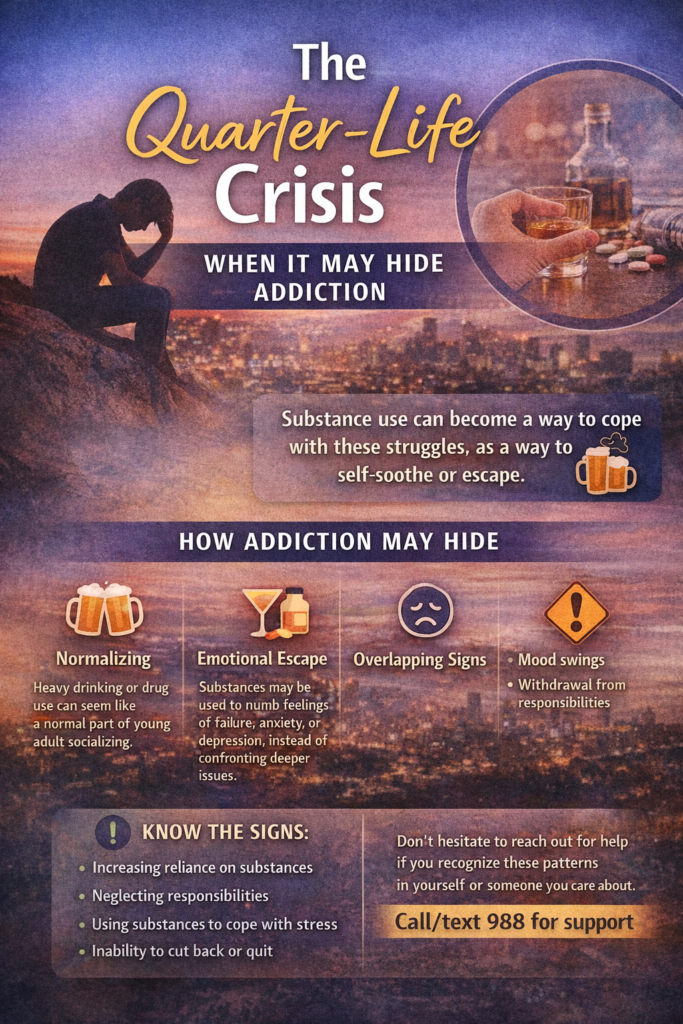
In young adulthood, heavy drinking or recreational drug use is often normalized in social settings. This can blur the line between:
- Social use
- Habitual use
- Dependency
As a result, problematic patterns may be dismissed as “just part of the phase.”
3. Emotional Avoidance
Instead of addressing deeper concerns—such as purpose, identity, or unresolved stress—substances can become a way to avoid confronting them. Over time, this avoidance can reinforce both anxiety and dependence.
4. Overlapping Symptoms
Many signs of a quarter-life crisis overlap with addiction, including:
- Mood swings
- Lack of motivation
- Risk-taking behaviors
- Withdrawal from responsibilities
This overlap can make it difficult to recognize when substance use is contributing to the problem.
Warning Signs It May Be More Than a Phase
It may be time to look deeper if:
- Substance use increases during stress or emotional distress
- Responsibilities (work, school, relationships) begin to suffer
- There is a reliance on substances to feel “normal” or cope
- Attempts to cut back are unsuccessful
These signs suggest that what appears to be a life transition may also involve substance misuse.
Why Early Awareness Matters
Identifying addiction early—especially when it is hidden behind a socially accepted phase—can:
- Prevent long-term dependency
- Improve mental health outcomes
- Support healthier coping strategies
- Reduce the risk of escalation into more severe substance use
Early awareness allows individuals to address both the emotional and behavioral aspects of their experience.
Healthier Ways to Navigate a Quarter-Life Crisis
1. Develop Self-Awareness
Reflect on emotions, stressors, and coping habits. Journaling or therapy can help uncover underlying issues.
2. Build Healthy Coping Strategies
Exercise, mindfulness, and structured routines can provide stability without relying on substances.
3. Seek Support
Talking to a therapist, mentor, or support group can provide guidance and reduce isolation.
4. Redefine Expectations
Recognize that uncertainty is a normal part of growth—not a failure.
Reframing the Experience
A quarter-life crisis is not inherently negative—it can be a period of transformation. However, when substances are used to cope, it can delay growth and create additional challenges. By addressing both the emotional uncertainty and any potential substance use, individuals can turn this phase into an opportunity for meaningful change.
Conclusion: Looking Beneath the Surface
What feels like a temporary phase may sometimes be a signal of something deeper. Understanding that addiction can hide within the quarter-life crisis allows for earlier recognition, more compassionate self-reflection, and better support. Growth comes not from avoiding discomfort, but from learning how to navigate it in healthy, sustainable ways. By facing both the uncertainty and the coping patterns honestly, individuals can move forward with greater clarity, resilience, and control over their future.
Finding Clarity Within the Chaos: Self-Management Strategies for When a Quarter-Life Crisis May Hide Addiction
Introduction: Looking Beneath the Surface
A quarter-life crisis is often described as a time of uncertainty, identity shifts, and emotional instability. While these experiences are common in early adulthood, they can sometimes mask deeper issues—particularly unhealthy coping mechanisms like substance use. When stress, self-doubt, or lack of direction becomes overwhelming, substances may be used to escape rather than address underlying concerns. Self-management strategies are essential in helping individuals recognize these patterns, understand their behaviors, and take control of both their mental health and recovery journey.
Understanding the Connection Between Crisis and Coping
During a quarter-life crisis, individuals may feel pressure to succeed, compare themselves to others, or question their purpose. Without effective coping tools, this emotional discomfort can lead to:
- Increased reliance on alcohol or drugs
- Avoidance of responsibilities or decision-making
- Difficulty managing anxiety or low mood
Recognizing that substance use may be a response to deeper emotional struggles is the first step toward meaningful change.
Self-Management Strategies to Build Awareness and Control
1. Increase Self-Awareness Through Reflection
Understanding your thoughts and behaviors is key:
- Journal about stressors, emotions, and coping habits
- Ask yourself: Am I using substances to cope or to avoid?
- Identify patterns between mood and substance use
Awareness helps uncover whether addiction may be hidden beneath the surface.
2. Identify Emotional and Situational Triggers
Notice when urges to use substances increase:
- After stressful events or failures
- During social comparison or self-doubt
- When feeling stuck or directionless
Recognizing triggers allows you to prepare healthier responses.
3. Replace Avoidance With Active Coping
Instead of escaping discomfort, practice engaging with it:
- Break large problems into smaller, manageable steps
- Set realistic short-term goals
- Address issues directly rather than postponing them
This builds confidence and reduces reliance on substances.
4. Develop Healthy Emotional Regulation Skills
Managing emotions without substances is essential:
- Practice mindfulness or meditation
- Use breathing techniques during stress
- Label emotions clearly to reduce overwhelm
Emotional regulation reduces impulsive coping behaviors.
5. Reframe Negative Thought Patterns
A quarter-life crisis often involves distorted thinking, such as:
- “I’m falling behind.”
- “Everyone else has it figured out.”
Challenge these thoughts by asking:
- Is this objectively true?
- Am I comparing myself unfairly?
Shifting perspective can reduce anxiety and the urge to escape.
6. Create Structure and Routine
Uncertainty fuels both anxiety and unhealthy habits. Establish:
- Consistent sleep and wake times
- Daily routines that include productivity and self-care
- Scheduled activities that provide purpose
Structure creates stability during a chaotic phase.
7. Limit High-Risk Environments
If substance use is normalized in certain settings:
- Reduce time spent in those environments
- Seek out healthier social activities
- Surround yourself with individuals who support growth
The environment plays a major role in behavior.
8. Seek Support When Needed
Self-management does not mean doing everything alone:
- Therapy or counseling can provide guidance
- Support groups offer shared understanding
- Mentors or trusted individuals can provide perspective
Support strengthens self-awareness and accountability.
Turning Crisis Into Growth
A quarter-life crisis can feel overwhelming, but it also presents an opportunity for self-discovery. By addressing both emotional struggles and coping behaviors, individuals can move from avoidance to intentional living. Self-management strategies allow you to take control of your responses, rather than being controlled by circumstances.
Conclusion: Awareness Leads to Change
When addiction hides within a quarter-life crisis, it can delay growth and deepen emotional challenges. However, with intentional self-management—through awareness, emotional regulation, and healthy coping strategies—it is possible to uncover what lies beneath and take meaningful steps forward. This phase of life is not just about finding direction; it’s about learning how to navigate uncertainty without losing yourself in the process. With the right tools, what feels like chaos can become a foundation for clarity, resilience, and long-term well-being.
Supporting Through Uncertainty: Family Strategies to Understand When a Quarter-Life Crisis May Hide Addiction
Introduction: When Families See More Than “Just a Phase”
For many young adults, a quarter-life crisis is seen as a normal stage—marked by uncertainty, stress, and self-discovery. However, for families, it can sometimes feel like something deeper is happening. Changes in behavior, mood, or responsibility may raise concerns that go beyond typical growing pains. In some cases, substance use can quietly develop as a way to cope with pressure, anxiety, or lack of direction. Understanding how addiction can hide within this life stage allows families to respond with awareness, support, and early intervention rather than confusion or blame.
Understanding the Overlap Between Crisis and Addiction
A quarter-life crisis often includes:
- Anxiety about the future
- Identity confusion
- Emotional ups and downs
- Social comparison and pressure
These same stressors can lead individuals to use substances as a coping mechanism. Because substance use is often normalized in young adulthood, it can be difficult for families to distinguish between:
- Temporary experimentation
- Habitual coping
- Emerging addiction
Recognizing this overlap is key to offering the right kind of support.
Family Support Strategies That Make a Difference
1. Stay Observant Without Jumping to Conclusions
Families may notice:
- Increased withdrawal or secrecy
- Changes in motivation or responsibility
- Mood swings or irritability
- Growing reliance on substances in stressful situations
Rather than assuming the worst, approach these changes with curiosity and care.
2. Open the Door to Honest Conversations
Create a safe space for communication:
- Ask open-ended questions (“How have you been feeling lately?”)
- Avoid accusations or confrontational language
- Listen more than you speak
When individuals feel safe, they are more likely to be honest about their struggles.
3. Avoid Minimizing or Dismissing Their Experience
Statements like “It’s just a phase” can shut down communication. Instead:
- Acknowledge their feelings (“That sounds really overwhelming”)
- Validate their stress without endorsing harmful behaviors
Validation builds trust and reduces defensiveness.
4. Recognize Coping Patterns, Not Just Behavior
Focus on why behaviors are happening:
- Is substance use tied to stress, failure, or anxiety?
- Are they avoiding difficult decisions or emotions?
Understanding the underlying cause helps families respond more effectively.
5. Encourage Healthy Coping Alternatives
Support positive changes by:
- Suggesting activities that reduce stress (exercise, hobbies)
- Encouraging structured routines
- Promoting mental health support when needed
Small, supportive suggestions can guide healthier habits.
6. Set Clear and Healthy Boundaries
Support does not mean enabling. Families should:
- Be clear about expectations and limits
- Avoid covering up the consequences of substance use
- Maintain consistency in boundaries
Boundaries create accountability while still offering care.
7. Normalize Seeking Professional Help
If concerns grow, encourage:
- Therapy or counseling
- Substance use assessments
- Support groups
Framing help as a resource—not a punishment—can reduce resistance.
8. Take Care of Family Well-Being
Supporting someone in this stage can be stressful. Families should:
- Seek their own support (e.g., counseling or peer groups)
- Practice self-care
- Avoid taking responsibility for another person’s choices
Healthy families are better equipped to provide effective support.
Shifting the Perspective: From Phase to Opportunity
A quarter-life crisis is not inherently negative—it can be a time of growth and self-discovery. However, when substance use becomes part of the coping process, it can delay that growth. Families who recognize this early can help redirect the experience toward healthier outcomes.
Conclusion: Support Rooted in Understanding
When addiction hides within a quarter-life crisis, it can be easy to misinterpret the signs or overlook the risks. Families play a crucial role in recognizing patterns, encouraging open dialogue, and supporting healthier coping strategies. By approaching the situation with empathy, awareness, and clear boundaries, families can help transform a confusing and challenging phase into an opportunity for growth, healing, and long-term stability.
Beyond the Phase: Community Resource Strategies to Understand When a Quarter-Life Crisis May Hide Addiction
Introduction: When Personal Struggles Need Collective Support
A quarter-life crisis can feel isolating—filled with uncertainty about identity, career, relationships, and purpose. While this stage is often normalized, it can sometimes conceal deeper issues like substance misuse used as a coping mechanism. Because these struggles are not always visible, individuals may go without the support they need. Community resources play a vital role in bridging this gap, offering education, connection, and practical tools to help individuals better understand their experiences and address unhealthy coping patterns before they escalate.
Why Community Resources Matter
Community support helps individuals move from confusion to clarity by:
- Normalizing experiences of stress, anxiety, and uncertainty
- Providing education about the connection between emotional distress and substance use
- Offering alternatives to unhealthy coping strategies
- Creating accountability and connection
When individuals engage with supportive environments, they are more likely to recognize when a “phase” may involve deeper challenges.
Community Resource Strategies That Make a Difference
1. Peer Support Groups for Young Adults
Groups specifically designed for young adults provide:
- A space to discuss life transitions openly
- Shared experiences that reduce isolation
- Insight into how others cope without substances
Hearing similar stories can help individuals recognize patterns in their own behavior.
2. Mental Health Counseling Services
Community clinics and counseling centers offer:
- Individual therapy to explore identity, stress, and coping
- Support for anxiety, depression, and substance use
- Guidance in distinguishing between normal stress and harmful behaviors
Professional support helps uncover what may be hidden beneath the surface.
3. Substance Use Education Programs
Workshops and seminars can:
- Explain how addiction can develop during stressful life stages
- Identify early warning signs of dependency
- Teach healthier coping strategies
Education empowers individuals to make informed choices.
4. Career and Life Coaching Resources
Uncertainty about direction is a major part of a quarter-life crisis. Community programs that offer:
- Career counseling
- Goal-setting workshops
- Skill-building opportunities
can reduce the stress that often leads to unhealthy coping behaviors.
5. Wellness and Mindfulness Programs
Community-based activities such as:
- Yoga or meditation classes
- Stress management workshops
- Recreational groups
help individuals regulate emotions and reduce reliance on substances.
6. Online Support Communities
Digital platforms expand access to:
- Virtual peer support groups
- Mental health resources and discussions
- Anonymous spaces to share experiences
These are especially helpful for those hesitant to seek in-person support.
7. Crisis Support and Hotlines
For individuals experiencing overwhelming distress or risky behaviors, community hotlines provide:
- Immediate emotional support
- Guidance during high-risk moments
- Referrals to local services
These resources act as a safety net during critical times.
Overcoming Barriers to Seeking Help
Many young adults hesitate to use community resources due to:
- Stigma around mental health or addiction
- Fear of judgment
- Belief that their struggles are “not serious enough.”
Communities can address this by promoting openness, accessibility, and education about early intervention.
Turning Confusion Into Connection
A quarter-life crisis can feel like a personal failure, but it is often a shared human experience. When substance use becomes part of coping, community resources help individuals step back, reflect, and choose healthier paths. Connection replaces isolation, and knowledge replaces uncertainty.
Conclusion: Community as a Path to Awareness and Growth
When addiction hides within a quarter-life crisis, it can delay personal growth and increase long-term risk. Community resources provide the support, education, and structure needed to recognize and address these patterns early. By engaging with supportive networks, individuals can better understand their experiences, develop healthier coping strategies, and move forward with clarity and purpose. Recovery and self-discovery are not journeys meant to be taken alone—within a community, both become more achievable and sustainable.
Frequently Asked Questions
Here are some common questions:
1. What is a quarter-life crisis?
A quarter-life crisis is a period in early adulthood—typically in the 20s to early 30s—marked by uncertainty about identity, career, relationships, and life direction. It often involves anxiety, self-doubt, and pressure to meet personal or societal expectations.
2. How can addiction be hidden within a quarter-life crisis?
Addiction can develop as a coping mechanism for the stress and emotional discomfort associated with this life stage. Because substance use is often normalized among young adults, it may be dismissed as “just part of the phase,” even when it becomes harmful.
3. What are the signs that it may be more than just a phase?
Warning signs include:
- Increasing reliance on alcohol or drugs to cope
- Neglecting responsibilities (work, school, relationships)
- Difficulty cutting back on substance use
- Mood swings, isolation, or lack of motivation
These indicators suggest that substance use may be more than temporary experimentation.
4. Why is substance use common during a quarter-life crisis?
This period often involves high levels of stress, uncertainty, and comparison to others. Substances may be used to:
- Escape feelings of failure or anxiety
- Increase social confidence
- Temporarily relieve emotional discomfort
However, this can lead to unhealthy patterns over time.
5. How do social environments contribute to hidden addiction?
In young adulthood, heavy drinking or recreational drug use is often socially accepted. This normalization can make it difficult to recognize when use becomes problematic, as it blends in with typical social behavior.
6. Can mental health issues play a role?
Yes. Anxiety, depression, and identity-related stress are common during a quarter-life crisis. Substance use may be used to self-medicate these feelings, increasing the risk of developing addiction.
7. How can someone tell if they are using substances to cope?
Ask yourself:
- Do I use substances when I feel stressed or overwhelmed?
- Do I rely on them to feel “normal” or relaxed?
- Do I avoid dealing with problems when using?
If the answer is yes, substances may be serving as a coping mechanism rather than occasional use.
8. What are healthier alternatives to coping during this phase?
Effective strategies include:
- Developing routines and structure
- Practicing mindfulness or stress management techniques
- Setting realistic goals
- Seeking therapy or mentorship
- Engaging in physical activity or hobbies
These approaches address underlying issues rather than avoiding them.
9. When should someone seek help?
Help should be considered if:
- Substance use interferes with daily life
- There is an inability to cut back
- Emotional distress feels overwhelming
- Relationships or responsibilities are affected
Early support can prevent long-term consequences.
10. How can friends and family help?
They can:
- Encourage open, nonjudgmental conversations
- Avoid minimizing concerns as “just a phase.”
- Support healthy coping strategies
- Suggest professional help if needed
Support and understanding can make a significant difference.
11. Is a quarter-life crisis always negative?
No. It can be a period of growth and self-discovery. However, when unhealthy coping mechanisms like substance use are involved, it can delay personal development and create additional challenges.
12. Can someone recover if addiction develops during this phase?
Absolutely. Early recognition and intervention greatly improve outcomes. With the right support, coping strategies, and self-awareness, individuals can overcome both the crisis and substance use challenges, leading to long-term growth and stability.
Conclusion
While a quarter-life crisis can be a meaningful period of self-discovery, it also has the potential to mask unhealthy coping patterns such as substance use. Recognizing this possibility allows individuals and those around them to respond with greater awareness and intention. By addressing both the emotional challenges and the coping behaviors involved, it becomes possible to move beyond avoidance and toward growth. With the right support, reflection, and healthier strategies, what may initially feel like confusion or instability can ultimately lead to clarity, resilience, and long-term well-being.
Video: