Recovery from addiction requires more than simply stopping harmful behaviors; it also involves changing the thoughts, beliefs, and attitudes that influence those behaviors. Many people who struggle with addiction develop patterns of thinking shaped by their life experiences and environments. For some individuals, what is often described as a “hood mentality” can develop from growing up or living in environments where survival, toughness, and emotional self-protection are necessary to manage daily challenges.
In these circumstances, people may learn to hide their vulnerability, avoid trusting others, and rely heavily on self-reliance to cope with hardship. While these attitudes can serve as protective strategies in difficult environments, they may also become obstacles during the recovery process. Individuals influenced by this mindset may feel uneasy asking for help, sharing emotions, or fully participating in counseling and support programs, which can make it harder to engage in the healing process.
Recognizing how this mentality influences thoughts and behaviors is an important step toward change. By developing greater self-awareness and learning to see vulnerability, emotional openness, and support from others as strengths rather than weaknesses, individuals can begin to shift from survival-based thinking to healthier perspectives. This shift allows them to build stronger coping skills, form supportive relationships, and move forward in recovery with greater resilience, healing, and personal growth.
Breaking the “Hood” Mentality: Changing Mindsets for Successful Recovery
Recovery from addiction often requires more than stopping substance use—it also involves changing the environment, behaviors, and mindsets that may have contributed to addiction in the first place. One challenge some individuals face during recovery is overcoming what is sometimes referred to as the “hood mentality.” This mindset can include beliefs shaped by difficult environments, social pressures, and survival-based thinking that may discourage seeking help, expressing vulnerability, or pursuing long-term change. Understanding and addressing this mentality can be an important step in building a healthier and more sustainable recovery.
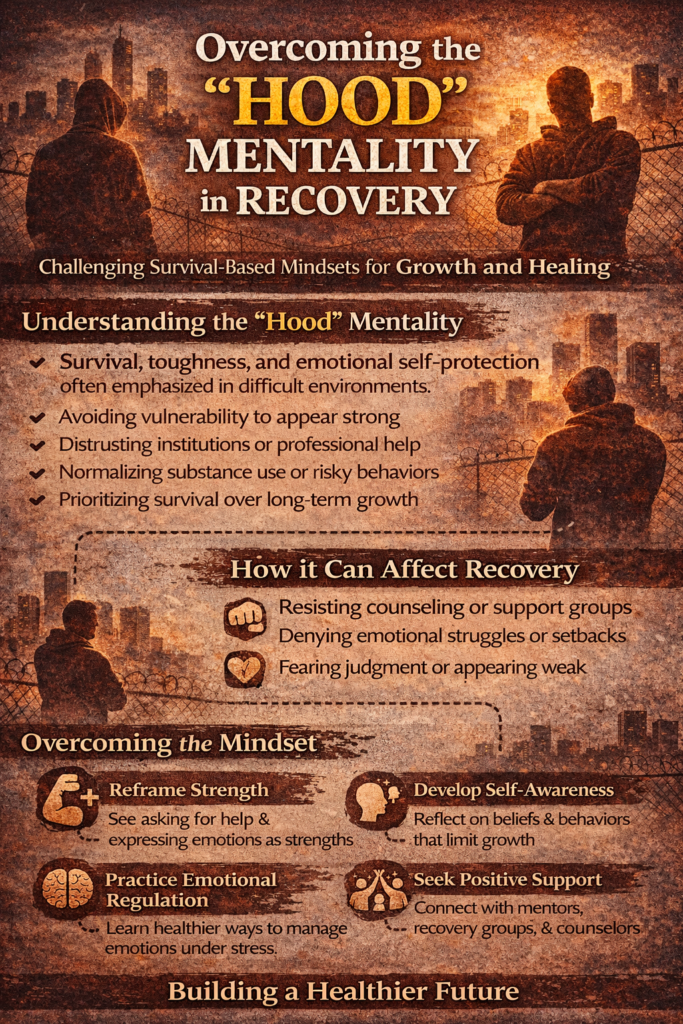
Understanding the “Hood” Mentality
The “hood mentality” often develops in environments where individuals must focus on survival, toughness, and self-protection. In some communities, showing vulnerability or asking for help may be seen as a weakness. As a result, individuals may feel pressure to appear strong or independent, even when they are struggling internally.
This mindset can sometimes include beliefs such as:
- Avoiding emotional expression or vulnerability
- Distrusting institutions or professional help
- Normalizing substance use or risky behaviors
- Feeling pressure to maintain a tough or resilient image
While these attitudes may develop as coping mechanisms in challenging environments, they can create barriers to seeking support during recovery.
How It Can Affect Recovery
Recovery often requires openness, honesty, and the willingness to ask for help. When individuals feel pressured to maintain a certain image or hide their struggles, it can make recovery more difficult. For example, someone may avoid counseling or support groups because they fear judgment from peers or community members.
This mindset may also reinforce behaviors such as isolation, denial of emotional struggles, or resistance to treatment. Over time, these barriers can slow the recovery process and make it harder for individuals to build healthier habits.
Challenging Harmful Beliefs
Overcoming the “hood mentality” in recovery does not mean rejecting one’s background or community. Instead, it involves reframing beliefs that may prevent healing and growth. Recovery encourages individuals to see vulnerability, accountability, and personal growth as strengths rather than weaknesses.
Challenging these beliefs may involve:
- Learning that asking for help is a sign of strength
- Recognizing that emotional expression is part of healing
- Understanding that change does not mean abandoning one’s identity
This shift in perspective can help individuals embrace recovery without feeling disconnected from their cultural or community roots.
Building Positive Support Systems
Support systems play an essential role in helping individuals move beyond harmful mindsets. Mentors, counselors, recovery groups, and positive community leaders can help reinforce healthier perspectives about recovery.
Helpful support systems may include:
- Recovery support groups and peer mentorship
- Counseling and therapy services
- Community programs focused on personal development
- Positive friendships that encourage growth and accountability
These networks help individuals see that recovery is not a sign of weakness but a step toward empowerment and self-improvement.
Creating a New Mindset for Recovery
Breaking away from limiting beliefs requires time, patience, and self-reflection. As individuals progress in recovery, they often begin to develop new ways of thinking that support healthier choices and stronger relationships.
Recovery encourages individuals to replace survival-based thinking with growth-focused thinking, where healing, personal development, and emotional well-being become priorities.
Moving Forward with Strength
The journey of recovery involves more than physical change—it requires a transformation in mindset and perspective. By challenging harmful beliefs, embracing vulnerability, and building supportive networks, individuals can move beyond barriers created by the “hood mentality.”
True strength in recovery comes from the courage to change, the willingness to seek support, and the determination to build a healthier future. Through these efforts, individuals can create new paths for themselves while inspiring others in their communities to pursue healing and growth.
Changing the Mindset: Self-Management Strategies to Overcome the “Hood” Mentality in Recovery
Recovery from addiction requires more than physical sobriety—it also involves transforming the thoughts, beliefs, and behaviors that may have developed through life experiences. For some individuals, the “hood mentality” can create challenges during recovery. This mindset often forms in environments where survival, toughness, and independence are emphasized, sometimes discouraging vulnerability or seeking help. While these attitudes may develop as protective responses to difficult circumstances, they can make it harder to fully engage in the recovery process. Practicing self-management strategies can help individuals recognize these patterns and develop healthier perspectives that support long-term healing.
Developing Self-Awareness
One of the most important self-management strategies is self-awareness. Individuals can begin by reflecting on how certain beliefs or attitudes may influence their recovery journey. Recognizing patterns such as avoiding emotional conversations, distrusting support systems, or feeling pressure to appear strong can help individuals understand how the “hood mentality” may affect their choices.
Self-awareness can be strengthened by:
- Reflecting on personal experiences and behaviors
- Identifying beliefs that discourage asking for help
- Recognizing emotional triggers or defensive reactions
Understanding these patterns is the first step toward creating healthier ways of thinking and responding.
Reframing Strength and Vulnerability
Many people raised in tough environments are taught that showing vulnerability is a weakness. In recovery, however, openness and honesty are signs of strength. Self-management involves redefining what strength truly means.
Individuals can practice reframing their mindset by:
- Viewing vulnerability as a part of personal growth
- Accepting that asking for help is a responsible choice
- Understanding that emotional expression supports healing
This shift allows individuals to engage more fully in recovery without feeling that they are abandoning their identity or resilience.
Practicing Emotional Regulation
Another important strategy is learning to manage emotions in healthier ways. People influenced by survival-based environments may suppress emotions or respond with anger or withdrawal. Recovery encourages individuals to recognize emotions and respond constructively.
Helpful practices include:
- Journaling thoughts and emotions
- Practicing mindfulness or relaxation techniques
- Taking time to pause before reacting to stressful situations
These tools help individuals process emotions without returning to harmful coping behaviors.
Setting Personal Goals for Growth
Self-management also involves setting goals that support personal development and recovery. These goals can help individuals shift their focus from survival-based thinking to long-term growth and stability.
Examples of recovery goals may include:
- Attending recovery meetings or counseling sessions
- Building healthy routines and daily habits
- Strengthening relationships with supportive people
- Developing new skills or pursuing education and career opportunities
Achieving these goals helps reinforce confidence and demonstrates that change is possible.
Building Positive Influences
Surrounding oneself with positive influences can help challenge limiting beliefs associated with the “hood mentality.” Mentors, recovery groups, counselors, and supportive peers can provide encouragement and guidance.
Positive influences can help individuals:
- See recovery as a sign of strength
- Learn new perspectives about personal growth
- Develop healthier coping strategies
These relationships reinforce the idea that change is not only possible but also empowering.
Moving Toward a Growth Mindset
Overcoming the “hood mentality” in recovery is about shifting from survival thinking to growth thinking. This does not mean rejecting one’s background or experiences. Instead, it means learning to use those experiences as motivation to build a healthier future.
Through self-awareness, emotional regulation, goal setting, and supportive relationships, individuals can reshape their mindset and strengthen their recovery journey. By practicing these self-management strategies, people can move beyond limiting beliefs and create a life defined by resilience, growth, and long-term healing.
Supporting Change: Family Strategies to Address the “Hood” Mentality in Recovery
Recovery from addiction is not only an individual process but often a family journey of healing and growth. For some individuals, attitudes shaped by difficult environments—sometimes described as the “hood mentality”—can create barriers to recovery. This mindset may emphasize toughness, independence, and emotional self-protection, which can make it difficult for individuals to seek help, express vulnerability, or accept support. Families can play an important role in helping their loved ones challenge these beliefs and develop healthier perspectives that support long-term recovery.
Encouraging Open and Honest Communication
One of the most important family support strategies is creating an environment where open communication is welcomed and respected. Individuals who have been taught to hide their emotions or appear strong may struggle to talk about their experiences.
Families can encourage communication by:
- Listening without judgment or criticism
- Allowing space for honest conversations about struggles and recovery
- Showing empathy and understanding when emotions are expressed
These conversations help individuals realize that vulnerability is not a weakness but a step toward healing.
Redefining Strength Within the Family
In many environments where the “hood mentality” develops, strength is often associated with silence, toughness, and independence. Families can help redefine strength by emphasizing that seeking help, expressing emotions, and committing to recovery are powerful acts of courage.
Families can reinforce this idea by:
- Praising efforts toward recovery and self-improvement
- Acknowledging the courage it takes to ask for help
- Supporting healthy emotional expression
This shift in perspective helps individuals feel supported rather than judged for embracing recovery.
Providing Consistent Encouragement
Recovery can be challenging, especially when individuals are trying to change long-standing beliefs and behaviors. Family members can provide consistent encouragement, reminding individuals they are not alone in their journey.
Encouragement may include:
- Recognizing progress and personal growth
- Celebrating recovery milestones
- Offering reassurance during difficult moments
Positive reinforcement strengthens motivation and helps individuals remain committed to their recovery goals.
Promoting Healthy Relationships and Environments
Families can also support recovery by encouraging healthy social environments and relationships. Individuals seeking to overcome limiting mindsets may benefit from spending time with people who foster positive growth and accountability.
Families can help by:
- Encouraging involvement in recovery groups or counseling
- Supporting participation in community activities or educational opportunities
- Promoting friendships that support healthy lifestyles
These environments help individuals develop new perspectives and reinforce positive changes.
Practicing Patience and Understanding
Changing deeply rooted beliefs and habits takes time. Family members who practice patience and understanding can help individuals move forward without feeling pressured or discouraged.
Supportive patience involves:
- Recognizing that recovery and mindset changes are gradual
- Avoiding criticism or unrealistic expectations
- Focusing on progress rather than perfection
This approach creates a supportive atmosphere where individuals feel safe continuing to grow.
Healing Together
Addressing the “hood mentality” in recovery means helping individuals move beyond survival-based thinking toward a mindset focused on growth, healing, and opportunity. Families who provide open communication, encouragement, and understanding can play a powerful role in this transformation.
By working together, families and individuals in recovery can create stronger relationships, healthier perspectives, and a foundation for long-term success and well-being.
Community Resource Strategies to Overcome the “Hood” Mentality in Recovery
Recovery from addiction often involves more than breaking physical dependence—it also requires transforming the beliefs, attitudes, and environmental influences that may have contributed to substance use. For some individuals, the “hood mentality”—a mindset shaped by survival, distrust, and pressure to appear strong—can create barriers to seeking help or embracing recovery. Community resources can play a vital role in helping individuals challenge these beliefs and develop healthier perspectives that support long-term recovery.
Through education, mentorship, and supportive programs, communities can create opportunities that encourage healing, empowerment, and personal growth.
Promoting Recovery Education and Awareness
Community education programs can help individuals understand addiction and recovery in ways that reduce stigma and challenge harmful beliefs. Workshops, seminars, and outreach initiatives can teach that seeking help and pursuing recovery are signs of strength rather than weakness.
These programs can help individuals:
- Understand the impact of addiction on individuals and communities
- Learn healthier coping and recovery strategies
- Recognize that recovery is a positive and achievable goal
Education helps reshape perspectives that may discourage people from seeking help.
Providing Mentorship and Role Models
Mentorship programs can be especially powerful in communities where the “hood mentality” discourages vulnerability. Seeing others who have successfully overcome addiction can inspire individuals to pursue their own recovery journey.
Community mentors may:
- Share personal recovery experiences
- Offer guidance and encouragement
- Demonstrate positive examples of resilience and growth
These role models help individuals see that change is possible without losing their identity or connection to their community.
Offering Accessible Recovery Programs
Community-based recovery programs provide safe environments where individuals can receive support, counseling, and resources. Accessible programs help reduce barriers for individuals who may be hesitant to seek help.
These programs may include:
- Recovery support groups
- Counseling and mental health services
- Substance use treatment and rehabilitation programs
- Peer recovery coaching
Having resources available within the community makes it easier for individuals to take the first steps toward recovery.
Creating Opportunities for Personal Development
Communities can also support recovery by providing programs that encourage education, job training, and personal development. Opportunities for growth help individuals shift their focus from survival-based thinking to building a stable and fulfilling future.
Examples include:
- Job training and employment support programs
- Educational workshops and career development services
- Youth leadership and mentorship initiatives
These opportunities help individuals build confidence and develop new goals that support recovery.
Encouraging Community Engagement
Community engagement activities can help individuals feel connected and valued within their communities. Positive involvement in community events, volunteer work, and support initiatives reinforces the idea that recovery can lead to meaningful contributions.
Community engagement may include:
- Volunteer opportunities and service projects
- Recovery awareness events
- Community outreach programs
These activities strengthen relationships and encourage individuals to see themselves as active and valued members of their communities.
Building a Culture of Support and Growth
Communities that promote understanding, compassion, and access to recovery resources create environments where individuals feel empowered to change. By addressing the barriers created by the “hood mentality,” communities can help individuals replace survival-based thinking with a mindset focused on growth and healing.
Through education, mentorship, accessible services, and opportunities for personal development, community resources can play a powerful role in helping individuals move forward in recovery and build healthier futures.
Frequently Asked Questions
Here are some common questions:
1. What is the “Hood Mentality” in addiction recovery?
The “hood mentality” refers to a set of attitudes and survival-based behaviors that often develop in environments where individuals must protect themselves emotionally and physically. These environments may encourage toughness, self-reliance, distrust of others, and hiding vulnerability. While these traits may help people survive difficult circumstances, they can sometimes interfere with the openness and trust needed for successful addiction recovery.
2. Why can the hood mentality make recovery more challenging?
Recovery often requires honesty, vulnerability, and asking for help. People with a strong survival mindset may feel uncomfortable trusting others or sharing personal struggles. As a result, they may resist counseling, group participation, or emotional expression, which can slow recovery progress.
3. Is the hood mentality always negative?
No. Many aspects of this mentality develop as adaptive survival skills. Strength, resilience, independence, and the ability to navigate difficult environments can be valuable qualities. The goal in recovery is not to erase these strengths but to balance them with healthier coping strategies and openness to support.
4. Why do some people in recovery struggle with trust?
Individuals who grew up in environments where betrayal, violence, or instability were common may have learned that trusting others can lead to harm. This protective mindset can carry into recovery, making it difficult to trust counselors, peers, or support systems.
5. Why is vulnerability important in recovery?
Vulnerability allows people to express their emotions, acknowledge struggles, and receive support from others. In recovery programs, sharing experiences and feelings often helps individuals feel understood, reduce shame, and build stronger connections with others who are facing similar challenges.
6. How can someone begin to change survival-based thinking?
Change begins with self-awareness. Individuals can learn to recognize when survival thinking—such as distrust, emotional suppression, or isolation—is interfering with recovery. Counseling, peer support groups, and recovery education can help individuals develop new ways of thinking and responding to challenges.
7. How can support groups help someone with this mindset?
Support groups create a safe environment where individuals can hear others share similar experiences. Over time, this can help break down barriers, build trust, and demonstrate that openness and vulnerability can lead to strength rather than weakness.
8. What are healthier alternatives to survival-based coping?
Some healthier coping strategies include:
- Communicating feelings honestly
- Asking for help when needed
- Developing supportive relationships
- Practicing stress management techniques
- Learning emotional regulation skills
These approaches help individuals manage challenges without relying on isolation or emotional suppression.
9. Can cultural or environmental experiences be respected while still promoting recovery?
Yes. Recovery programs should respect individuals’ backgrounds and experiences while helping them develop healthier coping strategies. Acknowledging how the environment shapes behavior can help people feel understood rather than judged.
10. What is the ultimate goal when addressing this mentality in recovery?
The goal is to transform survival-based thinking into growth-oriented thinking. Individuals can keep their resilience and strength while learning to trust, communicate openly, and build supportive relationships that support long-term recovery.
Conclusion
Overcoming the “hood mentality” in recovery requires patience, support, and a willingness to embrace new ways of thinking. By learning that vulnerability, accountability, and seeking help are strengths rather than weaknesses, individuals can begin to break through barriers that once limited their progress. Support from family, community resources, and positive influences can further encourage this shift toward a growth-focused mindset. As individuals challenge old beliefs and develop healthier coping strategies, they create opportunities for lasting recovery and personal transformation. Ultimately, recovery becomes not only a process of overcoming addiction but also a journey toward resilience, self-awareness, and a more hopeful future.
Video: Trapped by Toughness: How Hood Mentality Blocks Healing #SelfWork #Transformation