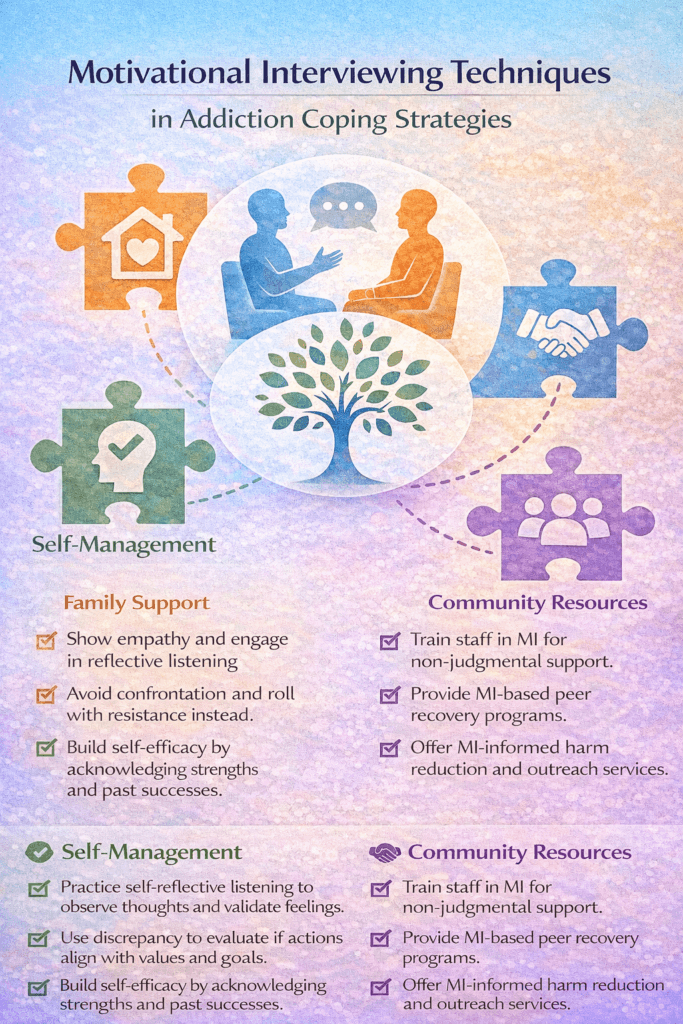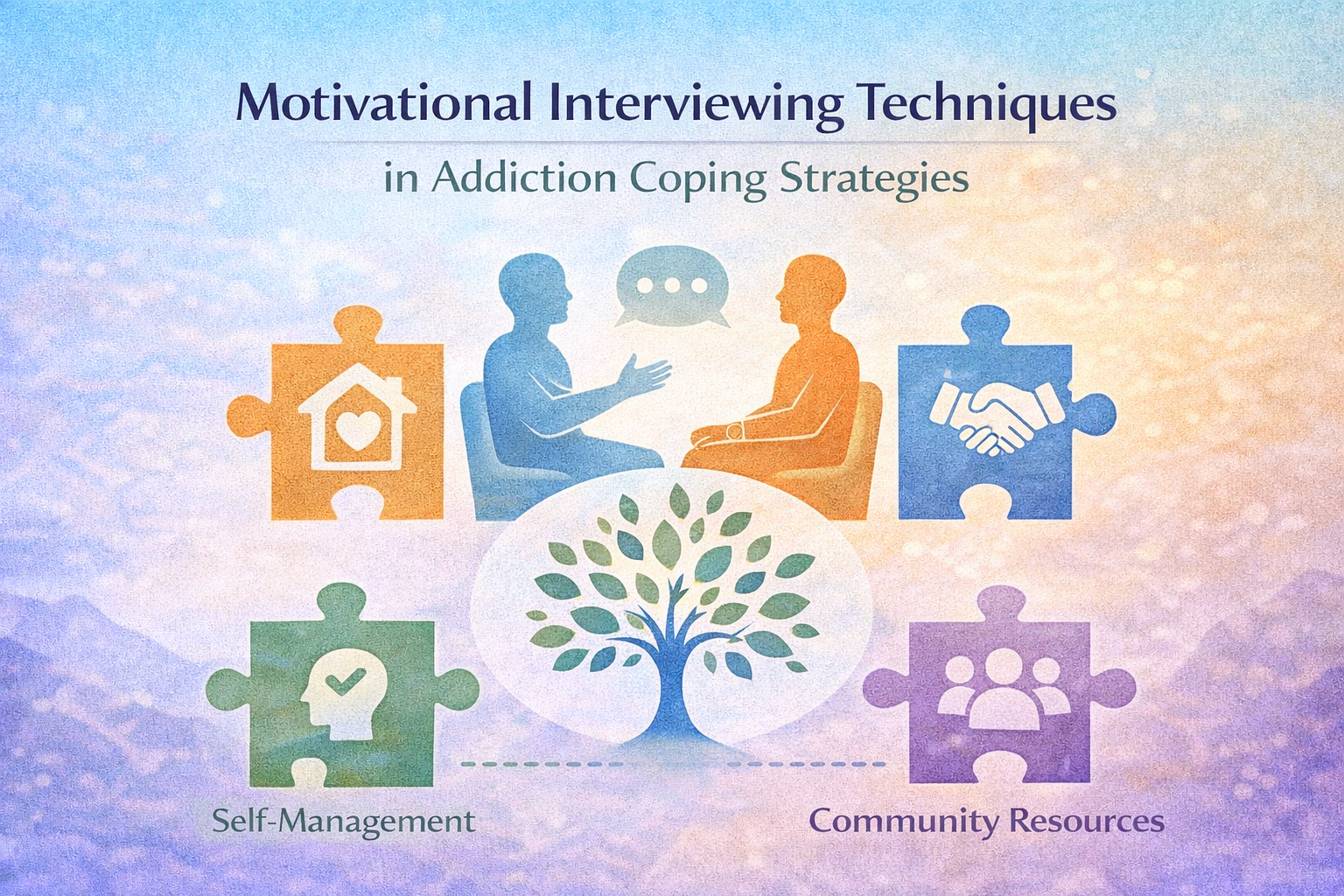
Motivational Interviewing (MI) techniques play a vital role in addiction coping strategies by helping individuals navigate ambivalence, strengthen motivation, and build confidence for change. Rather than relying on confrontation or pressure, MI emphasizes empathy, collaboration, and respect for autonomy. When applied across self-management, family support, and community resource strategies, motivational interviewing creates a consistent, supportive environment that enhances emotional regulation, reduces resistance, and encourages healthier coping responses during recovery.
Motivational Interviewing Techniques in Addiction Coping Strategies
Motivational Interviewing (MI) is a person-centered, evidence-based counseling approach that plays a powerful role in addiction coping strategies. Rather than confronting or persuading, MI focuses on collaboration, empathy, and strengthening an individual’s own motivation for change. This approach is especially effective in addiction recovery, where ambivalence about change is common and coping with urges, stress, and setbacks requires internal commitment rather than external pressure.
At the core of motivational interviewing is the understanding that change is more likely when it comes from within. Many individuals struggling with addiction feel torn between the perceived benefits of substance use and the desire for a healthier life. MI techniques help individuals explore this ambivalence safely, without judgment, allowing them to articulate their own reasons for change. This process strengthens coping by increasing insight, confidence, and personal ownership of recovery decisions.
One key MI technique is expressing empathy through reflective listening. When individuals feel heard and understood, defensiveness decreases and openness increases. Reflective statements validate emotions and experiences, helping individuals cope with shame, frustration, or fear—emotions that often trigger substance use. Empathy itself becomes a coping resource, reducing emotional distress.
Another essential technique is developing discrepancy. MI helps individuals recognize the gap between their current behaviors and their personal values or goals, such as health, family, or stability. This awareness supports coping by clarifying what is at stake and reinforcing motivation during moments of craving or stress. Rather than imposing consequences, MI allows individuals to connect coping strategies to what matters most to them.
Supporting self-efficacy is also central to motivational interviewing. Addiction often erodes confidence, leaving individuals feeling powerless. MI reinforces past successes, strengths, and efforts, reminding individuals that they are capable of change. This confidence strengthens coping skills by increasing the likelihood that individuals will use healthy strategies—such as reaching out for support or practicing stress-management techniques—during high-risk situations.
MI also emphasizes rolling with resistance, meaning resistance is not confronted but explored. When individuals express doubt or reluctance, MI treats it as valuable information rather than a barrier. This approach reduces power struggles and helps individuals develop coping strategies that feel realistic and self-directed rather than forced.
Overall, motivational interviewing enhances addiction coping strategies by fostering motivation, emotional regulation, and confidence. By aligning coping skills with personal values and goals, MI helps individuals move through recovery with greater engagement, resilience, and long-term success.
Self-Management Strategies for Using Motivational Interviewing Techniques in Addiction Coping
Motivational Interviewing (MI) is often used in counseling settings, but its core principles can also be applied through self-management. When individuals learn to use MI techniques internally, they strengthen motivation, emotional regulation, and coping during recovery. Self-directed MI helps people navigate ambivalence, manage cravings, and sustain change by aligning daily choices with personal values rather than external pressure.
A foundational self-management strategy is practicing self-reflective listening. Just as MI clinicians listen without judgment, individuals can learn to observe their own thoughts and emotions with curiosity instead of criticism. Journaling or brief self-check-ins—such as asking, “What am I feeling right now, and why?”—help validate internal experiences and reduce emotional reactivity that often drives substance use.
Another key strategy is to intentionally explore ambivalence. Recovery often involves mixed feelings about change, and suppressing these thoughts can increase stress. Using MI-style questions—“What do I like about change? What worries me about it?”—allows individuals to process ambivalence honestly. This clarity strengthens coping by reducing internal conflict and supporting informed decision-making.
Developing discrepancy can also be used as a self-management tool. Individuals can regularly reflect on how current behaviors align with—or conflict with—core values such as health, family, or stability. Writing value-based statements or reviewing personal recovery goals during moments of craving helps reinforce motivation and guide coping choices without self-blame.
Supporting self-efficacy is essential for sustained recovery. Individuals can use MI principles to recognize strengths, past successes, and progress, even in the face of setbacks. Keeping a recovery journal or progress log reinforces the belief that change is possible, increasing confidence in using coping skills under stress.
Rolling with resistance is another powerful self-management approach. Instead of fighting urges or criticizing hesitation, individuals can acknowledge resistance as a signal to pause and reassess. Asking, “What feels hard about this right now?” promotes flexibility and prevents all-or-nothing thinking that can undermine coping efforts.
By applying motivational interviewing techniques internally, individuals become active participants in their own recovery process. These self-management strategies transform MI from a counseling method into a daily coping framework, strengthening motivation, resilience, and long-term recovery success.
Family Support Strategies for Using Motivational Interviewing Techniques in Addiction Coping
Families have a powerful influence on motivation, communication, and coping in addiction recovery. When family members adopt principles of Motivational Interviewing (MI), they can support recovery without triggering defensiveness, resistance, or shame. MI-informed family support focuses on empathy, collaboration, and respect for autonomy—key elements that strengthen coping strategies and long-term change.
A core family strategy is expressing empathy through reflective listening. Rather than correcting, lecturing, or problem-solving immediately, families can listen to understand. Reflecting back what a loved one says—“It sounds like you’re feeling overwhelmed and unsure”—helps individuals feel heard and emotionally regulated. This emotional safety improves coping by reducing stress and defensiveness.
Another important strategy is avoiding confrontation and power struggles. MI teaches families to “roll with resistance,” recognizing that reluctance or ambivalence is a normal part of change. When families respond with curiosity instead of pressure—“What feels hardest about this right now?”—they support coping by keeping communication open and non-threatening.
Families can also help by gently developing discrepancy. Instead of pointing out failures, family members can ask reflective questions that help individuals connect recovery goals with personal values. For example, “How does staying in recovery fit with the future you want?” This approach strengthens motivation without imposing judgment.
Supporting autonomy and self-efficacy is another essential MI-based family strategy. Families can reinforce confidence by acknowledging effort, strengths, and progress rather than focusing only on outcomes. Statements such as “You’ve handled difficult days before” build coping confidence and encourage continued use of healthy strategies during stress.
Finally, families can model MI principles in their own coping. Seeking support, managing emotions constructively, and communicating openly demonstrate healthy behavior and reduce pressure on the individual in recovery. Family therapy or education in MI techniques can further strengthen these skills.
By integrating motivational interviewing techniques into family support, coping becomes a shared, respectful process rather than a source of conflict. This approach fosters trust, emotional regulation, and motivation—key ingredients for sustained recovery.
Community Resource Strategies for Using Motivational Interviewing Techniques in Addiction Coping
Community resources play a vital role in strengthening coping strategies for addiction, especially when grounded in Motivational Interviewing (MI) principles. MI is most effective when individuals consistently encounter empathy, collaboration, and respect for autonomy across healthcare, social services, and recovery environments. When communities integrate MI into their programs and services, coping skills are reinforced beyond the therapy room.
One key community strategy is training staff in motivational interviewing techniques. Healthcare providers, peer recovery coaches, social workers, case managers, and first responders who use MI-informed communication create safer, non-judgmental spaces. This consistency helps individuals feel respected and understood, increasing engagement and willingness to use coping strategies during stressful or crisis situations.
Peer recovery programs are especially well-suited to MI-based approaches. Peer support specialists naturally use empathy and shared experience to explore ambivalence and reinforce self-efficacy. When peers are trained in MI, they help individuals identify personal motivations for change and strengthen coping skills in real-world settings.
Community-based integrated care models also support MI implementation. Primary care clinics, mental health services, and substance use treatment programs that use MI during screenings, follow-ups, and care coordination help individuals navigate ambivalence and maintain motivation over time. MI-informed check-ins encourage honest communication about cravings, stressors, and setbacks.
Outreach and harm reduction services further reinforce MI principles by meeting individuals where they are. Mobile outreach teams, syringe service programs, and crisis response services that use MI avoid coercion and emphasize choice. This approach builds trust and supports coping by encouraging safer behaviors and gradual movement toward recovery goals.
Finally, community education and policy alignment help sustain MI-based coping strategies. Public health campaigns, recovery community organizations, and advocacy efforts that emphasize respectful, person-centered language reinforce MI values at a population level. When community messaging supports autonomy and hope, individuals are more likely to engage in coping strategies and recovery services.
By embedding motivational interviewing techniques into community resources, coping becomes a shared responsibility supported by compassionate systems. These strategies promote engagement, resilience, and sustained recovery by aligning community support with how change truly happens—from within.
Frequently Asked Questions
Here are some common questions:
1. What is motivational interviewing (MI)?
Motivational Interviewing is a person-centered, evidence-based counseling approach designed to help individuals resolve ambivalence and strengthen motivation for change. It emphasizes empathy, collaboration, and respect for autonomy rather than confrontation or persuasion.
2. Why is motivational interviewing effective in addiction recovery?
MI is effective because it helps individuals find their own reasons for change. By reducing resistance and enhancing self-efficacy, MI supports healthier coping responses during cravings, stress, and emotional challenges.
3. How does MI support addiction coping strategies?
MI enhances coping by improving emotional regulation, clarifying personal values, and increasing confidence. It helps individuals choose coping strategies that align with what matters most to them rather than relying on external pressure.
4. What are the core principles of motivational interviewing?
The core principles include expressing empathy, developing a sense of discrepancy, rolling with resistance, and supporting self-efficacy. Together, these principles guide respectful, non-judgmental conversations that encourage change.
5. What is “ambivalence,” and how does MI address it?
Ambivalence is having mixed feelings about change, which is common in addiction. MI helps individuals explore both sides of ambivalence safely, reducing internal conflict and strengthening commitment to healthier coping strategies.
6. Can motivational interviewing be used as a self-management tool?
Yes. Individuals can apply MI techniques internally through self-reflection, journaling, and values-based decision-making. Self-directed MI supports coping by increasing awareness, motivation, and confidence.
7. How can families use MI techniques to support coping?
Families can use MI by listening empathetically, avoiding confrontation, asking open-ended questions, and reinforcing strengths. This approach reduces defensiveness and supports healthier coping during stressful moments.
8. How do community resources support MI-based coping strategies?
Community resources support MI by training staff in MI techniques, offering peer support programs, integrating MI into healthcare and outreach services, and promoting stigma-free, person-centered care environments.
9. How does MI differ from confrontational approaches?
Unlike confrontational methods, MI does not argue or pressure individuals to change. Instead, it builds motivation through collaboration and respect, which leads to greater engagement and more effective coping.
10. Is MI only effective in early recovery?
No. MI is useful at all stages of recovery. It supports early engagement, strengthens coping during maintenance, and helps individuals navigate setbacks or renewed ambivalence over time.
11. Does motivational interviewing replace other therapies?
MI does not replace other treatments but complements them. It enhances engagement and motivation, making therapies such as CBT, medication-assisted treatment, and peer support more effective.
12. How does MI improve long-term recovery outcomes?
By strengthening internal motivation, self-efficacy, and coping skills, MI increases treatment retention, reduces relapse risk, and supports sustainable, values-driven recovery.
Conclusion
The impact of motivational interviewing techniques is greatest when they are reinforced at multiple levels. Individuals can use MI-based self-management strategies to reflect on values, manage ambivalence, and strengthen self-efficacy; families can support coping by practicing empathetic listening and avoiding power struggles; and communities can embed MI principles into healthcare, peer support, and outreach services. Together, these approaches transform coping from a reactive effort into a motivated, values-driven process. By aligning self, family, and community strategies with motivational interviewing principles, addiction recovery becomes more engaging, compassionate, and sustainable over time.
Video: From Uncertainty To Confidence #AddictionRecovery #MotivationForChange