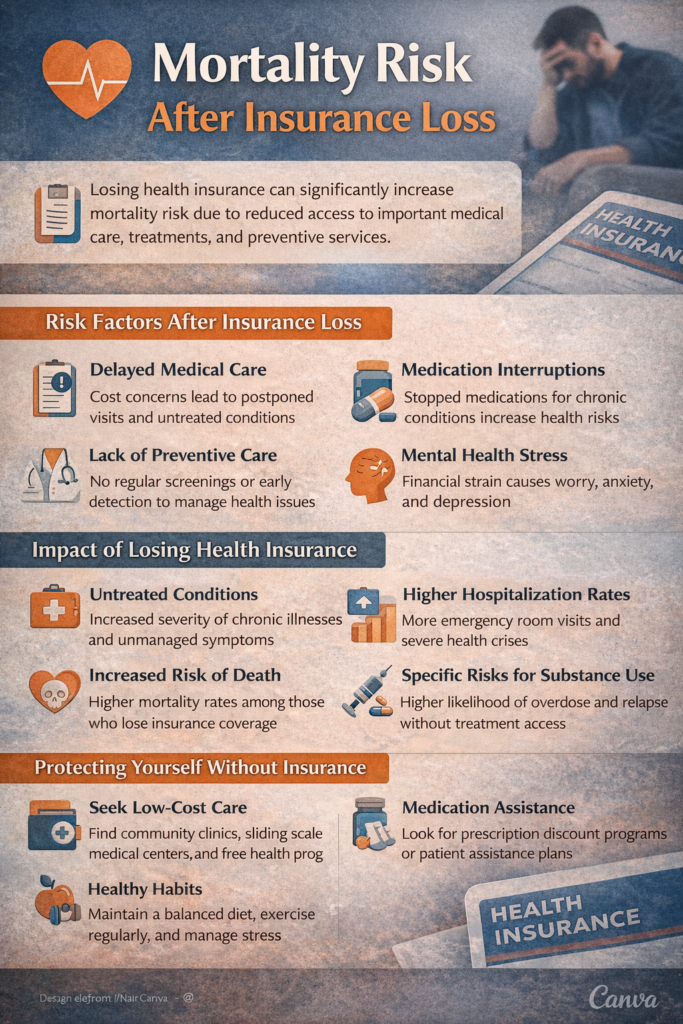
Health insurance is essential for maintaining access to healthcare services, medications, and preventive care. When individuals lose insurance coverage, they often face significant barriers to receiving necessary medical treatment. Without consistent access to healthcare, many people delay or avoid medical visits due to financial constraints. This interruption in care can lead to worsening health conditions, untreated illnesses, and increased vulnerability to serious health complications. As a result, losing health insurance has been linked to a higher risk of mortality, particularly among individuals with chronic illnesses or those requiring ongoing medical treatment. Understanding the risks associated with insurance loss highlights the importance of maintaining continuity of care and ensuring that individuals have access to healthcare resources even during periods without coverage.
Mortality Risk After Insurance Loss
Health insurance plays a critical role in ensuring individuals have access to medical care, medications, and treatment programs. When people lose their health insurance coverage, they may face significant barriers to receiving necessary healthcare services. For individuals managing serious health conditions, including substance use disorders, losing insurance can increase the risk of negative health outcomes and, in some cases, mortality.
One of the primary challenges associated with insurance loss is the interruption of ongoing medical care. Individuals receiving treatment for chronic conditions often rely on consistent access to doctors, medications, and support services. Without insurance coverage, many patients delay or avoid medical visits due to high costs. This disruption can lead to worsening health conditions, unmanaged symptoms, and increased risk of medical emergencies.
Insurance loss can be particularly dangerous for individuals undergoing treatment for opioid use disorder or other substance use disorders. Treatment often involves medication-assisted therapy, counseling, and regular medical monitoring. If insurance coverage ends, patients may lose access to medications and treatment programs that help stabilize recovery. Interruptions in treatment can increase the likelihood of relapse and raise the risk of overdose, which may ultimately contribute to higher mortality rates.
Financial strain also plays a significant role. Without insurance, medical expenses can quickly become overwhelming. Individuals may face difficult decisions about whether to pay for healthcare, housing, food, or other essential needs. This financial stress can worsen mental health conditions such as anxiety and depression, which may further complicate recovery and overall health.
In addition to financial and treatment barriers, losing insurance may reduce access to preventive care and early medical intervention. Preventive services such as routine checkups, screenings, and mental health support help identify and manage health issues before they become severe. When these services are no longer accessible, conditions may go untreated until they reach critical stages.
Addressing the risks associated with insurance loss requires stronger healthcare policies and support systems that promote continuity of care. Programs that help individuals maintain coverage, transition between insurance plans, or access low-cost treatment services can help prevent interruptions in care. Expanding community health services and treatment programs also ensures that vulnerable populations continue receiving support even during periods without insurance.
Mortality risk after insurance loss highlights the importance of stable healthcare coverage. Ensuring that individuals maintain access to treatment and essential medical services is critical not only to individual well-being but also to improving public health outcomes and supporting long-term recovery.
Self-Management Strategies to Prevent Mortality Risk After Insurance Loss
Losing health insurance can create serious challenges for individuals who rely on consistent medical care, medications, and treatment services. Without coverage, many people face financial barriers that limit access to healthcare. These barriers can increase the risk of worsening health conditions and, in severe cases, mortality. However, self-management strategies can help individuals maintain their health, reduce risks, and navigate healthcare challenges even during periods without insurance.
One important strategy is seeking low-cost or community-based healthcare services. Many communities offer clinics, nonprofit health centers, and sliding-scale medical services that provide care at reduced costs. These resources can help individuals continue receiving basic medical care, preventive screenings, and treatment for chronic conditions despite losing insurance coverage.
Another essential approach is maintaining medication management. Individuals who depend on prescription medications should explore options such as generic medications, patient assistance programs, or pharmacy discount programs. Some pharmaceutical companies and healthcare organizations offer programs that help patients access necessary medications at reduced prices or even free of charge.
Health monitoring and preventive self-care also play a critical role in reducing mortality risk. Individuals can adopt healthy lifestyle practices such as maintaining a balanced diet, exercising regularly, managing stress, and avoiding harmful substances. Monitoring symptoms and addressing health concerns early can prevent complications that might otherwise require costly emergency care.
Building a strong support network is another valuable strategy. Family members, friends, and community organizations can help individuals navigate healthcare systems, identify available resources, and provide emotional support during challenging times. Support systems can also encourage individuals to stay engaged in treatment and maintain healthy behaviors.
Education and awareness are equally important. Individuals should learn about available healthcare programs, such as temporary coverage options, government assistance programs, and nonprofit services that support uninsured individuals. Understanding these resources can help people regain access to medical care more quickly and reduce the treatment gap.
Finally, individuals should practice proactive health planning. This may include keeping medical records organized, tracking medications and health conditions, and communicating openly with healthcare providers about financial concerns. Some healthcare providers can help patients find affordable treatment options or adjust care plans to better fit financial circumstances.
Self-management strategies can help reduce the risks associated with losing health insurance. By seeking community resources, maintaining healthy habits, managing medications, and building strong support networks, individuals can better protect their health during periods without coverage. These proactive approaches play an important role in preventing serious health complications and reducing mortality risk as patients navigate healthcare challenges.
Family Support Strategies to Prevent Mortality Risk After Insurance Loss
Losing health insurance can create significant barriers to accessing healthcare, medications, and treatment services. Without coverage, individuals may delay medical care, discontinue essential treatments, or struggle to afford necessary medications. These challenges can increase the risk of serious health complications and even mortality. During such times, family support plays a crucial role in helping individuals maintain their health and navigate the healthcare system despite financial and insurance-related obstacles.
One important family support strategy is helping individuals access alternative healthcare resources. Family members can assist in locating community health clinics, nonprofit healthcare providers, and sliding-scale medical services that offer care to uninsured patients. By helping to identify affordable healthcare options, families can ensure that their loved ones continue to receive necessary medical attention.
Another key strategy is supporting medication access and management. Family members can help research patient assistance programs, pharmacy discount plans, or generic medication options that reduce costs. They may also assist in organizing medications, reminding individuals to take them regularly, and helping communicate with healthcare providers about more affordable treatment options.
Families can also provide emotional support and encouragement, which is essential during periods of uncertainty and stress. Losing insurance coverage can create feelings of anxiety, frustration, and fear about future health outcomes. Compassionate communication, reassurance, and encouragement from family members can help individuals remain motivated to prioritize their health and seek available care.
Shared responsibility for health management is another helpful strategy. Family members may assist with scheduling medical appointments, arranging transportation to clinics, or helping manage medical records and important documents. This shared involvement can make healthcare navigation easier and reduce the stress experienced by the individual who has lost insurance.
Families can also help individuals explore insurance alternatives and assistance programs. This may include researching government-supported programs, temporary insurance coverage options, or nonprofit organizations that provide financial assistance for healthcare services. Family members can help complete applications, gather necessary documents, and stay informed about eligibility requirements.
Finally, families should encourage preventive health practices and healthy lifestyle choices. Supporting balanced nutrition, regular physical activity, stress management, and avoidance of harmful substances can help reduce health risks during periods without insurance coverage. These practices can strengthen overall health and prevent conditions from worsening.
Family support strategies are essential in reducing the risks associated with insurance loss. By providing practical assistance, emotional support, and guidance in accessing healthcare resources, families can help protect the health and well-being of their loved ones. Strong family involvement can play a critical role in preventing serious health complications and reducing mortality risk during times of healthcare instability.
Community Resource Strategies to Prevent Mortality Risk After Insurance Loss
Health insurance plays a vital role in providing access to medical care, medications, and preventive services. When individuals lose insurance coverage, they may face serious barriers to healthcare that can lead to untreated medical conditions, delayed care, and increased mortality risk. Community resources can play an essential role in helping individuals maintain access to healthcare services and protect their health during periods without insurance.
One important community strategy is the availability of community health clinics and federally qualified health centers. These facilities often provide low-cost or sliding-scale healthcare services for individuals who are uninsured or underinsured. Community clinics offer essential services such as primary care, mental health counseling, preventive screenings, and treatment for chronic illnesses. By ensuring access to basic healthcare, these clinics help reduce the health risks associated with losing insurance.
Another valuable resource is community-based assistance programs that help individuals access medications and treatment services. Many nonprofit organizations and local health programs provide support for prescription medications, medical supplies, and treatment services at reduced costs. These programs help individuals continue essential treatments even when they cannot afford the full cost of healthcare.
Community outreach and education programs also play a significant role in preventing mortality risk. Educational workshops and public health campaigns can inform individuals about available healthcare resources, preventive health practices, and early warning signs of medical conditions. Increasing awareness helps individuals seek care earlier and avoid severe health complications.
In addition, many communities offer support services for individuals facing financial hardship. These services may include transportation assistance for medical appointments, food support programs, housing assistance, and social service referrals. By addressing social determinants of health, these programs help reduce stress and improve overall well-being, which can indirectly lower health risks.
Community organizations may also provide case management and navigation services. Healthcare navigators and social workers can assist individuals in finding affordable healthcare providers, enrolling in temporary coverage programs, and accessing government assistance programs. This guidance helps individuals maintain continuity of care and avoid long gaps in treatment.
Finally, community partnerships between healthcare providers, nonprofit organizations, and local governments can strengthen healthcare access for vulnerable populations. Collaborative programs can expand healthcare services, increase outreach to uninsured individuals, and ensure that critical resources are available during times of insurance instability.
Community resource strategies are essential in protecting individuals from the health risks associated with losing insurance coverage. By providing affordable healthcare services, educational programs, and supportive resources, communities can help reduce mortality risk and ensure that individuals continue receiving the care they need. Strengthening these community-based systems is an important step toward improving public health and supporting vulnerable populations.
Frequently Asked Questions
Here are some common questions:
1. What does mortality risk after insurance loss mean?
Mortality risk after insurance loss refers to the increased likelihood of death that may occur when individuals lose health insurance coverage and are unable to access necessary healthcare services, medications, or treatments.
2. Why can losing health insurance increase mortality risk?
Losing insurance often limits access to medical care, leading to delayed treatment, untreated health conditions, and interruptions in essential medications. These factors can worsen health outcomes and increase the risk of serious complications.
3. Who is most affected by insurance loss?
Individuals with chronic illnesses, low-income families, older adults, and people receiving ongoing medical treatment are often the most vulnerable when insurance coverage is lost. These groups typically rely on consistent healthcare services to manage their conditions.
4. How does insurance loss affect access to healthcare?
Without insurance, many people face high out-of-pocket costs for doctor visits, hospital care, medications, and preventive services. As a result, individuals may delay seeking medical help or avoid care altogether.
5. Can losing insurance affect mental health?
Yes. Losing insurance can cause financial stress, anxiety, and uncertainty about future healthcare access. This stress can negatively impact mental health and overall well-being.
6. What health problems can worsen after insurance loss?
Chronic conditions such as diabetes, heart disease, and mental health disorders may worsen without regular medical monitoring and treatment. Preventive care and early intervention may also be delayed.
7. Are there alternatives for people who lose health insurance?
Yes. Community health clinics, federally qualified health centers, nonprofit healthcare programs, and medication assistance programs often provide services for uninsured individuals at reduced costs.
8. How can individuals reduce health risks after losing insurance?
Individuals can seek community healthcare resources, maintain healthy lifestyle habits, monitor symptoms closely, and look for financial assistance programs that help cover medical services or medications.
9. Why is continuity of care important?
Continuity of care ensures that individuals receive consistent medical attention and treatment. When care is interrupted due to insurance loss, health conditions may worsen and become more difficult to manage.
10. What role do communities and families play in reducing mortality risk?
Families and communities can help individuals locate healthcare resources, provide emotional and practical support, and assist with navigating healthcare programs and services available to uninsured individuals.
Conclusion
Mortality risk after insurance loss is a critical public health concern that affects many vulnerable individuals and families. The lack of healthcare coverage can lead to delayed treatment, medication interruptions, and limited access to preventive care, all of which contribute to poorer health outcomes. Addressing this issue requires increased awareness, improved access to healthcare, and stronger support systems to help individuals maintain continuity of care. By promoting policies that stabilize healthcare and expanding community resources for uninsured individuals, society can reduce the risks associated with losing insurance. Ensuring that people continue to receive necessary medical care, even during periods without coverage, is essential for protecting health and improving long-term outcomes.
Video: When You Can’t Afford Healthcare, This Happens #mortality #healthinsurance