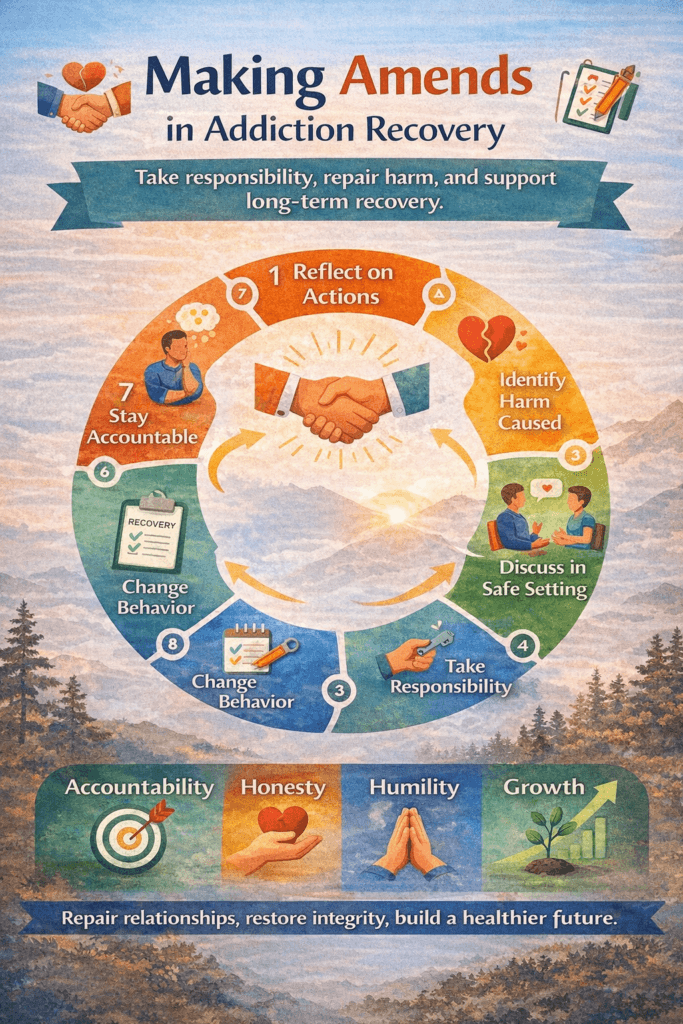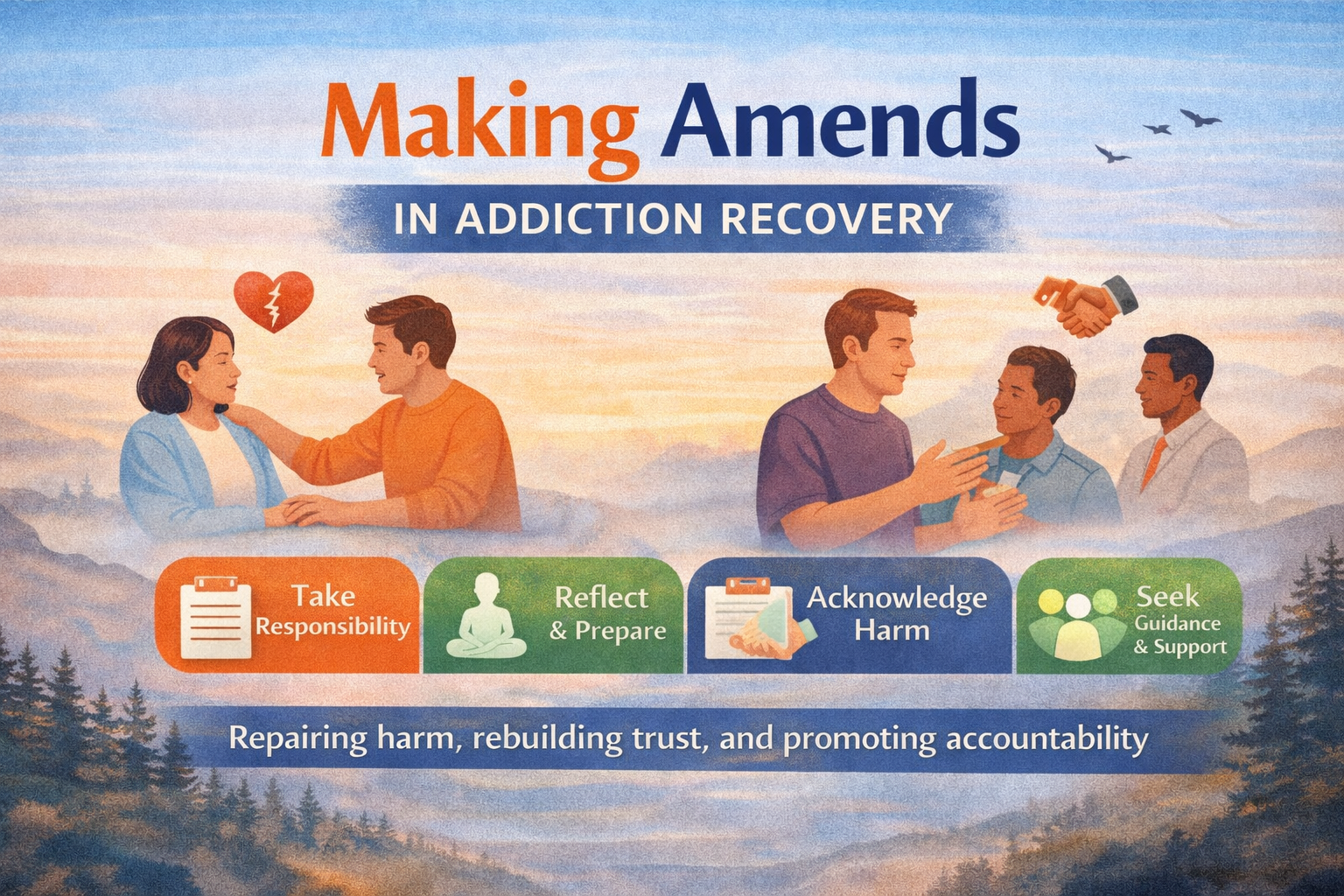
Making amends is a vital step in addiction recovery, focused on taking responsibility for past actions and repairing harm where possible. Addiction often damages trust, relationships, and self-worth, leaving lasting emotional and practical consequences. Making amends is not about dwelling on mistakes or seeking forgiveness, but about accountability, honesty, and meaningful change. When approached thoughtfully and safely, the amends process supports healing for both the individual in recovery and those affected by addiction.
Making Amends in Addiction Recovery: Healing Relationships and Restoring Trust
Making amends is one of the most meaningful—and challenging—parts of addiction recovery. Addiction often damages relationships, trust, and self-respect, leaving behind hurt, broken promises, and unresolved conflict. Making amends is not about erasing the past, but about taking responsibility, repairing harm where possible, and committing to healthier behavior moving forward. It is a process of accountability, humility, and growth.
Making amends begins with honesty and self-reflection. Before approaching others, individuals must acknowledge how their actions affected people emotionally, financially, or relationally. This step requires courage, as it involves facing guilt or shame without defensiveness. Recovery teaches that accountability is a strength, not a punishment.
Amends are about actions, not just apologies. Saying “I’m sorry” matters, but real amends involve changed behavior over time. This can include repaying debts, honoring commitments, respecting boundaries, or consistently showing up in healthier ways. Trust is rebuilt through consistency, not words alone.
Timing and safety are essential. Not every relationship is ready for direct amends, and in some cases, contact may cause further harm. Recovery emphasizes making amends only when it does not injure others or oneself. Sometimes amends are indirect—such as living differently, maintaining sobriety, or contributing positively to the community.
Letting go of expectations is a key part of the process. Making amends does not guarantee forgiveness or reconciliation. Others may need time, distance, or may choose not to engage. Recovery focuses on taking responsibility regardless of the outcome, allowing individuals to find peace in doing the right thing rather than controlling the response.
Making amends also includes self-forgiveness. Many people in recovery struggle with internal shame long after external damage has been addressed. Learning to forgive oneself—while still remaining accountable—helps reduce emotional burden and supports long-term healing.
When done thoughtfully and supported by therapy, peer guidance, or recovery programs, making amends becomes a powerful step toward emotional freedom. It strengthens integrity, restores dignity, and reinforces a recovery built on honesty and respect. In addiction recovery, making amends is not about fixing the past—it is about building a healthier future grounded in responsibility, compassion, and lasting change.
Self-Management Strategies for Making Amends in Addiction Recovery
Making amends in addiction recovery requires more than good intentions—it requires strong self-management skills. Addressing past harm can bring up guilt, shame, fear, and emotional discomfort, which may increase relapse risk if not managed carefully. Self-management strategies help individuals approach amends thoughtfully, safely, and in ways that support both recovery and emotional stability.
Preparation and self-reflection are essential first steps. Before making amends, individuals benefit from identifying whom they harmed, how the harm occurred, and what responsibility they can realistically take. Writing reflections, discussing plans with a sponsor or therapist, and clarifying intentions help prevent impulsive or emotionally driven actions.
Emotional regulation is critical throughout the amends process. Feelings of anxiety, anger, or shame can arise before, during, and after making amends. Self-management tools such as deep breathing, grounding techniques, journaling, and mindfulness help maintain emotional balance and reduce reactivity.
Setting realistic expectations protects recovery. Making amends does not guarantee forgiveness, reconciliation, or closure. Self-management involves focusing on accountability rather than outcomes. Letting go of expectations helps individuals stay grounded, even when responses are difficult or disappointing.
Boundary awareness is another key strategy. Not all amends should be made directly, especially if contact may cause further harm or emotional instability. Self-management includes recognizing when indirect amends—such as changed behavior, financial responsibility, or community service—are more appropriate.
Consistency in behavior is the most powerful form of amends. Long-term change requires ongoing self-management, including honoring commitments, maintaining sobriety, and responding responsibly to stress. These daily actions reinforce sincerity and rebuild trust over time.
Self-forgiveness and self-compassion support emotional resilience. Holding onto excessive shame can undermine recovery. Self-management includes acknowledging mistakes while allowing room for growth and healing.
In addiction recovery, making amends is a process, not a single event. With effective self-management strategies, individuals can navigate amends with clarity, integrity, and emotional stability—strengthening both personal recovery and healthier relationships for the future.
Family Support Strategies for Making Amends in Addiction Recovery
Making amends is a pivotal step in addiction recovery, and family support can greatly influence whether this process leads to healing or renewed conflict. Addiction often affects the entire family system—eroding trust, creating resentment, and leaving emotional wounds on all sides. When families understand how to support amends thoughtfully, they help create conditions for accountability, safety, and genuine repair.
Understanding the purpose of amends is the foundation of family support. Amends are not meant to erase the past or force forgiveness; they are about acknowledging harm and committing to healthier behavior. Families who recognize this are better able to listen without minimizing pain or rushing outcomes. This understanding reduces pressure and allows the process to unfold at a healthy pace.
Creating emotional safety is essential. Making amends can be emotionally intense for everyone involved. Families can support recovery by choosing calm, private settings, avoiding interruptions, and setting clear boundaries around respectful communication. Emotional safety allows honesty without fear of escalation or retaliation.
Listening without judgment is one of the most powerful supports families can offer. Allowing the person in recovery to take responsibility without being interrupted, lectured, or criticized reinforces accountability rather than defensiveness. Likewise, families benefit from expressing their own feelings honestly and constructively when they are ready.
Setting and respecting boundaries protects both recovery and family well-being. Families are not required to accept amends immediately or resume relationships on the same terms. Healthy boundaries—such as pacing contact or defining expectations—help rebuild trust gradually and sustainably.
Supporting change through actions, not pressure, is key. Families can reinforce amends by acknowledging consistent effort, reliability, and behavioral change over time. Trust is rebuilt through patterns, not promises. Encouragement paired with accountability strengthens long-term recovery.
Seeking family support resources benefits everyone. Family therapy, education programs, and support groups help loved ones process emotions, reduce resentment, and understand the recovery process. These resources prevent burnout and improve communication.
In addiction recovery, family support during the amends process can transform painful history into shared healing. When families respond with patience, boundaries, and understanding, making amends becomes not just an apology—but a pathway to restored trust, healthier relationships, and lasting recovery.
Community Resource Strategies for Making Amends in Addiction Recovery
Making amends in addiction recovery is a deeply personal process, but it is not meant to be done alone. Community resources provide guidance, structure, and emotional support that help individuals take responsibility for past harm while protecting their recovery. When communities offer compassionate, well-coordinated supports, making amends becomes safer, more effective, and more sustainable.
Peer recovery support services play a central role in the amends process. Sponsors, recovery coaches, and peer specialists help individuals prepare for amends by clarifying intentions, practicing communication, and managing expectations. Lived experience guidance reduces fear and helps individuals approach amends with humility and accountability.
Therapeutic and counseling services provide a safe space to process guilt, shame, and anxiety related to past harm. Individual therapy, trauma-informed care, and group counseling help individuals understand the impact of their actions and develop emotionally regulated approaches to repair. These services are especially important when amends involve complex family dynamics or past trauma.
Restorative justice and mediation programs offer structured, facilitated environments for making amends when harm has extended beyond personal relationships. These programs focus on accountability, dialogue, and repair rather than punishment. Facilitated conversations help ensure emotional safety for all parties while supporting meaningful resolution.
Recovery community centers and mutual-help groups reinforce accountability through shared values and support. These spaces encourage honesty, reflection, and long-term behavioral change. Group discussions and educational workshops help normalize the process of amends and reduce shame.
Legal and financial assistance programs support practical amendments. Community-based legal aid, debt counseling, and employment programs help individuals address financial harm, fulfill obligations, and rebuild stability. Addressing these responsibilities reduces ongoing stress and reinforces integrity.
Effective community strategies emphasize coordination and ethics. Professionals help individuals determine appropriate timing, whether direct or indirect amends are safest, and how to proceed without causing further harm. This guidance protects both recovery and the well-being of those affected.
In addiction recovery, community resources transform making amends from an isolated burden into a supported process of accountability and healing. By providing structure, compassion, and practical assistance, communities help individuals repair harm, restore dignity, and move forward in recovery with purpose and integrity.
Frequently Asked Questions
Here are some common questions:
What does “making amends” mean in addiction recovery?
Making amends means taking responsibility for harm caused during active addiction and making sincere efforts to repair that harm through changed behavior, accountability, and respectful communication.
Is making amends the same as apologizing?
No. An apology is verbal, while amends involve action. True amends include consistent behavior change and responsibility over time, not just saying “I’m sorry.”
Why is making amends important in recovery?
Making amends helps reduce guilt and shame, rebuild integrity, repair relationships when possible, and support long-term emotional and psychological recovery.
Do I have to make amends to everyone I hurt?
Not always. Amends should only be made when they do not cause further harm to others or yourself. Some situations require indirect amends instead of direct contact.
What are indirect amendments?
Indirect amends involve repairing harm through actions rather than direct communication, such as living responsibly, maintaining sobriety, repaying debts, or contributing positively to the community.
When is the right time to make amends?
Timing is important. Amends should be made when emotional stability has been established and guidance from a sponsor, therapist, or recovery program is available.
What if the person I harmed doesn’t forgive me?
Forgiveness is not guaranteed. Recovery focuses on taking responsibility regardless of the outcome. Letting go of expectations protects emotional well-being.
Can making amends trigger relapse?
It can if done impulsively or without support. That’s why preparation, emotional regulation, and professional guidance are essential.
How should someone prepare to make amends?
Preparation includes self-reflection, identifying harm caused, clarifying intentions, managing emotions, and seeking guidance from recovery supports.
Can families refuse to accept amends?
Yes. Families have the right to set boundaries. Acceptance of amends may take time or may not happen at all.
How can families support the amends process?
Families can support recovery by creating a sense of emotional safety, listening without judgment, respecting boundaries, and recognizing consistent behavioral changes.
Do amends always repair relationships?
Not always. Some relationships cannot be restored, but making amends still supports personal growth and recovery.
Is self-forgiveness part of making amends?
Yes. Self-forgiveness helps release shame while maintaining accountability and supports emotional healing.
Are amends a one-time event?
No. Making amends is an ongoing process demonstrated through long-term behavior change and responsible living.
What is the main goal of making amends in recovery?
The goal is to restore integrity, reduce emotional burden, support healing, and build a healthier future grounded in accountability and change.
Conclusion
In addiction recovery, making amends is a process rooted in action, consistency, and personal growth. Whether amends lead to reconciliation or not, taking responsibility restores integrity and reduces the emotional burden of guilt and shame. With self-management skills, family understanding, and community support, making amends becomes a pathway to emotional freedom and long-term recovery. Ultimately, it is not about fixing the past, but about building a future guided by responsibility, respect, and sustained change.
Video: