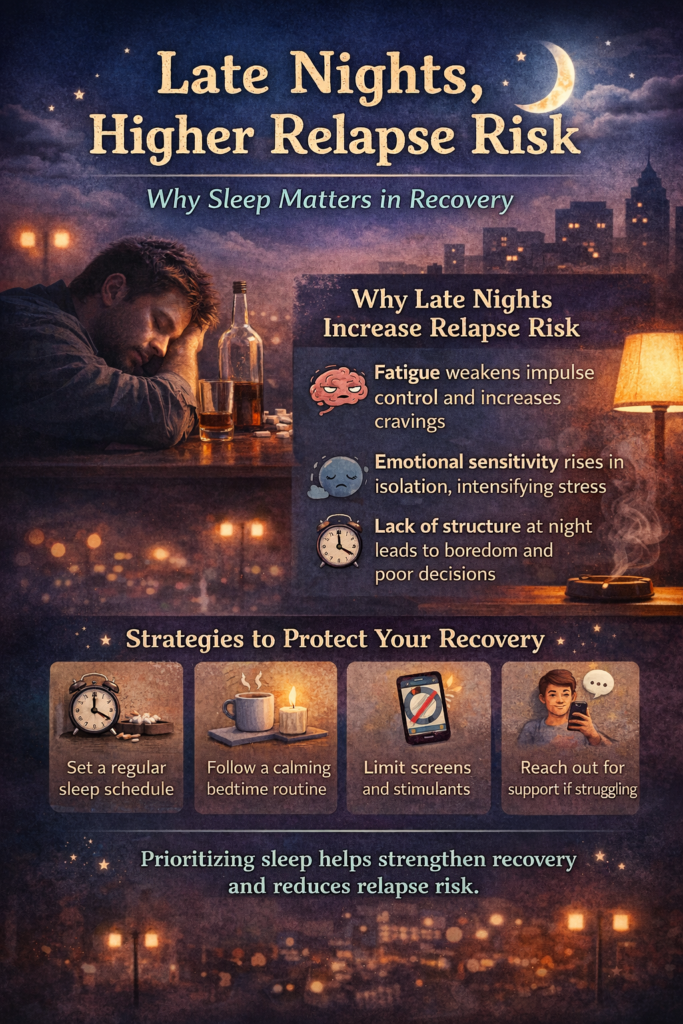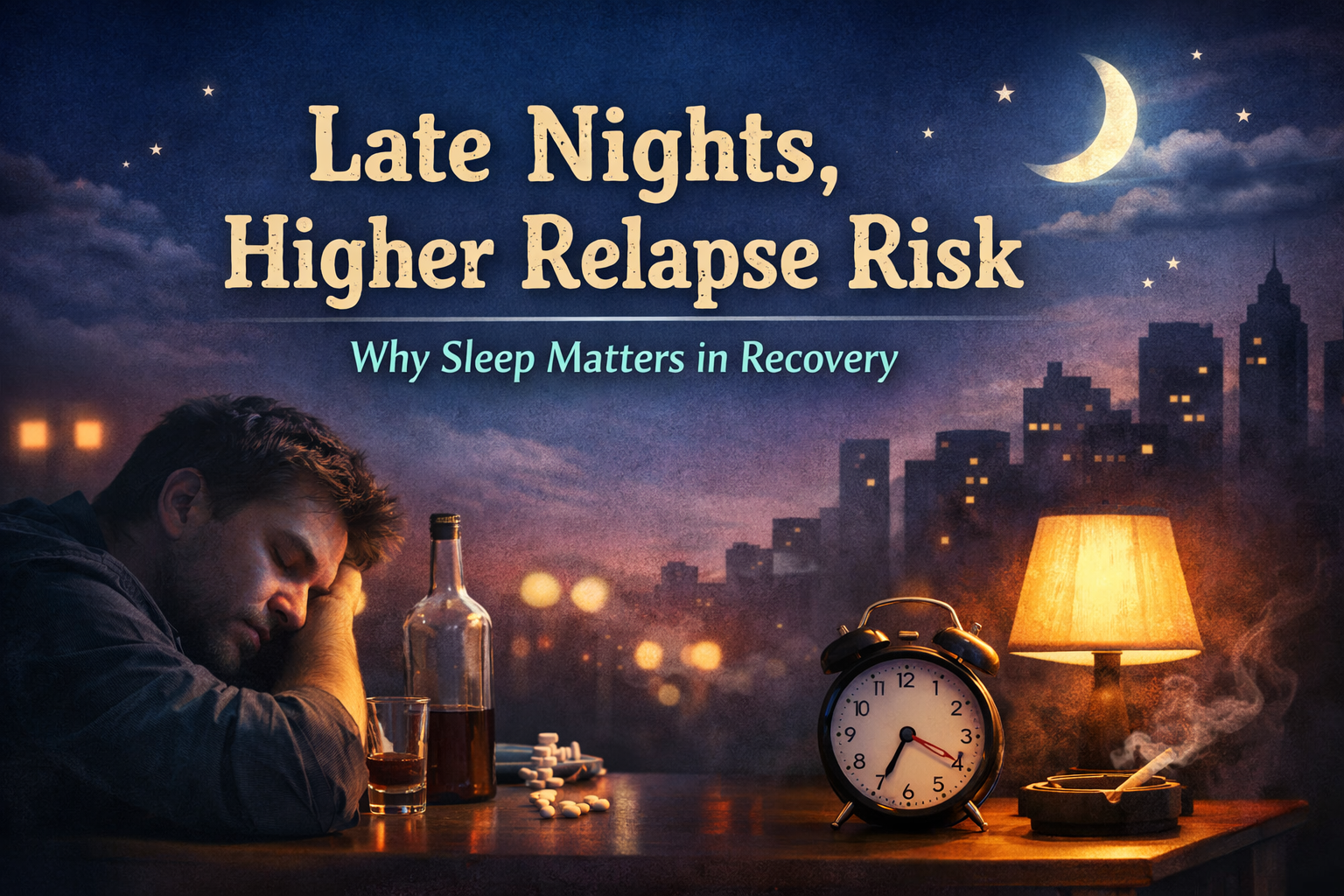
Late nights are often seen as harmless—extra time to relax, think, or escape the pressures of the day. However, in the context of recovery, these hours can become a period of increased vulnerability. As fatigue sets in, the brain’s ability to regulate emotions and control impulses weakens, while cravings for immediate relief tend to grow stronger. Combined with isolation and a lack of structure, late-night environments can quietly increase the risk of relapse. Understanding this connection is essential for recognizing how seemingly small habits, like staying up late, can significantly impact long-term recovery.
Late Nights, Higher Relapse Risk: Why Sleep Matters in Recovery
Recovery is often thought of in terms of major decisions—avoiding substances, attending support meetings, and building healthier habits. However, one of the most overlooked factors in maintaining recovery is sleep. Late nights and irregular sleep patterns can quietly undermine progress, increasing vulnerability to cravings and relapse. What may seem like harmless extra hours awake can actually have significant effects on the brain and behavior.
The Brain on Sleep Deprivation
Sleep is essential for cognitive functioning, emotional regulation, and decision-making. When the brain is deprived of rest, the prefrontal cortex—the area responsible for impulse control and rational thinking—becomes less effective. At the same time, the brain’s reward system becomes more sensitive to immediate gratification.
This imbalance creates a perfect storm:
- Reduced self-control
- Increased impulsivity
- Stronger cravings for quick rewards
In recovery, where resisting urges is critical, this combination can significantly raise the risk of relapse.
Why Late Nights Are Especially Risky
The nighttime environment itself can amplify vulnerability. Late hours are often associated with:
- Isolation and fewer distractions
- Increased fatigue and emotional sensitivity
- Less structure and accountability
Without the routines and support systems present during the day, individuals may find it harder to manage urges. The mind becomes more susceptible to negative thinking patterns, making old habits feel more appealing.
The Link Between Fatigue and Cravings
Fatigue doesn’t just make you tired—it changes how you think and feel. When exhausted, the brain seeks quick relief, often through substances or other rewarding behaviors. This is because the brain is trying to compensate for low energy and emotional strain.
Additionally, lack of sleep disrupts stress hormones, making individuals feel more overwhelmed and less capable of coping—two key factors that can trigger relapse.
Disrupted Routines and Recovery Stability
Recovery thrives on consistency. Regular sleep patterns help reinforce daily structure, which supports stability and predictability. Late nights, on the other hand, can:
- Disrupt morning routines
- Increase missed responsibilities or appointments
- Create a cycle of exhaustion and poor decision-making
Over time, this instability can weaken the foundation of recovery.
Strategies to Protect Your Recovery
Protecting sleep is protecting recovery. Some practical strategies include:
- Establishing a consistent sleep schedule (going to bed and waking up at the same time daily)
- Creating a nighttime routine to signal the brain it’s time to wind down
- Limiting screen time and stimulants before bed
- Planning evening activities that promote relaxation, not stimulation
Small adjustments in sleep habits can lead to significant improvements in emotional balance and self-control.
A Critical but Overlooked Factor
Sleep is not just rest—it is a biological reset that strengthens the brain’s ability to make healthy choices. Late nights may seem harmless in the moment, but over time, they can erode the mental resilience needed for recovery.
In summary, recovery is built on more than just avoiding substances—it depends on caring for the mind and body as a whole. By prioritizing sleep and recognizing the risks of late-night vulnerability, individuals can strengthen their recovery and reduce the likelihood of relapse. In the journey toward healing, sometimes the most powerful step is simply getting enough rest.
Taking Back the Night: Self-Management Strategies for Understanding Late Nights and Relapse Risk
Late nights can feel harmless—extra time to think, scroll, or unwind—but in recovery, they often create a hidden vulnerability. The combination of fatigue, reduced structure, and increased emotional sensitivity can significantly raise the risk of relapse. Understanding this connection is the first step; the next is learning how to manage it effectively through self-awareness and intentional habits.
Recognizing Your Personal Risk Window
Self-management begins with awareness. For many individuals in recovery, late-night hours become a high-risk period where cravings and negative thoughts intensify.
Ask yourself:
- What time do I feel most vulnerable?
- What thoughts or emotions tend to show up at night?
- Am I alone, bored, or overwhelmed during these hours?
Identifying this “risk window” allows you to prepare rather than react.
Tracking Patterns and Triggers
Keeping a simple log of sleep habits, mood, and cravings can reveal important connections. You may notice patterns such as:
- Increased urges after poor sleep
- Stronger cravings when staying up past a certain time
- Emotional triggers (stress, loneliness) that appear at night
This awareness transforms late nights from unpredictable to understandable.
Setting Protective Boundaries Around Sleep
One of the most powerful self-management tools is maintaining a consistent sleep schedule. Creating consistent boundaries helps reduce vulnerability.
Effective strategies include:
- Setting a regular bedtime and wake time
- Using alarms or reminders to wind down
- Limiting stimulating activities late at night (social media, intense conversations)
Structure reduces decision fatigue and supports better self-control.
Interrupting Nighttime Thought Patterns
Late at night, the mind often drifts toward negative or impulsive thinking. Learning to interrupt these patterns is key.
Try:
- Challenging thoughts (“Will this help me tomorrow?”)
- Redirecting attention to calming activities (reading, music, breathing exercises)
- Practicing grounding techniques to stay present
These tools help create distance between urge and action.
Creating a Night Routine That Supports Recovery
Replacing unstructured late-night time with intentional habits can make a significant difference. A supportive routine might include:
- Light stretching or relaxation exercises
- Journaling to process the day
- Preparing for the next morning
- Turning off screens at a set time
A routine signals safety and stability to the brain, reducing the appeal of old behaviors.
Building Alternative Coping Strategies
Since cravings often increase when tired or emotionally drained, having alternatives ready is essential. Consider:
- Reaching out to a support person
- Engaging in a calming hobby
- Practicing mindfulness or meditation
The goal is not to eliminate discomfort, but to respond to it in healthier ways.
Practicing Self-Compassion During Setbacks
Not every night will go perfectly. If you stay up late or experience stronger urges, how you respond matters.
Instead of self-criticism:
- Acknowledge what happened without judgment
- Reflect on what triggered the situation
- Adjust your plan moving forward
Self-compassion helps prevent one difficult night from turning into a larger setback.
Strengthening Recovery Through Intentional Choices
Late nights do not have to be a threat to recovery—but unmanaged, they can become one. By understanding your patterns, setting boundaries, and developing supportive routines, you can turn a high-risk time into an opportunity for growth and self-control.
In summary, recovery is built on small, consistent choices. Managing your nights is one of those choices—one that can protect your progress, strengthen your resilience, and help you move forward with greater confidence and stability.
Stronger Together at Night: Family Support Strategies for Understanding Late Nights and Relapse Risk
Late nights can be one of the most vulnerable times in recovery. As fatigue sets in and structure fades, the risk of cravings and relapse can increase. While much of recovery focuses on individual effort, family support plays a crucial role in helping individuals navigate these high-risk hours. With understanding, communication, and intentional support, families can help transform late nights from a danger zone into a safer, more manageable time.
Understanding the Risk as a Family
The first step is awareness. Family members need to understand that late-night vulnerability is not about weakness—it is influenced by:
- Fatigue and reduced impulse control
- Increased emotional sensitivity
- Lack of structure and routine
Recognizing that the brain functions differently at night helps families approach the situation with empathy rather than judgment.
Encouraging Open and Honest Communication
Creating a safe space for discussion is essential. Individuals in recovery are more likely to share their struggles if they feel supported rather than criticized.
Families can:
- Ask supportive questions like, “Are nights harder for you?”
- Listen without immediately trying to fix the problem
- Validate feelings of stress, loneliness, or restlessness
Open communication builds trust and allows families to better understand specific challenges.
Establishing Supportive Evening Routines
Structure is a powerful protective factor. Families can help create a consistent and calming nighttime routine that reduces risk.
This might include:
- Shared activities like watching a show, talking, or playing a game
- Encouraging a regular bedtime
- Creating a calm, low-stimulation environment in the evening
A predictable routine helps signal safety and reduces the likelihood of impulsive decisions.
Reducing Isolation During High-Risk Hours
Isolation often increases at night, which can intensify cravings and negative thinking. Families can help by:
- Being present and available for conversation
- Checking in during vulnerable times
- Encouraging connection rather than withdrawal
Even small moments of interaction can make a significant difference.
Supporting Healthy Sleep Habits
Families can reinforce the importance of sleep by promoting habits that support rest, such as:
- Limiting late-night distractions or stimulating activities
- Encouraging winding-down routines
- Respecting quiet time and sleep schedules
Better sleep strengthens emotional regulation and decision-making, both of which are critical for recovery.
Responding Without Judgment
If a loved one struggles during late-night hours, how the family responds matters. Criticism or frustration can increase shame and push the individual further into isolation.
Instead:
- Focus on understanding rather than blaming
- Offer reassurance and encouragement
- Emphasize progress, not perfection
Supportive responses create a safer space for growth and honesty.
Working as a Team
Recovery is not an individual journey—it is a shared process. Families who approach late-night challenges as a team can:
- Problem-solve together
- Adjust routines when needed
- Celebrate improvements and small wins
This collaborative approach reduces pressure on the individual and strengthens the support system.
A Safer Night, A Stronger Recovery
Late nights may present increased risks, but they also offer an opportunity for connection, understanding, and support. With the right family strategies in place, these vulnerable hours can become a time of stability rather than struggle.
In summary, recovery is strengthened through relationships. When families show up with empathy, structure, and consistency—especially during the hardest hours—they become a powerful force in reducing relapse risk and supporting long-term healing.
Community Matters: Resource Strategies for Understanding Late Nights and Relapse Risk
Late nights can quietly become one of the most vulnerable periods in recovery. As structure fades and fatigue increases, the risk of cravings and relapse rises. While individual and family strategies are essential, community resources provide an added layer of support, offering education, connection, and accountability during these high-risk hours. Tapping into these resources can help individuals better understand and manage late-night challenges.
Why Community Support Is Important at Night
Recovery does not happen in isolation. Community resources help fill the gaps that often appear during late hours by providing:
- Access to support when personal networks may be unavailable
- Structured environments that reduce idle, unplanned time
- Opportunities for connection instead of isolation
These supports are especially valuable when individuals feel most vulnerable.
Evening and Late-Night Support Groups
Many recovery programs offer meetings during evening or nighttime hours—precisely when risk tends to increase. These groups provide:
- A safe space to share thoughts and struggles
- Real-time support during high-risk moments
- A sense of accountability and routine
Attending or even virtually joining a late-night meeting can interrupt the cycle of cravings and provide immediate reinforcement of recovery goals.
24/7 Helplines and Crisis Support
When urges feel overwhelming, immediate access to help can make a critical difference. Community-based helplines and crisis services offer:
- Confidential, judgment-free support
- Guidance through intense cravings or emotional distress
- Someone to talk to during moments of isolation
Knowing that help is always available can reduce feelings of being alone at night.
Online Communities and Recovery Platforms
Digital resources have expanded access to support beyond physical locations. Online forums, apps, and virtual recovery groups allow individuals to:
- Connect with others at any time of night
- Share experiences and coping strategies
- Track habits, sleep, and triggers
These platforms are especially helpful for maintaining connections when in-person options are limited.
Structured Evening Programs
Some communities offer structured nighttime activities focused on wellness and recovery, such as:
- Workshops on stress management or sleep hygiene
- Group fitness or relaxation sessions
- Educational programs about relapse prevention
These activities provide a healthy alternative to unstructured late-night time and reinforce positive routines.
Access to Professional Support
Community resources often include access to professionals who can help individuals understand the link between late nights and relapse risk. Therapists, counselors, and behavioral specialists can:
- Identify personal triggers tied to nighttime vulnerability
- Develop individualized coping strategies
- Address underlying sleep or mental health concerns
Professional guidance adds depth and personalization to recovery efforts.
Reducing Stigma and Encouraging Engagement
Communities that openly discuss recovery challenges—like late-night vulnerability—help normalize the experience. This reduces stigma and encourages individuals to seek help without shame.
When people feel understood and supported, they are more likely to engage with available resources and remain committed to their recovery journey.
Taking Advantage of What’s Available
Getting started with community resources can be simple:
- Attend an evening or virtual support meeting
- Save a helpline number for quick access
- Join an online recovery group
- Explore local wellness or education programs
Each step builds a stronger safety net for late-night hours.
A Connected Approach to Safer Nights
Late nights may increase relapse risk, but they do not have to define the outcome. With the support of community resources, individuals can replace isolation with connection and vulnerability with structure.
In summary, recovery is strengthened through connection. By utilizing community-based strategies, individuals can better understand their nighttime challenges and develop the tools needed to navigate them successfully—turning late nights into opportunities for resilience rather than risk.
Frequently Asked Questions
Here are some common questions:
1. Why are late nights risky in recovery?
Answer:
Late nights increase relapse risk because fatigue weakens the brain’s ability to control impulses and make rational decisions. At the same time, cravings for immediate relief tend to increase, making it harder to resist urges.
2. How does sleep deprivation affect decision-making?
Answer:
Lack of sleep reduces activity in the prefrontal cortex, the part of the brain responsible for judgment and self-control. This makes individuals more impulsive and more likely to seek short-term rewards, including substance use.
3. Why do cravings feel stronger at night?
Answer:
Cravings often feel stronger at night due to a combination of fatigue, emotional vulnerability, and fewer distractions. The brain seeks quick comfort, and without daytime structure, urges can intensify.
4. Does isolation at night increase relapse risk?
Answer:
Yes. Nighttime often brings less social interaction and support, which can increase feelings of loneliness or negative thinking. Isolation can make it easier for cravings to grow without interruption.
5. What role does routine play in preventing relapse?
Answer:
Routine provides structure and stability, which are essential in recovery. Consistent sleep and daily habits reduce decision fatigue and help the brain function more effectively, lowering relapse risk.
6. Can staying up late occasionally still be harmful?
Answer:
Occasional late nights may not always lead to relapse, but repeated patterns of poor sleep can increase vulnerability over time. Consistency in sleep is key to maintaining emotional and cognitive balance.
7. How does fatigue influence emotional regulation?
Answer:
Fatigue makes it harder to manage stress, frustration, and negative emotions. This can lead to increased irritability and a stronger desire to escape discomfort, which may trigger relapse behaviors.
8. What are common signs that late nights are affecting recovery?
Answer:
Signs include:
- Increased cravings at night
- Poor decision-making
- Mood swings or irritability
- Skipping routines or responsibilities
- Feeling more vulnerable or overwhelmed
9. What are effective ways to reduce late-night relapse risk?
Answer:
Helpful strategies include:
- Maintaining a consistent sleep schedule
- Creating a calming bedtime routine
- Avoiding stimulating activities before bed
- Reaching out to support systems during vulnerable times
- Planning structured evening activities
10. Should someone avoid being awake at night entirely?
Answer:
Not necessarily, but it’s important to be mindful. If being awake late is unavoidable, having a structured plan and support system in place can help reduce risk.
11. How can support systems help during late-night hours?
Answer:
Support systems—such as family, friends, or recovery groups—can provide accountability, encouragement, and connection. Even a simple check-in can help interrupt cravings and reduce isolation.
12. Can improving sleep really strengthen recovery?
Answer:
Yes. Quality sleep improves mood, decision-making, impulse control, and stress management—all of which are critical for maintaining recovery and reducing relapse risk.
Conclusion
Late nights are more than just a disruption to sleep—they can influence the brain, emotions, and decision-making in ways that heighten relapse risk. By recognizing the role of fatigue, reduced self-control, and nighttime isolation, individuals can take proactive steps to protect their recovery. Prioritizing rest, creating structure, and building supportive routines can transform late nights from a period of risk into one of stability. Ultimately, recovery is strengthened not only by the choices made during the day but also by how individuals care for themselves during the most vulnerable hours of the night.
Video: