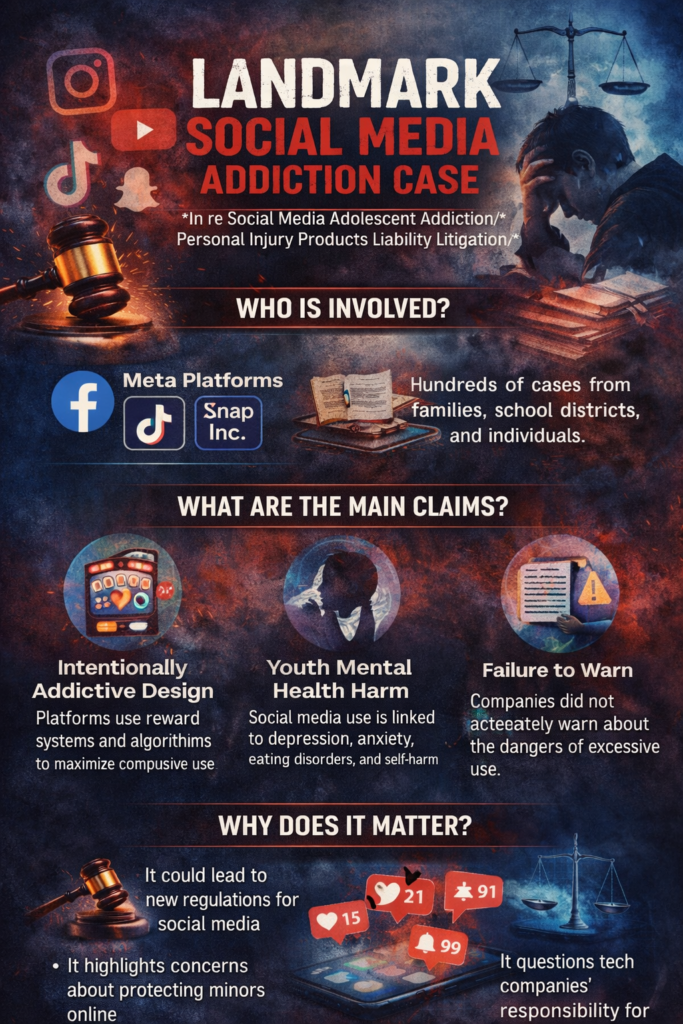
The rise of social media has transformed the way people communicate, share information, and interact with the world. Platforms such as Instagram, TikTok, Snapchat, and YouTube have become a daily part of life for millions of users, especially adolescents. However, growing concerns about the potential addictive nature of these platforms have led to increased public scrutiny and legal action. One of the most significant legal developments is the case In re Social Media Adolescent Addiction/Personal Injury Products Liability Litigation, which combines hundreds of lawsuits alleging that major technology companies intentionally designed their platforms to encourage excessive and compulsive use. This landmark case has sparked an important debate about the responsibility of technology companies and the impact of social media on mental health.
The Social Media Reckoning: Landmark Cases Linking Platforms to Addiction
Over the past decade, social media platforms have become deeply embedded in daily life. Billions of people log into apps every day to communicate, consume news, and share personal moments. But alongside these benefits, researchers, parents, and policymakers have raised serious concerns about social media addiction, especially among adolescents.
These concerns have increasingly moved from academic studies into the courtroom. Several landmark lawsuits against major technology companies argue that social media platforms are intentionally designed to be addictive, harming users’ mental health. These cases represent a turning point in how society may regulate digital platforms and protect young users.
The Rise of Social Media Addiction Concerns
Social media addiction is not formally classified as a disorder in the same way as substance addiction, but many psychologists argue it shares similar behavioral patterns. These include:
- Compulsive checking of apps
- Withdrawal-like symptoms when not online
- Loss of control over time spent on platforms
- Negative impacts on sleep, relationships, and mental health
Platforms such as Instagram, TikTok, Snapchat, and YouTube rely on algorithmic feeds, notifications, and infinite scrolling to maximize user engagement. Critics argue that these design features function similarly to reward loops in gambling systems, reinforcing repetitive behavior through intermittent rewards such as likes, comments, and new content.
The Landmark Litigation: In re Social Media Adolescent Addiction/Personal Injury Products Liability Litigation
One of the most significant legal developments is the consolidated federal case known as
In re Social Media Adolescent Addiction/Personal Injury Products Liability Litigation.
Filed in 2022 and centralized in federal court in California, the case combines hundreds of lawsuits filed by families, school districts, and individuals who claim social media platforms harmed young users.
The lawsuits target companies, including:
- Meta Platforms (owner of Instagram and Facebook)
- TikTok
- Snap Inc.
- Google (owner of YouTube)
Plaintiffs argue these companies knowingly designed products to maximize compulsive use among minors, despite internal research showing potential mental health risks.
Key Allegations in the Case
The lawsuits center on several major claims:
1. Intentional Addictive Design
Plaintiffs argue platforms use psychological techniques—such as variable rewards, algorithmic personalization, and endless feeds—to create compulsive engagement similar to addiction.
2. Harm to Youth Mental Health
Families claim excessive social media use contributed to:
- depression
- anxiety
- eating disorders
- sleep deprivation
- self-harm
Several lawsuits involve tragic cases where parents argue that social media content played a role in a child’s suicide or mental health crisis.
3. Failure to Warn Users
Another central argument is that companies were aware of the risks but did not adequately warn users or parents about the potential harms of prolonged social media use.
Why This Case Is Considered “Landmark”
Legal experts describe this litigation as potentially historic for several reasons.
Scale of the Lawsuits
Hundreds of cases have been consolidated into one federal multidistrict litigation (MDL), making it one of the largest legal challenges to social media companies.
Internal Evidence
Whistleblower reports and leaked research have revealed that some platforms were aware that certain features could negatively impact teenage mental health.
Potential Industry Regulation
If the plaintiffs succeed, the case could lead to:
- design regulations for social media platforms
- stronger age protections for minors
- warning labels or usage limits
- increased liability for tech companies
Broader Legal and Social Implications
The litigation reflects a broader societal shift. Just as lawsuits against tobacco companies in the 1990s reshaped public health policy, legal action against social media companies may redefine how digital platforms are regulated.
Policymakers are already proposing new legislation addressing:
- algorithm transparency
- youth data protection
- screen time limits for minors
Courts now face a difficult question: Should technology companies be held responsible for addictive design features that contribute to psychological harm?
Conclusion
The ongoing litigation in In re Social Media Adolescent Addiction represents a pivotal moment in the relationship between technology, law, and public health. As evidence emerges and courts weigh responsibility, the outcomes could reshape how social media platforms are designed and how society addresses behavioral addiction in the digital age.
Whether the courts ultimately hold social media companies liable or not, one thing is clear: the debate over addiction, technology, and responsibility is only beginning.
Self-Management Strategies for Understanding the Landmark Social Media Addiction Case
The growing concern over social media addiction has moved beyond academic research and public debate into the legal system. One of the most significant legal actions is the case In re Social Media Adolescent Addiction/Personal Injury Products Liability Litigation, which brings together hundreds of lawsuits alleging that social media platforms are designed in ways that encourage addictive behaviors, particularly among adolescents.
Understanding a complex legal case like this can be challenging. The case involves legal terminology, psychological concepts about addiction, and technological design practices used by major companies such as Meta Platforms, TikTok, Snap Inc., and Google. To make sense of these issues, individuals can use self-management strategies—intentional approaches that help organize information, regulate learning, and build deeper understanding.
This blog explores practical strategies that can help readers better understand the landmark social media addiction litigation and its broader implications.
Why Self-Management Matters When Studying Complex Legal Issues
Legal cases involving technology and addiction combine multiple fields of study, including psychology, law, and digital media design. Without structured strategies, it can be easy to become overwhelmed by technical language and the large amount of information involved.
Self-management strategies allow learners to:
- Organize complex information
- Reflect on how different concepts connect
- Monitor their own understanding
- Apply knowledge to real-world issues
These skills are especially important when analyzing topics such as social media addiction, which involve both behavioral science and legal accountability.
Strategy 1: Break the Case into Key Components
One effective self-management technique is chunking information into smaller sections. Instead of trying to understand the entire case at once, focus on the main elements:
- Who is involved?
Technology companies, families, adolescents, and the courts. - What is being claimed?
Plaintiffs argue that social media platforms intentionally use design features that promote addictive behaviors. - What evidence is presented?
Internal company research, psychological studies, and user experiences. - What are the potential outcomes?
Possible regulation, financial damages, or changes in platform design.
Breaking the case into these categories makes the legal process easier to analyze and remember.
Strategy 2: Connect the Case to Addiction Concepts
Understanding addiction principles helps clarify why the lawsuit is significant. Many researchers suggest that social media platforms use design features similar to behavioral reinforcement systems.
For example, platforms such as Instagram, TikTok, and Snapchat include:
- Infinite scrolling
- Algorithm-based recommendations
- Notifications and alerts
- Likes and social rewards
These features can trigger dopamine-related reward responses, encouraging users to repeatedly check their devices. When studying the case, connecting these features to addiction psychology helps explain the legal arguments being made.
Strategy 3: Use Reflective Learning
Reflective learning is another powerful self-management approach. After reading about the case, ask questions such as:
- How do platform design choices influence user behavior?
- Should companies be responsible for addictive technology features?
- How does this case compare to lawsuits against other industries, such as tobacco or gambling?
Writing short reflections or discussion notes can deepen understanding and encourage critical thinking about digital responsibility.
Strategy 4: Monitor Your Own Media Habits
A unique aspect of studying social media addiction is that most people are also active users of these platforms. A useful self-management strategy is to observe personal behavior when using social media.
Consider tracking:
- Time spent on apps
- Frequency of checking notifications
- Emotional reactions after scrolling
Self-awareness can help individuals better understand the addictive patterns being discussed in the lawsuit and connect academic knowledge to real-life experiences.
Strategy 5: Stay Informed with Credible Sources
Legal cases evolve over time, and new evidence may emerge as courts review arguments and testimony. Effective self-management includes following credible information sources, such as academic research, legal analysis, and reputable news coverage.
Keeping up to date on developments in the case helps build a more complete understanding of how courts are addressing social media addiction and technology regulation.
Conclusion
The landmark case In re Social Media Adolescent Addiction Litigation represents a significant moment in the intersection of technology, psychology, and law. As courts examine whether social media companies should be held accountable for potentially addictive design practices, the outcome could reshape how digital platforms operate.
Using self-management strategies—such as breaking down complex information, connecting concepts to addiction science, reflecting on personal media habits, and staying informed—can help individuals better understand both the legal case and the broader conversation about responsible technology use.
In a world increasingly shaped by digital platforms, developing these strategies not only improves academic understanding but also encourages healthier relationships with technology.
Family Support Strategies for Understanding the Landmark Social Media Addiction Case
As social media becomes a central part of everyday life, families are increasingly concerned about how digital platforms affect mental health and behavior—especially for adolescents. These concerns have reached the legal system through the landmark case In re Social Media Adolescent Addiction/Personal Injury Products Liability Litigation. This case consolidates hundreds of lawsuits claiming that social media platforms were intentionally designed to encourage addictive use among young people.
The litigation involves several major technology companies, including Meta Platforms, TikTok, Snap Inc., and Google, whose platforms—such as Instagram, TikTok, Snapchat, and YouTube—are used by millions of teenagers worldwide.
Because the case deals with complex issues related to technology, addiction, and mental health, families can benefit from supportive strategies that help them understand the legal issues while also encouraging healthy technology use. Family support plays an important role in creating awareness, fostering open discussion, and guiding young people toward balanced digital habits.
Why Family Support Matters
Family environments strongly influence how adolescents interpret and respond to technology. When families actively discuss topics such as social media use and addiction, young people are more likely to develop critical thinking skills about digital behavior.
Family support strategies help:
- Increase awareness of social media risks
- Encourage healthy technology habits
- Improve communication between parents and adolescents
- Promote informed discussions about digital responsibility
By working together, families can better understand why cases like the social media addiction litigation are significant and what they may mean for the future of technology.
Strategy 1: Encourage Open Conversations About Social Media
One of the most important family support strategies is open communication. Parents and guardians can initiate conversations about how social media platforms operate and why some experts believe certain features may contribute to addictive behaviors.
Discussions may include topics such as:
- Why social media apps are designed to keep users engaged
- How notifications, likes, and algorithm-driven content influence behavior
- The mental health impacts associated with excessive social media use
Open dialogue allows adolescents to ask questions and express their experiences with social media, creating a learning environment rather than a restrictive one.
Strategy 2: Learn About the Legal Case Together
Another supportive approach is to explore the case as a family learning experience. Parents and teens can read news articles or educational resources about the lawsuit and discuss key questions together, such as:
- What are the plaintiffs claiming in the lawsuit?
- Why are technology companies being held accountable?
- How might the case influence social media regulation in the future?
This shared learning process helps families develop a deeper understanding of how social media design and public health concerns intersect with legal responsibility.
Strategy 3: Promote Digital Literacy
Digital literacy involves understanding how technology works and how it influences behavior. Families can support this by teaching adolescents about:
- Algorithms and content recommendation systems
- Data collection and targeted advertising
- Psychological design strategies used in digital platforms
When young people understand how platforms operate, they are better equipped to recognize persuasive design features and make more informed choices about their social media use.
Strategy 4: Establish Healthy Technology Boundaries
Families can also support healthy digital habits by establishing clear boundaries around social media use. These boundaries may include:
- Setting daily screen-time limits
- Encouraging device-free times during meals or before bedtime
- Promoting activities that do not involve screens
These practices do not necessarily eliminate social media use; instead, they help create a balanced relationship with technology.
Strategy 5: Support Emotional Well-Being
Since the landmark case focuses on the potential mental health impacts of social media, families should also prioritize emotional support. Adolescents may experience stress, social comparison, or pressure from online interactions.
Supportive actions include:
- Encouraging open discussions about online experiences
- Recognizing signs of stress or excessive screen use
- Seeking professional guidance if mental health concerns arise
A supportive family environment can help young people navigate digital challenges while maintaining positive self-esteem and well-being.
Conclusion
The landmark case In re Social Media Adolescent Addiction Litigation highlights growing concerns about how digital platforms influence behavior and mental health. While courts examine the legal responsibility of technology companies, families also play a critical role in helping adolescents understand these issues.
Through open communication, shared learning, digital literacy, healthy boundaries, and emotional support, families can better navigate the challenges associated with social media use. These strategies not only help individuals understand the legal case but also promote healthier relationships with technology in an increasingly connected world.
Community Resource Strategies for Understanding the Landmark Social Media Addiction Case
Concerns about social media addiction have become a growing public health issue, particularly among adolescents. These concerns have led to major legal actions, including the landmark case In re Social Media Adolescent Addiction/Personal Injury Products Liability Litigation. This case combines hundreds of lawsuits alleging that social media platforms were intentionally designed to encourage addictive behavior in young users.
The litigation involves several major technology companies, including Meta Platforms, TikTok, Snap Inc., and Google. Platforms owned or operated by these companies—such as Instagram, TikTok, Snapchat, and YouTube—are widely used by adolescents and young adults worldwide.
Because the case involves legal, technological, and psychological concepts, community resources can play an important role in helping individuals better understand the issues involved. Schools, public health organizations, libraries, and community programs can provide valuable information and support to educate the public about social media addiction and its broader societal implications.
The Role of Community Resources
Community resources serve as important educational and support systems for individuals and families navigating complex social issues. When addressing topics such as social media addiction and digital well-being, community organizations help bridge the gap between academic research, legal developments, and everyday life.
Community resources can help people:
- Access reliable information about social media addiction
- Learn about current legal and public health discussions
- Develop digital literacy and critical thinking skills
- Connect with professionals who specialize in mental health or technology use
By providing structured programs and educational opportunities, communities can promote awareness and understanding of the landmark litigation and its potential impact.
Strategy 1: Educational Programs and Workshops
Community centers, schools, and nonprofit organizations often host educational workshops that focus on digital wellness and responsible technology use. These programs may include presentations from psychologists, legal experts, or technology specialists who explain how social media platforms function and why addiction concerns have become a legal issue.
Workshops may cover topics such as:
- The psychology of social media engagement
- Algorithm-driven content and its influence on behavior
- The legal arguments behind social media addiction lawsuits
- Strategies for responsible technology use
Educational events create opportunities for community members to ask questions and engage in meaningful discussions about digital technology and its effects.
Strategy 2: Public Libraries as Information Hubs
Public libraries play a key role in providing access to credible resources about emerging social issues. Many libraries offer books, research databases, and community lectures that explore topics such as technology ethics, digital addiction, and internet safety.
Libraries can support community learning by:
- Hosting informational sessions about social media use
- Providing access to academic research and legal case summaries
- Offering digital literacy training programs
- Creating community discussion groups on technology and mental health
These services help individuals understand the broader context of the social media addiction litigation and encourage informed public dialogue.
Strategy 3: School-Based Awareness Programs
Schools are an essential community resource for educating young people about digital responsibility. Teachers and school counselors can incorporate discussions about social media addiction into health education or technology classes.
School programs may include:
- Lessons on online behavior and mental health
- Discussions about the legal responsibilities of technology companies
- Guidance on managing screen time and social media use
- Peer-led initiatives that encourage healthy digital habits
By integrating these topics into educational curricula, schools help students understand both the benefits and potential risks associated with social media platforms.
Strategy 4: Mental Health and Counseling Services
Community mental health organizations can provide professional support for individuals who struggle with excessive social media use or related emotional challenges. Counselors and psychologists can help people develop healthier relationships with technology while addressing issues such as anxiety, depression, or social comparison linked to online interactions.
Community mental health services may offer:
- Individual counseling for technology-related stress
- Group discussions on digital well-being
- Workshops for parents and adolescents about online behavior
- Educational resources about behavioral addiction
These services support both prevention and recovery by promoting awareness and emotional well-being.
Strategy 5: Community Discussions and Advocacy
Community forums and advocacy groups also play an important role in helping the public understand the broader implications of the social media addiction case. Public discussions can encourage dialogue about technology regulation, corporate responsibility, and youth protection policies.
Community advocacy efforts may involve:
- Public forums on technology and public health
- Partnerships with local schools and organizations
- Educational campaigns about responsible social media use
- Encouraging civic engagement around technology policy
These conversations allow communities to participate in shaping how society addresses digital addiction and technology accountability.
Conclusion
The landmark case In re Social Media Adolescent Addiction Litigation highlights growing concerns about the relationship between social media platforms, user behavior, and mental health. While courts evaluate the legal responsibilities of technology companies, communities also play a crucial role in educating the public about these complex issues.
Through educational programs, library resources, school initiatives, mental health services, and community discussions, local organizations can help individuals better understand the case and its broader implications. By using community resources effectively, individuals and families can develop stronger digital literacy skills and promote healthier relationships with technology in an increasingly connected world.
Frequently Asked Questions
Here are some common questions:
1. What is the landmark social media addiction case?
The landmark case is known as In re Social Media Adolescent Addiction/Personal Injury Products Liability Litigation. It is a large federal lawsuit that combines hundreds of cases filed by families, individuals, and school districts who claim that social media platforms were designed in ways that encourage addictive behavior, particularly among teenagers.
2. Which companies are involved in the lawsuit?
The case involves several major technology companies, including Meta Platforms, TikTok, Snap Inc., and Google. These companies operate widely used social media platforms and are being sued for allegedly designing features that encourage excessive use.
3. Which social media platforms are part of the case?
The lawsuit focuses on popular platforms such as Instagram, TikTok, Snapchat, and YouTube. Plaintiffs argue that certain design features on these platforms may contribute to compulsive use among young users.
4. Why do people say social media can be addictive?
Researchers suggest that social media apps use engagement features like notifications, likes, and algorithm-based recommendations. These features can trigger reward responses in the brain, encouraging users to repeatedly check their devices and spend more time on the platforms.
5. What are the main claims in the lawsuit?
The lawsuits generally claim that social media companies:
- Designed platforms with addictive features
- Failed to adequately warn users about potential mental health risks
- Contributed to psychological harm among adolescents
Some plaintiffs also argue that excessive use contributed to depression, anxiety, and other mental health challenges.
6. Why is this case considered a landmark case?
The case is considered a landmark because it could change how courts and governments treat social media companies. If the plaintiffs succeed, the case could influence future regulations on digital safety, platform design, and protections for young users.
7. How could the case affect social media companies?
If courts find the companies responsible, the outcome could lead to:
- New regulations for social media design
- Increased safety features for younger users
- Financial penalties or settlements
- Greater transparency about how algorithms work
8. Does this case mean social media will be banned?
No. The lawsuit is not about banning social media. Instead, it focuses on whether companies should be held responsible for designing platforms that may encourage harmful levels of use, especially among minors.
9. What stage is the case currently in?
The case is part of a multidistrict litigation process, in which many related lawsuits are consolidated in federal court to streamline pretrial proceedings. Courts are still reviewing evidence and legal arguments.
10. Why is this case important for society?
The case raises broader questions about the relationship between technology, mental health, and corporate responsibility. It may influence how society balances technological innovation with protecting users—particularly children and teenagers—from potential harms associated with excessive digital engagement.
Conclusion
The landmark social media addiction litigation represents a critical moment in the intersection of technology, public health, and the legal system. As courts examine the role of companies such as Meta Platforms, TikTok, Snap Inc., and Google in designing highly engaging platforms, the outcome of the case could shape future policies related to digital safety and youth protection. Beyond the courtroom, the case has increased awareness of the potential risks of excessive social media use and the importance of responsible technology design. Ultimately, this litigation may influence how society balances innovation with the need to protect users—especially young people—from the harmful effects of addictive digital environments.
Video: Major Lawsuit Proves Apps Are Deliberately Addictive #TechAccountability #DigitalJustice