Independence is often praised as a defining trait of strength, self-discipline, and personal responsibility. However, in the context of addiction, independence can take on a more complex psychological meaning. What may appear as confidence and self-reliance can sometimes reflect deeper patterns of avoidance, denial, or difficulty trusting others. Many individuals struggling with addiction hold tightly to the belief that they must handle their problems alone, which can delay or prevent them from seeking help. Understanding the psychology of independence in addiction requires looking beyond surface-level behavior to examine the emotional, cognitive, and experiential factors that shape this mindset.
The Psychology of Independence in Addiction
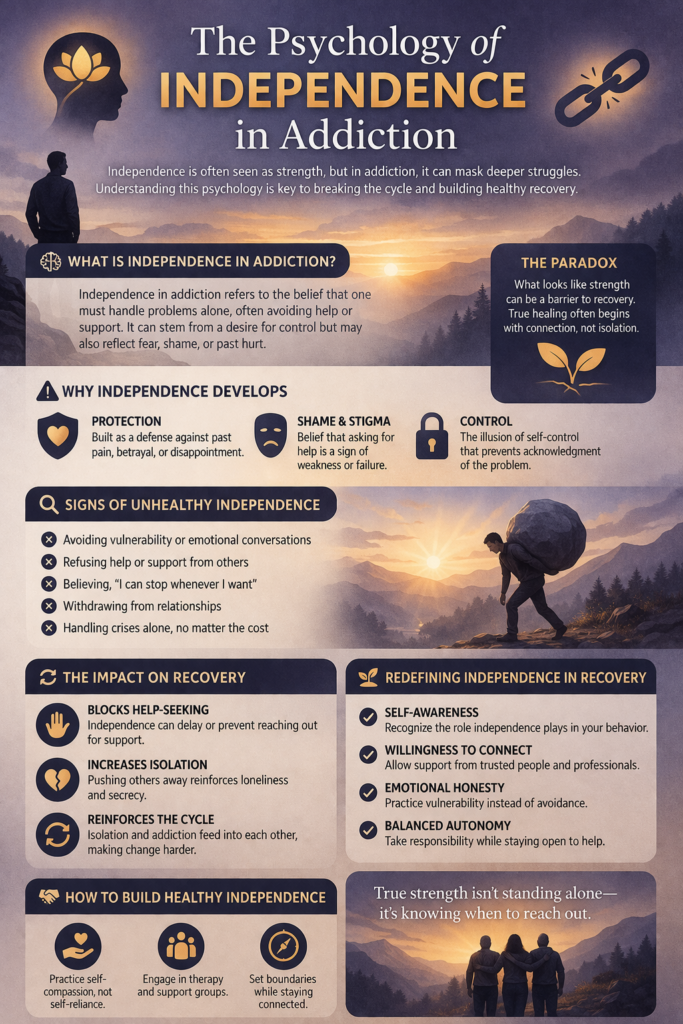
Independence is often seen as a sign of strength, reflecting resilience, self-control, and the ability to manage life on one’s own. However, in the context of addiction, independence can take on a more complex meaning. What may appear as confidence and self-sufficiency can sometimes hide deeper struggles with trust, vulnerability, and the need for support. For many individuals, the belief that they must handle everything alone can become a barrier rather than a strength.
At the center of this mindset is a strong desire for control. Individuals struggling with addiction may feel they should be able to manage their behavior without help, leading to denial or resistance to support. This belief is often shaped by past experiences, such as being let down by others or feeling judged, which reinforces self-reliance as a form of protection. In other cases, shame may play a role, making it difficult to admit the need for help. Over time, this can lead to isolation, where individuals withdraw from relationships and rely more heavily on addictive behaviors, creating a cycle that is difficult to break.
Recovery challenges this idea by redefining independence. True independence is not about doing everything alone—it involves taking responsibility while also recognizing the importance of connection and support. Building trust in others, developing emotional awareness, and learning to accept help are all essential parts of this process. By finding a balance between autonomy and connection, individuals can move toward a healthier, more sustainable form of independence.
Key Points
- Understanding Independence in Addiction
- Often viewed as a strength, but it can mask deeper struggles
- May reflect avoidance of vulnerability or trust
- Desire for Control
- Belief in handling problems alone
- Can lead to denial or resistance to help
- Psychological Roots
- Past experiences of disappointment or judgment
- Shame or fear of appearing weak
- Self-reliance as emotional protection
- Cycle of Isolation
- Withdrawal from relationships
- Increased reliance on addictive behaviors
- Reinforces both addiction and isolation
- Redefining Independence in Recovery
- Includes accepting support and guidance
- Focuses on responsibility and intentional choices
- Balances autonomy with connection
- Role of Support Systems
- Therapy, support groups, family, and community
- Provide accountability and shared understanding
- Help rebuild trust and belonging
- Emotional Independence
- Ability to manage emotions without avoidance
- Encourages direct engagement with challenges
- Reduces reliance on addictive coping
Key Takeaway:
True independence in addiction recovery is not about facing everything alone. It is about balancing self-reliance with connection—having the strength to take responsibility while also knowing when to seek support.
Finding Balance: Self-Management Strategies for Independence in Addiction
Independence is often viewed as a sign of strength—the ability to rely on oneself and manage life’s challenges alone. However, in addiction, this sense of independence can become misleading. What feels like self-reliance may actually reflect avoidance, denial, or discomfort with seeking support. Understanding this dynamic is key to recovery. With the right self-management strategies, individuals can learn to balance independence with connection, creating a healthier and more sustainable approach to personal growth.
Developing self-awareness is the first step in this process. Reflecting on personal beliefs about independence—such as discomfort with asking for help—can reveal patterns that may be limiting progress. From there, independence can be redefined as taking responsibility for one’s well-being, which includes knowing when to seek support. Building this balance involves practicing vulnerability, setting boundaries, and developing emotional regulation skills. Over time, individuals can shift away from isolation and toward a more balanced form of independence that includes both autonomy and connection.
Key Points
- Building Self-Awareness
- Reflect on beliefs about independence
- Identify avoidance of help or reliance on self only
- Recognize independence as a possible defense mechanism
- Reframing Independence
- Redefine it as a responsibility for well-being
- Include seeking help as a strength
- Balance control with openness to support
- Practicing Vulnerability
- Start with small, safe expressions of openness
- Share thoughts or needs with trusted individuals
- Gradually reduce fear of relying on others
- Setting Healthy Boundaries
- Protect personal limits and energy
- Balance alone time with supportive environments
- Maintain structure without isolation
- Emotional Regulation Skills
- Use mindfulness, journaling, or breathing techniques
- Address emotions directly instead of avoiding them
- Reduce reliance on addictive behaviors
- Challenging All-or-Nothing Thinking
- Avoid extremes of total independence or dependence
- Embrace a balanced approach to autonomy and connection
- Choosing Support Systems
- Build a network based on trust and comfort
- Engage in therapy, groups, or supportive relationships
- Maintain independence while accepting help
- Practicing Self-Compassion
- Let go of shame around asking for help
- Treat yourself with patience and understanding
- Recognize growth as a gradual process
- Creating a Balanced Routine
- Engage in personal goals and self-care
- Include time for connection and support
- Reinforce both independence and structure
Key Takeaway:
Healthy independence in addiction recovery is about balance. It involves taking responsibility for yourself while also recognizing the value of support, connection, and shared growth.
Supporting Strength: Family Strategies for Understanding Independence in Addiction
Independence is often encouraged and celebrated within families as a sign of strength, responsibility, and maturity. However, in the context of addiction, independence can take on a more complex meaning. What may appear as self-reliance can sometimes reflect emotional distance, denial, or difficulty accepting help. For families, understanding this distinction is essential in offering support that is both compassionate and effective.
Recognizing the difference between healthy independence and isolation is a key starting point. While healthy independence involves confidence and responsibility, isolation may involve withdrawal, secrecy, and avoidance of support. Families can respond by practicing empathetic communication, creating a safe and non-judgmental environment, and gently encouraging openness. By reframing independence as something that includes seeking help, and by maintaining clear boundaries, families can help their loved one move toward a more balanced and supportive recovery process.
Key Points
- Recognizing Healthy vs. Unhealthy Independence
- Healthy: responsibility, confidence, decision-making
- Unhealthy: isolation, secrecy, avoidance of help
- Empathetic Communication
- Use supportive, non-judgmental language
- Express concern without criticism
- Keep communication open and respectful
- Reframing Independence
- Emphasize that asking for help is a strength
- Reinforce autonomy while encouraging support
- Shift mindset from “alone” to “supported.”
- Setting Healthy Boundaries
- Avoid enabling harmful behaviors
- Maintain expectations for responsibility and behavior
- Balance support with accountability
- Encouraging Gradual Openness
- Allow small, low-pressure conversations
- Build trust over time
- Support emotional expression at a comfortable pace
- Support Without Control
- Offer help without forcing it
- Respect autonomy while remaining available
- Avoid over-involvement or pressure
- Promoting Connection
- Engage in shared activities and quality time
- Strengthen relationships outside of addiction discussions
- Reduce isolation through positive interaction
- Family Education
- Learn about addiction and emotional factors
- Understand links to fear, shame, and past experiences
- Replace judgment with empathy
- Family Self-Care
- Recognize emotional strain on family members
- Seek support through counseling or groups
- Maintain personal well-being
Key Takeaway:
Independence in addiction is not about doing everything alone—it’s about balance. Families can help transform independence from a barrier into a strength by supporting both self-reliance and meaningful connection.
Bridging the Gap: Community Strategies for Understanding Independence in Addiction
Independence is often viewed as a symbol of strength, resilience, and personal responsibility. However, in the context of addiction, this idea can become more complicated. What appears to be self-reliance may actually reflect isolation, avoidance, or difficulty accepting help. While individuals and families play important roles in addressing this dynamic, community resources are essential in reshaping how independence is understood. By promoting awareness, accessibility, and connection, communities can help individuals balance autonomy with support in the recovery process.
Education and access to resources are key components of this effort. When communities redefine independence as the ability to take responsibility while also seeking help when needed, they reduce stigma and encourage healthier perspectives. Support groups, mental health services, and early intervention programs all contribute to this shift. By fostering environments that value both independence and connection, communities help individuals move away from isolation and toward meaningful, supported recovery.
Key Points
- Redefining Independence
- Move away from “handling everything alone.”
- Emphasize balance between autonomy and support
- Encourage help-seeking as a strength
- Education and Awareness
- Use workshops, schools, and public campaigns
- Reduce stigma around addiction and vulnerability
- Promote understanding of psychological factors
- Accessible Mental Health Services
- Provide counseling and recovery programs
- Address underlying issues like shame or past experiences
- Offer safe, supportive environments
- Support Groups
- Create shared spaces for connection
- Normalize vulnerability and open discussion
- Reduce isolation through peer support
- Training for Community Professionals
- Equip teachers, healthcare workers, and social workers
- Recognize signs of unhealthy independence
- Encourage supportive, respectful intervention
- Early Intervention
- Focus on youth through schools and programs
- Teach emotional intelligence and help-seeking skills
- Prevent harmful patterns before they develop
- Digital and Online Resources
- Provide flexible access to support and education
- Offer online therapy and recovery communities
- Reach individuals hesitant to seek in-person help
- Promoting Connection and Belonging
- Encourage community engagement and shared activities
- Create safe spaces for open dialogue
- Strengthen social support networks
- Collaboration Across Systems
- Connect healthcare, education, and social services
- Ensure consistent messaging and coordinated care
- Expand access to comprehensive support
Key Takeaway:
Healthy independence in addiction is not about isolation—it’s about balance. Communities play a vital role in helping individuals understand that true strength includes both self-reliance and the willingness to seek support.
Frequently Asked Questions
Here are some common questions:
1. What does “independence” mean in the context of addiction?
In addiction, independence often refers to the belief that a person should handle their struggles alone without relying on others for help or support.
2. Why can independence become a problem in addiction?
While independence is usually positive, in addiction it can lead to isolation, denial, and avoidance of help, which can make recovery more difficult.
3. Is independence always unhealthy in addiction recovery?
No. Healthy independence involves responsibility and self-awareness. The problem arises when independence turns into refusing support or avoiding vulnerability.
4. What psychological factors contribute to extreme independence?
- Fear of vulnerability
- Past trauma or broken trust
- Shame or stigma around asking for help
- Desire for control
- Low self-esteem
5. What are the signs of unhealthy independence in addiction?
- Refusing help or support
- Avoiding emotional conversations
- Withdrawing from relationships
- Believing “I can handle this alone.”
- Denying the severity of the problem
6. How does independence reinforce addiction?
Independence can create a cycle where individuals isolate themselves, rely more on addictive behaviors for coping, and avoid accountability or support that could help them recover.
7. How does this mindset affect relationships?
It often creates emotional distance, reduces trust, and makes it harder for loved ones to provide support, leading to strained or disconnected relationships.
8. Why is asking for help important in recovery?
Recovery involves addressing deeper emotional and psychological issues. Support from others provides guidance, accountability, and connection, which are essential for long-term change.
9. How can someone balance independence and support?
By redefining independence as:
- Taking responsibility for actions
- Making informed choices
- Knowing when to seek help
- Staying connected while maintaining autonomy
10. What role do support systems play?
Support systems—such as family, friends, therapists, and recovery groups—help individuals feel understood, reduce isolation, and provide encouragement and structure.
11. Can someone recover on their own?
While some people may make progress independently, recovery is generally more effective and sustainable with support, guidance, and connection.
12. How can someone shift from isolation to healthy independence?
- Build self-awareness about avoidance patterns
- Start small by opening up to trusted individuals
- Challenge beliefs about needing to do everything alone
- Engage in therapy or support groups
- Practice vulnerability and emotional honesty
13. What is the key takeaway about independence in addiction?
True independence is not about doing everything alone—it’s about taking responsibility for your well-being while being open to support and connection.
Conclusion
The psychology of independence in addiction highlights the importance of balance between self-reliance and connection. While independence can be a valuable strength, it becomes a barrier when it leads to isolation or resistance to support. Recovery challenges individuals to redefine independence—not as doing everything alone, but as taking responsibility for one’s well-being, including the willingness to seek help. By fostering self-awareness, encouraging healthy relationships, and reducing stigma around vulnerability, individuals can move toward a more balanced and sustainable form of independence. Ultimately, true strength lies not just in standing alone, but in knowing when to reach out and grow through connection.
Video: