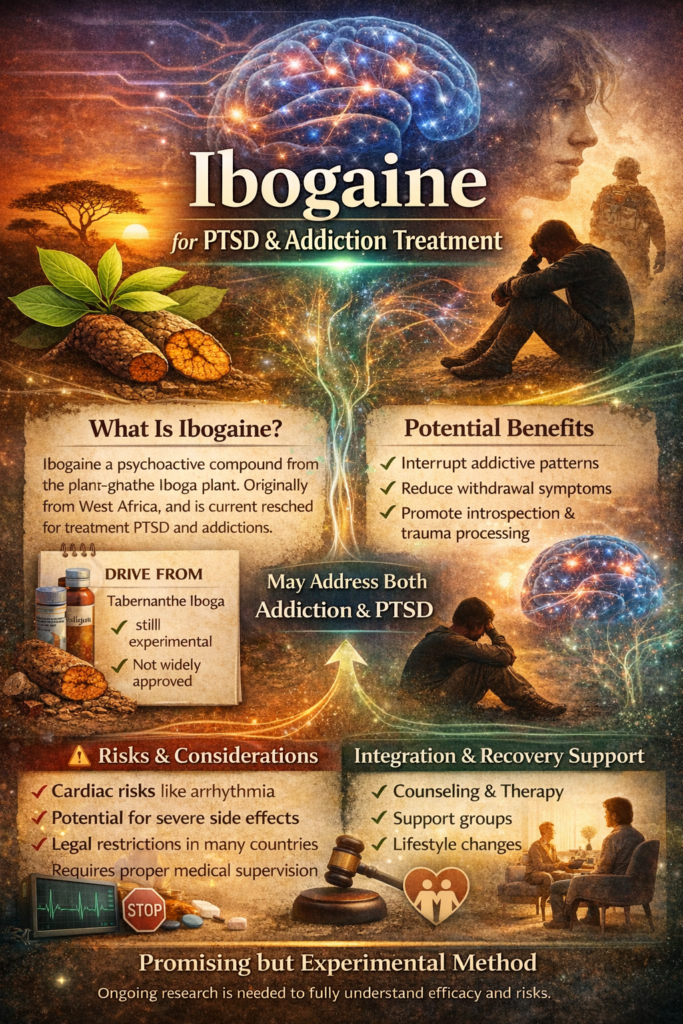
PTSD and substance use disorders often co-occur, creating a cycle where trauma and addiction reinforce each other. While standard treatments help many, some individuals continue to struggle, leading to interest in alternatives like ibogaine. This psychoactive compound is being studied for its ability to reduce cravings and promote insight into trauma. Although still experimental and not widely approved, ibogaine represents a novel and controversial approach to treating both conditions.
Healing Beyond Trauma: Exploring Ibogaine for PTSD and Addiction Treatment
Post-traumatic stress disorder (PTSD) and substance use disorders often occur together, creating a complex cycle that can be difficult to break. Individuals may turn to substances as a way to cope with trauma, while substance use can worsen emotional regulation and mental health over time. Traditional treatments—such as therapy and medication—are effective for many, but not all individuals respond to these approaches. This has led to growing interest in alternative treatments, including ibogaine, a naturally derived psychoactive compound being explored for its potential to address both trauma and addiction.
What Is Ibogaine?

Ibogaine is a compound extracted from the root bark of the Tabernanthe iboga plant, traditionally used in spiritual and healing rituals in parts of West Africa. In modern contexts, ibogaine is being studied for its potential role in treating addiction and mental health conditions, particularly PTSD.
Unlike many conventional treatments, ibogaine produces a profound psychoactive experience, often described as introspective or dream-like, which may help individuals process traumatic memories and patterns of substance use.
How Ibogaine May Work
Ibogaine’s effects are thought to involve multiple brain systems, including:
- Resetting reward pathways affected by addiction
- Modulating neurotransmitters such as dopamine and serotonin
- Promoting neuroplasticity, allowing the brain to form new patterns
Some individuals report a significant reduction in withdrawal symptoms and cravings after treatment, along with increased emotional insight into trauma.
Potential Benefits for PTSD and Addiction
Ibogaine is being explored for its ability to address both conditions simultaneously:
- Reduced cravings and withdrawal symptoms
- Enhanced emotional processing of trauma
- Increased self-awareness and insight
- Potential interruption of addictive patterns
This dual-action approach is especially important for individuals with co-occurring PTSD and substance use disorders, where treating one condition without addressing the other may be less effective.
Risks and Limitations
Despite its potential, ibogaine is not without serious concerns:
- Medical risks, including heart complications (cardiac arrhythmias)
- Not approved in many countries, including the United States
- Requires careful medical screening and supervision
- Limited large-scale clinical research
Because of these risks, ibogaine should only be considered in highly controlled, medically supervised settings where it is legally permitted.
The Role of Integration and Ongoing Support
Ibogaine is not a standalone cure. Its potential benefits depend heavily on what happens after the experience.
Integration strategies include:
- Trauma-informed therapy
- Support groups or recovery programs
- Journaling and reflection
- Continued mental health care
These steps help individuals translate insights gained during treatment into lasting behavioral change.
Ethical and Legal Considerations
Ibogaine treatment exists in a complex legal and ethical space:
- It is not FDA-approved in the U.S.
- Treatment often occurs in other countries or experimental settings
- Standards of care can vary significantly
This makes it essential for individuals to carefully evaluate safety, legality, and provider credentials.
The Bigger Picture: A New Direction in Treatment
Ibogaine reflects a broader shift toward exploring psychedelic-assisted therapies for complex mental health and addiction issues. While still controversial and under-researched, it highlights the need for innovative approaches—especially for individuals who have not benefited from traditional treatments.
Final Thoughts
Ibogaine offers a unique and potentially powerful approach to treating both PTSD and addiction by targeting the deep psychological and neurological roots of these conditions. However, its risks, legal status, and limited research mean it must be approached with caution.
As science continues to evolve, ibogaine may become part of a new generation of treatments that focus not only on symptom management but on transformational healing and long-term recovery.
Taking an Active Role: Self-Management Strategies for Understanding Ibogaine in PTSD and Addiction Treatment
Post-traumatic stress disorder (PTSD) and addiction often overlap, creating a cycle that can feel overwhelming to break. As interest grows in alternative approaches like ibogaine, individuals exploring this treatment may find themselves navigating unfamiliar territory. Because ibogaine is not a standard or widely approved treatment, understanding it requires active involvement, critical thinking, and self-management.
Self-management strategies empower individuals to make informed decisions, prepare for treatment, and support long-term recovery—especially when considering complex and emerging therapies like ibogaine.
Why Self-Management Is Essential with Ibogaine
Unlike traditional treatments, ibogaine is:
- Less regulated in many regions
- Associated with both potential benefits and serious risks
- Highly dependent on preparation and follow-up care
This makes it especially important for individuals to take an active, informed role in their treatment journey rather than relying solely on providers.
Understanding Ibogaine and Its Effects
Ibogaine is a psychoactive compound that may:
- Interrupt addictive patterns
- Reduce withdrawal symptoms
- Facilitate deep emotional and psychological insight
For individuals with PTSD, it may also help process unresolved trauma. However, the experience can be intense and requires preparation and support.
Key Self-Management Strategies
1. 📘 Educate Yourself Thoroughly
Before considering ibogaine:
- Learn how it works in the brain
- Understand both benefits and risks, including cardiac concerns
- Research the legal status in your region
Avoid relying on only anecdotal reports—seek credible, evidence-based information when possible.
2. 🩺 Prioritize Medical Safety
Ibogaine carries real medical risks, especially related to the heart.
Self-management includes:
- Getting a full medical evaluation (including heart screening)
- Disclosing all medications and substances you use
- Avoiding unsafe or unverified treatment providers
Your safety should always come first.
3. 🧠 Prepare Mentally and Emotionally
Ibogaine is often described as an intense introspective experience. Preparation may include:
- Setting intentions for treatment
- Reflecting on trauma and goals
- Practicing mindfulness or grounding techniques
Mental preparation can improve how you process the experience.
4. 📊 Reflect and Track Your Experience
Self-awareness is key. Before and after treatment, track:
- Cravings and substance use patterns
- PTSD symptoms (e.g., triggers, flashbacks)
- Mood and emotional changes
This helps you understand whether the treatment is having a meaningful impact.
5. 🤝 Plan for Integration and Aftercare
The period after ibogaine is critical. Self-management includes:
- Engaging in therapy (especially trauma-informed care)
- Joining support groups
- Continuing reflection through journaling or counseling
Without integration, insights gained during treatment may not translate into lasting change.
6. ⚖️ Set Realistic Expectations
Ibogaine is often portrayed as a “reset,” but:
- Results vary from person to person
- It is not a guaranteed cure
- Ongoing effort is required for recovery
Managing expectations helps prevent disappointment and supports long-term progress.
Challenges to Expect
Even with strong self-management:
- The experience may be emotionally intense
- Recovery is still a long-term process
- Access to safe, legal treatment may be limited
Being prepared for these challenges can improve outcomes.
The Bigger Picture: Empowered and Informed Healing
Ibogaine represents a different approach—one that focuses on both neurological and psychological transformation. However, its effectiveness depends heavily on the individual’s engagement, preparation, and follow-through.
Self-management transforms ibogaine from a one-time experience into part of a broader recovery strategy.
Final Thoughts
Exploring ibogaine for PTSD and addiction requires courage—but also caution, education, and personal responsibility. By taking an active role in understanding the treatment, preparing thoughtfully, and committing to ongoing recovery work, individuals can make more informed and safer decisions.
Recovery is not just about the treatment you choose—it’s about how you engage with it.
Supporting Healing Together: Family Strategies for Understanding Ibogaine in PTSD and Addiction Treatment
When a loved one is struggling with both post-traumatic stress disorder (PTSD) and addiction, families often search for effective ways to help. As interest in alternative approaches like ibogaine grows, many families are left with questions, concerns, and uncertainty. Because ibogaine is not a standard or widely approved treatment, understanding it requires thoughtful learning, open communication, and careful support.
Family involvement can play a powerful role—not only in helping a loved one make informed decisions, but also in supporting their safety and long-term recovery.
Why Family Understanding Matters
Ibogaine is often described as a treatment that can address both trauma and addiction at a deep level. However, it also carries:
- Medical risks, including heart-related complications
- Legal and regulatory limitations in many countries
- A need for structured preparation and follow-up care
When families understand both the potential benefits and risks, they can provide balanced, informed support rather than reacting out of fear or misinformation.
Key Family Support Strategies
1. 📘 Educate Yourself About Ibogaine
Before forming opinions, take time to learn:
- What ibogaine is and how it works
- Its potential effects on PTSD and addiction
- Known risks and safety concerns
Use credible, research-based sources rather than relying only on anecdotal stories online. Informed families are better equipped to support safe decision-making.
2. 🗣️ Create Open, Non-Judgmental Communication
Your loved one may already feel vulnerable. Supportive communication includes:
- Listening without interrupting or criticizing
- Asking questions מתוך curiosity, not judgment
- Avoiding dismissive or fearful reactions
For example:
Instead of “That sounds dangerous—don’t do it,”
Try “Can you tell me what you’ve learned about it?”
3. 🩺 Encourage Medical Safety First
Because ibogaine can affect the heart, safety is critical. Families can be supported by encouraging:
- Full medical screening (especially cardiac evaluation)
- Disclosure of all medications and substances
- Choosing qualified, medically supervised providers
Never support unsafe or unverified treatment environments.
4. 🧠 Support Emotional Preparation
Ibogaine experiences can be intense and emotionally revealing. Families can help by:
- Encouraging reflection on goals and intentions
- Supporting stress-reduction practices (e.g., mindfulness)
- Being emotionally available before treatment
Preparation can make the experience more meaningful and manageable.
5. 🤝 Be Involved in Aftercare and Integration
The period after ibogaine is often the most important. Families can:
- Encourage therapy or trauma-focused counseling
- Support participation in recovery programs
- Provide a stable, low-stress environment
Integration helps turn insights into lasting change.
6. ⚖️ Set Healthy Boundaries
Support does not mean agreeing with everything. Families should:
- Express concerns respectfully
- Set limits to protect safety and well-being
- Avoid enabling harmful behaviors
Healthy boundaries create a balance between support and accountability.
Challenges Families May Face
Supporting a loved one considering ibogaine can be emotionally complex:
- Fear about safety and unknown outcomes
- Conflicting information about effectiveness
- Stress from navigating non-traditional treatment options
It’s important for families to seek their own support—through counseling or support groups—when needed.
The Bigger Picture: Informed and Compassionate Support
Ibogaine represents a different approach to healing—one that may offer insight and relief, but also requires caution and responsibility. Families play a key role in helping loved ones approach this option safely and thoughtfully.
By staying informed, communicating openly, and supporting recovery beyond treatment, families become an essential part of the healing process.
Final Thoughts
You don’t have to have all the answers to make a difference. Being present, informed, and supportive can help your loved one navigate difficult decisions and stay grounded in their recovery journey.
Ibogaine may open the door to change—but family support helps sustain it.
Community Connections for Healing: Resource Strategies to Understand Ibogaine in PTSD and Addiction Treatment
Post-traumatic stress disorder (PTSD) and addiction are deeply interconnected conditions that often require comprehensive, multi-level support. As interest grows in alternative treatments like ibogaine, individuals and families are increasingly looking to their communities for guidance, education, and access. However, because ibogaine exists outside of mainstream medical practice in many regions, community resources play an especially important role in helping people understand, evaluate, and safely approach this treatment option.
Community-based strategies can bridge the gap between curiosity and informed decision-making—ensuring that individuals are not navigating complex and potentially risky treatments alone.
Why Community Resources Matter
Ibogaine is often discussed in online forums or anecdotal reports, which can make it difficult to separate fact from misinformation. Community resources help by:
- Providing credible education about risks and benefits
- Connecting individuals to qualified professionals
- Supporting safer decision-making
- Reducing isolation during recovery
Strong community networks promote both awareness and safety.
Key Community Resource Strategies
1. 🏥 Partner with Healthcare and Mental Health Providers
Community organizations can collaborate with:
- Mental health professionals
- Addiction treatment providers
- Trauma-informed therapists
These partnerships ensure individuals receive balanced, evidence-based information about ibogaine and alternative treatment options, rather than relying solely on unverified sources.
2. 📢 Promote Accurate Public Education
Education is critical when discussing a complex and controversial treatment like ibogaine. Communities can offer:
- Workshops or seminars on PTSD and addiction treatments
- Educational materials explaining risks, legality, and research
- Online resources that highlight both benefits and limitations
Accurate information helps individuals make informed, not impulsive, decisions.
3. 🤝 Integrate Peer Support and Lived Experience
Peer support groups can:
- Provide real-life perspectives on recovery journeys
- Offer emotional support for individuals exploring treatment options
- Help normalize conversations about trauma and addiction
While peer experiences should not replace medical advice, they can help individuals feel less alone and more supported.
4. 📋 Offer Case Management and Navigation Support
Navigating ibogaine-related decisions can be overwhelming. Community case managers can help:
- Identify safe and legal treatment options
- Coordinate care before and after treatment
- Connect individuals to therapy, housing, or support services
This is especially important because ibogaine treatment often occurs outside traditional healthcare systems.
5. 🧠 Emphasize Integration and Ongoing Care
Community resources should focus not only on the treatment itself, but also on what comes after. This includes:
- Trauma-informed therapy
- Recovery support groups
- Mental health services
- Wellness programs
Integration is essential for turning short-term experiences into long-term recovery.
6. ⚖️ Reduce Stigma and Encourage Open Dialogue
Stigma can prevent individuals from seeking help or discussing alternative treatments openly. Communities can:
- Promote addiction and PTSD as treatable health conditions
- Encourage respectful, non-judgmental conversations
- Create safe spaces for discussion
Reducing stigma increases access to support, education, and care.
Challenges to Consider
Community efforts may face several barriers:
- Limited clinical research and standardized guidelines
- Legal restrictions in many countries
- Variability in provider quality and safety standards
- Misinformation online
These challenges make trusted, community-based education and support even more important.
The Bigger Picture: Community as a Guide, Not a Replacement
Ibogaine represents a potential new direction in treating PTSD and addiction—but it is not a simple or universally safe solution. Community resources should not replace medical guidance but instead act as a bridge to informed, safe decision-making.
Final Thoughts
Exploring ibogaine can feel overwhelming, but no one should have to navigate it alone. Communities have the power to provide knowledge, connection, and support—helping individuals approach treatment options with clarity and caution.
When communities invest in education, safety, and support, they transform complex treatment choices into informed pathways toward healing and recovery.
Frequently Asked Questions
Here are some common questions:
1. What is ibogaine?
Answer:
Ibogaine is a naturally occurring psychoactive compound derived from the root bark of the Tabernanthe iboga plant, traditionally used in West African spiritual practices. It is being studied for its potential to treat substance use disorders and PTSD.
2. How does ibogaine work in the brain?
Answer:
Ibogaine affects multiple neurotransmitter systems, including dopamine and serotonin. It may:
- Reduce cravings and withdrawal symptoms
- “Reset” disrupted reward pathways
- Promote neuroplasticity and emotional processing
This combination may help address both addiction and trauma.
3. Can ibogaine treat both PTSD and addiction at the same time?
Answer:
Potentially, yes. Ibogaine is unique in that it may:
- Help process traumatic memories (PTSD)
- Interrupt addictive behaviors (substance use disorder)
This makes it of interest for individuals with co-occurring conditions, though more research is needed.
4. Is ibogaine FDA-approved?
Answer:
No. Ibogaine is not approved by the FDA for any medical use in the United States. It is considered experimental and is illegal or restricted in many countries.
5. Is ibogaine safe?
Answer:
Ibogaine carries serious medical risks, including:
- Heart rhythm abnormalities (arrhythmias)
- Potential for life-threatening complications
- Interactions with other substances
It should only be considered in medically supervised settings where it is legal.
6. What does the ibogaine experience feel like?
Answer:
People often describe it as:
- A long-lasting (12–24-hour) introspective or dream-like experience
- Emotionally intense
- Focused on personal memories, trauma, and life patterns
The experience can be psychologically demanding.
7. Does ibogaine eliminate withdrawal symptoms?
Answer:
Some reports suggest ibogaine can reduce or interrupt withdrawal symptoms, especially for opioids. However, results vary, and it does not guarantee complete elimination.
8. Does ibogaine cure addiction?
Answer:
No. Ibogaine is not a cure. It may provide a temporary “reset” or window of opportunity, but long-term recovery depends on:
- Therapy
- Support systems
- Lifestyle changes
9. Who might consider ibogaine treatment?
Answer:
It is sometimes explored by individuals who:
- Have not responded to traditional treatments
- Have co-occurring PTSD and addiction
- Are seeking alternative approaches
However, medical screening is essential.
10. What kind of screening is required before ibogaine?
Answer:
Proper screening should include:
- Cardiac evaluation (ECG)
- Medical history review
- Medication and substance use assessment
This helps reduce the risk of complications.
11. What happens after ibogaine treatment?
Answer:
Post-treatment care (called integration) is critical and may include:
- Therapy or counseling
- Support groups
- Continued mental health care
- Lifestyle changes
Without integration, benefits may not last.
12. Is ibogaine legal?
Answer:
Its legal status varies:
- Illegal in the United States
- Legal or unregulated in some countries
- Often available only in specialized clinics abroad
Always check local laws.
13. Are there side effects?
Answer:
Yes, including:
- Nausea and vomiting
- Ataxia (loss of coordination)
- Heart-related complications
- Psychological distress during the experience
14. How long do the effects last?
Answer:
The acute experience typically lasts 12–24 hours, followed by a recovery period. Psychological effects and insights may last longer.
15. Can ibogaine be combined with other treatments?
Answer:
Yes. It is most effective when combined with:
- Trauma-informed therapy
- Addiction counseling
- Ongoing recovery support
16. Why is ibogaine considered controversial?
Answer:
Because it:
- Has limited large-scale clinical research
- Carries significant safety risks
- Exists outside mainstream medical practice
- Has mixed anecdotal outcomes
17. What are the biggest risks?
Answer:
The most serious risks include:
- Cardiac arrest due to arrhythmias
- Unsafe treatment environments
- Lack of standardized dosing or protocols
18. Is ibogaine right for everyone?
Answer:
No. It is not suitable for everyone, especially individuals with:
- Heart conditions
- Certain psychiatric conditions
- Complex medical histories
A healthcare professional should always be consulted.
Conclusion
Ibogaine offers a unique approach to treating PTSD and addiction by targeting both the neurobiological and psychological roots of these conditions. Early reports and emerging research suggest that it may reduce withdrawal symptoms, decrease cravings, and promote emotional processing of trauma. However, its use is accompanied by significant medical risks, legal limitations, and a lack of large-scale clinical evidence. As a result, ibogaine should be approached with caution and considered within the context of comprehensive care, including medical screening and ongoing therapeutic support. As research continues to evolve, ibogaine may contribute to a broader shift toward innovative, integrative treatments—but its role in mainstream care remains to be fully established.
Video: