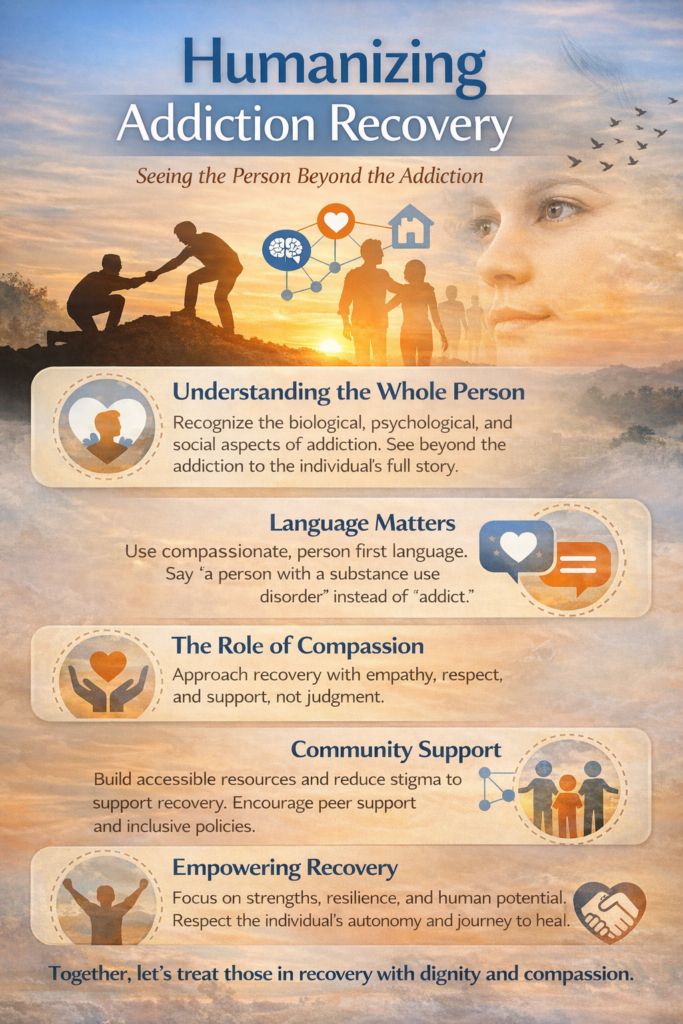
Addiction recovery is often misunderstood and stigmatized. Many people with substance use disorders are defined only by their addiction, overlooking their strengths and potential for change. Humanizing recovery shifts the focus from blame to empathy and understanding. By recognizing addiction as a complex health condition influenced by biological, psychological, and social factors, society can view recovery as healing rather than punishment, encouraging compassion and support for rebuilding meaningful lives.
Humanizing Addiction Recovery: Seeing the Person Beyond the Addiction
Addiction is often discussed in terms of statistics, diagnoses, and consequences. While these perspectives are important for understanding the scope of the issue, they can sometimes overshadow the most important element of recovery—the person. Humanizing addiction recovery means shifting our focus from judgment and stigma to compassion, dignity, and understanding. It recognizes that individuals experiencing addiction are not defined by their substance use but by their humanity, their struggles, and their capacity for growth.
Understanding Addiction as a Human Experience
Addiction does not occur in isolation. It is often intertwined with complex biological, psychological, and social factors. Research within the field of addiction medicine shows that substance use disorders involve changes in brain chemistry that affect reward, motivation, and self-control. However, addiction is also shaped by trauma, mental health challenges, environmental stressors, and social circumstances.
When society views addiction solely as a moral failure or a lack of willpower, it overlooks these underlying influences. This perspective can deepen shame and discourage individuals from seeking help. Humanizing addiction recovery involves recognizing addiction as a multifaceted health condition while acknowledging the personal stories behind it.
The Impact of Stigma
Stigma remains one of the most significant barriers to recovery. Negative stereotypes—such as labeling individuals as irresponsible, dangerous, or weak—can isolate people who are already struggling. Stigma may appear in subtle ways, including language that defines individuals by their addiction rather than recognizing them as people first.
This social stigma can have real consequences. Individuals who feel judged or misunderstood may delay treatment, avoid support systems, or internalize feelings of worthlessness. Humanizing addiction recovery challenges these assumptions by promoting respectful language, empathy, and inclusive attitudes.
Seeing the Person, Not the Problem
At the heart of humanizing addiction recovery is the idea of person-centered care. This approach emphasizes the individual’s strengths, values, and goals rather than focusing exclusively on their substance use. Recovery is not simply about abstaining from substances; it is about rebuilding identity, restoring relationships, and creating a meaningful life.
Every person in recovery carries a unique story. Some may have experienced trauma, loss, or chronic stress that contributed to their substance use. Others may struggle with co-occurring mental health conditions. By acknowledging these experiences, healthcare providers, families, and communities can create more supportive environments that encourage healing.
The Role of Compassion and Community
Recovery rarely happens alone. Supportive relationships—whether through family, peers, healthcare professionals, or recovery communities—play a crucial role in long-term healing. Compassionate support systems provide individuals with encouragement, accountability, and a sense of belonging.
Communities can humanize addiction recovery by embracing inclusive policies and educational initiatives that reduce stigma. Public conversations that highlight recovery stories, emphasize evidence-based treatment, and promote empathy can reshape how society views addiction.
Language Matters
The words we use influence how people perceive addiction and those who experience it. Person-first language, such as “a person with a substance use disorder” instead of “addict” or “junkie,” reinforces the idea that addiction is only one aspect of an individual’s life. Language that respects dignity can help foster understanding and reduce stigma.
Healthcare professionals, educators, and media outlets all have a role in shaping these narratives. By choosing language that reflects compassion and respect, society can gradually shift toward a more humane perspective on addiction and recovery.
Moving Toward a More Compassionate Future
Humanizing addiction recovery requires a cultural shift. It means recognizing that recovery is not simply a medical process but a deeply human journey. People who experience addiction deserve the same empathy, respect, and access to care as anyone facing a health challenge.
When society begins to see individuals in recovery not as problems to be fixed but as people capable of resilience and transformation, meaningful change becomes possible. Humanizing addiction recovery ultimately strengthens communities, improves treatment outcomes, and reminds us that healing begins with understanding.
Self-Management Strategies in Humanizing Addiction Recovery
Addiction recovery is often portrayed as a process guided primarily by treatment programs, healthcare providers, or support groups. While these supports are essential, an equally important element of recovery is the individual’s ability to actively manage their own healing process. Self-management strategies empower individuals to take ownership of their recovery while reinforcing dignity, autonomy, and self-worth. When recovery is approached through self-management, it becomes a human-centered journey that acknowledges the individual’s strengths, choices, and capacity for growth.
Understanding Self-Management in Recovery
Self-management refers to the daily practices and decision-making skills individuals use to maintain their health and well-being. In the context of addiction recovery, it involves learning to recognize triggers, regulate emotions, develop coping skills, and create supportive routines that promote long-term stability.
Humanizing addiction recovery through self-management means recognizing that individuals are not passive recipients of treatment. Instead, they are active participants in shaping their recovery. This perspective challenges stereotypes that portray people with substance use disorders as lacking control or responsibility, and instead emphasizes empowerment and personal agency.
Developing Self-Awareness
One of the most important self-management strategies in recovery is building self-awareness. This involves recognizing emotional patterns, environmental triggers, and thought processes that may increase the risk of relapse. Individuals in recovery often benefit from reflective practices such as journaling, mindfulness, or therapy sessions that encourage honest self-exploration.
Self-awareness allows individuals to identify early warning signs of stress, cravings, or emotional distress. By recognizing these signals early, they can implement coping strategies before challenges escalate. This process supports recovery by encouraging individuals to understand themselves more deeply rather than feeling defined by their addiction.
Building Healthy Coping Mechanisms
Many individuals struggling with addiction initially use substances as a way to cope with emotional pain, trauma, or stress. Recovery, therefore, requires replacing harmful coping mechanisms with healthier alternatives. Self-management strategies often include developing practical tools for managing difficult emotions.
Examples of healthy coping strategies may include physical activity, creative expression, meditation, structured problem-solving, or engaging in supportive conversations with trusted individuals. These strategies help individuals regulate stress and build resilience without relying on substances.
Learning these skills reinforces the idea that recovery is not only about stopping substance use but also about developing healthier ways to navigate life’s challenges.
Establishing Structure and Routine
Daily structure plays a critical role in maintaining stability during recovery. Establishing routines for sleep, meals, work, exercise, and social activities can reduce uncertainty and provide a sense of control. Structured schedules also help individuals minimize idle time, which can sometimes increase vulnerability to cravings or negative thought patterns.
Self-management strategies that emphasize routine contribute to a sense of normalcy and purpose. Over time, consistent habits support emotional regulation and reinforce healthier lifestyle patterns.
Strengthening Support Networks
Although self-management emphasizes personal responsibility, it does not mean recovering alone. Strong support systems remain essential. Individuals in recovery often benefit from maintaining connections with supportive friends, family members, recovery groups, or healthcare providers.
Self-management includes actively seeking help when needed and recognizing the value of shared experiences. Peer support groups, for example, allow individuals to learn from others who understand the recovery process. These connections reinforce the human element of recovery by reminding individuals that they are not isolated in their struggles.
Practicing Self-Compassion
Recovery is rarely a linear process. Setbacks, challenges, and moments of doubt are common. Self-compassion is therefore a critical component of self-management. Rather than responding to mistakes with harsh self-criticism, individuals are encouraged to treat themselves with the same understanding they would offer someone else facing similar challenges.
Practicing self-compassion helps reduce shame, which is often a powerful barrier to recovery. By acknowledging personal struggles without judgment, individuals can maintain motivation and continue working toward long-term goals.
Empowerment Through Self-Management
Humanizing addiction recovery means recognizing that individuals can grow, adapt, and rebuild their lives. Self-management strategies empower people to actively participate in their recovery while fostering independence and resilience.
When individuals develop skills such as self-awareness, healthy coping, structured routines, and supportive relationships, they strengthen their ability to sustain recovery over time. These strategies not only support sobriety but also contribute to a broader sense of well-being and personal fulfillment.
Ultimately, self-management reframes recovery as a process of empowerment rather than simply a response to illness. By emphasizing dignity, personal agency, and compassion, this approach reinforces the fundamental idea that recovery is not just about overcoming addiction—it is about rediscovering one’s humanity and potential.
Family Support Strategies in Humanizing Addiction Recovery
Addiction recovery is often described as a personal journey, but in reality, it is deeply influenced by relationships and social environments. Families play a significant role in shaping the recovery process by providing emotional support, stability, and encouragement. When families approach addiction with compassion rather than judgment, they help humanize recovery and create a supportive foundation for healing.
Humanizing addiction recovery means recognizing that individuals experiencing addiction are not defined by their struggles. Family support strategies focus on empathy, understanding, and constructive involvement, allowing loved ones to become active partners in the recovery process rather than passive observers.
Understanding Addiction as a Family Experience
Addiction does not only affect the individual—it often impacts the entire family system. Family members may experience confusion, frustration, fear, or emotional exhaustion while trying to understand their loved one’s behavior. In many cases, misunderstandings about addiction can lead to blame or resentment.
Education is one of the most important strategies families can adopt. Learning about substance use disorders as complex medical and psychological conditions can help families move away from viewing addiction as a moral failure. This shift in perspective encourages compassion and reduces stigma within the household.
Practicing Open and Honest Communication
Healthy communication is essential in supporting recovery. Families can create a safe environment by encouraging open conversations about emotions, challenges, and recovery goals. Listening without immediate judgment or criticism helps individuals in recovery feel respected and understood.
Effective communication also involves expressing concerns constructively. Rather than focusing on past mistakes, families can emphasize encouragement and future progress. This approach strengthens trust and helps individuals feel supported instead of criticized.
Establishing Healthy Boundaries
While family support is valuable, it is also important for families to establish clear and healthy boundaries. Boundaries protect both the individual in recovery and their loved ones from harmful behaviors that may interfere with healing.
Healthy boundaries may involve setting expectations around substance use, financial support, or household responsibilities. Boundaries are not meant to punish but rather to create stability and accountability. When families maintain consistent boundaries, they reinforce an environment that encourages responsibility and long-term recovery.
Encouraging Professional and Peer Support
Families can play a key role in encouraging individuals to seek professional treatment and participate in recovery programs. Therapy, counseling, medication-assisted treatment, and peer support groups provide essential tools for maintaining sobriety.
Family members may also benefit from their own support networks. Groups designed for families affected by addiction can provide guidance, education, and emotional support. These resources help families develop coping strategies and understand how to effectively support their loved one without neglecting their own well-being.
Promoting a Positive and Supportive Environment
A stable and supportive home environment can significantly influence recovery outcomes. Families can contribute to this environment by promoting healthy routines, encouraging positive activities, and celebrating milestones in recovery.
Simple actions—such as acknowledging progress, expressing appreciation, or participating in healthy activities together—can reinforce motivation and strengthen family bonds. Positive reinforcement reminds individuals that their efforts toward recovery are recognized and valued.
Practicing Patience and Compassion
Recovery is rarely a straightforward process. Individuals may experience setbacks, emotional challenges, or periods of uncertainty. Families who approach these difficulties with patience and compassion help reduce feelings of shame that often accompany addiction.
Instead of focusing solely on setbacks, families can emphasize progress and resilience. Compassionate responses reinforce the understanding that recovery is a long-term process that requires persistence and support.
Strengthening the Human Connection in Recovery
Humanizing addiction recovery involves seeing individuals not as problems to be solved but as people deserving of respect, dignity, and understanding. Families are uniquely positioned to reinforce this perspective because their relationships are often rooted in long-term emotional connections.
Through education, communication, healthy boundaries, and compassionate support, families can play a transformative role in the recovery process. Their involvement helps individuals feel valued, supported, and capable of rebuilding their lives.
Ultimately, family support strategies strengthen the human element of recovery. By fostering empathy and understanding, families create an environment where healing becomes possible, and individuals are reminded that they are not alone on their journey toward recovery.
Community Resource Strategies in Humanizing Addiction Recovery
Addiction recovery is not only a personal or family journey—it is also a community responsibility. Communities play a vital role in shaping how addiction is understood, treated, and supported. When communities provide accessible resources, compassionate support systems, and inclusive policies, they help humanize addiction recovery by recognizing individuals as members of society deserving of care, dignity, and opportunity.
Humanizing addiction recovery means shifting away from judgment and isolation toward empathy and support. Community resource strategies create environments where individuals in recovery can rebuild their lives, reconnect with society, and access the services they need to maintain long-term well-being.
Expanding Access to Treatment Services
One of the most important community strategies is ensuring access to evidence-based treatment services. Individuals experiencing addiction often require comprehensive care that may include medical treatment, counseling, mental health support, and recovery programs.
Communities can support recovery by increasing access to treatment centers, outpatient programs, and behavioral health services. Accessible healthcare resources reduce barriers to treatment and allow individuals to seek help without fear of stigma or limited availability.
When treatment services are integrated into community healthcare systems, recovery becomes a shared responsibility rather than an isolated struggle.
Strengthening Recovery Support Programs
Recovery support programs provide essential resources that extend beyond clinical treatment. Peer support groups, recovery coaching, and sober living environments offer individuals ongoing encouragement and accountability.
Peer-based programs are particularly powerful because they connect individuals with others who have experienced similar challenges. These shared experiences foster understanding, reduce feelings of isolation, and reinforce the idea that recovery is possible.
Communities that invest in recovery support services demonstrate a commitment to long-term healing rather than short-term intervention.
Providing Education and Public Awareness
Stigma remains a major barrier to addiction recovery. Community education initiatives can help reshape public perceptions by providing accurate information about substance use disorders and recovery.
Workshops, public campaigns, and educational programs can teach community members about the science of addiction, available treatment options, and ways to support individuals in recovery. Increased awareness encourages compassion and reduces misconceptions that often prevent people from seeking help.
When communities openly discuss addiction and recovery, they foster a culture of empathy and understanding.
Supporting Housing, Employment, and Social Stability
Recovery is closely connected to stability in everyday life. Access to safe housing, employment opportunities, and social services significantly influences an individual’s ability to maintain recovery.
Community programs that support job training, transitional housing, and reintegration services provide individuals with practical tools for rebuilding their lives. Employment opportunities in particular help individuals regain independence, purpose, and self-confidence.
By addressing these social determinants of health, communities acknowledge that recovery involves more than medical treatment—it also requires social support and opportunity.
Encouraging Collaborative Partnerships
Effective community resource strategies often involve collaboration between healthcare providers, social service organizations, educational institutions, and local governments. These partnerships allow communities to coordinate resources and create comprehensive recovery networks.
For example, partnerships between hospitals, counseling centers, and community organizations can streamline referrals and ensure individuals receive continuous care. Collaboration also helps communities identify service gaps and develop programs that address specific local needs.
When multiple organizations work together, they create stronger support systems that benefit individuals throughout the recovery process.
Creating Inclusive and Supportive Environments
Humanizing addiction recovery also involves fostering environments where individuals in recovery feel welcomed and valued. Communities can promote inclusivity by encouraging recovery-friendly workplaces, supportive community spaces, and policies that prioritize rehabilitation over punishment.
Community events, volunteer opportunities, and mentorship programs can also help individuals reconnect with society and rebuild meaningful relationships. These experiences reinforce the idea that people in recovery are active contributors to their communities.
Building a Compassionate Community Approach
Addiction recovery becomes more sustainable when communities embrace compassion as a guiding principle. When local resources prioritize dignity, access to care, and social support, individuals are more likely to seek help and remain engaged in recovery.
Community resource strategies demonstrate that addiction is not solely an individual challenge but a collective issue that requires collective solutions. By investing in treatment services, support programs, education, and social opportunities, communities help create environments where healing is possible.
Ultimately, humanizing addiction recovery means recognizing that every person deserves the chance to recover and rebuild their life. Communities that support this vision not only improve recovery outcomes but also strengthen social connections, reduce stigma, and promote a healthier and more compassionate society.
Frequently Asked Questions
Here are some common questions:
1. What does “humanizing addiction recovery” mean?
Humanizing addiction recovery means recognizing that people struggling with addiction are individuals with unique experiences, emotions, and strengths rather than defining them solely by their substance use. This approach emphasizes compassion, dignity, and understanding while reducing stigma and judgment.
2. Why is it important to humanize addiction recovery?
Humanizing addiction recovery is important because stigma and negative stereotypes can prevent individuals from seeking treatment and support. When society views addiction with empathy and understanding, individuals are more likely to access resources, engage in treatment, and maintain long-term recovery.
3. Is addiction a choice or a disease?
Addiction is widely recognized by medical and psychological communities as a complex health condition influenced by biological, psychological, and environmental factors. While personal choices can play a role in substance use, addiction often involves changes in brain function that make it difficult to control behavior without treatment and support.
4. How does stigma affect people in recovery?
Stigma can cause individuals to feel ashamed, isolated, or judged. This can discourage them from seeking help, participating in recovery programs, or talking openly about their struggles. Reducing stigma helps create safer environments where individuals feel supported during recovery.
5. What role does language play in humanizing addiction recovery?
Language has a powerful impact on how addiction is perceived. Using person-first language, such as “a person with a substance use disorder,” emphasizes the individual rather than labeling them as their condition. Respectful language promotes dignity and reduces stigma.
6. How can families support humanized addiction recovery?
Families can support recovery by:
- Practicing empathy and patience
- Communicating openly and respectfully
- Encouraging professional treatment and support groups
- Establishing healthy boundaries
- Celebrating recovery progress and milestones
Supportive families help individuals feel valued and understood.
7. How do communities contribute to humanizing addiction recovery?
Communities can help by providing accessible treatment programs, educational initiatives, peer support groups, and recovery-friendly policies. When communities prioritize compassion and resources, they create environments where individuals in recovery can rebuild their lives.
8. What are some strategies individuals can use in recovery?
Individuals in recovery can use self-management strategies such as:
- Developing healthy coping skills
- Building structured routines
- Seeking peer and professional support
- Practicing mindfulness and self-awareness
- Setting personal recovery goals
These strategies empower individuals to take an active role in their healing journey.
9. Can people fully recover from addiction?
Yes. Many individuals successfully maintain long-term recovery and build fulfilling lives. Recovery may involve ongoing effort, support systems, and lifestyle changes, but with proper treatment and encouragement, people can achieve stability and personal growth.
10. How can society help reduce stigma around addiction?
Society can reduce stigma by:
- Promoting education about addiction as a health condition
- Sharing recovery stories that highlight resilience
- Using respectful, person-centered language
- Supporting policies that prioritize treatment and rehabilitation
These actions encourage compassion and understanding toward those affected by addiction.
Conclusion
Humanizing addiction recovery requires a collective effort from individuals, families, healthcare professionals, and communities. When recovery is approached with empathy, supportive resources, and person-centered care, individuals are more likely to feel valued and empowered throughout their healing journey. Reducing stigma, promoting education, and strengthening supportive networks help create environments where people in recovery can thrive rather than feel marginalized. Ultimately, recognizing the humanity of those affected by addiction reinforces the idea that recovery is possible and that every person deserves dignity, compassion, and the opportunity to rebuild their life.
Video: Your support could change their entire recovery #RecoveryJourney #AddictionAwareness #Hope