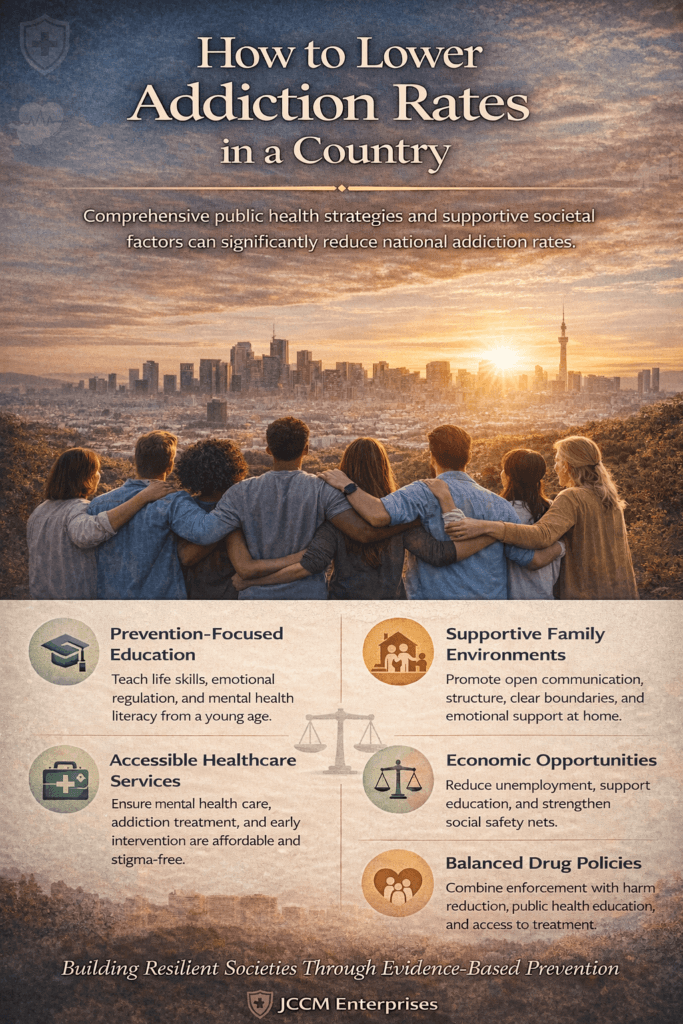
Lowering addiction rates within a country requires a comprehensive and sustained public health approach rather than isolated interventions. Substance use disorders develop through a complex interaction of biological vulnerability, psychological stressors, social environment, and economic conditions. Therefore, meaningful reduction in national addiction rates depends on coordinated strategies across multiple levels—individual self-management education, family stability, accessible healthcare systems, economic opportunity, and strong community infrastructure. Countries that successfully lower addiction prevalence typically invest in early prevention, mental health literacy, stigma reduction, and evidence-based treatment access. By shifting from crisis response to proactive resilience-building, nations create conditions that reduce both the initiation and progression of substance misuse.
How Can a Country Have the Lowest Drug Addiction Rates?
When discussions arise about global substance use trends, some countries appear to have comparatively low rates of drug addiction. While no nation is completely free from substance misuse, certain protective factors consistently contribute to lower prevalence rates. These factors are rarely accidental—they reflect coordinated public health strategies, cultural norms, economic stability, and early intervention systems.
One key element is prevention-focused education. Countries with strong school-based prevention programs teach emotional regulation, coping skills, and critical thinking from an early age. Rather than relying solely on punitive messaging, effective systems emphasize resilience, life skills, and mental health literacy.
Family and community cohesion also play a significant role. Stable family structures, strong social support networks, and clear cultural expectations can reduce isolation and risk-taking behaviors. When individuals feel connected and supported, vulnerability to substance misuse often decreases.
Accessible healthcare systems further contribute to lower addiction rates. Early mental health screening, integrated primary care, and readily available treatment services prevent substance use disorders from progressing. Reducing stigma encourages individuals to seek help before patterns escalate.
Economic stability is another protective factor. Lower unemployment, equitable income distribution, and social safety nets reduce chronic stressors that often drive substance use. When basic needs—housing, education, and healthcare—are secure, communities experience fewer drivers of addiction.
Balanced drug policies also matter. Some countries combine enforcement with harm-reduction strategies, such as education campaigns, community outreach, and evidence-based access to treatment. Approaches that prioritize public health over punishment often achieve better long-term outcomes.
Finally, cultural attitudes influence behavior. Societies that promote healthy coping, physical activity, meaningful work, and community participation create alternative reward systems that reduce reliance on psychoactive substances.
A country with low drug addiction rates typically reflects strong prevention infrastructure, supportive family and community systems, economic opportunity, accessible healthcare, and reduced stigma. Addiction is complex and multifactorial; therefore, lowering rates requires comprehensive, sustained investment in both individual well-being and societal resilience.
Self-Management Strategies to Lower Addiction Rates in a Country
Lowering addiction rates at a national level requires more than policy reform or law enforcement. Sustainable change begins with individuals who are equipped with the skills to regulate emotions, manage stress, and make informed decisions. When self-management strategies are taught early and reinforced across schools, workplaces, and healthcare systems, a country builds psychological resilience that reduces vulnerability to substance misuse.
The foundation of self-management is emotional regulation. Teaching children and adults how to recognize stress, anxiety, trauma responses, and impulsive urges reduces reliance on substances as coping tools. Programs that incorporate mindfulness training, cognitive-behavioral techniques, and stress-management skills strengthen executive functioning and decision-making capacity.
Goal setting and future orientation are also protective. Individuals who develop structured life goals—such as education, career planning, and personal development—are less likely to engage in high-risk behaviors. National education systems that integrate life skills training help cultivate long-term thinking over short-term reward seeking.
Sleep hygiene, physical activity, and nutrition further contribute to brain stability. Healthy routines regulate dopamine systems naturally, decreasing the appeal of artificial stimulation from drugs or alcohol. Public health campaigns that promote wellness behaviors indirectly reduce the risk of addiction.
Another critical strategy is self-monitoring. Encouraging individuals to track mood patterns, substance exposure, and peer influences increases awareness before problems escalate. Early insight supports early intervention.
Finally, promoting help-seeking behavior is essential. When citizens are taught that asking for mental health support is a strength rather than a weakness, barriers to treatment decrease. Normalizing counseling and screening reduces stigma and prevents progression from experimentation to dependence.
A country that prioritizes self-management education fosters citizens who can cope effectively with adversity. While policy, healthcare access, and community resources remain vital, empowering individuals with lifelong self-regulation skills creates the psychological infrastructure necessary to lower national addiction rates over time.
Family Support Strategies to Lower Addiction Rates in a Country
Reducing addiction rates at a national level begins in the home. While public policy and healthcare systems are essential, families are the first and most consistent influence on emotional development, coping skills, and behavioral expectations. Countries that strengthen family systems build protective environments that reduce early substance experimentation and long-term addiction risk.
Open communication is foundational. When parents and caregivers create safe spaces for honest discussion about stress, peer pressure, and substance exposure, children are more likely to seek guidance before engaging in risky behaviors. Early conversations about drugs, alcohol, and mental health normalize prevention rather than crisis response.
Consistent structure and boundaries also play a major role. Clear expectations regarding behavior, curfews, technology use, and peer relationships provide stability. Research consistently shows that adolescents with consistent parental monitoring and warmth are less likely to develop substance use disorders.
Emotional modeling is equally powerful. Children learn coping strategies by observing adults. Families that demonstrate healthy stress management—through exercise, reflection, faith practices, social connection, or professional support—teach adaptive alternatives to substance use.
Early identification and intervention further reduce risk. Families educated about warning signs—mood shifts, academic decline, secrecy, social withdrawal—can seek screening and counseling before patterns escalate. National initiatives that provide parent education programs strengthen this preventive capacity.
Support for families experiencing stress is also critical. Economic hardship, trauma, and untreated mental health conditions increase addiction vulnerability. Access to family counseling, parenting workshops, and social services stabilizes high-risk households and interrupts intergenerational cycles.
When a country invests in family-centered prevention, it strengthens its social foundation. Stable, communicative, and emotionally supportive homes reduce substance use and cultivate resilience. Over time, family support strategies become one of the most powerful national tools for lowering addiction rates and promoting long-term public health.
Community Resource Strategies to Lower Addiction Rates in a Country
Lowering addiction rates at a national level requires more than individual willpower or family involvement—it demands coordinated community infrastructure. Community resource strategies create the environmental conditions that reduce risk factors, expand protective factors, and ensure early access to support. When neighborhoods have access to services, prevention becomes proactive rather than reactive.
Accessible healthcare systems are foundational. Community clinics that integrate mental health screening, substance use assessment, and primary care services allow early identification before addiction becomes severe. When treatment is affordable, geographically available, and stigma-free, more individuals seek help at earlier stages.
Prevention education within schools and local organizations further reduces vulnerability. Evidence-based curricula that teach coping skills, emotional regulation, and decision-making empower youth to resist peer pressure. After-school programs, sports leagues, arts initiatives, and mentorship programs provide structured alternatives to high-risk environments.
Recovery community organizations also play a vital role. Peer support groups, sober living programs, and recovery coaching foster accountability and a sense of belonging. Individuals who feel connected to supportive networks are less likely to relapse and more likely to contribute positively to society.
Economic and housing stability are equally important. Job training programs, employment assistance, and safe housing initiatives address social determinants of health that often drive substance use. Communities that reduce unemployment and housing insecurity indirectly lower the risk of addiction.
Public awareness campaigns and stigma reduction efforts help strengthen help-seeking behaviors. When addiction is recognized as a treatable health condition rather than a moral failure, individuals access services sooner, and communities support funding for prevention.
Community resource strategies transform addiction prevention from isolated efforts into a coordinated national response. By investing in healthcare access, education, economic opportunity, and recovery infrastructure, a country builds resilient communities where fewer individuals turn to substances and more citizens thrive.
Frequently Asked Questions
Here are some common questions:
1. Can a country truly lower its addiction rates?
Yes. While no nation can eliminate substance use entirely, countries can significantly reduce addiction rates through prevention, early intervention, accessible treatment, economic stability, and coordinated public health strategies.
2. What is the most important factor in lowering addiction rates?
Early prevention. Teaching emotional regulation, coping skills, and mental health literacy in schools reduces vulnerability before substance use begins.
3. How does mental health care impact addiction rates?
Untreated anxiety, depression, trauma, and stress increase addiction risk. Accessible, affordable mental health services prevent individuals from self-medicating with drugs or alcohol.
4. Do strict drug laws reduce addiction?
Enforcement alone is not sufficient. Balanced approaches that combine prevention, harm reduction, treatment access, and public health education are more effective in the long term.
5. How do families influence national addiction rates?
Strong family communication, supervision, emotional support, and early intervention reduce youth experimentation and progression to substance use disorders.
6. What role do schools play?
Schools that implement evidence-based prevention programs help students develop resilience, decision-making skills, and awareness of substance risks.
7. How does economic stability affect addiction rates?
High unemployment, poverty, and housing instability increase chronic stress and addiction vulnerability. Job training, fair wages, and social safety nets reduce these pressures.
8. Why is stigma reduction important?
Stigma discourages help-seeking. When addiction is treated as a medical condition rather than a moral failure, individuals seek treatment earlier.
9. Do community programs make a measurable difference?
Yes. Community-based recovery programs, mentorship initiatives, and youth engagement activities reduce relapse and strengthen protective social networks.
10. How important is early screening?
Very important. Routine screening in primary care, schools, and workplaces identifies risky patterns before they escalate into full addiction.
11. Can public health campaigns reduce addiction?
Yes. Campaigns that promote mental wellness, healthy coping strategies, and awareness of risks can shift cultural norms and reduce demand.
12. What is the long-term outcome of a comprehensive national strategy?
Lower healthcare costs, reduced crime, improved workforce participation, stronger families, and increased national resilience.
Conclusion
Reducing addiction rates is not achieved through enforcement alone but through strengthening the social fabric of a nation. When individuals are equipped with coping skills, families provide stability, communities offer accessible resources, and healthcare systems prioritize early intervention, addiction becomes less likely to take root. Economic opportunity, public education, and coordinated policy further reinforce these protective factors. Over time, a country that treats addiction as a preventable and manageable health condition fosters healthier citizens, safer neighborhoods, and greater long-term social and economic stability. Lower addiction rates reflect not just reduced substance use, but increased national resilience and collective well-being.
Video: The Real Reason Some Countries Have Almost No Drug Addicts #Prevention #PublicHealth #SocialSafety