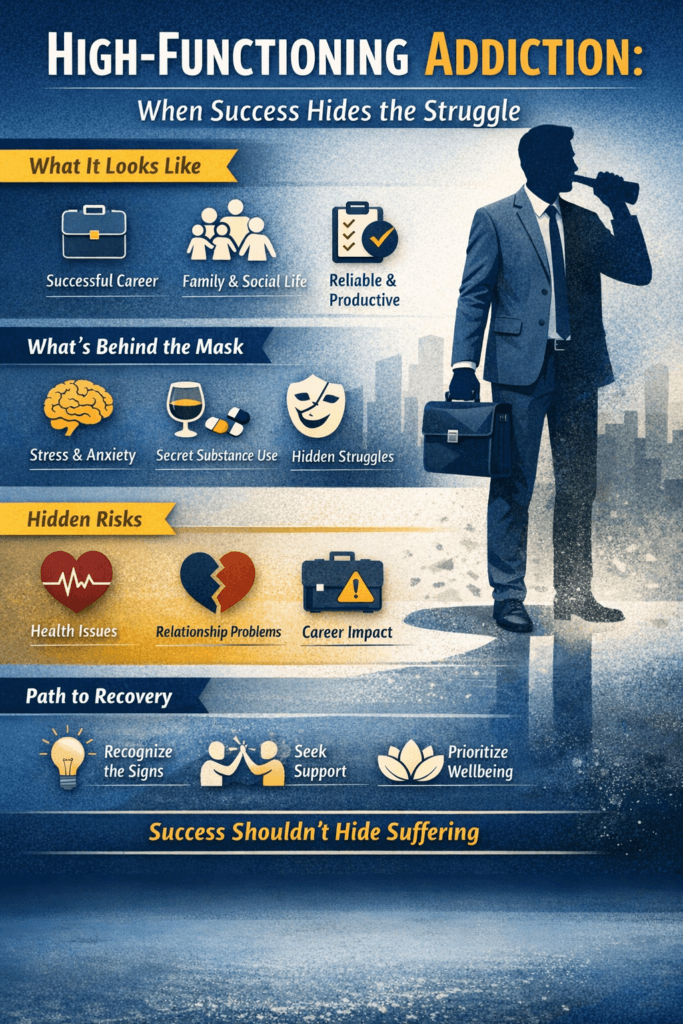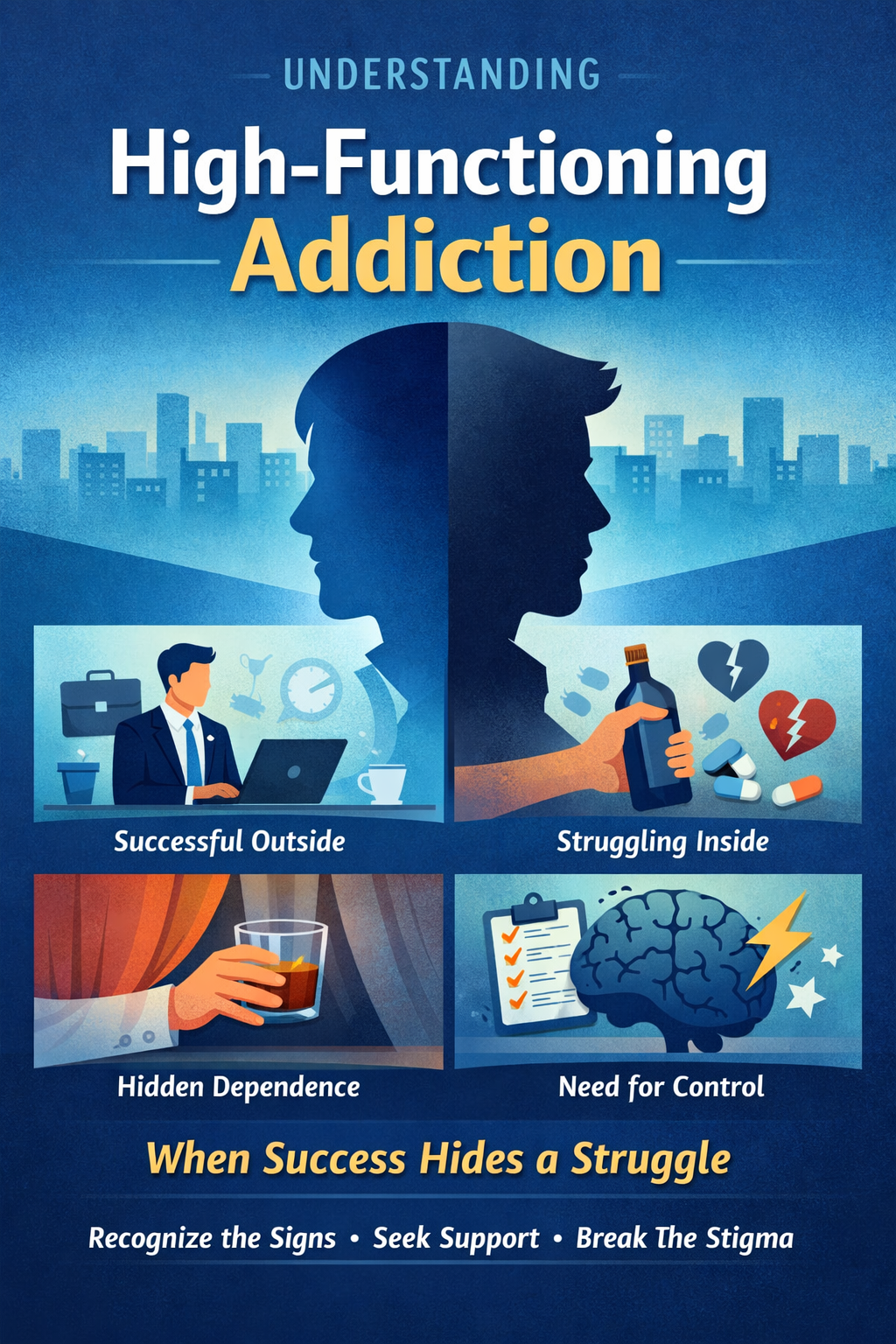
High-functioning addiction challenges common assumptions about what substance use disorder looks like. Individuals may appear successful, reliable, and in control—maintaining careers, relationships, and daily responsibilities—while privately relying on alcohol or drugs to cope with stress, pressure, or emotional discomfort. This hidden nature often delays recognition and intervention, allowing addiction to progress beneath the surface. Understanding high-functioning addiction requires looking beyond outward performance and focusing on internal impact, loss of control, and the role substances play in emotional regulation.
High-Functioning Addiction: When Success Masks Substance Use
High-functioning addiction is one of the most misunderstood forms of substance use disorder. It describes individuals who appear successful, responsible, and in control while secretly struggling with alcohol or drug dependence. They often maintain careers, families, and social obligations, which allows their addiction to remain hidden—sometimes for years.
Unlike stereotypical portrayals of addiction, high-functioning individuals may excel at work, meet deadlines, and appear reliable. This outward stability creates a false sense of security for both the individual and those around them. Because there are fewer visible consequences, denial can run deep. Many believe that as long as they are productive, their substance use is not a problem.
However, functioning does not equate to health. Over time, tolerance increases, meaning larger doses of the substance are required to achieve the same effect. What may begin as “stress relief” or “unwinding” can quietly turn into dependence. Internally, individuals often experience anxiety, depression, sleep disturbances, irritability, or guilt, even while appearing composed on the outside.
High-functioning addiction is especially dangerous because it delays intervention. Friends, family, and even healthcare providers may overlook warning signs, assuming the person is “doing fine.” This delay allows addiction to progress, increasing the risk of sudden health crises, relationship breakdowns, or professional consequences when the system finally collapses.
Recovery from high-functioning addiction is absolutely possible, but it often begins with awareness. Recognizing that addiction is defined by loss of control and negative internal impact—not just visible failure—is critical. Seeking help early can prevent severe consequences and support long-term well-being.
Understanding high-functioning addiction helps break stigma and expands the definition of who addiction affects. It reminds us that addiction can hide behind success—and that asking for help is a strength, not a failure.
Self-Management Strategies for Navigating High-Functioning Addiction
High-functioning addiction often hides behind productivity, responsibility, and outward success. Because daily life appears “under control,” many individuals delay seeking help, believing they can manage their substance use on their own. While professional support is strongly recommended, self-management strategies can play an important role in increasing awareness, reducing harm, and supporting long-term recovery.
The first step in self-management is honest self-assessment. High-functioning individuals benefit from regularly reflecting on why, when, and how substances are used. Tracking patterns—such as using substances to cope with stress, reward productivity, or manage emotions—helps break denial and builds insight into triggers.
Structured routines are another key strategy. Addiction thrives in unstructured time and emotional overload. Establishing consistent sleep schedules, meals, exercise, and work-life boundaries reduces stress and limits situations that fuel substance use. Replacing substance-centered rituals with healthier alternatives, such as evening walks, journaling, or relaxation practices, supports habit change.
Emotional regulation skills are essential. Many high-functioning individuals use substances to manage anxiety, perfectionism, or burnout. Learning coping strategies like mindfulness, deep breathing, grounding techniques, or cognitive reframing helps regulate emotions without relying on substances. Over time, these skills rebuild confidence in one’s ability to cope naturally.
Accountability without shame is also critical. This may include confiding in a trusted person, using recovery apps, or setting personal check-ins to monitor progress. Accountability works best when it is compassionate rather than punitive, reinforcing growth rather than guilt.
Finally, recognizing when self-management is no longer enough is a strength, not a failure. High-functioning addiction often escalates quietly, and early professional support can prevent serious consequences. Self-management strategies are most effective when paired with therapy, medical care, or peer support.
Managing high-functioning addiction is about aligning outward success with inner well-being. With awareness, structure, emotional skills, and support, recovery becomes not only possible but also sustainable.
Family Support Strategies in Managing High-Functioning Addiction
High-functioning addiction often goes unnoticed within families because the individual continues to meet responsibilities, maintain employment, and appear emotionally stable. This outward success can make it difficult for loved ones to recognize the seriousness of the problem, delaying meaningful support. Family involvement, however, plays a powerful role in early intervention, recovery engagement, and long-term stability.
One of the most important family strategies is education. Understanding that addiction is not defined by visible failure helps families move beyond denial and misconceptions. High-functioning addiction still involves loss of control, emotional distress, and health risks. When families learn to recognize subtle signs—such as mood changes, secrecy, increased stress, or reliance on substances to cope—they are better equipped to respond with clarity rather than confusion.
Compassionate communication is essential. Conversations should focus on concern rather than confrontation. Using nonjudgmental language and expressing specific observations can reduce defensiveness. When individuals feel respected rather than accused, they are more likely to acknowledge challenges and accept support. Avoiding labels and focusing on well-being keeps discussions constructive.
Families also benefit from setting healthy boundaries. Supporting someone does not mean enabling substance use or protecting them from consequences. Clear boundaries around behaviors, expectations, and emotional limits help preserve family stability while encouraging accountability. Boundaries communicate care while reinforcing that recovery is the individual’s responsibility.
Emotional support without pressure is another key strategy. High-functioning individuals often experience shame, fear of losing their identity, or anxiety about disrupting their success. Families can reassure their children that seeking help will not erase accomplishments but can strengthen long-term health and relationships. Encouraging balance, rest, and stress reduction helps address the underlying drivers of substance use.
Finally, families should seek support for themselves. Family therapy, support groups, or educational programs help loved ones process stress, avoid burnout, and learn effective coping strategies. A family with support is better positioned to facilitate recovery.
When families approach high-functioning addiction with education, compassion, boundaries, and shared support, they become a stabilizing force rather than a silent bystander. Recovery is most sustainable when success is measured not only by performance but also by health, connection, and emotional wellbeing.
Community Resource Strategies in Managing High-Functioning Addiction
High-functioning addiction often exists quietly within communities, workplaces, and social networks. Because individuals continue to perform well professionally and socially, their need for support may go unrecognized. Community resources play a critical role in bridging this gap by offering discreet, accessible, and stigma-reducing pathways to care.
One of the most effective community strategies is integrated healthcare access. Primary care clinics, outpatient behavioral health services, and employee wellness programs provide opportunities for early screening and intervention without requiring crisis-level symptoms. When addiction support is embedded into routine healthcare, individuals are more likely to seek help before consequences escalate.
Peer recovery support services are especially valuable for those managing high-functioning addiction. Peer specialists—individuals with lived experience of recovery—offer guidance, accountability, and understanding without judgment. These supports normalize help-seeking and reduce the isolation often felt by individuals who appear “successful” but struggle privately.
Workplace and professional community resources also play an important role. Confidential employee assistance programs, professional peer networks, and recovery-friendly workplace policies allow individuals to access counseling, referrals, and accommodations while maintaining dignity and career stability. These resources help counter the fear that seeking help will threaten professional identity.
Community-based education initiatives further strengthen recovery pathways. Public workshops, digital resources, and community health campaigns help redefine addiction beyond stereotypes. When communities understand that addiction can affect high-achieving individuals, stigma decreases and support increases. Education empowers families, employers, and peers to respond with compassion rather than silence.
Faith-based organizations, nonprofits, and local recovery centers also provide structured environments for connection, purpose, and accountability. These spaces foster belonging and reinforce recovery values without requiring individuals to abandon their existing roles or responsibilities.
Finally, accessibility matters. Flexible scheduling, telehealth options, and discreet entry points make community resources more usable for high-functioning individuals balancing work, family, and recovery. When services adapt to real-life demands, engagement and outcomes improve.
Managing high-functioning addiction is not a solitary process. Strong community resources transform recovery from a private struggle into a supported journey—one that aligns personal success with long-term health, connection, and resilience.
Frequently Asked Questions
Here are some common questions:
What is high-functioning addiction?
High-functioning addiction refers to a pattern of substance use in which an individual maintains work, family, and social responsibilities while experiencing dependence or loss of control. Despite outward success, substances play a central role in coping, emotional regulation, or daily functioning.
Can someone be addicted and still successful?
Yes. Success does not prevent addiction. Many high-functioning individuals excel professionally or academically while privately struggling with cravings, tolerance, and emotional distress. Addiction is defined by its internal impact and loss of control—not visible failure.
Why is high-functioning addiction hard to recognize?
Because consequences are often delayed or hidden. Individuals may minimize use, rationalize behaviors, or compare themselves to more severe cases. Family members, coworkers, and even healthcare providers may overlook warning signs because of the person’s productivity and reliability.
What are common signs of high-functioning addiction?
Common signs include increasing tolerance, using substances to manage stress or emotions, secrecy around use, irritability without substances, sleep problems, guilt, and difficulty relaxing or functioning without substances.
Is high-functioning addiction less serious than other forms of addiction?
No. While consequences may appear less obvious initially, high-functioning addiction can progress silently and lead to sudden health crises, relationship breakdowns, or professional consequences. Early intervention is critical.
Does high-functioning addiction mean the person is in denial?
Not always. Many individuals are aware that something is wrong but fear losing their identity, career, or reputation if they seek help. Shame and stigma often delay treatment more than denial.
Can high-functioning addiction resolve on its own?
Addiction rarely resolves without intentional change. While some people attempt self-management, substance use disorders tend to worsen over time without support. Early treatment improves outcomes and prevents escalation.
What types of substances are commonly involved?
Alcohol is most common, but prescription medications, stimulants, cannabis, and sedatives are also frequently involved. The substance matters less than the pattern of reliance and loss of control.
How can family and friends help?
Supportive, nonjudgmental communication is key. Families can express concern, set healthy boundaries, encourage professional support, and seek education for themselves. Avoiding confrontation and stigma increases openness to help.
What treatments are effective for high-functioning addiction?
Outpatient therapy, medication-assisted treatment, peer recovery support, stress-management training, and confidential workplace or community programs are often effective. Treatment plans can be tailored to protect privacy and professional responsibilities.
Is recovery possible without “hitting rock bottom”?
Absolutely. Recovery does not require crisis or collapse. Addressing addiction early—before severe consequences—often leads to stronger, more sustainable outcomes.
Why is reducing stigma important for high-functioning addiction?
Stigma prevents help-seeking. When addiction is recognized as a health condition rather than a moral failure, individuals are more likely to access care, families respond more effectively, and recovery becomes attainable earlier.
Conclusion
High-functioning addiction reminds us that addiction is not defined by visible failure, but by its effect on health, well-being, and autonomy. Productivity and success do not protect against dependence, and delaying help can increase long-term risks. Recognizing the signs early, reducing stigma, and encouraging supportive pathways to care allow individuals to align outward success with inner stability. With awareness, compassion, and timely support, recovery from high-functioning addiction is not only possible—it can strengthen both personal wellbeing and lasting resilience.
Video: POV: You Have High Functioning Addiction #addiction #facts