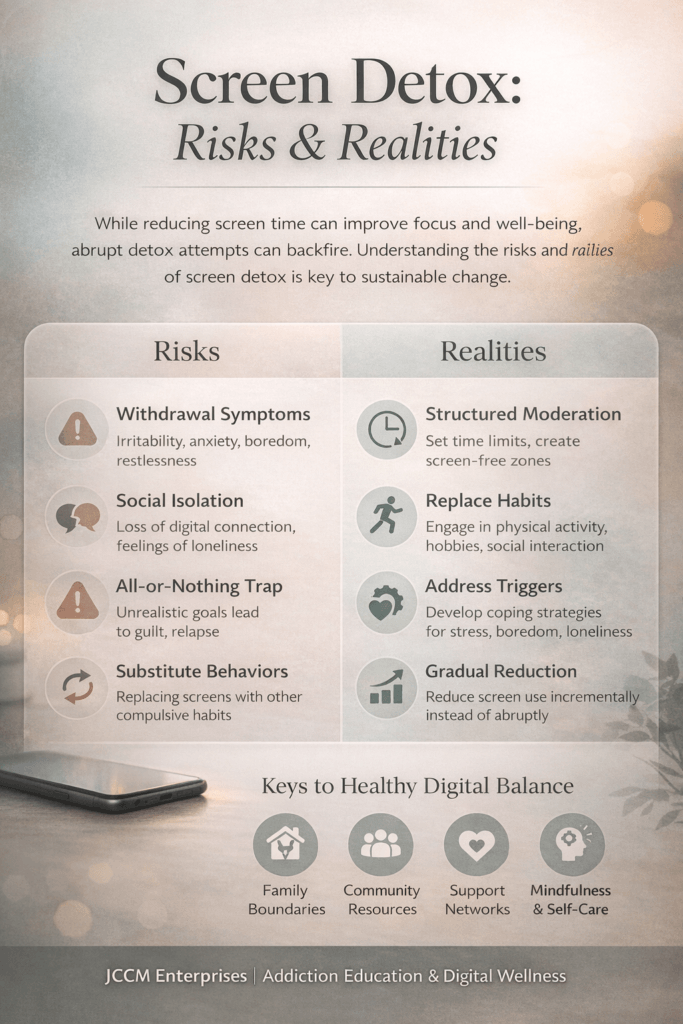
In today’s constantly connected world, screens play a central role in daily life, but excessive use can resemble behavioral addiction, causing compulsive engagement, mood dependence, poor sleep, and reduced focus. Many people attempt a “screen detox” to regain balance, yet abruptly cutting back can lead to irritability, boredom, anxiety, and social disconnection. Understanding both the risks and realities of screen detox is key to building sustainable, healthy digital habits rather than falling into cycles of relapse.
Screen Detox: Risks & Realities
In today’s hyperconnected world, screens dominate work, education, entertainment, and social interaction. For many individuals, excessive screen use can begin to resemble behavioral addiction—marked by compulsive checking, mood changes tied to notifications, sleep disruption, and difficulty disengaging. As a result, “screen detox” or “digital detox” has become a popular strategy. While reducing screen time can improve focus, mood, and sleep, the process is not always simple. Understanding the risks and realities of screen detox is essential for sustainable change.
One reality is withdrawal-like symptoms. Individuals who abruptly stop heavy screen use—especially social media, gaming, or streaming—may experience irritability, boredom, restlessness, anxiety, and even low mood. Dopamine-driven reward pathways, similar to those activated in other behavioral addictions, do not recalibrate overnight. Without replacement coping strategies, people may relapse quickly or substitute one compulsive behavior for another.
Another risk is social disconnection. Screens serve legitimate purposes: communication, professional networking, education, and support communities. A rigid detox may unintentionally isolate someone from positive digital connections, particularly if they rely on online peer groups or telehealth services.
There is also the “all-or-nothing” trap. When detox goals are unrealistic—such as complete elimination of all non-work screen use—failure can trigger guilt and self-criticism. This cycle mirrors patterns seen in addiction recovery: overcorrection, relapse, shame, and renewed overuse.
The healthier reality is structured moderation rather than total abstinence. Evidence-informed approaches include setting time boundaries, removing devices from bedrooms, disabling nonessential notifications, scheduling screen-free periods, and intentionally replacing digital habits with physical activity, face-to-face interaction, mindfulness, or creative engagement.
Screen detox is not about demonizing technology. It is about restoring intentional use. When approached gradually, with support from family boundaries and community accountability, reducing screen dependence can improve emotional regulation, sleep hygiene, productivity, and overall mental health.
In the end, the goal is not disconnection from the world—but reconnection with it.
Self-Management Strategies for Screen Detox: Understanding the Risks & Realities
Excessive screen use can mirror behavioral addiction patterns—compulsive checking, emotional dependence on notifications, sleep disruption, and difficulty tolerating boredom. While a screen detox can improve focus and emotional regulation, abrupt or poorly planned attempts may backfire. Irritability, anxiety, boredom, and rapid relapse are common when individuals remove screens without replacing the underlying reward system. Effective self-management strategies acknowledge both the benefits and risks of detox while promoting gradual, sustainable change.
The first strategy is awareness before restriction. Tracking screen time for one to two weeks helps identify high-risk periods, emotional triggers, and specific apps that drive overuse. Self-monitoring builds insight, which is foundational to behavior change models such as cognitive-behavioral therapy.
Second, replace rather than remove. Dopamine pathways activated by digital stimulation require alternative rewards. Physical activity, structured hobbies, journaling, in-person social interaction, reading, or mindfulness practices help regulate mood and reduce withdrawal-like symptoms. Without replacement behaviors, boredom often leads to relapse.
Third, implement graded reduction. Instead of eliminating all nonessential screen time, reduce it incrementally—such as by 20–30% per week. Disable nonessential notifications, establish screen-free zones (like bedrooms), and create protected time blocks for focused work. Gradual reduction minimizes emotional rebound effects.
Fourth, address emotional triggers. Many individuals use screens to escape stress, loneliness, or fatigue. Building coping skills—such as deep breathing, cognitive reframing, and short outdoor breaks—helps prevent substitution with another compulsive behavior.
Finally, practice self-compassion. Perfectionistic detox goals often lead to shame after setbacks. Sustainable change recognizes lapses as data, not failure. Consistency, not intensity, predicts long-term success.
Screen detox is not about rejecting technology; it is about restoring intentional engagement. Through structured self-management, individuals can reduce screen dependency while maintaining a healthy digital connection and emotional balance.
Family Support Strategies for Screen Detox: Risks & Realities
Screen overuse rarely affects just one person—it influences family communication, sleep routines, emotional regulation, and relationship quality. While a screen detox can restore connection and improve mental health, abrupt or rigid rules may create resistance, secrecy, or power struggles. Effective family support strategies acknowledge the risks and realities of digital reduction while fostering collaboration rather than control.
The first strategy is modeling before monitoring. Parents and caregivers who demonstrate balanced screen habits—such as device-free meals, limited nighttime scrolling, and intentional tech breaks—create credibility. Children and adolescents are more likely to adopt change when adults practice what they promote.
Second, create shared agreements instead of unilateral rules. Family meetings to discuss screen goals, concerns, and expectations allow everyone to participate in boundary setting. Collaborative plans may include device-free zones (e.g., bedrooms, the dinner table), scheduled tech-free hours, or charging stations outside sleeping areas. Shared ownership reduces rebellion and promotes accountability.
Third, replace screens with connections. Removing devices without offering alternatives often leads to boredom and frustration. Planning structured family activities—board games, outdoor walks, cooking together, faith or community involvement—helps rebuild dopamine pathways around real-world engagement.
Fourth, recognize emotional drivers. Screens are frequently used to cope with stress, loneliness, or social pressure. Open dialogue about these underlying needs prevents shame and supports healthier coping strategies. Family encouragement, empathy, and validation reduce the risk of secretive overuse.
Finally, practice flexibility and compassion. Detox is not about perfection or total abstinence. Occasional setbacks are expected, especially during high-stress or heavy academic-demand periods. A supportive family response strengthens trust and long-term behavior change.
Screen detox, when guided by family support rather than punishment, becomes less about restriction and more about restoring balance, communication, and shared presence.
Community Resource Strategies for Screen Detox: Risks & Realities
Screen overuse has evolved into a widespread behavioral health concern, affecting sleep, attention, productivity, and emotional regulation. While individual and family strategies are important, sustainable screen-detox efforts are strengthened by community resources. However, like other behavior change efforts, digital reduction carries risks—withdrawal-like symptoms, social isolation, and relapse—if individuals lack structured alternatives and accountability.
Community-based strategies provide a protective structure. Local libraries, recreation centers, faith organizations, and wellness programs offer screen-free environments that promote real-world engagement. Participation in sports leagues, book clubs, volunteer initiatives, and creative workshops helps rebuild social reward pathways in healthy ways. These alternatives are essential because abrupt screen reduction without replacement activities often leads to boredom and return to excessive use.
Support groups and psychoeducational workshops can also normalize the challenges of digital overuse. Behavioral addiction models show that shared experiences reduce shame and increase motivation. Community mental health programs may incorporate cognitive behavioral techniques, mindfulness training, and digital hygiene education to help individuals develop coping skills.
Schools and workplaces also play a role. Policies promoting tech-free breaks, in-person collaboration, and structured downtime reinforce balance rather than constant connectivity. Public health campaigns can educate communities about sleep hygiene, notification management, and the psychological impact of algorithm-driven platforms.
The reality is that screens are embedded in modern life. A community-supported detox does not aim for elimination but for intentional use. When neighborhoods, schools, faith groups, and healthcare systems collaborate, individuals are less likely to experience relapse, isolation, or substitution behaviors.
Screen detox becomes most effective when it is not a solitary effort, but a shared cultural shift toward healthier digital boundaries and real-world connections.
Frequently Asked Questions
Here are some common questions:
1. What is a screen detox?
A screen detox is a structured reduction or temporary break from digital devices such as smartphones, tablets, computers, gaming systems, and social media platforms. The goal is to reset unhealthy patterns, improve emotional regulation, and restore balanced technology use.
2. Is screen addiction a real condition?
While not formally classified the same way as substance use disorders, excessive screen use—particularly gaming and social media—can mirror behavioral addiction patterns. These include compulsive engagement, withdrawal-like symptoms, loss of control, and continued use despite negative consequences.
3. What are common withdrawal symptoms during a screen detox?
Individuals may experience irritability, boredom, restlessness, anxiety, low mood, difficulty concentrating, and sleep disruption. These symptoms typically improve as the brain’s reward system recalibrates.
4. Can screen detox backfire?
Yes. Abrupt or extreme detox efforts can lead to frustration, relapse, or substitution behaviors (e.g., replacing social media with excessive streaming). Unrealistic goals often create guilt and shame after setbacks.
5. Is complete abstinence from screens necessary?
In most cases, no. Because screens are essential for work, education, and communication, structured moderation is often more sustainable than total elimination.
6. How long should a screen detox last?
It varies. Some individuals benefit from short resets (24–72 hours), while others use gradual reduction over weeks. The focus should be on long-term habit change rather than a temporary challenge.
7. What are healthier alternatives during detox?
Physical activity, reading, journaling, mindfulness, hobbies, in-person social connections, volunteering, and outdoor activities help replace digital reward pathways.
8. How does screen overuse affect mental health?
Excessive use is associated with increased anxiety, sleep disturbances, reduced attention span, emotional dysregulation, and social comparison stress—especially with social media.
9. Should families detox together?
Yes. Shared boundaries and collaborative planning reduce resistance and improve accountability. Modeling balanced behavior is often more effective than strict enforcement.
10. When should professional help be considered?
If screen use significantly interferes with sleep, school/work performance, relationships, or mental health—and self-management efforts fail—consulting a behavioral health professional may be beneficial.
11. Is screen detox suitable for children and teens?
Yes, but it should be developmentally appropriate. Structured limits, supervision, and replacement activities are key. Sudden restriction without support may increase conflict.
12. What is the ultimate goal of screen detox?
The goal is not to eliminate technology but to restore intentional, balanced use—improving focus, emotional well-being, sleep quality, and real-world connection.
Conclusion
Screen detox is not about rejecting technology; it is about restoring intentional and balanced use. The risks—withdrawal-like symptoms, unrealistic expectations, and potential isolation—highlight the importance of gradual change, replacement activities, and supportive environments. Sustainable progress comes from structured moderation, emotional awareness, and accountability rather than rigid abstinence. When approached thoughtfully, screen detox can improve sleep, focus, relationships, and overall mental well-being. Ultimately, the goal is not to disconnect from modern life, but to reconnect with purpose, presence, and meaningful human interaction.
Video: The Dopamine Crash Nobody Talks About #digitaldetox #psychology