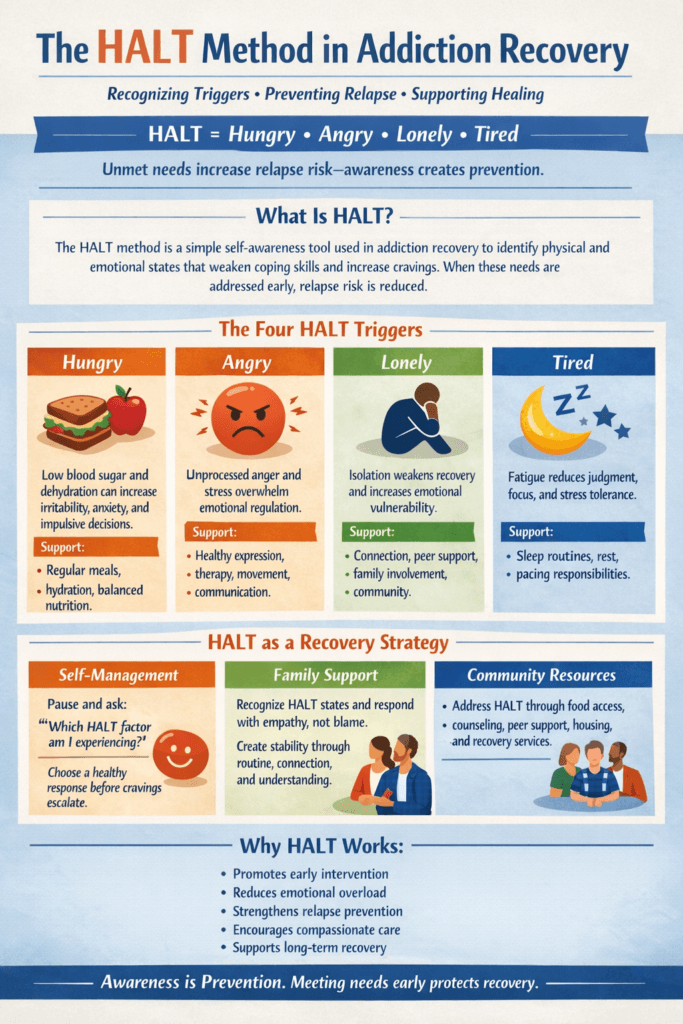
The **HALT method—Hungry, Angry, Lonely, Tired—**is a widely used and effective framework in addiction recovery for identifying early warning signs that increase vulnerability to cravings and relapse. Rather than viewing relapse risk as a lack of willpower, HALT emphasizes that many recovery challenges arise from unmet physical, emotional, and social needs. When these needs go unrecognized, coping skills weaken, and impulsive decision-making increases.
HALT provides a shared, easy-to-remember framework that helps individuals pause and assess their internal state before cravings escalate. It also allows families and support systems to recognize signs of vulnerability and respond with empathy rather than judgment. At the community level, HALT helps guide supportive interventions that address basic needs, emotional regulation, connection, and rest.
When applied across self-management, family support, and community resources, the HALT method shifts recovery away from crisis-driven responses and toward proactive, preventive care. By addressing vulnerability early, HALT strengthens emotional regulation, reduces relapse risk, and supports long-term recovery stability.
The HALT Method in Addiction Recovery: A Simple Tool That Prevents Relapse
In addiction recovery, relapse often doesn’t begin with a substance—it begins with an unmet need. The HALT method is a practical, evidence-informed self-awareness tool that helps individuals recognize vulnerable emotional and physical states before they escalate into cravings or relapse. HALT stands for Hungry, Angry, Lonely, and Tired, four common conditions that weaken coping skills and decision-making.
Hunger affects more than the body; it disrupts blood sugar, concentration, and emotional regulation. When nutrition is neglected, irritability and impulsivity increase, making substances seem like a quick fix. Regular meals and hydration are foundational to recovery, not an afterthought.
Anger is another powerful trigger. Unprocessed anger—whether from stress, trauma, resentment, or frustration—can create emotional overload. In recovery, anger is not something to suppress but something to acknowledge and express safely through therapy, journaling, physical movement, or communication.
Loneliness is one of the strongest predictors of relapse. Addiction often thrives in isolation, while recovery grows in connection. Feeling disconnected can reignite old coping patterns, especially when support systems are weak or underused. Peer support, recovery meetings, trusted relationships, and community involvement directly counter this risk.
Tiredness impacts judgment, emotional control, and resilience. Sleep deprivation and burnout reduce the brain’s ability to manage stress and cravings. Consistent sleep routines, rest, and pacing daily responsibilities are essential recovery strategies—not signs of weakness.
The power of HALT lies in its simplicity. By regularly asking, “Am I hungry, angry, lonely, or tired right now?”, individuals can intervene early with healthy actions rather than reacting impulsively. HALT encourages proactive self-care, emotional honesty, and accountability.
In addiction recovery, awareness is prevention. The HALT method helps people pause, assess their needs, and choose supportive responses—transforming moments of vulnerability into opportunities for growth, stability, and long-term recovery.
Self-Management Strategies Using the HALT Method in Addiction Recovery
Successful addiction recovery depends not only on treatment and support, but on daily self-management skills that help individuals respond to stress before it turns into relapse. The HALT method—Hungry, Angry, Lonely, Tired—is a powerful self-management framework that helps people recognize internal warning signs and take action early. When used intentionally, HALT becomes a practical guide for regulating emotions, protecting recovery, and building resilience.
Managing Hunger begins with recognizing the connection between physical needs and emotional stability. Skipping meals, dehydration, or poor nutrition can increase irritability, anxiety, and cravings. Self-management strategies include structured meal times, balanced nutrition, healthy snacks, and regular hydration. Planning ahead—such as keeping snacks available or setting meal reminders—reduces impulsive decisions driven by discomfort.
Managing Anger requires awareness and emotional regulation. Anger often masks deeper emotions such as fear, shame, or frustration. Instead of reacting automatically, self-management involves pausing, naming the emotion, and choosing a healthy outlet. Techniques such as deep breathing, physical activity, journaling, assertive communication, or speaking with a sponsor or therapist help process anger without turning to substances.
Managing Loneliness focuses on connection and accountability. Isolation is a common relapse risk, especially during stress or transition periods. Self-management strategies include scheduling regular check-ins with supportive people, attending recovery meetings, participating in group therapy, or engaging in purposeful activities like volunteering. Building connection into daily routines helps recovery remain active rather than reactive.
Managing Tiredness involves protecting energy, sleep, and mental capacity. Fatigue weakens judgment and emotional control, making cravings harder to resist. Effective self-management includes consistent sleep schedules, limiting overcommitment, taking breaks, and recognizing burnout early. Rest is not a luxury in recovery—it is a protective factor.
The strength of HALT as a self-management tool lies in daily practice. Regular self-check-ins throughout the day enable individuals to address needs before they escalate. Instead of asking, “Why am I craving?”, HALT reframes the question to, “What do I need right now?”
By combining awareness with action, the HALT method empowers individuals to take ownership of their recovery. Self-management through HALT transforms vulnerable moments into opportunities for self-care, emotional growth, and long-term stability—supporting recovery not just in crisis, but in everyday life.
Family Support Strategies Using the HALT Method in Addiction Recovery
Family involvement plays a critical role in addiction recovery, and one of the most effective ways families can offer support is by understanding and using the HALT method—Hungry, Angry, Lonely, Tired. While HALT is often taught as an individual self-awareness tool, it is equally powerful when families use it to recognize early warning signs, respond with compassion, and reduce relapse risk within the home.
Supporting Hunger starts with meeting basic physical needs. Families can help by encouraging regular meals, shared family eating times, and balanced nutrition. Low blood sugar and dehydration can intensify irritability, anxiety, and cravings, often leading to misunderstandings. By normalizing healthy routines around food and hydration, families create a more stable emotional environment that supports recovery.
Supporting Anger requires patience and a safe emotional environment. Anger in recovery is often a response to stress, shame, or unresolved trauma—not defiance or manipulation. Families can help by avoiding confrontational reactions, listening without judgment, and encouraging healthy outlets such as therapy, exercise, or calm conversation. Modeling respectful communication teaches that emotions can be expressed safely without escalation.
Supporting Loneliness focuses on connection rather than control. Many individuals in recovery struggle with isolation, even when surrounded by others. Families can reduce loneliness by spending intentional quality time, checking in consistently, encouraging peer support or recovery meetings, and avoiding shaming language. Recovery thrives when individuals feel accepted, included, and valued rather than monitored or judged.
Supporting Tiredness means respecting limits and prioritizing rest. Early recovery is physically and emotionally exhausting. Families can support by reducing overload, encouraging regular sleep routines, and recognizing that irritability or withdrawal may stem from fatigue rather than a lack of effort. Protecting rest helps preserve emotional regulation and decision-making.
The HALT method also helps families shift their mindset. Instead of reacting to behaviors with frustration, families learn to ask a different question: “Which HALT factor might be affecting them right now?” This reframing reduces conflict, builds empathy, and promotes problem-solving over blame.
When families use HALT as a shared framework, recovery becomes a collaborative process rather than an individual struggle. By responding early to hunger, anger, loneliness, and tiredness, families help create a supportive, predictable environment where healing is possible. In addiction recovery, informed family support doesn’t just prevent relapse—it strengthens trust, communication, and long-term stability.
Community Resource Strategies Using the HALT Method in Addiction Recovery
Addiction recovery does not happen in isolation. While personal insight and family support are essential, community resources play a powerful role in addressing the conditions identified by the HALT method—Hungry, Angry, Lonely, Tired. Communities that align services with these four vulnerability states can significantly reduce relapse risk and promote long-term recovery.
Addressing Hunger through Community Resources begins with access to basic needs. Food insecurity is a hidden trigger for stress, shame, and relapse. Community food banks, meal programs, recovery housing with shared meals, and nutrition education programs help stabilize individuals in recovery. When hunger is reduced, emotional regulation and treatment engagement improve.
Addressing Anger through Community-Based Supports focuses on emotional regulation and stress management. Counseling centers, outpatient treatment programs, anger management groups, trauma-informed services, and court diversion programs provide safe outlets for processing anger. These resources help individuals learn coping skills, conflict resolution, and emotional awareness—reducing the likelihood of reactive substance use.
Addressing Loneliness through Connection and Belonging is one of the most impactful community strategies. Peer recovery support services, recovery community centers, mutual-help groups, faith-based programs, and volunteer opportunities create meaningful connections. These spaces replace isolation with accountability, purpose, and shared experience—key protective factors in recovery.
Addressing Tiredness through Stability and Structure involves reducing burnout and overload. Community resources such as recovery-friendly workplaces, housing assistance programs, transportation services, childcare support, and case management help ease daily stress. When practical burdens are reduced, individuals have more energy to focus on healing and on making healthy decisions.
The HALT method also provides a common language across community systems. When healthcare providers, peer supporters, social workers, and recovery organizations consistently use HALT, individuals receive coordinated, compassionate care rather than fragmented services. This shared framework improves early intervention and relapse prevention.
By aligning community resources with the HALT method, recovery becomes more accessible and sustainable. Communities that address hunger, anger, loneliness, and tiredness are not just supporting sobriety—they are building environments where recovery can thrive. In addiction recovery, strong communities turn vulnerability into stability and isolation into hope.
Frequently Asked Questions
Here are some common questions:
What does HALT stand for in addiction recovery?
HALT stands for Hungry, Angry, Lonely, and Tired. These four physical and emotional states increase vulnerability to cravings and relapse when they are not addressed.
Why is the HALT method important in recovery?
HALT helps individuals recognize early warning signs before cravings escalate. It shifts focus from substance use to unmet needs, allowing for prevention instead of crisis response.
Is the HALT method only for people in early recovery?
No. HALT is useful at all stages of recovery. While especially helpful early on, it remains an effective relapse-prevention and self-regulation tool long term.
How does hunger affect addiction recovery?
Hunger and dehydration disrupt blood sugar and brain function, increasing irritability, anxiety, and impulsivity. This can make cravings stronger and decision-making weaker.
Why is anger a relapse risk factor?
Anger overwhelms emotional regulation and often masks deeper feelings like fear or shame. Without healthy expression, anger can trigger impulsive substance use.
How does loneliness contribute to relapse?
Isolation reduces accountability and emotional support. Addiction often thrives in isolation, while recovery grows through connection, belonging, and shared support.
Why does being tired increase relapse risk?
Fatigue reduces judgment, patience, and stress tolerance. When exhausted, individuals are more likely to revert to old coping patterns rather than healthy strategies.
How can the HALT method be used as a self-management tool?
Individuals can pause and ask, “Am I hungry, angry, lonely, or tired?” Then they take a healthy action—such as eating, resting, reaching out, or calming emotions—before cravings intensify.
How can families use the HALT method to support recovery?
Families can recognize HALT states and respond with empathy instead of blame. Supporting routines, communication, rest, and connection helps reduce conflict and the risk of relapse.
How do community resources support HALT needs?
Community services address HALT through food access, counseling, peer support, housing assistance, transportation, and recovery-friendly programs that reduce stress and isolation.
Does HALT replace therapy or treatment?
No. HALT is a complementary tool, not a replacement. It works best alongside professional treatment, counseling, medication-assisted care, and peer support.
How often should HALT be practiced?
HALT should be used daily and during stressful moments. Regular check-ins make it easier to recognize patterns and intervene early.
Can HALT help prevent relapse?
Yes. By identifying vulnerability early and responding to unmet needs, HALT reduces emotional overload and strengthens relapse prevention.
Is HALT supported by evidence-based recovery principles?
Yes. HALT aligns with neuroscience, behavioral health, and relapse-prevention models that emphasize emotional regulation, self-awareness, and meeting basic needs.
What is the main goal of the HALT method?
The goal is to increase awareness, encourage timely self-care, and create supportive responses that protect recovery and promote long-term stability.
Conclusion
Using the HALT method as a self-management tool empowers individuals to check in with their needs and take healthy action before stress escalates. When families adopt HALT, they learn to respond with empathy rather than judgment, strengthening communication and trust. At the community level, aligning resources with HALT—through access to food, emotional support, connection, and rest—creates environments that actively protect recovery. Together, these approaches transform HALT from a personal awareness tool into a comprehensive recovery strategy, reinforcing stability, reducing relapse risk, and supporting long-term healing at individual, family, and community levels.
Video: HALT: A Powerful Relapse Prevention Tool in Addiction Recovery