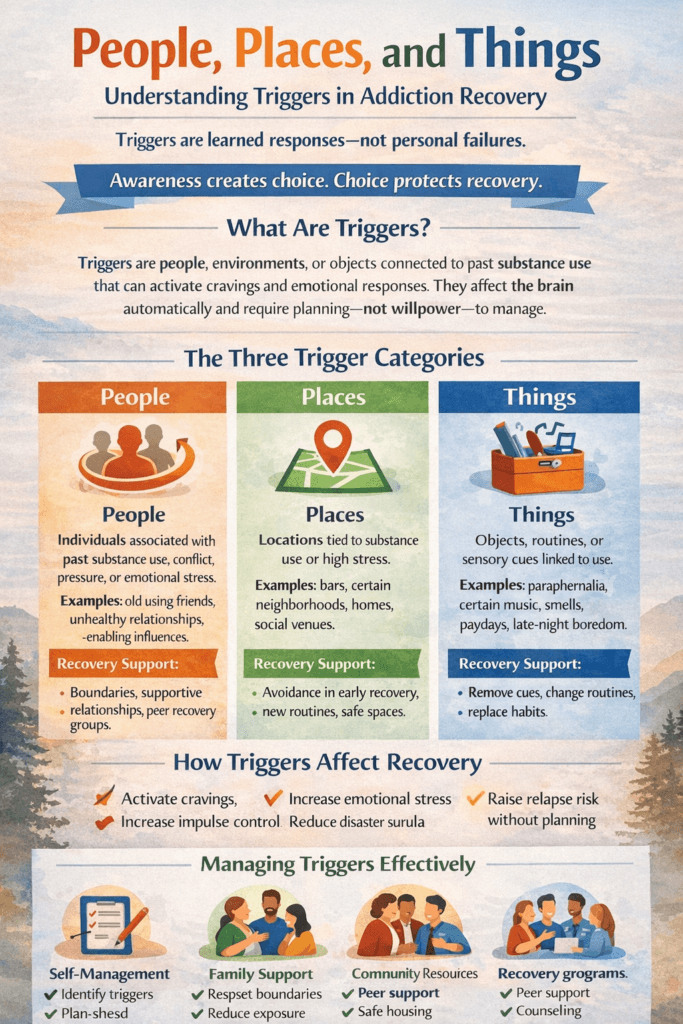
In addiction recovery, understanding triggers is essential for preventing relapse and building long-term stability. One of the most widely used frameworks for identifying external triggers is “People, Places, and Things.” This concept helps individuals recognize how certain relationships, environments, and objects are connected to past substance use and can automatically activate cravings. These triggers are learned brain responses, not personal failures. By increasing awareness of people, places, and things, recovery shifts from reacting to urges to proactively managing risk.
Understanding “People, Places, and Things”: Identifying Triggers in Addiction Recovery
In addiction recovery, relapse prevention begins with understanding triggers—the internal and external cues that can reignite cravings and risky behaviors. One of the most widely used and practical frameworks for identifying these triggers is “People, Places, and Things.” This concept helps individuals recognize patterns connected to past substance use and make intentional changes that protect recovery.
People can be powerful triggers because addiction often develops within social contexts. Certain individuals may be associated with past substance use, enabling behaviors, emotional conflict, or unresolved trauma. Even well-meaning people can trigger cravings if interactions evoke stress, shame, or pressure. Recovery-focused strategies include setting boundaries, limiting contact with high-risk individuals, strengthening relationships with supportive people, and building new connections through peer support and recovery communities.
Places matter because environments store emotional and sensory memories. Locations where substance use occurred—such as specific homes, neighborhoods, bars, or social venues—can activate cravings automatically. These reactions are rooted in brain conditioning rather than conscious choice. Recovery involves avoiding high-risk locations when possible, creating new routines, and identifying safe spaces that promote calm, accountability, and healthy habits.
Things are objects, activities, or sensory cues associated with substance use. This can include paraphernalia, music, certain smells, media, or even routines like payday or late-night boredom. These cues can subtly reactivate craving pathways. Removing or replacing triggering items, changing routines, and introducing recovery-supportive activities are key protective strategies.
The purpose of identifying people, places, and things is not to live in fear or avoidance forever, but to increase awareness and choice. Early recovery often requires stronger boundaries and environmental changes, while later recovery focuses on coping skills and resilience when exposure is unavoidable. Triggers lose power when they are anticipated, planned for, and managed with support.
Understanding people, places, and things also reduces shame. Cravings triggered by familiar cues are not signs of weakness—they are learned brain responses that can be unlearned over time. With insight, preparation, and support, individuals can navigate triggers safely and confidently.
In addiction recovery, awareness is protection. By recognizing and addressing people, places, and things, individuals reclaim control over their environment, strengthen relapse prevention, and create space for long-term healing and stability.
Self-Management Strategies for “People, Places, and Things” Triggers in Addiction Recovery
Self-management is a core skill in addiction recovery, especially when it comes to recognizing and responding to triggers. The “People, Places, and Things” framework helps individuals identify external cues associated with past substance use and develop practical strategies to protect their recovery. Rather than relying on avoidance alone, self-management focuses on awareness, planning, and healthy responses.
Managing People as Triggers begins with recognizing emotional patterns. Certain relationships may be tied to substance use, conflict, or pressure to return to old behaviors. Effective self-management includes setting clear boundaries, limiting contact with high-risk individuals, and choosing supportive relationships that respect recovery. Practicing assertive communication, planning exit strategies for stressful interactions, and identifying safe contacts to reach out to during cravings strengthen personal control.
Managing Places as Triggers involves understanding how environments influence cravings. Locations associated with past use can activate strong emotional and sensory memories. Self-management strategies include avoiding high-risk places during early recovery, creating new routines to replace old patterns, and identifying safe spaces, such as recovery meetings, fitness centers, or quiet environments, that promote stability. When exposure is unavoidable, planning ahead reduces risk.
Managing Things as Triggers focuses on removing or replacing cues linked to substance use. Items such as paraphernalia, certain music, routines, or even specific times of day can reignite cravings. Self-management involves removing triggers, changing daily habits, and intentionally incorporating recovery-supportive activities such as exercise, hobbies, mindfulness, or a structured schedule.
A key part of self-management is preparation. Developing a personal trigger plan helps individuals anticipate situations, identify warning signs, and choose healthy responses before cravings escalate. This proactive approach replaces impulsive reactions with intentional choices.
Over time, consistent self-management weakens the power of triggers. Cravings become more manageable as new neural pathways form and healthier routines take hold. In addiction recovery, mastering self-management strategies for people, places, and things empowers individuals to navigate daily life with confidence while protecting long-term recovery and personal growth.
Family Support Strategies for “People, Places, and Things” Triggers in Addiction Recovery
Family support is a powerful protective factor in addiction recovery, especially when families understand how “People, Places, and Things” function as triggers. These triggers are not a matter of willpower but conditioned responses tied to past substance use. When families recognize and respond to these triggers with awareness and empathy, they help create an environment that supports healing and relapse prevention.
Supporting Triggers Related to People begins with understanding that certain relationships may increase stress, cravings, or emotional overload. Families can help by respecting boundaries, avoiding pressure to reconnect with high-risk individuals, and supporting the individual’s choices about social contact. Using calm, nonjudgmental communication and encouraging connections with recovery-supportive peers helps reduce emotional strain.
Supporting Triggers Related to Places involves recognizing that some environments are closely associated with past substance use. Families can support recovery by helping avoid high-risk locations, assisting with transportation when needed, and creating safe, predictable home environments. Family routines that emphasize stability, such as shared meals and consistent schedules, further reduce environmental stress.
Supporting Triggers Related to Things focuses on removing or minimizing exposure to cues linked to substance use. This may include eliminating paraphernalia, avoiding substance-related media, or changing household routines that resemble past use patterns. Families can also encourage replacement activities, such as exercise, hobbies, or structured family time, to reinforce healthy coping skills.
An important family strategy is reframing behavior. Irritability, withdrawal, or emotional reactions may signal trigger exposure rather than resistance to recovery. Asking supportive questions, such as “What might be triggering this right now?”, fosters problem-solving rather than conflict.
Families also benefit from education and support. Learning about triggers reduces fear, blame, and misunderstandings while strengthening trust. When families work collaboratively to manage people, places, and things, recovery becomes a shared process rather than an individual burden.
In addiction recovery, informed family support does more than reduce relapse risk—it builds safety, connection, and long-term stability. By understanding and addressing triggers together, families become active partners in healing and sustained recovery.
Community Resource Strategies for “People, Places, and Things” Triggers in Addiction Recovery
Addiction recovery is strengthened when communities actively support individuals in managing triggers linked to “People, Places, and Things.” These triggers are deeply connected to environments, social networks, and daily experiences. Community resources play a vital role in reducing exposure to high-risk situations while increasing access to stability, connection, and healthy alternatives.
Addressing People-Based Triggers Through Community Support focuses on replacing high-risk social circles with recovery-supportive relationships. Peer recovery support programs, mutual-help groups, recovery community centers, and group counseling provide safe spaces where individuals feel understood and accepted. These connections reduce reliance on past social networks tied to substance use and promote accountability, belonging, and shared growth.
Addressing Place-Based Triggers Through Environmental Support involves creating access to safe, structured environments. Recovery housing, sober living homes, community wellness centers, and recovery-friendly workplaces help individuals avoid locations associated with past use. Transportation assistance and flexible scheduling further reduce the need to return to high-risk neighborhoods or settings during vulnerable periods.
Addressing Thing-Based Triggers Through Resource Access includes removing exposure to substance-related cues and replacing them with healthy routines. Community programs offering recreational activities, job training, educational opportunities, fitness programs, and creative outlets help individuals establish new habits and identities that support recovery. These resources redirect time, attention, and energy away from old patterns.
Community systems also reduce stressors that intensify triggers. Housing assistance, food programs, childcare support, legal aid, and case management address practical burdens that often push individuals back toward familiar but harmful coping mechanisms. When basic needs are met, triggers lose much of their power.
Equally important is coordination. When healthcare providers, social services, peer supporters, and recovery organizations share an understanding of people, places, and things, individuals receive more consistent and compassionate care. This shared framework supports early intervention and reduces the risk of relapse.
In addiction recovery, strong communities change outcomes. By addressing people, places, and things through accessible, recovery-oriented resources, communities help individuals move beyond survival toward stability, purpose, and long-term healing.
Frequently Asked Questions
Here are some common questions:
What does “People, Places, and Things” mean in addiction recovery?
It refers to common external triggers that can activate cravings. These include certain individuals, environments, or objects connected to past substance use.
Why are people considered triggers?
People associated with past use, emotional conflict, or enabling behaviors can activate stress, memories, and cravings. This can happen even if the person has good intentions.
What kinds of places can trigger relapse?
Places where substance use occurred, such as bars, homes, neighborhoods, or social venues, can trigger cravings due to conditioned brain responses tied to memory and emotion.
What are examples of “things” as triggers?
Things include paraphernalia, music, smells, routines, paydays, media, or specific times of day that were linked to substance use in the past.
Are triggers a sign of weakness?
No. Triggers are learned brain responses. Experiencing cravings does not mean recovery is failing—it means the brain is responding to familiar cues.
Can triggers be eliminated completely?
Some triggers can be avoided, especially in early recovery, but many cannot be fully eliminated. Recovery focuses on awareness, planning, and healthy coping rather than total avoidance.
How do people manage triggers in early recovery?
Early recovery often involves stronger boundaries, avoiding high-risk people and places, removing triggering objects, and increasing structure and support.
Do triggers change over time?
Yes. Triggers often weaken as recovery progresses and new coping skills, routines, and neural pathways develop.
How does planning help with triggers?
Planning allows individuals to anticipate situations, identify warning signs, and choose healthy responses before cravings escalate.
How can families help with people, places, and things triggers?
Families can respect boundaries, reduce exposure to high-risk environments, avoid judgment, and support healthy routines and connections.
How do community resources help manage triggers?
Community resources provide peer support, safe housing, counseling, employment assistance, and recovery-friendly environments that reduce exposure to high-risk situations.
Is avoiding triggers forever necessary?
No. Avoidance is often a short-term strategy. Long-term recovery focuses on coping skills and resilience when exposure occurs.
How do triggers affect relapse risk?
Unmanaged triggers increase emotional stress and reduce impulse control, which raises relapse risk. Managed triggers reduce vulnerability.
Can triggers become learning opportunities?
Yes. When identified and managed successfully, triggers strengthen confidence, self-awareness, and relapse-prevention skills.
What is the main goal of understanding people, places, and things?
The goal is to increase awareness, reduce shame, improve preparedness, and support long-term recovery stability.
Conclusion
Recognizing and addressing people, places, and things empowers individuals to regain control over their recovery journey. With insight, planning, and support, triggers lose their intensity and influence over time. Whether managed through self-awareness, family support, or community resources, understanding triggers transforms vulnerability into preparedness. In addiction recovery, awareness is protection—when triggers are anticipated and managed, recovery becomes stronger, safer, and more sustainable.
Video: The Sneaky Triggers Hiding in Your Daily Life #addiction #recovery