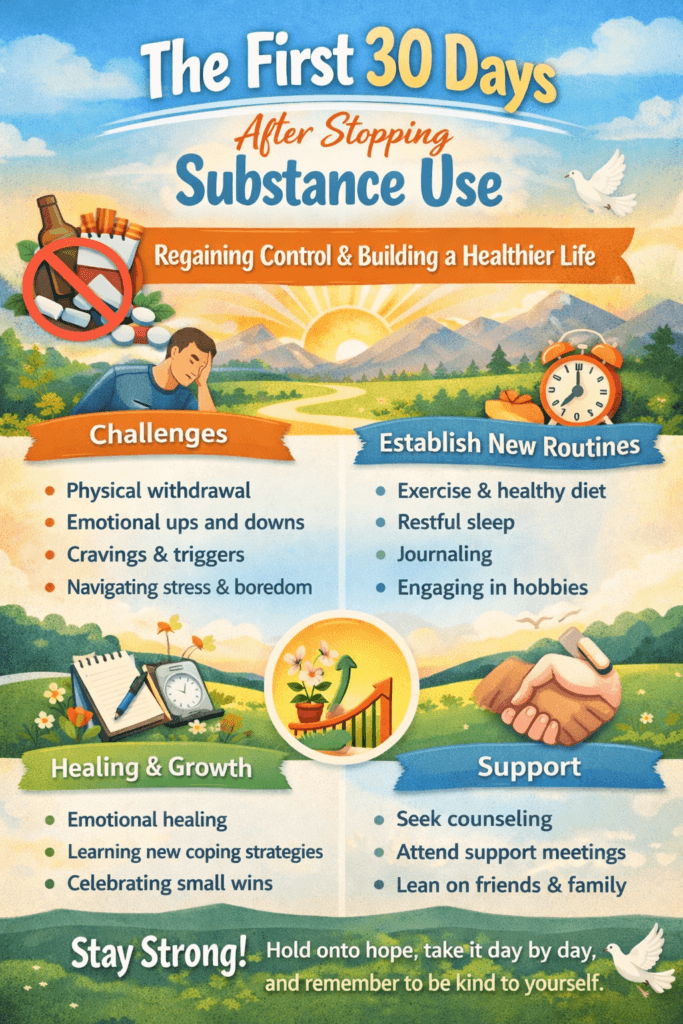
The first 30 days after stopping substance use represent one of the most critical and vulnerable stages of recovery. During this period, the body begins to detoxify, and the brain starts adjusting to the absence of substances that previously altered its reward and stress systems. Individuals may experience physical withdrawal symptoms, emotional instability, cravings, and shifts in energy levels. While this phase can be uncomfortable and unpredictable, it also marks the beginning of neurological healing and behavioral change. Understanding what occurs during the first month of sobriety helps normalize the challenges of early recovery and highlights the importance of medical support, structure, and accountability.
The First 30 Days After Stopping Substance Use: What to Expect and How to Stay Strong
The first 30 days after stopping substance use are often the most physically and emotionally intense phase of recovery. This period marks the beginning of neurological stabilization, emotional adjustment, and behavioral change. While it can be challenging, it is also a critical window for healing. Understanding what happens during this time helps individuals prepare, stay motivated, and seek appropriate support.
Recovery in the first month is not just about abstinence—it is about rebuilding the brain, body, and the structure of daily life.
Week 1: Acute Withdrawal and Physical Adjustment
The first week is typically dominated by withdrawal symptoms, especially for substances such as alcohol, opioids, benzodiazepines, or stimulants.
Common symptoms may include:
- Nausea or gastrointestinal distress
- Sweating and shaking
- Headaches
- Sleep disturbances
- Irritability or anxiety
- Cravings
- Fatigue
The severity depends on the substance used, duration of use, and individual health factors. In some cases, medical supervision is necessary, particularly for alcohol or benzodiazepine withdrawal, which can be dangerous.
During this stage, the brain begins recalibrating after prolonged exposure to substances that artificially stimulate dopamine and other neurotransmitters.
Week 2: Emotional Fluctuations and Psychological Withdrawal
As physical symptoms begin to decrease, emotional and psychological symptoms often intensify. This phase is sometimes referred to as the “emotional crash.”
Individuals may experience:
- Depression
- Anxiety
- Mood swings
- Low motivation
- Brain fog
- Increased cravings
This occurs because the brain’s reward system is still stabilizing. Natural dopamine production may be temporarily low, leading to feelings of emptiness or lack of pleasure (anhedonia).
Support during this period is essential. Therapy, peer support groups, and structured routines can reduce the risk of relapse.
Week 3: Rebuilding Routine and Identity
By the third week, many individuals begin to regain physical energy. However, psychological triggers and habits become more noticeable.
This phase often involves:
- Confronting triggers
- Rebuilding daily structure
- Learning new coping skills
- Managing stress without substances
Without the numbing effect of substances, emotions may feel more intense. This is a normal part of recovery as emotional regulation systems strengthen.
Developing healthy habits—exercise, balanced nutrition, sleep routines, and mindfulness practices—supports neurological healing.
Week 4: Stabilization and Early Confidence
By the end of the first 30 days, many people notice:
- Improved sleep patterns
- Better concentration
- Increased emotional awareness
- Improved physical health
- Clearer thinking
Cravings may still occur, especially in response to stress or environmental triggers, but they often become more manageable with coping strategies.
Completing the first 30 days builds psychological confidence and reinforces self-efficacy—the belief that change is possible.
Common Challenges During the First Month
- Romanticizing past substance use
- Social pressure
- Emotional vulnerability
- Boredom or lack of structure
- Underestimating relapse risk
Understanding that discomfort is temporary helps individuals remain committed.
Why the First 30 Days Matter
The first month lays the neurological and behavioral foundation for long-term recovery. During this period:
- Brain chemistry begins to stabilize
- Cravings gradually decrease
- Healthy habits are introduced
- Support systems are established
- Relapse prevention strategies are practiced
While recovery continues beyond 30 days, this milestone represents a critical turning point.
Strategies for Success
- Seek medical or clinical supervision when necessary
- Attend therapy or counseling regularly
- Participate in support groups
- Build a structured daily routine
- Avoid high-risk environments
- Practice stress management techniques
- Stay connected to supportive individuals
Recovery is not linear. Some days will be more difficult than others. Progress should be measured by persistence rather than perfection.
Conclusion
The first 30 days after stopping substance use are a period of profound physical and emotional adjustment. Withdrawal, mood changes, and cravings are common—but they are temporary signs that the body and brain are healing.
With proper support, structure, and coping strategies, individuals can successfully navigate this critical stage and build a strong foundation for sustained recovery. The first 30 days are not the end of the journey—they are the beginning of a healthier and more stable future.
Self-Management Strategies for the First 30 Days After Stopping Substance Use
The first 30 days after stopping substance use are a critical phase of early recovery. During this period, the body begins detoxifying, the brain starts recalibrating its reward system, and emotional regulation gradually stabilizes. While professional support is often recommended, self-management strategies play a powerful role in maintaining sobriety and preventing relapse.
This first month is not only about abstaining from substances—it is about learning how to manage thoughts, emotions, stress, and behavior without chemical coping mechanisms.
Why Self-Management Matters in Early Recovery
Substance use often becomes a primary coping strategy. Once it is removed, individuals must develop alternative methods for handling:
- Stress
- Emotional discomfort
- Boredom
- Social pressure
- Cravings
Without structured self-management, the risk of relapse significantly increases during this vulnerable period.
Week 1: Managing Withdrawal and Physical Stabilization
1. Prioritize Physical Care
- Stay hydrated
- Eat small, balanced meals
- Rest as much as possible
- Seek medical supervision if withdrawal symptoms are severe
The body is adjusting to the absence of substances, and fatigue or irritability is common.
2. Reduce Environmental Triggers
- Remove substances from the home
- Avoid high-risk locations
- Limit contact with individuals who encourage use
Environmental control is a key relapse prevention strategy.
Week 2: Managing Emotional Fluctuations
As physical symptoms improve, emotional challenges may intensify.
3. Practice Emotional Awareness
Keep a daily journal to identify:
- Triggers
- Cravings
- Mood changes
- Stress patterns
Self-awareness strengthens impulse control.
4. Use Grounding Techniques
Examples include:
- Deep breathing exercises
- Progressive muscle relaxation
- Short mindfulness practices
- 5-4-3-2-1 sensory grounding method
These techniques reduce anxiety and emotional overload.
Week 3: Building Structure and Routine
Substance use often disrupts daily structure. Rebuilding routine enhances stability.
5. Create a Daily Schedule
Include:
- Wake and sleep times
- Meals
- Exercise
- Support meetings
- Productive tasks
Structure reduces idle time, a major relapse trigger.
6. Engage in Physical Activity
Exercise helps:
- Increase natural dopamine production
- Improve mood
- Reduce cravings
- Support sleep
Even moderate daily walking can significantly improve mental clarity.
Week 4: Strengthening Cognitive and Behavioral Control
By this stage, individuals may experience improved clarity but continued psychological triggers.
7. Develop a Relapse Prevention Plan
Identify:
- Personal triggers
- Warning signs
- Coping strategies
- Emergency support contacts
Planning ahead reduces impulsive decision-making.
8. Challenge Negative Thinking
Early recovery often includes thoughts such as:
- “I can handle just one.”
- “It wasn’t that bad.”
- “I deserve a reward.”
Cognitive restructuring helps challenge distorted thinking patterns.
Core Self-Management Tools for All 30 Days
9. Build Social Support
Isolation increases relapse risk. Maintain connection with:
- Trusted friends
- Family members
- Support groups
- Recovery communities
Accountability enhances commitment.
10. Practice Stress Management
Chronic stress is one of the strongest relapse triggers. Use:
- Meditation
- Time management strategies
- Healthy boundaries
- Relaxation techniques
11. Focus on Short-Term Goals
Instead of thinking about lifelong sobriety, focus on:
- 24 hours at a time
- One-week milestones
- 30-day completion
Small successes build confidence.
Common Self-Management Challenges
- Cravings triggered by stress
- Emotional numbness or depression
- Social isolation
- Overconfidence after initial improvement
- Impatience with slow progress
Recognizing these challenges as normal prevents discouragement.
The Psychological Shift in the First Month
During the first 30 days, individuals begin transitioning from substance-dependent coping to self-regulated coping. The brain’s reward system gradually stabilizes, but it requires time and repetition of healthy behaviors.
Consistency—not perfection—is the goal.
Conclusion
The first 30 days after stopping substance use represent a vulnerable but transformative stage of recovery. Effective self-management strategies—such as emotional regulation, structured routines, trigger awareness, and social support—create the foundation for long-term sobriety.
While professional treatment enhances recovery outcomes, personal responsibility and daily self-regulation are equally critical. Recovery begins with abstinence, but it is sustained through disciplined self-management, resilience, and commitment to healthier coping mechanisms.
Family Support Strategies During the First 30 Days After Stopping Substance Use
The first 30 days after stopping substance use are often the most physically and emotionally challenging stage of recovery. While the individual works through withdrawal, cravings, and emotional adjustment, family members play a critical role in stabilizing the environment and supporting early sobriety. However, effective support requires balance—providing encouragement without enabling, structure without control, and compassion without minimizing accountability.
This first month sets the tone for long-term recovery, and healthy family involvement can significantly reduce relapse risk.
Why Family Support Matters in the First 30 Days
Early recovery involves:
- Physical withdrawal symptoms
- Mood instability
- Increased cravings
- Sleep disturbances
- Emotional vulnerability
During this period, the brain’s reward and stress systems are recalibrating. Individuals may experience irritability, anxiety, or low motivation. Family members who understand these changes are better equipped to respond calmly rather than react emotionally.
Supportive family environments improve:
- Treatment engagement
- Emotional stability
- Accountability
- Long-term recovery outcomes
Week 1: Stabilization and Safety
1. Create a Substance-Free Environment
Remove alcohol, drugs, or triggering items from the home. Limiting exposure reduces temptation during intense craving periods.
2. Prioritize Medical Safety
If withdrawal symptoms are severe—especially for alcohol or benzodiazepines—encourage medical supervision. Family members should monitor for:
- Severe tremors
- Confusion
- Hallucinations
- Seizure activity
Safety is the first priority in early recovery.
Week 2: Emotional Support and Communication
As physical symptoms improve, emotional instability may increase.
3. Practice Nonjudgmental Listening
Avoid statements such as:
- “You did this to yourself.”
- “Why can’t you just move on?”
Instead, use supportive language:
- “I’m proud of you for trying.”
- “How can I support you today?”
Validation reduces shame, which is a strong relapse trigger.
4. Set Healthy Boundaries
Support does not mean removing consequences. Boundaries may include:
- No financial support for risky behaviors
- Clear expectations regarding responsibilities
- Honest communication about household rules
Boundaries protect both the individual and the family system.
Week 3: Encouraging Structure and Accountability
By the third week, individuals begin to rebuild their routines.
5. Support Daily Structure
Encourage:
- Consistent sleep schedules
- Balanced meals
- Therapy attendance
- Support group participation
- Physical activity
Structure reduces idle time and improves emotional regulation.
6. Reinforce Progress
Recognize small achievements, such as:
- Completing one week sober
- Attending counseling
- Avoiding a trigger
Positive reinforcement strengthens motivation.
Week 4: Long-Term Planning and Relapse Prevention
By the end of the first 30 days, early confidence may emerge—but the risk of relapse remains.
7. Participate in Family Education
Learning about addiction as a chronic condition reduces stigma and unrealistic expectations. Understanding relapse warning signs allows families to respond early.
8. Develop a Relapse Response Plan
Families should discuss:
- Warning signs of relapse
- Emergency contacts
- Communication strategies
- Boundaries in case of relapse
Planning reduces panic and reactive decision-making.
What Families Should Avoid
- Monitoring obsessively or acting as a “police officer.”
- Bringing up past mistakes repeatedly
- Ignoring their own stress and burnout
- Enabling by covering up consequences
- Assuming recovery is “complete” after 30 days
Balance is essential: support without control.
Caring for the Family System
Addiction affects the entire family, not just the individual. Family members should also:
- Seek counseling if needed
- Attend support groups (e.g., family recovery groups)
- Practice self-care
- Maintain healthy boundaries
A stable family environment enhances recovery outcomes.
The Emotional Reality of the First Month
The first 30 days can feel unpredictable. There may be:
- Mood swings
- Irritability
- Fatigue
- Emotional vulnerability
Families who understand that these are temporary stages of neurological healing are less likely to misinterpret them as personal attacks or failure.
Patience and consistency are key.
Conclusion
Family support during the first 30 days after stopping substance use can significantly influence recovery success. By creating a safe environment, practicing compassionate communication, establishing healthy boundaries, and encouraging structured routines, families provide a foundation for long-term sobriety.
Recovery is not a single event but a process. The first month is about stabilization and rebuilding trust. When families combine accountability with empathy, they become powerful allies in the journey toward sustained healing.
Community Resource Strategies During the First 30 Days After Stopping Substance Use
The first 30 days after stopping substance use are a critical stabilization period marked by physical withdrawal, emotional adjustment, and heightened relapse risk. While individual commitment and family support are essential, community resources provide an additional layer of structure, accountability, and professional guidance. Effective community engagement during this early phase strengthens recovery outcomes and reduces isolation.
Recovery does not occur in isolation—it is reinforced through structured systems of support.
Why Community Resources Matter in Early Recovery
During the first month of sobriety, individuals often experience:
- Intense cravings
- Mood instability
- Sleep disturbances
- Anxiety or depression
- Social disconnection
- Difficulty managing daily responsibilities
Community-based services provide stability by addressing both behavioral health needs and social determinants of health, such as housing, employment, and access to care.
Research consistently shows that individuals connected to recovery-supportive communities have lower relapse rates and improved long-term outcomes.
Week 1: Crisis Stabilization and Medical Support
1. Detox and Medical Monitoring Services
For substances such as alcohol, opioids, or benzodiazepines, medically supervised detox may be necessary. Community healthcare systems and outpatient clinics provide:
- Withdrawal monitoring
- Medication-assisted treatment (MAT)
- Safety assessments
Early medical stabilization reduces complications and increases engagement in ongoing treatment.
2. Crisis Intervention Services
If emotional distress escalates—such as suicidal thoughts or severe anxiety—community crisis hotlines, mobile crisis units, and emergency services provide immediate intervention.
Week 2: Structured Support and Peer Engagement
3. Peer Recovery Support Groups
Community-based recovery meetings offer:
- Accountability
- Shared experience
- Emotional validation
- Practical coping strategies
Peer support reduces feelings of isolation, which are common during early sobriety.
4. Outpatient Counseling and Therapy
Licensed mental health professionals within community clinics provide structured therapy sessions to address:
- Underlying trauma
- Depression or anxiety
- Relapse triggers
- Behavioral coping strategies
Integrated care is especially important for individuals with co-occurring mental health conditions.
Week 3: Addressing Social Determinants of Health
Recovery is strengthened when basic needs are stable.
5. Housing and Sober Living Programs
Transitional housing and sober living homes offer substance-free environments with structured expectations and peer accountability.
6. Employment and Vocational Services
Job training programs and workforce development services help individuals rebuild financial stability and self-efficacy. Meaningful employment reduces idle time and strengthens purpose.
7. Transportation and Case Management Services
Case managers help coordinate appointments, treatment services, and community resources, reducing barriers that could disrupt recovery.
Week 4: Long-Term Planning and Continuity of Care
By the fourth week, individuals begin transitioning from crisis stabilization to sustained recovery planning.
8. Recovery Coaching and Mentorship
Recovery coaches help individuals:
- Set realistic goals
- Identify relapse warning signs
- Strengthen coping strategies
- Maintain accountability
9. Community Wellness Programs
Wellness centers may provide:
- Fitness programs
- Mindfulness classes
- Nutrition education
- Recreational activities
These programs support natural dopamine regulation and emotional balance.
Building a Community-Based Recovery Network
Effective recovery networks often include:
- Healthcare providers
- Behavioral health clinics
- Peer recovery organizations
- Faith-based groups
- Social service agencies
- Educational institutions
Collaboration across systems ensures continuity of care rather than fragmented services.
Common Barriers to Utilizing Community Resources
- Stigma or shame
- Lack of awareness
- Transportation challenges
- Financial limitations
- Fear of judgment
Community outreach and education efforts are essential to reducing these barriers and increasing access.
The Importance of Early Engagement
The first 30 days are a high-risk period for relapse. Engagement with community resources during this time:
- Reduces isolation
- Strengthens accountability
- Improves emotional regulation
- Increases treatment adherence
- Builds long-term support systems
Recovery becomes more sustainable when individuals feel connected to a broader community rather than relying solely on personal willpower.
Conclusion
Community resource strategies play a foundational role in supporting individuals during the first 30 days after stopping substance use. From medical stabilization and counseling to housing assistance and peer support, these services address both clinical and environmental factors that influence recovery.
Early connection to community-based support systems transforms the first month from a period of vulnerability into a structured pathway toward stability. When communities collaborate to provide comprehensive care, they strengthen not only individual recovery but also overall public health and resilience.
Frequently Asked Questions
Here are some common questions:
1. Why are the first 30 days so important in recovery?
Answer:
The first 30 days are a critical stabilization period. During this time, the body detoxifies, and the brain recalibrates its reward and stress systems. This phase sets the foundation for long-term recovery by establishing new coping mechanisms, routines, and support systems.
2. What physical symptoms are common during the first week?
Answer:
Common withdrawal symptoms may include:
- Nausea
- Sweating
- Shaking or tremors
- Headaches
- Sleep disturbances
- Fatigue
- Cravings
Severity depends on the substance used, length of use, and overall health. Alcohol and benzodiazepine withdrawal can be medically dangerous and may require supervision.
3. What is psychological withdrawal?
Answer:
Psychological withdrawal refers to emotional and mental symptoms that occur after stopping substance use. These may include:
- Depression
- Anxiety
- Irritability
- Mood swings
- Brain fog
- Low motivation
These symptoms often intensify after physical withdrawal decreases because the brain’s dopamine system is still stabilizing.
4. Why do cravings feel so intense in the first month?
Answer:
Repeated substance use alters the brain’s reward circuitry, particularly dopamine pathways. After stopping, the brain temporarily produces lower levels of natural dopamine, increasing cravings. Triggers such as stress, certain environments, or emotional distress can intensify these urges.
5. How long do withdrawal symptoms last?
Answer:
Acute withdrawal typically lasts a few days to one week, depending on the substance. However, some individuals experience Post-Acute Withdrawal Syndrome (PAWS), which can include mood swings, sleep problems, and cravings that persist for weeks or months.
6. Is it normal to feel worse emotionally after stopping?
Answer:
Yes. Many individuals experience an emotional “crash” during the second week. Substances often mask underlying stress or mental health issues. Once removed, emotions may feel amplified until healthier coping skills are developed.
7. What are the biggest relapse risks during the first 30 days?
Answer:
Common relapse triggers include:
- Stress
- Social pressure
- Isolation
- Boredom
- Emotional distress
- Overconfidence (“I can handle just one”)
Recognizing triggers early is essential for prevention.
8. Should someone seek medical help during the first month?
Answer:
Medical supervision is recommended for withdrawal from alcohol, opioids, or benzodiazepines. Ongoing therapy or counseling is also beneficial to address psychological symptoms and relapse prevention.
9. How can someone manage cravings during the first month?
Answer:
Effective strategies include:
- Delaying the urge (cravings often peak and pass)
- Deep breathing or grounding techniques
- Calling a supportive person
- Attending a support meeting
- Engaging in physical activity
- Removing access to substances
Cravings are temporary, even when intense.
10. Is it normal to have trouble sleeping?
Answer:
Yes. Sleep disturbances are common in early recovery. Establishing a consistent bedtime routine, limiting caffeine, and practicing relaxation techniques can improve sleep quality over time.
11. What changes might someone notice by the end of 30 days?
Answer:
Many individuals report:
- Improved mental clarity
- Better sleep
- Increased energy
- Reduced cravings
- Improved mood stability
- Enhanced physical health
However, recovery progress varies from person to person.
12. Can mental health symptoms appear after stopping substance use?
Answer:
Yes. Sometimes, underlying depression, anxiety, or trauma becomes more noticeable once substances are removed. This does not mean recovery is failing; it may indicate a need for mental health treatment alongside sobriety.
13. Is one month enough to consider someone “recovered”?
Answer:
No. Thirty days is an important milestone, but it represents early recovery. Addiction is considered a chronic condition that requires ongoing management, support, and behavioral change.
14. What is the most important focus during the first 30 days?
Answer:
The primary goals are:
- Safety and stabilization
- Avoiding relapse
- Building structure
- Establishing support systems
- Developing healthy coping skills
Long-term goals come later; the first month focuses on the foundation.
15. What should family members understand about this period?
Answer:
Family members should expect mood fluctuations, fatigue, and vulnerability. Recovery during the first 30 days is emotionally intense. Patience, clear boundaries, and encouragement are essential.
Conclusion
In summary, the first 30 days after stopping substance use are a foundational period of stabilization and adjustment. Although withdrawal symptoms, mood fluctuations, and cravings may create significant challenges, these experiences are often temporary signs of the body and brain recalibrating. With appropriate support, healthy coping strategies, and consistent structure, individuals can successfully navigate this initial stage and build momentum for long-term recovery. The first month is not the completion of recovery—it is the beginning of a sustained process of healing, growth, and renewed stability.
Video: