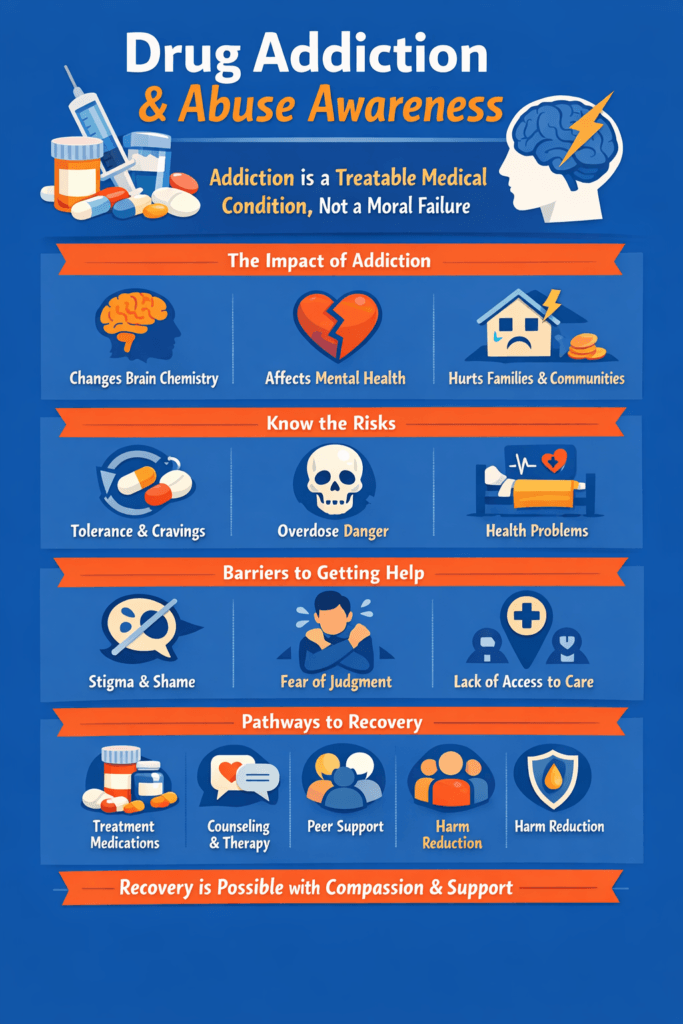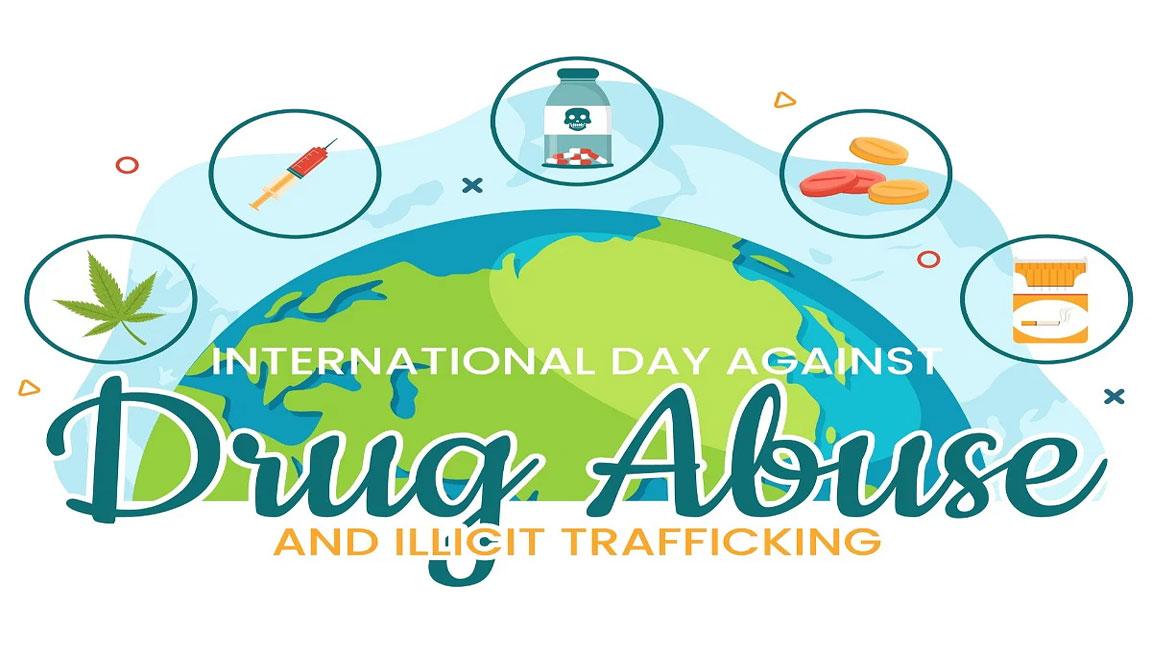
The International Day Against Drug Abuse and Illicit Trafficking on June 26 raises global awareness about drug abuse and trafficking. The U.S. supports this through legislation, awareness campaigns, and international cooperation. Social media helps spread the message widely, while the WHO focuses on evidence-based treatment, harm reduction, and education to promote public health. Together, these efforts advance prevention and recovery worldwide.
June 26: International Day Against Drug Abuse and Illicit Trafficking — Breaking the Cycle Together
Every year on June 26, the world unites to observe the International Day Against Drug Abuse and Illicit Trafficking, a global initiative established by the United Nations General Assembly in 1987. This significant day marks the historical dismantling of the opium trade in Guangdong, China, in 1839, symbolizing the international commitment to eradicating the devastating effects of drug abuse and illegal drug trade.
Led by the United Nations Office on Drugs and Crime (UNODC), this annual observance raises awareness about the global drug problem. It mobilizes action at every level—from international policy to community outreach. Each year, a specific theme guides global engagement. In 2025, the theme “Break the Cycle. #StopOrganizedCrime” draws attention to the intricate connections between drug abuse and organized criminal networks.
The consequences of drug abuse extend far beyond individual health—they impact families, communities, and the fabric of societies. Illicit trafficking fuels violence, corruption, and economic instability, making it essential for stakeholders across the globe to collaborate on effective strategies. This international day underscores the need for education, prevention, treatment access, and more substantial enforcement efforts to dismantle the systems that support the drug trade.
Governments, NGOs, treatment centers, educators, and individuals are encouraged to participate through:
- Awareness campaigns and public forums
- School and community education programs
- Policy advocacy and research dissemination
- Support for addiction recovery and reintegration services
Ultimately, the International Day Against Drug Abuse and Illicit Trafficking calls for solidarity and shared responsibility in building a world where health, safety, and dignity are protected from the harms of substance abuse and trafficking.
Let June 26 be more than just a date—make it a day for renewed action, empathy, and commitment to breaking the cycle.
How the United States Supports the International Day Against Drug Abuse and Illicit Trafficking
The United States plays an active and strategic role in supporting the International Day Against Drug Abuse and Illicit Trafficking, observed each year on June 26. Through a combination of legislative action, public awareness campaigns, and international cooperation, the U.S. reinforces the global effort to curb drug abuse and dismantle illicit drug networks.
Legislative Support
The U.S. government has formally acknowledged the significance of this observance through bipartisan legislative efforts. In 2022, Senators Sheldon Whitehouse (D-RI) and Chuck Grassley (R-IA) led a Senate resolution recognizing June 26 as the International Day Against Drug Abuse and Illicit Trafficking. The resolution emphasizes:
- The urgent need for prevention, treatment, and recovery programs
- The importance of international collaboration
- The shared responsibility to combat drug trafficking and production
This congressional action reinforces the country’s commitment to both domestic reform and global partnerships in addressing the drug crisis.
Public Awareness Campaigns
At home, the U.S. continues to lead public education efforts through Red Ribbon Week, the nation’s most extensive drug awareness campaign. Established in 1985 to honor DEA agent Enrique “Kiki” Camarena, the initiative promotes:
- Drug-free living among youth
- School-based activities that reinforce prevention messages
- Community engagement to foster safe, healthy environments
While Red Ribbon Week is held in October, its message echoes the goals of the June 26 international observance—raising awareness and inspiring action against drug abuse.
International Cooperation
The U.S. has also taken firm steps on the global stage to address the opioid crisis, particularly the flow of illicit fentanyl. In 2022, the Biden administration imposed sanctions on Chinese companies linked to the fentanyl supply chain. These sanctions aimed to:
- Disrupt the production and distribution networks fueling the opioid epidemic
- Pressure foreign actors to enforce stricter controls
- Strengthen global accountability in drug trafficking operations
This move highlighted the importance of transnational collaboration in confronting drug-related threats that cross borders.
In summary, through policy, education, and international diplomacy, the United States demonstrates a firm commitment to the goals of the International Day Against Drug Abuse and Illicit Trafficking. These efforts reflect a comprehensive approach that supports not only national well-being but also the global fight against drug abuse and organized crime.
By aligning domestic initiatives with international objectives, the U.S. helps shape a healthier, safer, and more just world.
Harnessing the Power of Social Media for the International Day Against Drug Abuse and Illicit Trafficking
In today’s connected world, social media plays a vital role in shaping public opinion, spreading awareness, and mobilizing communities. When used effectively, platforms like Instagram, X (formerly Twitter), TikTok, Facebook, and LinkedIn can significantly amplify the message of the International Day Against Drug Abuse and Illicit Trafficking, observed each year on June 26.
Here’s how social media can become a powerful tool for change:
1. Raising Awareness
Social media offers a broad stage to share facts, statistics, personal stories, and infographics that educate the public about the devastating impact of drug abuse and illicit trafficking. Visual content and personal testimonials can humanize the issue and inspire empathy.
2. Amplifying Campaigns and Events
From webinars and community outreach to local rallies and virtual town halls, social media is ideal for promoting observance-related events. Use hashtags like #EndDrugAbuse, #StopIllicitTrafficking, or the official campaign theme (e.g., #BreakTheCycle) to boost visibility and engagement.
3. Engaging Influencers and Advocates
Partnering with health professionals, public figures, recovery advocates, or local leaders can help spread the message to larger audiences. These voices bring credibility and authenticity, especially when sharing personal journeys or expert advice.
4. Providing Resources and Support
Use your platform to share access points to help:
- Hotlines and treatment centers
- Educational resources about substance use prevention
- Community programs for support and recovery
Making this information easy to find can empower individuals and families seeking help.
5. Encouraging Dialogue and Peer Support
Create space for meaningful conversation:
- Host live Q&A sessions with experts
- Share success stories from those in recovery
- Encourage followers to comment, share, or ask questions
This fosters connection, understanding, and support, particularly for those who feel isolated.
6. Countering Misinformation
Unfortunately, myths about addiction and trafficking still circulate online. Use your platform to provide evidence-based facts, debunk harmful stereotypes, and promote compassion over judgment.
7. Mobilizing Action
Social media can turn awareness into impactful action:
- Encourage people to volunteer, donate, or advocate
- Share petition links or tools for contacting policymakers
- Organize or participate in global challenges or campaigns
In summary, by creatively and responsibly using social media, individuals and organizations can play a key role in supporting the International Day Against Drug Abuse and Illicit Trafficking. It’s more than just posting—it’s about connecting, informing, and empowering communities worldwide to take a stand against the harms of drug abuse and illicit trafficking.
Let’s use our voices, clicks, and platforms to break the silence, challenge stigma, and drive change—one post at a time.
How Society Can Drive Change on the International Day Against Drug Abuse and Illicit Trafficking
The International Day Against Drug Abuse and Illicit Trafficking, observed each year on June 26, calls for global unity in the fight against drug-related harms. While the day is led by international organizations like the United Nations Office on Drugs and Crime (UNODC), real change begins at the community level. Society—individuals, institutions, and governments—can all play a role in advancing its mission.
Here are seven practical ways society can take meaningful action:
1. Public Education Campaigns
Widespread educational efforts are vital to changing mindsets and preventing substance abuse. Schools, workplaces, and community centers can:
- Host workshops or speaker events on the risks of drug abuse
- Share evidence-based information on prevention and treatment
- Use creative content (e.g., posters, videos, art) to reach diverse audiences
2. Policy Advocacy and Support
Citizens and advocacy groups can push for stronger policies by:
- Urging lawmakers to pass and enforce legislation that supports drug prevention, treatment access, and trafficking control
- Promoting increased funding for addiction recovery services, mental health programs, and law enforcement collaboration
3. Community Engagement
Grassroots efforts can make a powerful impact. Communities can:
- Organize local events such as marches, candlelight vigils, and awareness seminars on or around June 26
- Collaborate with local leaders, faith organizations, and nonprofits to spread the message and offer support
4. Media Collaboration
Media outlets—both traditional and digital—play a crucial role in shaping public opinion. Collaborate with journalists, bloggers, and content creators to:
- Highlight stories of recovery, loss, and resilience
- Run public service announcements or awareness segments
- Promote social media campaigns and hashtags to expand visibility
5. Support Harm Reduction and Recovery Programs
Instead of criminalizing addiction, societies can:
- Expand access to treatment centers, counseling, medication-assisted therapy, and harm reduction programs like syringe exchange or naloxone distribution
- Reduce stigma by treating addiction as a health condition, not a moral failing
6. Encourage Corporate and Institutional Involvement
Businesses, schools, and healthcare systems can:
- Recognize June 26 with awareness events or campaigns
- Offer substance-free workplace programs and mental health resources
- Partner with local services to support employees and students in recovery
7. Foster International Cooperation
Global challenges require global solutions. Governments and NGOs can:
- Support cross-border law enforcement partnerships and intelligence sharing
- Exchange best practices in drug prevention, education, and treatment
- Invest in international programs aimed at reducing supply and demand
In summary, the International Day Against Drug Abuse and Illicit Trafficking is more than a symbolic gesture—it’s a global call to action. By investing in education, policy, community, recovery, and international unity, society can move closer to a world free from the harms of substance abuse and illegal drug trade.
Whether you’re a policymaker, teacher, parent, employer, or concerned citizen, you have a role to play. Let June 26 inspire year-round efforts that heal, protect, and empower.
By combining education, policy, community action, and collaboration, society can strengthen the impact of the International Day Against Drug Abuse and Illicit Trafficking and move toward a healthier, safer future.
WHO’s Role in Advancing Public Health on the International Day Against Drug Abuse and Illicit Trafficking
Each year on June 26, the world observes the International Day Against Drug Abuse and Illicit Trafficking, a global campaign to raise awareness and mobilize action against the harms of drug abuse and illegal drug trade. Among the key leaders driving this mission is the World Health Organization (WHO), which promotes a public health-centered, evidence-based, and human rights-oriented approach to substance use.
Here’s how WHO contributes to this vital global effort:
1. Regional Flagship Initiative on Substance Use
In October 2024, the WHO’s Eastern Mediterranean Regional Office launched a flagship initiative to accelerate health sector responses to substance use. This comprehensive program focuses on:
- Life skills education in schools and workplaces to build resilience
- Policy advocacy that emphasizes science-based and compassionate treatment options
- Integration of harm reduction strategies—such as needle exchange and overdose prevention—into health and social care systems
- Civil society engagement, including individuals with lived experience, in shaping programs and policies
This initiative reflects WHO’s commitment to tackling substance use not just as a legal issue, but as a health and social challenge requiring community-driven solutions.
2. Advocacy for Evidence-Based and Human Rights-Driven Approaches
WHO consistently champions the idea that drug policies should be grounded in science and compassion, not punishment. Instead of relying solely on law enforcement, WHO urges countries to:
- Prioritize prevention, treatment, and rehabilitation
- Respect human rights and uphold the dignity of people with substance use disorders
- Reduce stigma and discrimination that often prevent people from seeking help
This approach encourages governments to view substance use as a public health matter—and respond with care, not condemnation.
3. Educational Campaigns and Public Engagement
WHO also works to raise public awareness and build supportive communities through:
- Global and regional webinars, forums, and campaigns
- Collaborations with governments, NGOs, and youth groups
- Dissemination of educational resources that promote understanding of addiction, treatment, and recovery
These outreach efforts empower individuals, families, and health professionals with the tools to educate, advocate, and support those affected by substance use.
In summary, through its leadership, advocacy, and partnerships, the World Health Organization plays a pivotal role in reshaping how the world responds to drug abuse and illicit trafficking. By promoting health-centered strategies, evidence-based interventions, and respect for human dignity, WHO helps advance a more compassionate and effective global response.
As we commemorate the International Day Against Drug Abuse and Illicit Trafficking, let’s follow WHO’s example—shifting the conversation from punishment to prevention, and from stigma to support.
Frequently Asked Questions
Here are some common questions:
Question: What can you do locally to promote International Day Against Drug Abuse and Illicit Trafficking?
Answer: Promoting the International Day Against Drug Abuse and Illicit Trafficking (June 26) at the local level can make a significant difference in raising awareness, reducing stigma, and mobilizing community support. Here are some practical ways you can get involved locally:
🌍 1. Organize or Participate in Local Events
- Host a community event, such as a walk, vigil, art show, or educational fair.
- Partner with local schools, churches, or youth groups to organize awareness assemblies or peer education workshops.
- Invite local health professionals or recovery advocates to speak on prevention and treatment.
📚 2. Launch an Educational Campaign
- Distribute flyers, posters, or infographics in libraries, schools, coffee shops, and community centers.
- Host a film screening or panel discussion on addiction, recovery, or trafficking.
- Create or share social media content (use hashtags like #EndDrugAbuse, #June26, or the UN’s official campaign theme).
🧠 3. Engage Schools and Youth
- Collaborate with educators to integrate drug education into the curriculum.
- Support student-led campaigns or clubs focused on mental health and substance use prevention.
- Promote life skills training that builds resilience and decision-making.
🫱🏽🫲🏿 4. Support Local Recovery and Harm Reduction Services
- Volunteer with or donate to local addiction treatment centers, recovery programs, or harm reduction outreach.
- Distribute resources and helpline information at community events.
- Advocate for nonjudgmental, science-based services for people who use drugs.
🗣️ 5. Advocate for Local Policy Changes
- Attend or speak at city council meetings or school board sessions to promote prevention and recovery-friendly policies.
- Connect with local officials to proclaim June 26 as a day of awareness in your town or city.
- Support efforts to increase funding for prevention, treatment, and social services.
🧑🏾⚕️ 6. Collaborate with Professionals and Organizations
- Partner with health clinics, law enforcement, or faith groups to host events or campaigns.
- Encourage local media to feature stories on addiction, recovery, or trafficking awareness.
- Invite professionals to offer free workshops or screenings during the week of June 26.
💬 7. Share Personal Stories and Foster Dialogue
- Create a safe space for people with lived experience to share their stories.
- Start conversations in your workplace, classroom, or family about substance use and stigma.
- Use storytelling to build empathy and reduce shame around addiction and recovery.
🌐 8. Make an Online Impact—Locally
- Highlight local resources and events on social media.
- Tag and thank local organizations and recovery champions.
- Encourage friends and followers to take a local action pledge or participate in a challenge.
In summary, even small local actions contribute to a global movement. By raising awareness, supporting those in recovery, and advocating for compassionate, health-focused responses to drug use, you help build a community that values healing over punishment and connection over stigma.
Question: Provide samples of social media posts.
Answer: Sample social media posts for promoting the International Day Against Drug Abuse and Illicit Trafficking (June 26). You can adapt these for Instagram, Facebook, X (Twitter), LinkedIn, or TikTok captions. Each version includes hashtags and a suggested visual idea.
📲 Post 1: General Awareness
Caption:
🌍 June 26 is the International Day Against Drug Abuse and Illicit Trafficking.
Let’s raise our voices to support prevention, treatment, recovery—and break the cycle of stigma and organized crime. 💪
Together, we can build healthier, safer communities. 💙
#BreakTheCycle #EndDrugAbuse #StopIllicitTrafficking #June26 #RecoveryIsPossible
Visual Suggestion:
Image of people holding hands at a vigil, or a globe with chain links breaking apart
📲 Post 2: Community Event Promo
Caption:
📢 You’re Invited!
Join us on June 26 for a community event to observe the International Day Against Drug Abuse and Illicit Trafficking 💬
🎤 Guest speakers
📚 Free resources
🕯️ Candlelight vigil
🧠 Education for change
📍 [Your Location]
🕒 [Event Time]
Let’s stand together for awareness, compassion, and action.
#DrugFreeCommunity #June26 #BreakTheCycle #SubstanceUseAwareness
Visual Suggestion:
Flyer image or Canva-designed poster with event details
📲 Post 3: Youth & Schools
Caption:
Our youth deserve truth, support, and a future free from the harms of drugs. 🙌
This June 26, let’s engage our schools, parents, and students in honest conversations about substance use, stigma, and support.
Start early. Speak often. Change lives. 💬
#DrugFreeStartsWithMe #YouthForChange #StopIllicitTrafficking #June26Awareness
Visual Suggestion:
Photos of students in a classroom, poster contest, or community workshop
📲 Post 4: Call to Action
Caption:
📅 Mark your calendar: June 26
It’s more than a day—it’s a global movement to confront addiction, challenge stigma, and disrupt the drug trade.
🌐 Learn.
🗣 Share.
💙 Support.
Tag someone who inspires change. 👇
#June26 #RecoveryMatters #HealthNotHandcuffs #DrugAbuseAwareness
Visual Suggestion:
Bold, minimalist design with key date, theme, and action words (Canva-ready)
Question: What drug awareness projects has the World Health Organization initiated?
Answer: The World Health Organization (WHO) has initiated and supported numerous drug awareness and public health projects worldwide. These projects emphasize prevention, treatment, harm reduction, and reducing stigma, and often involve collaboration with governments, NGOs, and communities. Here are notable examples:
1. Regional Flagship Initiative on Substance Use (Eastern Mediterranean Region, 2024–present)
- Objective: Strengthen public health responses to substance use.
- Key Actions:
- Promote life skills education in schools and workplaces.
- Support evidence-based policies and harm reduction strategies.
- Involve civil society and people with lived experience.
- Impact: A comprehensive model for integrating addiction support into national health systems.
2. WHO and UNODC Joint Programs on Drug Use Prevention
- WHO collaborates with the United Nations Office on Drugs and Crime (UNODC) to:
- Develop international standards on drug prevention.
- Disseminate best practices for early intervention, youth education, and family-based prevention.
- Provide technical guidance to member states.
3. “Health for Justice. Justice for Health.” Campaign (2019)
- Theme for the International Day Against Drug Abuse and Illicit Trafficking (2019).
- WHO contributed messaging and resources focusing on:
- Integrating public health and justice systems.
- Promoting access to treatment over incarceration.
- Raising awareness of the health consequences of punitive drug policies.
4. Technical Guidance on Harm Reduction
- WHO develops and distributes guidelines for harm reduction strategies:
- Needle and syringe programs (NSP)
- Opioid substitution therapy (OST)
- Naloxone distribution to prevent overdose
- Used globally to support countries in building evidence-based, stigma-free harm reduction services.
5. Mental Health Gap Action Programme (mhGAP)
- While broader than just drug use, MHGAP includes substance use disorder modules.
- Helps train non-specialist health workers in identifying and managing drug use issues in low-resource settings.
- Implemented in countries such as Nigeria, Pakistan, and Jordan.
6. WHO’s Global Alcohol Action Plan 2022–2030
- Though focused on alcohol, this plan contributes to wider substance use awareness.
- Promotes public education, youth engagement, regulation, and cross-sector collaboration.
- Encourages community-based awareness campaigns and school prevention efforts.
7. Country-Specific Projects (selected examples):
Ukraine & Central Asia: WHO supported needle exchange programs and HIV prevention among people who inject drugs.
Philippines: WHO worked with the government to strengthen community-based drug rehabilitation with a health-centered framework.
Iran: In collaboration with the Ministry of Health, WHO helped develop harm reduction services, including opioid maintenance therapy.
Conclusion
The International Day Against Drug Abuse and Illicit Trafficking serves as a vital platform to unite global efforts against the harms of drug abuse and trafficking. The United States advances this cause through strong policies and public campaigns, while social media expands reach and engagement. The World Health Organization supports these efforts by promoting evidence-based, health-centered strategies. Together, these combined actions foster greater awareness, encourage societal change, and strengthen the global commitment to prevention, treatment, and recovery.
Video: Why so many people are fighting addiction right now #AddictionCrisis #Awareness #Recovery