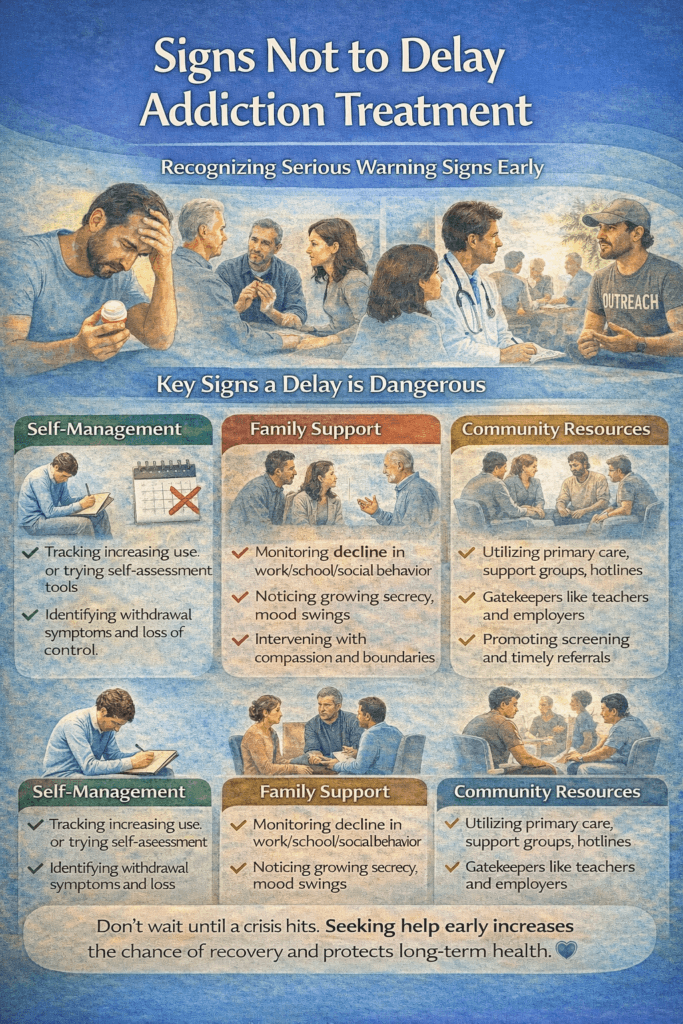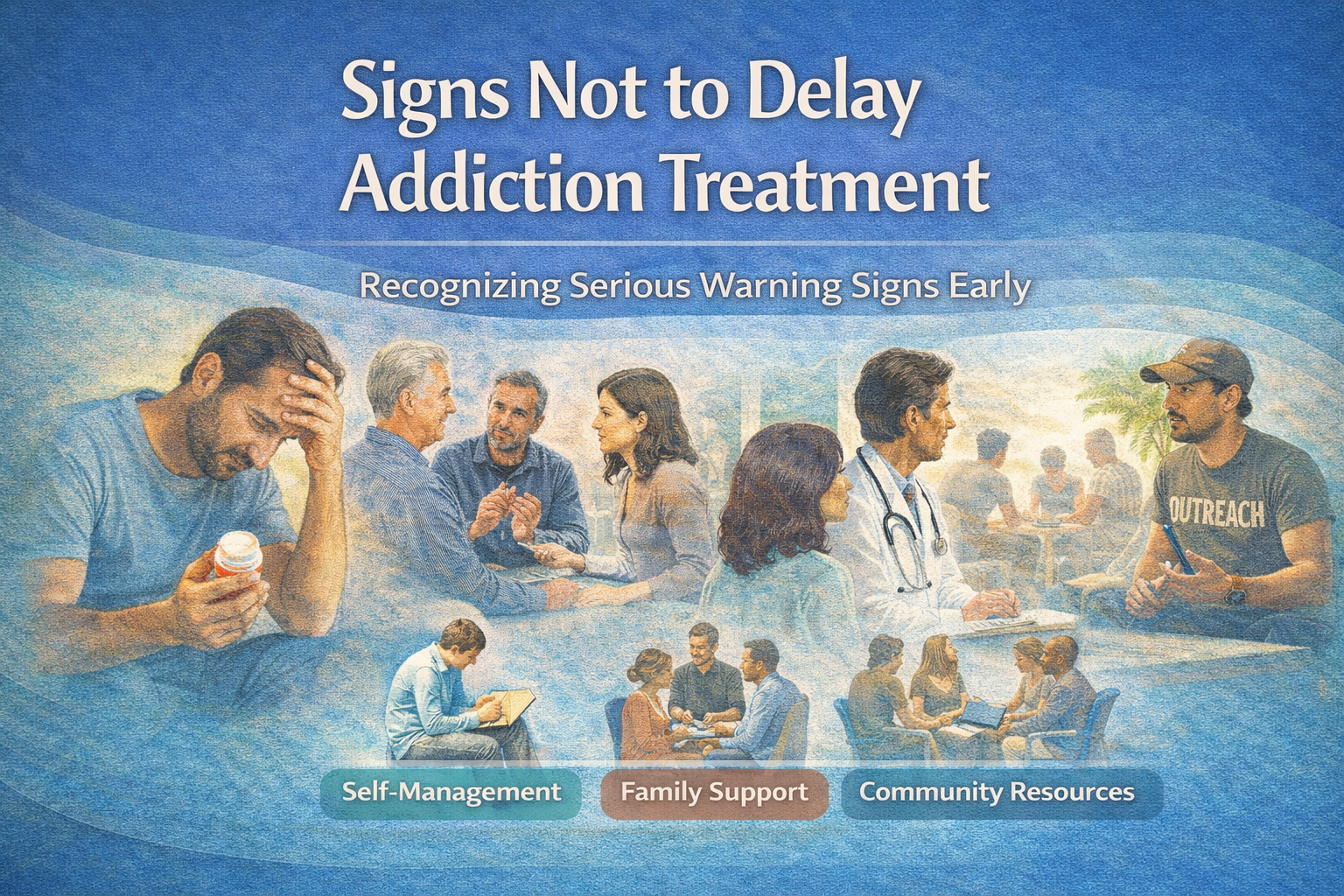
Addiction is a progressive brain-based condition that rarely improves without intervention. As use continues, insight becomes impaired, making it easier to minimize tolerance, withdrawal, and loss of control. Delaying treatment increases the risk of overdose, mental health decline, and social consequences.
Recognizing when not to wait requires layered awareness. Self-monitoring helps identify escalating use and failed attempts to quit. Family members often notice behavioral or safety changes early. Community screening and referral systems create accessible pathways to care. When these supports align, treatment can begin before serious harm occurs.
Signs You Should Not Delay Addiction Treatment
Addiction rarely improves with time alone. While denial, fear, or hope that things will “settle down” are common, delaying treatment often allows substance use to deepen neurologically, psychologically, and socially. Addiction affects the brain’s reward system, decision-making circuits, and stress response pathways. The earlier the intervention, the greater the likelihood of recovery and fewer long-term consequences. Recognizing warning signs early can prevent medical complications, legal problems, and strained relationships.
1. Increasing Tolerance
If larger amounts of a substance are needed to achieve the same effect, the brain has already adapted. Rising tolerance signals progression and increases overdose risk.
2. Withdrawal Symptoms
Experiencing irritability, anxiety, nausea, tremors, insomnia, or cravings when not using indicates physical or psychological dependence. Withdrawal is a clear marker that professional support is warranted.
3. Loss of Control
Repeated attempts to cut down or quit without success demonstrate impaired self-regulation. Addiction alters executive function, making willpower alone insufficient.
4. Neglecting Responsibilities
Declining work performance, academic problems, missed appointments, or family conflict suggest that substance use is taking priority over core life roles.
5. Risk-Taking Behavior
Driving under the influence, mixing substances, unsafe sexual practices, or using in dangerous settings increases harm and signals escalating severity.
6. Emotional Instability
Mood swings, anxiety, depression, irritability, or social withdrawal often accompany substance misuse. When substances become the primary coping mechanism, emotional health deteriorates.
7. Concern From Others
When trusted family members, friends, or colleagues express worry, it is important to listen. External observation often identifies patterns that individuals minimize.
8. Legal or Financial Consequences
Arrests, workplace disciplinary action, or unexplained financial strain tied to substance use are urgent indicators that delay will likely worsen outcomes.
Why Early Treatment Matters
Early treatment interrupts the cycle before medical complications, overdose, or chronic mental health consequences develop. Modern addiction care includes medical evaluation, counseling, medication-assisted treatment when appropriate, and recovery support systems. Seeking help is not a sign of failure—it is a preventive step toward restoring stability.
Addiction is progressive but treatable. When warning signs appear, postponing care increases risk. Acting early increases the likelihood of sustained recovery, improved mental health, and a higher quality of life.
Self-Management Strategies to Recognize When You Should Not Delay Addiction Treatment
One of the greatest barriers to addiction treatment is delay. Many individuals minimize their symptoms, compare themselves to others, or believe they can regain control on their own. However, addiction is a progressive condition that affects judgment, impulse control, and emotional regulation—making early recognition difficult without intentional self-awareness practices. Self-management strategies can help individuals identify warning signs before consequences escalate.
1. Track Patterns Honestly
Keeping a simple log of substance use—how often, how much, and in what situations—can reveal patterns that memory alone may distort. If use is increasing in frequency, intensity, or risk, this is a strong signal not to delay evaluation. Objective tracking reduces denial and supports informed decision-making.
2. Monitor Emotional Triggers
Substances often become coping tools for stress, anxiety, loneliness, or fatigue. Self-check questions such as, “Am I using to escape or regulate emotions?” can clarify motivation. When substances become the primary strategy for managing feelings, professional support is often needed.
3. Assess Loss of Control
Repeated failed attempts to cut back, promises to stop “next week,” or rules that are frequently broken (e.g., “only on weekends”) indicate impaired control. A key self-management insight is recognizing that difficulty stopping is not a moral failure—it is a clinical sign.
4. Evaluate Consequences
Self-reflection should include an honest review of impacts on work, school, relationships, finances, or health. If negative consequences are present but use continues, delay increases risk. A practical strategy is asking, “If nothing changes, where will I be in six months?”
5. Watch for Withdrawal or Tolerance
Physical or psychological withdrawal symptoms, or needing more of the substance to feel the same effect, are biological indicators of dependence. These are objective signs that treatment should not be postponed.
6. Seek Outside Perspective
Self-management includes knowing when self-assessment is limited. Asking a trusted friend, family member, or healthcare professional for honest feedback can provide clarity. Outside input often identifies patterns that individuals rationalize.
7. Create a Decision Threshold
Predefine a personal rule, such as “If I experience withdrawal” or “If someone close expresses concern twice,” to schedule an evaluation. Setting thresholds in advance reduces emotional avoidance when warning signs appear.
Acting Early Is a Strength
Recognizing the need for treatment early improves outcomes and reduces long-term harm. Self-management does not mean handling addiction alone—it means developing awareness strong enough to seek help promptly. The earlier the intervention begins, the greater the opportunity to restore stability and health and support long-term recovery.
Family Support Strategies to Recognize When Not to Delay Addiction Treatment
Families are often the first to notice when substance use shifts from occasional behavior to a developing addiction. Because addiction affects judgment and insight, individuals may minimize or deny the severity of their use. Family members, however, can observe changes in behavior, mood, functioning, and safety that signal treatment should not be delayed. Supportive, informed family involvement can accelerate early intervention and improve outcomes.
1. Monitor Functional Changes
One of the clearest warning signs is a decline in daily functioning. Missed work or school, poor performance, financial instability, disrupted sleep, or neglect of responsibilities indicate progression. Families should view these changes not as character flaws but as clinical red flags.
2. Notice Behavioral and Emotional Shifts
Mood swings, irritability, secrecy, withdrawal from family activities, or sudden changes in friend groups may signal escalating substance use. Emotional instability combined with substance access increases urgency for evaluation.
3. Watch for Tolerance and Withdrawal
If the person needs increasing amounts to achieve the same effect, or becomes anxious, nauseated, tremulous, or irritable without the substance, dependence is likely developing. Physical withdrawal symptoms are strong indicators that treatment should not be postponed.
4. Take External Concerns Seriously
Concerns expressed by teachers, employers, healthcare providers, or friends should be considered carefully. When multiple people notice similar patterns, delay increases the risk of medical, legal, or social harm.
5. Respond Early Without Shame
Families are most effective when they approach concerns calmly and specifically. Statements such as, “We’ve noticed you’ve missed several shifts and seem exhausted—can we talk about what’s going on?” promote dialogue rather than defensiveness. Shame-driven confrontation often pushes the issue underground.
6. Avoid Enabling Behaviors
Covering up consequences, making excuses, or providing financial support that indirectly sustains substance use can unintentionally delay treatment. Support means helping the person access care—not protecting them from every consequence.
7. Establish Clear Treatment Thresholds
Families can decide in advance what behaviors require professional evaluation, such as overdose, withdrawal symptoms, driving under the influence, or repeated failed attempts to quit. Clear thresholds reduce hesitation when action is needed.
Early Action Protects Long-Term Health
Addiction is progressive, but early intervention improves recovery outcomes significantly. Family members are not responsible for causing or curing addiction, but they are powerful agents in recognizing when help is needed. When families combine observation, compassion, boundaries, and timely referral to professional care, they reduce the risk of crisis and increase the likelihood of sustained recovery.
Community Resource Strategies to Recognize When Not to Delay Addiction Treatment
Addiction often progresses quietly until a crisis occurs. Because individuals may minimize symptoms and families may hesitate to intervene, communities play a critical role in early identification of warning signs and in reducing treatment delays. Schools, healthcare systems, workplaces, faith organizations, and public health agencies can create structures that recognize risk before severe medical, legal, or social consequences develop.
1. Routine Screening in Healthcare Settings
Primary care clinics, emergency departments, and school-based health centers are frontline detection points. Standardized substance use screening tools help identify escalating patterns before overdose or severe withdrawal occurs. Early screening normalizes conversations about substance use and reduces stigma that prevents disclosure.
2. Training Gatekeepers to Recognize Warning Signs
Teachers, coaches, employers, clergy, and community leaders often observe behavioral changes before healthcare professionals do. Training these “gatekeepers” to recognize red flags—such as declining performance, mood instability, absenteeism, or risky behavior—creates earlier referral pathways.
3. Public Awareness Campaigns
Community education initiatives that outline clear warning signs—tolerance, withdrawal, loss of control, increasing secrecy, legal issues—help individuals and families recognize when treatment should not be postponed. Messaging that emphasizes addiction as treatable reduces fear-based avoidance.
4. Accessible Assessment and Referral Networks
Communities that provide low-barrier access to evaluations—walk-in clinics, telehealth assessments, mobile outreach teams, and crisis lines—reduce the friction between recognizing a problem and seeking help. The shorter the gap between concern and evaluation, the better the outcomes.
5. Peer Recovery Support Services
Peer recovery coaches and community-based recovery organizations often identify early relapse patterns or escalating risk. Their lived experience positions them to recognize warning signs and encourage timely treatment before crisis escalation.
6. Integrated Mental Health Services
Many people delay addiction treatment because underlying anxiety, depression, or trauma remains untreated. Communities that integrate behavioral health services into schools, primary care, and community centers address co-occurring disorders early, reducing progression.
7. Crisis Response Systems
Overdose response teams, stabilization centers, and diversion programs create structured opportunities to connect individuals to treatment immediately after high-risk events. Rather than cycling through emergency services alone, these systems provide direct linkage to treatment.
Community Infrastructure Prevents Crisis
Addiction rarely resolves without intervention. When communities proactively screen, educate, train, and connect individuals to care, they reduce the likelihood that warning signs escalate into medical emergencies or legal consequences. Recognizing that treatment delays increase harm, community resource strategies serve as protective systems that translate early warning signs into early action—improving recovery outcomes and strengthening public health.
Frequently Asked Questions
Here are some common questions:
Why is delaying addiction treatment risky?
Addiction is a progressive condition. The longer substance use continues, the more it alters brain chemistry, behavior, and physical health. Delays increase the risk of overdose, medical complications, legal consequences, and relationship damage.
What are the earliest signs that treatment may be needed?
Early warning signs include increasing tolerance, stronger cravings, using more frequently than intended, mood changes, secrecy, and neglecting responsibilities. If substance use begins to interfere with daily life, evaluation should not be postponed.
How do I know if it’s dependence rather than occasional use?
Dependence is often marked by withdrawal symptoms (such as anxiety, irritability, nausea, tremors, or insomnia) when not using, and repeated unsuccessful attempts to cut down. Loss of control is a key clinical indicator.
Should I wait until there is a major crisis before seeking help?
No. Waiting for a crisis—such as overdose, arrest, job loss, or severe health decline—significantly worsens outcomes. Early intervention leads to better recovery rates and fewer long-term consequences.
What if the person says they can quit on their own?
While some individuals can reduce use independently, repeated failed attempts signal that professional support is needed. Addiction impairs decision-making, making self-assessment unreliable without external support.
How can self-management help identify the need for treatment?
Tracking substance use, recognizing emotional triggers, assessing functional decline, and noticing withdrawal symptoms improve awareness. Honest self-monitoring reduces denial and helps prompt earlier action.
What role does family play in recognizing warning signs?
Family members often notice behavioral changes, secrecy, mood instability, or functional decline before the individual does. Calm, specific conversations and early boundary-setting can prompt timely evaluation.
How can community resources help prevent delays?
Routine screening in primary care, school-based counseling, workplace programs, crisis lines, and peer recovery services create accessible pathways to evaluation. The easier it is to access help, the less likely treatment is to be delayed.
Are there specific high-risk situations that require immediate treatment?
Yes. Overdose, mixing substances, suicidal thoughts, severe withdrawal symptoms, driving under the influence, or repeated risky behavior warrant urgent professional assessment.
Does early treatment really improve outcomes?
Yes. Research consistently shows that early intervention reduces relapse risk, lowers medical complications, improves mental health stability, and strengthens long-term recovery success.
Conclusion
The ability to recognize signs that addiction treatment should not be delayed is a shared responsibility across individuals, families, and communities. Self-management builds internal awareness, empowering people to notice patterns and seek help proactively. Family support strengthens early intervention through observation, compassionate dialogue, and clear boundaries. Community resources provide screening, education, and low-barrier access to care, reducing the gap between concern and action. When these strategies work together, warning signs become opportunities for timely support rather than precursors to crisis. Early recognition and intervention significantly improve recovery outcomes, reduce harm, and protect long-term health and stability.
Video: Don’t Delay Addiction Treatment